Kirjojen hintavertailu. Mukana 12 595 353 kirjaa ja 12 kauppaa.
Kirjailija
Pethuru Raj Chelliah
Kirjat ja teokset yhdessä paikassa: 9 kirjaa, julkaisuja vuosilta 2017-2026, suosituimpien joukossa AI and Cloud Native Software Engineering. Vertaile teosten hintoja ja tarkista saatavuus suomalaisista kirjakaupoista.
Numerous advancements are being brought in and incorporated into the cloud domain with the aim of realizing a trove of deeper and decisive automations.Rather than discussing the cloud paradigm in isolation, this fully updated text examines how cloud computing can work collaboratively with other computing models to meet the needs of evolving trends.This multi-dimensional approach encompasses the challenges of fulfilling the storage requirements of big data, the use of the cloud as a remote server for Internet of Things and sensor networks, and an investigation of how cloud computing is interlinked with other established computing phenomenon such as edge computing. New chapters illustrate the distinct ideals of the cloud-native computing, proclaimed as the next-generation cloud computing paradigm.Topics and features:Includes learning objectives, motivating questions, and self-test exercisesIntroduces the underlying concepts, fundamental features, and key technological foundations of cloud computingExamines how enterprise networking and cloud networking can work together to achieve business goalsReviews the different types of cloud storage available to address the evolution of data and the need for digitizationDiscusses the challenges and approaches to implementing cloud governance, security, and the hot topic of cloud managementDescribes the details of cloud migration, the crucial role of monitoring in optimizing the cloud, and the basics of disaster recovery using cloud infrastructureThis technically rigorous, yet simple-to-follow textbook is an ideal resource for graduate courses on cloud computing. Professional software developers and cloud architects will also find the work to be an invaluable reference.
Data science is a fast-emerging field of study and research. It mainly leverages integrated data analytics platforms, and in the recent past, the arrival of artificial intelligence (AI) technologies and tools to extract actionable insights out of burgeoning data volumes has totally changed the game of data science. Machine and deep learning (ML/DL) algorithms are the principal technologies of the AI paradigm. There are innovations and improvisations in the AI ecosystem that make sense out of a massive quantity of multi-structured data. The data science domain is acquiring special significance these days as businesses and governments across the globe need to fulfil the long-standing goal of data-driven insights and insight-driven decisions. Transitioning data into information and knowledge plays a pivotal role for worldwide enterprises and establishments in effectively initiating and implementing next-generation digital transformation projects.Programming statistics and probability applications are key to this vital transformation of data into knowledge and insight. Probability and statistics are also key to decision-making processes that data science is automating. Demystifying Probability and Statistics for Data Scientists with R illustrates statistics with the R programming language, an emerging tool in data science. Filled with techniques for data science and analytics programming, this book is written for students and professionals. It is focused on learning outcomes and problem solving. Beginning with the basics of R programming, data science, and probability, the book progresses to methods, testing, and experiment design. Highlights of the book include: Types of data and collection methods Data visualization methods Probability basics Random variables and distributions Sampling methods and confidence intervals and hypothesis testing Design of experiments Correlation and regression Chi square test Non-parametric tests
Data science is a fast-emerging field of study and research. It mainly leverages integrated data analytics platforms, and in the recent past, the arrival of artificial intelligence (AI) technologies and tools to extract actionable insights out of burgeoning data volumes has totally changed the game of data science. Machine and deep learning (ML/DL) algorithms are the principal technologies of the AI paradigm. There are innovations and improvisations in the AI ecosystem that make sense out of a massive quantity of multi-structured data. The data science domain is acquiring special significance these days as businesses and governments across the globe need to fulfil the long-standing goal of data-driven insights and insight-driven decisions. Transitioning data into information and knowledge plays a pivotal role for worldwide enterprises and establishments in effectively initiating and implementing next-generation digital transformation projects.Programming statistics and probability applications are key to this vital transformation of data into knowledge and insight. Probability and statistics are also key to decision-making processes that data science is automating. Demystifying Probability and Statistics for Data Scientists with R illustrates statistics with the R programming language, an emerging tool in data science. Filled with techniques for data science and analytics programming, this book is written for students and professionals. It is focused on learning outcomes and problem solving. Beginning with the basics of R programming, data science, and probability, the book progresses to methods, testing, and experiment design. Highlights of the book include: Types of data and collection methods Data visualization methods Probability basics Random variables and distributions Sampling methods and confidence intervals and hypothesis testing Design of experiments Correlation and regression Chi square test Non-parametric tests
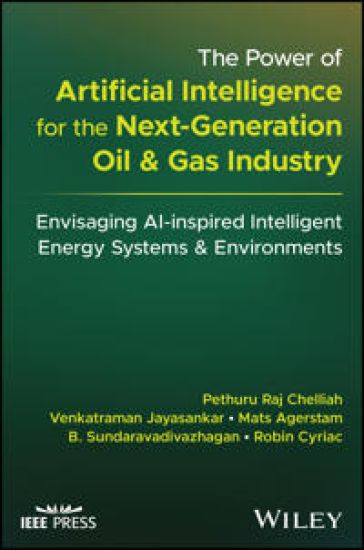
The Power of Artificial Intelligence for the Next-Generation Oil and Gas Industry Comprehensive resource describing how operations, outputs, and offerings of the oil and gas industry can improve via advancements in AI The Power of Artificial Intelligence for the Next-Generation Oil and Gas Industry describes the proven and promising digital technologies and tools available to empower the oil and gas industry to be future-ready. It shows how the widely reported limitations of the oil and gas industry are being nullified through the application of breakthrough digital technologies and how the convergence of digital technologies helps create new possibilities and opportunities to take this industry to its next level. The text demonstrates how scores of proven digital technologies, especially in AI, are useful in elegantly fulfilling complicated requirements such as process optimization, automation and orchestration, real-time data analytics, productivity improvement, employee safety, predictive maintenance, yield prediction, and accurate asset management for the oil and gas industry. The text differentiates and delivers sophisticated use cases for the various stakeholders, providing easy-to-understand information to accurately utilize proven technologies towards achieving real and sustainable industry transformation. The Power of Artificial Intelligence for the Next-Generation Oil and Gas Industry includes information on: How various machine and deep learning (ML/DL) algorithms, the prime modules of AI, empower AI systems to deliver on their promises and potentialKey use cases of computer vision (CV) and natural language processing (NLP) as they relate to the oil and gas industrySmart leverage of AI, the Industrial Internet of Things (IIoT), cyber physical systems, and 5G communicationEvent-driven architecture (EDA), microservices architecture (MSA), blockchain for data and device security, and digital twins Clearly expounding how the power of AI and other allied technologies can be meticulously leveraged by the oil and gas industry, The Power of Artificial Intelligence for the Next-Generation Oil and Gas Industry is an essential resource for students, scholars, IT professionals, and business leaders in many different intersecting fields.
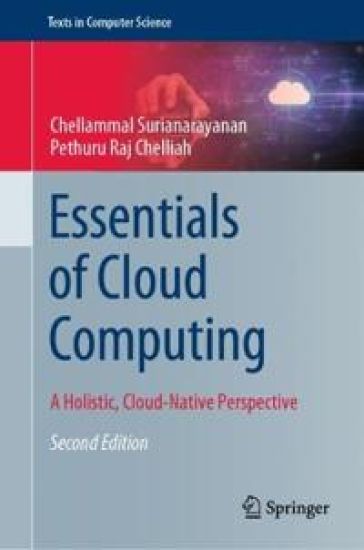
Numerous advancements are being brought in and incorporated into the cloud domain with the aim of realizing a trove of deeper and decisive automations.Rather than discussing the cloud paradigm in isolation, this fully updated text examines how cloud computing can work collaboratively with other computing models to meet the needs of evolving trends.This multi-dimensional approach encompasses the challenges of fulfilling the storage requirements of big data, the use of the cloud as a remote server for Internet of Things and sensor networks, and an investigation of how cloud computing is interlinked with other established computing phenomenon such as edge computing. New chapters illustrate the distinct ideals of the cloud-native computing, proclaimed as the next-generation cloud computing paradigm.Topics and features:Includes learning objectives, motivating questions, and self-test exercisesIntroduces the underlying concepts, fundamental features, and key technological foundations of cloud computingExamines how enterprise networking and cloud networking can work together to achieve business goalsReviews the different types of cloud storage available to address the evolution of data and the need for digitizationDiscusses the challenges and approaches to implementing cloud governance, security, and the hot topic of cloud managementDescribes the details of cloud migration, the crucial role of monitoring in optimizing the cloud, and the basics of disaster recovery using cloud infrastructureThis technically rigorous, yet simple-to-follow textbook is an ideal resource for graduate courses on cloud computing. Professional software developers and cloud architects will also find the work to be an invaluable reference.
This reader-friendly textbook presents a comprehensive overview of the essential aspects of cloud computing, from the origin of the field to the latest developments. Rather than merely discussing the cloud paradigm in isolation, the text also examines how cloud computing can work collaboratively with other computing models to meet the needs of evolving computing trends. This multi-dimensional approach encompasses the challenges of fulfilling the storage requirements of big data, the use of the cloud as a remote server for Internet of Things and sensor networks, and an investigation of how cloud computing is interlinked with edge, fog and mist computing, among other illuminating perspectives.Topics and features: includes learning objectives, motivating questions, and self-test exercises in every chapter; presents an introduction to the underlying concepts, fundamental features, and key technological foundations of cloud computing; examines how enterprise networking and cloud networking can work together to achieve business goals; reviews the different types of cloud storage available to address the evolution of data and the need for digitization; discusses the challenges and approaches to implementing cloud security, and the hot topic of cloud management; highlights the value of cloud brokerage capabilities, and explains the importance of cloud orchestration in multi-cloud environments; describes the details of cloud migration, the crucial role of monitoring in optimizing the cloud, and the basics of disaster recovery using cloud infrastructure.This technically rigorous yet simple-to-follow textbook is an ideal resource for graduate courses on cloud computing. Professional software developers and cloud architects will also find the work to be an invaluable reference.
Create, deploy, and manage applications at scale using SRE principlesKey FeaturesBuild and run highly available, scalable, and secure softwareExplore abstract SRE in a simplified and streamlined wayEnhance the reliability of cloud environments through SRE enhancementsBook DescriptionSite reliability engineering (SRE) is being touted as the most competent paradigm in establishing and ensuring next-generation high-quality software solutions.This book starts by introducing you to the SRE paradigm and covers the need for highly reliable IT platforms and infrastructures. As you make your way through the next set of chapters, you will learn to develop microservices using Spring Boot and make use of RESTful frameworks. You will also learn about GitHub for deployment, containerization, and Docker containers. Practical Site Reliability Engineering teaches you to set up and sustain containerized cloud environments, and also covers architectural and design patterns and reliability implementation techniques such as reactive programming, and languages such as Ballerina and Rust. In the concluding chapters, you will get well-versed with service mesh solutions such as Istio and Linkerd, and understand service resilience test practices, API gateways, and edge/fog computing.By the end of this book, you will have gained experience on working with SRE concepts and be able to deliver highly reliable apps and services.What you will learnUnderstand how to achieve your SRE goalsGrasp Docker-enabled containerization conceptsLeverage enterprise DevOps capabilities and Microservices architecture (MSA)Get to grips with the service mesh concept and frameworks such as Istio and LinkerdDiscover best practices for performance and resiliencyFollow software reliability prediction approaches and enable patternsUnderstand Kubernetes for container and cloud orchestrationExplore the end-to-end software engineering process for the containerized worldWho this book is forPractical Site Reliability Engineering helps software developers, IT professionals, DevOps engineers, performance specialists, and system engineers understand how the emerging domain of SRE comes handy in automating and accelerating the process of designing, developing, debugging, and deploying highly reliable applications and services.
Learn the importance of architectural and design patterns in producing and sustaining next-generation IT and business-critical applications with this guide. Key Features Use patterns to tackle communication, integration, application structure, and more Implement modern design patterns such as microservices to build resilient and highly available applications Choose between the MVP, MVC, and MVVM patterns depending on the application being built Book Description Enterprise Architecture (EA) is typically an aggregate of the business, application, data, and infrastructure architectures of any forward-looking enterprise. Due to constant changes and rising complexities in the business and technology landscapes, producing sophisticated architectures is on the rise. Architectural patterns are gaining a lot of attention these days. The book is divided in three modules. You'll learn about the patterns associated with object-oriented, component-based, client-server, and cloud architectures. The second module covers Enterprise Application Integration (EAI) patterns and how they are architected using various tools and patterns. You will come across patterns for Service-Oriented Architecture (SOA), Event-Driven Architecture (EDA), Resource-Oriented Architecture (ROA), big data analytics architecture, and Microservices Architecture (MSA). The final module talks about advanced topics such as Docker containers, high performance, and reliable application architectures. The key takeaways include understanding what architectures are, why they're used, and how and where architecture, design, and integration patterns are being leveraged to build better and bigger systems. What you will learn Understand how several architectural and design patterns work to systematically develop multitier web, mobile, embedded, and cloud applications Learn object-oriented and component-based software engineering principles and patterns Explore the frameworks corresponding to various architectural patterns Implement domain-driven, test-driven, and behavior-driven methodologies Deploy key platforms and tools effectively to enable EA design and solutioning Implement various patterns designed for the cloud paradigmWho this book is for This book will empower and enrich IT architects (such as enterprise architects, software product architects, and solution and system architects), technical consultants, evangelists, and experts.