Kirjojen hintavertailu. Mukana 12 657 676 kirjaa ja 12 kauppaa.
Kirjailija
Pheme Perkins
Kirjat ja teokset yhdessä paikassa: 12 kirjaa, julkaisuja vuosilta 1990-2024, suosituimpien joukossa Peter. Vertaile teosten hintoja ja tarkista saatavuus suomalaisista kirjakaupoista.
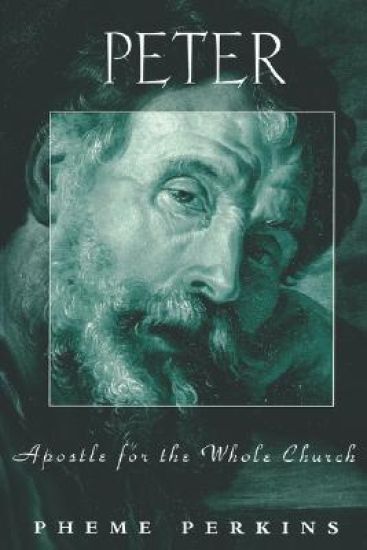
Perkins describes the search for the historical Peter, and the influence his image has had, in Roman Catholic and Protestant ecumenical discussions. Pointing to portrayals of Peter in the Pauline and Johannine traditions, the synoptic Gospels, and the Book of Acts, Perkins argues that precisely because there is no single Petrine tradition in the New Testament, the apostle might serve as a unifying figure for incongruous forms of Christianity. Perkins argues that Peter should be viewed as a harmonizing figure who captures the Christian imagination not only because he is the most prominent of Jesus' disciples, but also because his weaknesses and strengths present a character accessible to the average Christian.
Reading the New Testament is an excellent introduction to the writings of the New Testament, written by a prominent scholar who is able to communicate the main ideas and results with a clear and simple style. This third edition, although leaving intact the structure of the book, has been rewritten extensively, updating the information and adding the results of new biblical approaches and research. Highlights of this new revised edition: • Extensively rewritten • New results of biblical exegesis incorporated • Updated and expanded bibliography • New maps and illustrations “With this third edition of her fine work, Dr. Pheme Perkins has taken a great book and made it still better…. Both teachers and students owe her a great debt for distilling the rich experience of a great teacher in a single book.” —John P. Meier, University of Notre Dame. “This third revised edition of Reading the New Testament continues to make solid biblical scholarship accessible to a broad spectrum of readers….Already impressive for its longevity, this highly recommended book will continue to serve new readers for a long time to come.” —John J. Pilch, Johns Hopkins University “For conciseness, clarity, and the ability to offer a balanced introduction to the literary, historical, and theological dimensions of the New Testament, the volume is unrivaled…. I can think of no others scholar today that I would rather have as a guide for my students as they begin their journey in understanding the New Testament!” —Margaret Y. MacDonald, St. Francis Xavier University †
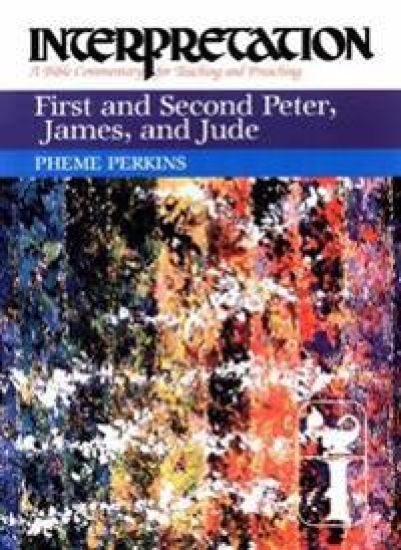
First and Second Peter, James, and Jude have existed on the edges of the canon throughout the centuries. In this volume in the Interpretation series, Pheme Perkins casts light on these often neglected writings. She ably demonstrates that these "catholic epistles" have, in fact, much to offer to today's readers.
2013 Catholic Press Award WinnerIn this addition to the well-received Paideia series, a respected New Testament scholar examines cultural context and theological meaning in First Corinthians. Paideia commentaries explore how New Testament texts form Christian readers by• attending to the ancient narrative and rhetorical strategies the text employs• showing how the text shapes theological convictions and moral habits• commenting on the final, canonical form of each New Testament book• focusing on the cultural, literary, and theological settings of the text• making judicious use of maps, photos, and sidebars in a reader-friendly formatStudents, pastors, and other readers will appreciate the historical, literary, and theological insight Pheme Perkins offers in interpreting First Corinthians.
In this volume, Pheme Perkins mines the writings from Nag Hammadi and Qumran for illuminating parallels to Ephesians, showing how a first-century audience would have heard and responded to the various parts of the letter. Under her sure guidance, contemporary readers are led to see the rhetorical power and the theological depth of this pseudonymous letter.
How did the imperial cult affect Christians in the Roman Empire? "Jesus is lord, not Caesar." Many scholars and preachers attribute mistreatment of early Christians by Roman authorities to this fundamental confessional conflict. But this mantra relies on a reductive understanding of the imperial cult. D. Clint Burnett examines copious evidence--literary, epigraphic, numismatic, and archaeological--to more accurately reconstruct Christian engagement with imperial divine honors. Outdated narratives often treat imperial divine honors as uniform and centralized, focusing on the city of Rome. Instead, Burnett examines divine honors in Philippi, Thessalonica, and Corinth. While all three cities incorporated imperial cultic activity in their social, religious, economic, and political life, the purposes and contours of the practice varied based on the city's unique history. For instance, Thessalonica paid divine honors to living Julio-Claudians as tribute for their status as a free city in the empire--and Christian resistance to the practice was seen as a threat to that independence. Ultimately, Burnett argues that early Christianity was not specifically antigovernment but more broadly countercultural, and that responses to this stance ranged from conflict to apathy. Burnett's compelling argument challenges common assumptions about the first Christians' place in the Roman Empire. This fresh account will benefit Christians seeking to understand their faith's place in public life today.
2023 Catholic Media Association Second Place Award, Scripture – Academic Studies Reading 1 Peter through the lens of feminist and diaspora studies keeps front and center the bodily, psychological, and social suffering experienced by those without stable support of family or homeland, whether they were economic migrants or descendants of those enslaved by Roman armies. In the new “household” of God, believers are encouraged to exhibit a moral superiority to the society that engulfs them. But adoption of “elite” values cannot erase the undertones of randomized verbal abuse, general scorn, and physical violence that women, immigrants, slaves, and freedmen faced as the “facts of life.” First Peter offers the “honor” of identifying with the Crucified, “by his bruises you are healed” (2:24). A Christian liberation ethic would challenge 1 Peter’s approach. Pliny the Younger, governor of Bithynia-Pontus in north-western Asia Minor, is a contemporary of 2 Peter’s writer. The polemical, accusatory genre of 2 Peter, like Jude, originates in Roman judicial rhetoric. The pastor, in the persona of a prosecuting attorney, condemns immoral defendants, including influential women. Their “crimes” encode community tensions over women’s leadership, Gentile-members’ sexual ethics, their syncretistic deviations from Jewish doctrine on creation, and the certainty of divine judgment and punishment. Citations to Elizabeth Cady Stanton’s A Woman’s Bible enliven the commentary. The doctrinal disorder prompts the male pastor to sustain loyalists in their commitment to “Our Lord and Savior Jesus Christ.” Second Peter dramatizes an ecclesial crisis whose “solution” was the eventual imposition of a magisterium to silence dissent. Brief, combative, and assuming a familiarity with a literary culture that most twenty-first-century readers do not have, the Letter of Jude would be an obvious candidate for being the most neglected book of the New Testament. As a model for a pastoral strategy, it can be recommended only with great reservations: almost everyone will find in it something problematic, if not offensive. Yet, in addition to giving a window on a Greek-speaking Jewish-Christian milieu, Jude’s energetic prose testifies to the author’s visceral concern for those attempting to live by the gospel in difficult circumstances. Furthermore, to the extent that over familiarity with parts of the New Testament can blunt their challenge, this letter provides a salutary reminder that the entire canon originated in a world that is radically unfamiliar to us.
This newest addition to the popular Trinity New Testament in Context series focuses on the politics of division in Paul's letter to the Galatians. Traditionally, Galatians has been read as the "Magna Charta" of Christian liberty since in Galatians Paul teaches that Gentiles need not become Jews before becoming Christians. As Pheme Perkins demonstrates, the matter was not so simple. She uses recent evidence to show that the communal boundaries of Judaism were more porous than has been assumed. Thus, rather than portraying a simple conflict between Jews and Gentile converts, Galatians depicts a Jewish community whose identity is in flux and Gentile converts not entirely certain about their lineage in the Christian faith. In Abraham s Divided Children, Perkins argues that while Paul might have tried to use his rhetoric to encourage unity among Gentile converts, he actually created harsh divisions between the Christian and Jewish communities. Perkin's lively and engaging reading of Galatians challenges much recent scholarship on Paul's letter and offers fresh insights into a contentious Pauline text. Pheme Perkins is Professor of New Testament at Boston College and the author of numerous books and articles, including Peter: Apostle for the Whole Church.
Pheme Perkins searches for the historical Peter, and the influence his image has had for both Roman Catholics and Protestants. Pointing to portrayals of Peter in the Pauline and Johannine traditions, the synoptic Gospels, and the Book of Acts, Perkins argues that precisely because there is no single Petrine tradition in the New Testament, the apostle should serve as a unifying figure for many forms of Christianity. She shows how Peter should be viewed as a harmonising figure who captures the Christian imagination, not only because he is the most prominent of Jesus disciples but also because his weaknesses and strengths reveal a character accessible to all Christians.
First and Second Peter, James, and Jude have existed on the edges of the canon throughout the centuries. In this much-anticipated volume in the Interpretation series, Pheme Perkins casts light on these often neglected writings. She ably demonstrates that these "catholic epistles" have, in fact, much to offer to today's readers.Interpretation: A Bible Commentary for Teaching and Preaching is a distinctive resource for those who interpret the Bible in the church. Planned and written specifically for teaching and preaching needs, this critically acclaimed biblical commentary is a major contribution to scholarship and ministry.
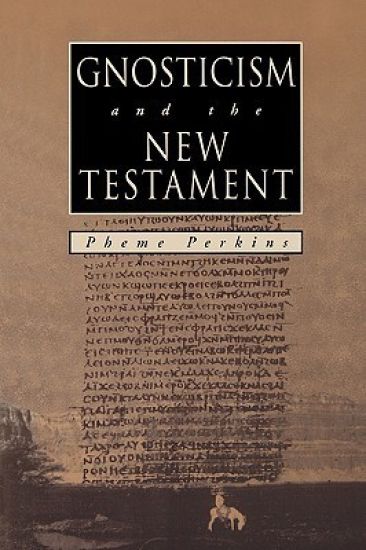
The gnostic writings found at Nag Hammadi have stimulated much controversy about the relationship between early Christians and the diverse religious movement of the first three centuries. Perkins fills the New Testament student's need for a guide to recent developments in scholarship with a helpful survey that addresses the origins of Gnosticism, its relationship to Judaism, Redeemer myths and New Testament hymns, and other relevant topics.
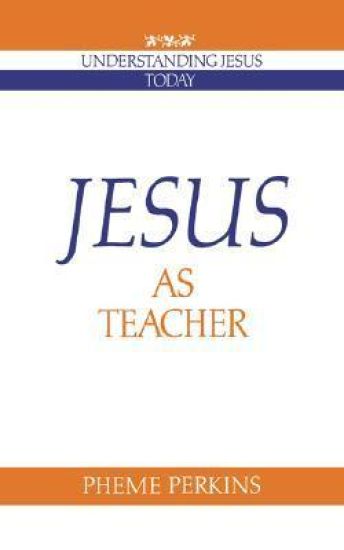
Professor Perkins compares Jesus with other types of teachers in his day: philosophers, interpreters of the law, prophets, and visionaries. Jesus is characterized as a charismatic teacher and prophet who addressed his message to all people, as opposed to the elite groups taught in formal schools in ancient times. Readers are shown how Jesus used parables, proverbs, and legal and prophetic sayings to challenge the imagination and to allow his listeners to discover his message. The book contains detailed analyses of many Gospel passages and covers themes of particular prominence in Jesus’ teaching, including justice, wealth, forgiveness and love.