
Kirjailija
Phil H Listemann
Kirjat ja teokset yhdessä paikassa: 62 kirjaa, julkaisuja vuosilta 2009-2026, suosituimpien joukossa The Supermarine Spitfire Mk V. Vertaile teosten hintoja ja tarkista saatavuus suomalaisista kirjakaupoista.
Mukana myös kirjoitusasut: Phil H. Listemann
62 kirjaa
Kirjojen julkaisuhaarukka 2009-2026.

The Mitchell was one of the major medium bombers of the Second World War. It was operated by many air forces during the war including the RAF. The RAF received about 900 Mitchells among them some Mitchells coming from a Dutch order which were exclusively used by No. 320 (Dutch) Squadron. The Mitchell was also used by two other foreign units in the RAF, the Polish 305 and the French 342. This book covers in 44 pages, about 30 photos and 8 colour profiles, the operational usage of the Mitchell by those three squadrons with the usual details on losses. Revised April 2019, November 2020.

Designed before the Mk. IX, but following it into service because its radical design changes would have meant production delays when time was of the essence, the Spitfire Mk. Vlll was in fact a non-pressurised version of the Mk. VII designed for low altitude combat (see SQUADRONS No. 6). At the outset it was the designated successor to the Mk. V, the replacement of which was planned from 1943 onwards but when it became available the Mk. IX had recently entered service with Fighter Command and appeared to have a bright future. Therefore, the RAF decided to retain the Mk. VIII for overseas theatres - the Mediterranean, Far East and the Pacific - where the replacement of the Spitfire Mk. V had become a necessity. One fourth of the production will reach the Southwest Pacific, and this volume focuses on the usage made by the three RAF squadrons, Nos. 54, 548 and 549. Over thirty photographs and six colour profiles. The story of Australian squadrons in the SWPac is told in SQUADRONS No. 20. Updated June 2019.
Even though the history of the Marauder is generally pretty well known, the history of the Marauder Mk.I has been overshadowed for many reasons, the main one being that only 71 Marauders received the designation of Marauder Mk.I. With so few aircraft only one unit could be equipped with this type and this was No. 14 Squadron in the Middle East. Manned by aggressive aircrew, coming from all the Dominions, the Marauder Mk.I was used for two years in the unexpected role of maritime reconnaissance. Sorties were normally flown by a single aircraft and the Marauder Mk.I recorded an impressive record against the Luftwaffe, showing that the aircraft was able to defend itself and was far from being an easy prey, but sustaining heavy losses with 25 aircraft lost on operations. It is a revised edition of Allied Wings #2 publised in 2008 with new photographs and new data added. Revised May 2019.

The Spitfire XVI is one of the Spitfire mark to have been so far little covered in depth. It was actually a Mk. IX engined with an American built Packard engine but otherwise it was very familar to a IX. Used in the fighter-bomber role, from the UK with the Fighter Command or from the Continent with the 2 TAF, one of the main task given to the XVI would be the destruction of the V-2 sites located in Holland. This book gives the details of the operations carried out by the British squadrons, Nos. 66, 74, 127, 229, 602 and 603. This study doesn't continue beyond the summer 1945. Thirty photos and 7 colour profiles. Revised September 2018.
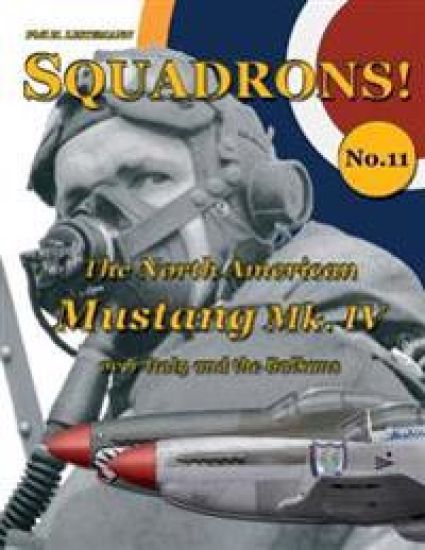
The North American Mustang Mk. IV over Italy and the Balkans
Phil H Listemann
Philedition
2015
pokkari
The North American P-51 is among the most famous fighters of WW2, and the P-51D probably the model the most known. The RAF became a late user of this model as Mustang IV, and they participated to the last weeks of the war over Italy and the Balkans in the fighter-bomber role, the Australian 3 Squadron and the South African 5 Squadron being among the major units which flew the Mustang IV with great success. With over 40 pages, over 40 photos and six colour profiles, this volume with Squadrons No. 10 - The Mustang IV in Western Europe - completes the history of the Mustang IV. Revised August 2019




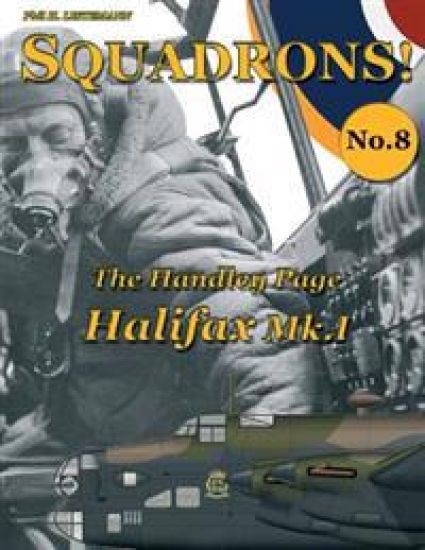
From before the end of the Great War the United Kingdom had coveted long-range bombers that were able to bomb the continent. Bomber Command, formed in 1936, was a major and vital organisation within the RAF. While the twin-engine Vickers Wellington was about to be introduced, a new generation of four-engine bombers was already under development. The concept was not new but, in the middle of the 1930s, technological progress with engines and airframe materials gave the opportunity for many air forces to develop their long-range bombers. It was also a matter of prestige as the long-range bomber, also known as the 'strategic' bomber, was not accessible to all. In the middle of the '30s, the USA and Germany had various projects under way and even Italy joined in. When the war broke out, the UK had two projects of 'strategic' bombers on the table - the Short Stirling and the Handley Page Halifax.Built in small numbers, less than 100 (of the global production of over 6000 copies), the Halifax Mk.I despite its shortcomings, was the first but the essential step to allow the Halifax to reach maturity, goal achived in 1943 only. This study is rich of photographs, appendices, document and two colour profiles.
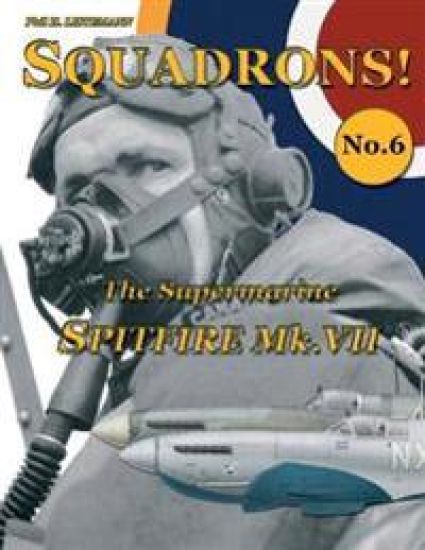
The Spitfire Mk. VII was the first attempt to re-work the airframe of the Spitfire. Dedicated to high altitude interception, the Mk.VII arrived actually too late for this, the Luftwaffe having almost deserted the sky of the British Iles. Replacing the Mk.VI in this role in Nos. 124 and 616 Sqns, the Mk.VII was underemployed for about a year (many aircraft remaining in storage), before to see its role switching to more conventional missions, with one more squadron, the 131, joining the two Mk.VII squadrons in 1944. However, as the Mk.IX was already widely used by that time, and being more versatile, the Mk.VII was not able to have any impact over the Continent during the summer 1944. Somewhere, the Mk.VII missed its war, despite its potential. 44 pages, 40 photos, 3 colour profiles. Revised December 2018 with 3 new profiles (6 in all).

The Spitfire F.21 was the last Spitfire variant to be introduced into service before the end of WW2. It belongs to what we usually call the third generation of Spitfires, and the F.21 was the first of it, preceding the F.22 and F.24. This is a study of 32 pages, with over 30 photos and 5 colour profiles, and details its carreer during and after the war. Revised February 2019, March 2021.