Kirjojen hintavertailu. Mukana 12 326 084 kirjaa ja 12 kauppaa.

Kirjailija

Phil O'Keefe

Kirjat ja teokset yhdessä paikassa: 15 kirjaa, julkaisuja vuosilta 1995-2020, suosituimpien joukossa Microphones For The Recording Musician. Vertaile teosten hintoja ja tarkista saatavuus suomalaisista kirjakaupoista.

Mukana myös kirjoitusasut: Phil O’Keefe

15 kirjaa

Kirjojen julkaisuhaarukka 1995-2020.

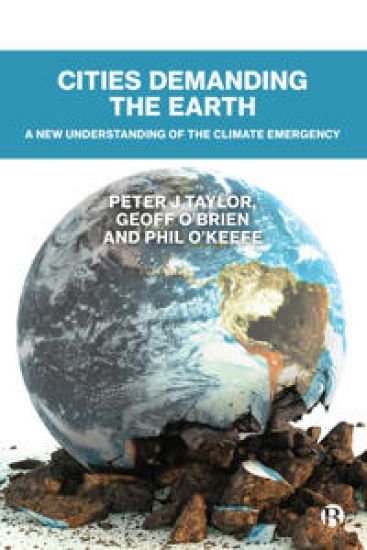
Cities Demanding the Earth

Cities Demanding the Earth

Peter Taylor; Geoff O'Brien; Phil O'Keefe

Bristol University Press
2020
sidottu
This urgent book brings our cities to the fore in understanding the human input into climate change. The demands we are making on nature by living in cities has reached a crisis point and unless we make significant changes to address it, the prognosis is terminal consumption. Providing a radical new argument that integrates global understandings of making nature and making cities, the authors move beyond current policies of mitigation and adaption and pose the challenge of urban stewardship to tackle the crisis. Their new way of thinking re-orients possibilities for environmental policy and calls for us to reinvent our cities as spaces for activism.
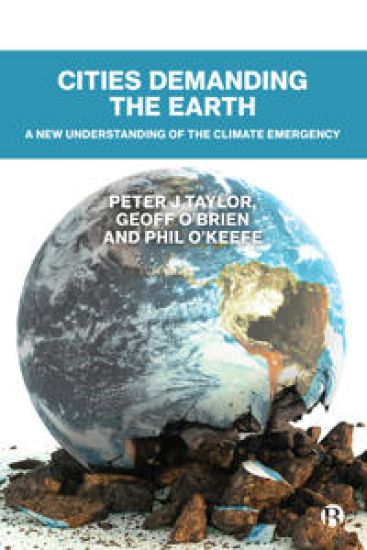
Cities Demanding the Earth

Cities Demanding the Earth

Peter Taylor; Geoff O'Brien; Phil O'Keefe

Bristol University Press
2020
nidottu
This urgent book brings our cities to the fore in understanding the human input into climate change. The demands we are making on nature by living in cities has reached a crisis point and unless we make significant changes to address it, the prognosis is terminal consumption. Providing a radical new argument that integrates global understandings of making nature and making cities, the authors move beyond current policies of mitigation and adaption and pose the challenge of urban stewardship to tackle the crisis. Their new way of thinking re-orients possibilities for environmental policy and calls for us to reinvent our cities as spaces for activism.

Microphones For The Recording Musician

Microphones For The Recording Musician

Phil O'Keefe; Craig Anderton

Hal Leonard Corporation
2018
nidottu
This book focuses on microphones as the essential link between the recording process and vocals, guitars, pianos, drums, and other acoustic sounds. Choosing the right mic can make or break a song. Authors Phil O'Keefe and Craig Anderton cover how to choose and apply mics with real-world examples and explanations. Topics include the following: • Understanding different microphone types • Essential miking accessories • Mic preamps and connections • Stereo miking techniques • How to mic specific instruments Loaded with illustrations and featuring sidebars with details on selected topics for those who want to know “why” as well as “how ” Microphones for the Recording Musician gives the practical knowledge needed to make the best possible home studio recordings. About the Musician's Guide to Home Recording Series The book series Musician's Guide to Home Recording takes a clear, practical approach to today's world of computer-based recording. Each book in the series focuses with laser-like precision on a particular topic. Titles include How to Choose and Use Audio Interfaces, How to Create Superior Mixes, How to Record and Mix Great Vocals, and more. Readers can choose individual books to increase their knowledge in specific areas, or treat the series as a complete course and cover selected topics at their own pace. Musician's Guide to Home Recording is the definitive series to help musicians everywhere use digital recording, mixing, and editing to their fullest potential.
The Fuelwood Trap

The Fuelwood Trap

Barry Munslow; Yemi Katerere; Adriaan Ferf; Phil O'Keefe

Routledge
2017
nidottu
Over 60 million people live in the SADCC countries; by 2000 AD the number will be over 100 million. The vast majority, city-dwellers as well as farmers, rely on wood fuel for domestic use. Supplies are diminishing as consumption grows. The quality of life is deteriorating yet further and the environment is more and more degraded. But these phenomena are not simply the consequence of a wood shortage which might be cured by some cropping and management policy. They flow from a complex network of causes each contributing in its way to growing poverty and want which has, as one obvious symptom, the shortage of fuel for life's basic purposes. The authors, by means of case studies, examine those causes throughout the nine SADCC countries and consider the policies that can be developed there which will not only help to alleviate the symptom but will help to prevent the imminent catastrophe which it represents. Originally published in 1988
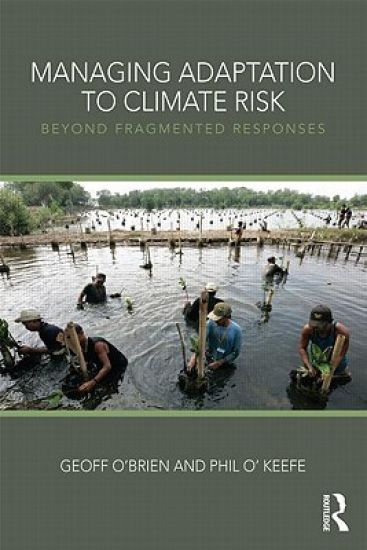
Managing Adaptation to Climate Risk

Managing Adaptation to Climate Risk

Geoff O'Brien; Phil O'Keefe

Routledge
2013
sidottu
Climate change is the single largest threat to the attainment of the Millennium Development Goals (MDGs) and sustainable development. Addressing climate risk is a challenge for all. This book calls for greater collaboration between climate communities and disaster development communities. In discussing this, the book will evaluate the approaches used by each community to reduce the adverse effects of climate change. One area that offers some promise for bringing together these communities is through the concept of resilience. This term is increasingly used in each community to describe a process that embeds capacity to respond to and cope with disruptive events. This emphasizes an approach that is more focused on pre-event planning and using strategies to build resilience to hazards in an adaptation framework. The book will conclude by evaluating the scope for a holistic approach where these communities can effectively contribute to building communities that are resilient to climate driven risks.
Managing Adaptation to Climate Risk

Managing Adaptation to Climate Risk

Geoff O'Brien; Phil O'Keefe

Routledge
2013
nidottu
Climate change is the single largest threat to the attainment of the Millennium Development Goals (MDGs) and sustainable development. Addressing climate risk is a challenge for all. This book calls for greater collaboration between climate communities and disaster development communities. In discussing this, the book will evaluate the approaches used by each community to reduce the adverse effects of climate change. One area that offers some promise for bringing together these communities is through the concept of resilience. This term is increasingly used in each community to describe a process that embeds capacity to respond to and cope with disruptive events. This emphasizes an approach that is more focused on pre-event planning and using strategies to build resilience to hazards in an adaptation framework. The book will conclude by evaluating the scope for a holistic approach where these communities can effectively contribute to building communities that are resilient to climate driven risks.
The Future of Energy Use

The Future of Energy Use

Phil O'Keefe; Nicola Pearsall; Geoff O'Brien

Earthscan Ltd
2010
nidottu
Following the success of its predecessor, this second edition of The Future of Energy Use provides essential analysis of the use of different forms of energy and their environmental and social impacts. It examines conventional, nuclear and renewable sources and technologies, using relevant case studies and providing a vital link between technology and related policy issues. The new edition has been comprehensively developed and updated, including new text, diagrams and tables, with entire new sections that reflect the significant changes that have occurred since the first edition. New material includes: a stronger focus on climate change policy and energy security; a discussion of the long run marginal costs of oil; coverage of the biofuels debate in both the developed and developing worlds; an outline of developments in the built environment (including transport issues); and the relationship between behaviour and energy use. It reviews policy shifts with relation to energy efficiency, carbon capture and storage, combined heat and power, and combined cycle gas turbines. There is new coverage of nuclear waste, storage and proliferation, and new material on microgeneration and biofuels, as well as essential new information on carbon markets and the hydrogen economy. The result is a unique introduction and guide to all the vital issues within energy for students, academics and professionals new to the field.
The Future of Energy Use

The Future of Energy Use

Phil O'Keefe; Nicola Pearsall; Geoff O'Brien

Earthscan Ltd
2010
sidottu
Following the success of its predecessor, this second edition of The Future of Energy Use provides essential analysis of the use of different forms of energy and their environmental and social impacts. It examines conventional, nuclear and renewable sources and technologies, using relevant case studies and providing a vital link between technology and related policy issues. The new edition has been comprehensively developed and updated, including new text, diagrams and tables, with entire new sections that reflect the significant changes that have occurred since the first edition. New material includes: a stronger focus on climate change policy and energy security; a discussion of the long run marginal costs of oil; coverage of the biofuels debate in both the developed and developing worlds; an outline of developments in the built environment (including transport issues); and the relationship between behaviour and energy use. It reviews policy shifts with relation to energy efficiency, carbon capture and storage, combined heat and power, and combined cycle gas turbines. There is new coverage of nuclear waste, storage and proliferation, and new material on microgeneration and biofuels, as well as essential new information on carbon markets and the hydrogen economy. The result is a unique introduction and guide to all the vital issues within energy for students, academics and professionals new to the field.
The Fuelwood Trap

The Fuelwood Trap

Barry Munslow; Yemi Katerere; Adriaan Ferf; Phil O'Keefe

Earthscan Ltd
2009
sidottu
Over 60 million people live in the SADCC countries; by 2000 AD the number will be over 100 million. The vast majority, city-dwellers as well as farmers, rely on wood fuel for domestic use. Supplies are diminishing as consumption grows. The quality of life is deteriorating yet further and the environment is more and more degraded. But these phenomena are not simply the consequence of a wood shortage which might be cured by some cropping and management policy. They flow from a complex network of causes each contributing in its way to growing poverty and want which has, as one obvious symptom, the shortage of fuel for life's basic purposes. The authors, by means of case studies, examine those causes throughout the nine SADCC countries and consider the policies that can be developed there which will not only help to alleviate the symptom but will help to prevent the imminent catastrophe which it represents. Originally published in 1988
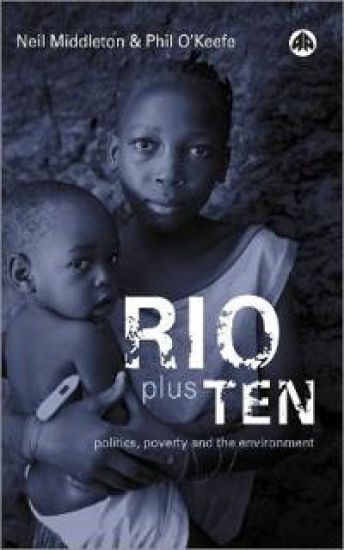
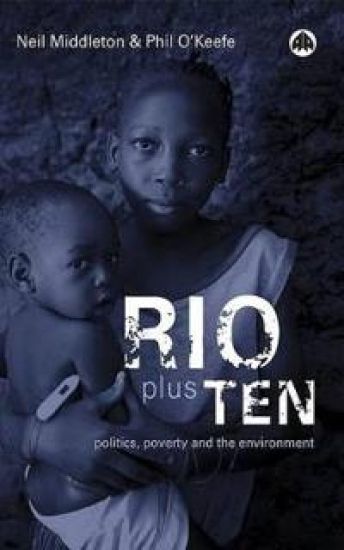
Rio Plus Ten

Rio Plus Ten

Neil Middleton; Phil O’Keefe

Pluto Press
2003
pokkari
The World Summit on Sustainable Development took place in Johannesburg, South Africa in September 2002. In this book, the authors look at the agenda established since the original Rio conference in 1992 and cover the events of the intervening years: global warming and the unfolding arguments over climate change, energy, water and sanitation, patents and many other issues. They examine what progress, if any, has been made. Offering a critical analysis of the links between neoliberal economics and transnational organisations, the authors expose the poverty of so-called international protocols and resolutions which claim to offer solutions. They show how, in virtually every case, these resolutions remain part of the problem of continuing poverty and environmental degradation in the non-Western world.
Rio Plus Ten: Politics, Poverty and the Environment

Rio Plus Ten: Politics, Poverty and the Environment

Neil Middleton; Phil O'Keefe

Pluto Press (UK)
2003
sidottu
The World Summit on Sustainable Development took place in Johannesburg, South Africa in September 2002. In this book, the authors look at the agenda established since the original Rio conference in 1992 and cover the events of the intervening years: global warming and the unfolding arguments over climate change, energy, water and sanitation, patents and many other issues. They examine what progress-- if any--has been made. Offering a critical analysis of the links between neo-liberal economics and transnational organisations, the authors expose the poverty of so-called international protocols and resolutions which claim to offer solutions. They show how, in virtually every case, these resolutions remain part of the problem of continuing poverty and environmental degradation in the non-Western world.
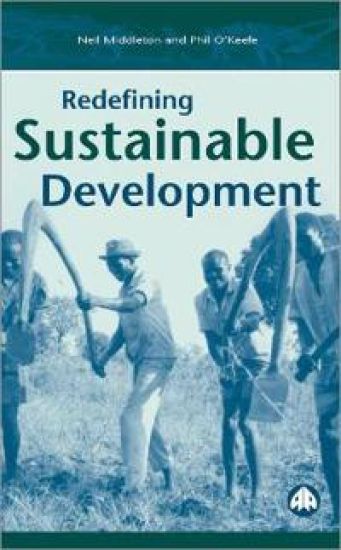
Redefining Sustainable Development

Redefining Sustainable Development

Neil Middleton; Phil O’Keefe

Pluto Press
2001
sidottu
Development and assistance in disasters is about helping people to help themselves. It is to do with facilitating 'sustainable livelihoods' and addressing the ills of social discrimination. These seem to be self-evident propositions. In fact, they are a minefield. If development workers intervene to assist in the creation of environmentally sustainable livelihoods, what judgemental codes are contained in the everyday cultural and linguistic assumptions of development practitioners? What account do they give of the environment and people’s relationship to it? If livelihoods are to be economically sustainable, by which economic criteria is the judgement made? Is the objective to keep projects going until the funds run out, or, like cancer patients, to survive for five years, or to knit people into the world’s trading systems? If projects are to be sustainable, they must be socially just. By whose justice do we judge? At present, much development and disaster relief work derives its importance solely from providing opportunities for honing survival skills. The authors of this book examine these questions and others in detail and argue that the assumptions of the social-democratic world, including those of international NGOs, are tied to the perpetuation of capitalism. Neil Middleton and Phil O’Keefe suggest that the issue, in the face of anarchic global financial power, is to rethink the nature of class in a late capitalist world and to recognise indigenous NGOs as the new political vehicles for its struggle.
Disaster and Development

Disaster and Development

Neil Middleton; Phil O’Keefe

Pluto Press
1997
pokkari
In this compelling and controversial study, Neil Middleton and Phil O’Keefe examine the links between disasters, aid, development and relief – in the context of globalisation, the ‘free market’ ideology of the industrialised nations, the rapacity of financial short termism and the rise of new forms of colonialism – and argue that the profoundly political dimensions of humanitarian aid and disaster relief are being ignored. To illustrate this, the authors draw on case studies from Somalia, Kenya, Sudan, Mozambique, Rwanda, Afghanistan and Azerbaijan.
The New Forester

The New Forester

Berry van Gelder; Phil O'Keefe

Practical Action Publishing
1995
nidottu
Traditionally, subsistence economies in developing countries are biomass economies. Housing itself, energy, furniture and utensils are still biomass products. The yield of trees and shrubs provides thatch, fodder and a host of other products which serve each family household. Deforestation is an erosion of local entitlement to subsistence resources as well as being an environmental problem that destroys local, national and global common property resources. The challenge for foresters, and other rural development professionals, is to build new landscapes which provide a range of biomass products to local users. This book will contribute to that task by helping professionals to see new opportunities by working through, not against, the local people. This book is aimed at foresters, but its practical approach is worth the attention of all rural development practitioners, as well as individuals within a range of professional backgrounds from engineering to sociology.