Kirjojen hintavertailu. Mukana 12 595 353 kirjaa ja 12 kauppaa.

Kirjailija

Philip A. Shaw

Kirjat ja teokset yhdessä paikassa: 5 kirjaa, julkaisuja vuosilta 2011-2025, suosituimpien joukossa Names and Naming in 'Beowulf'. Vertaile teosten hintoja ja tarkista saatavuus suomalaisista kirjakaupoista.

5 kirjaa

Kirjojen julkaisuhaarukka 2011-2025.

The English Language

The English Language

Charles Barber; Joan C. Beal; Philip A. Shaw

Cambridge University Press
2025
sidottu
A comprehensive yet concise history of the English language, this accessible textbook helps those studying the subject to understand the formation of English. It tells the story of the language from its remote ancestry to the present day, especially the effects of globalisation and the spread of, and subsequent changes to, English. Now in its third edition, it has been substantially revised and updated in light of new research, with an extended chapter on World Englishes, and a completely updated final chapter, which concentrate on changes to English in the twenty-first century. It makes difficult concepts very easy to understand, and the chapters are set out to make the most of the wide range of topics covered, using dozens of familiar texts, including the English of King Alfred, Chaucer, Shakespeare, and Addison. It is accompanied by a website with exercises for each chapter, and a range of extra resources.
Names and Naming in 'Beowulf'

Names and Naming in 'Beowulf'

Philip A. Shaw

BLOOMSBURY PUBLISHING PLC
2022
nidottu
‘Beowulf’, one of the earliest poems in the English language, recounts a tale of heroism played out against the backdrop of Scandinavia in the 5th to 6th centuries AD. And yet, this Old English verse narrative set in Scandinavia is – a little surprisingly, perhaps – populated with names of German descent.This insight into the personal names of ‘Beowulf’ acts the starting point for Philip A. Shaw’s innovative and nuanced study. As Shaw reveals, the origins of these personal names provide important evidence for the origins of Beowulf as it enables us to situate the poem fully in its continental contexts. As such, this book is not only a much-needed reassessment of ‘Beowulf’'s beginnings, but also sheds new light on the links between ‘Beowulf’ and other continental narrative traditions, such as the Scandinavian sagas and Continental German heroics. In doing so, Names and Naming in ‘Beowulf’ takes readers beyond the continuing debate over the dating of the poem and provides a compelling new model for the poem’s origins.
Names and Naming in 'Beowulf'

Names and Naming in 'Beowulf'

Philip A. Shaw

Bloomsbury Academic
2020
sidottu
‘Beowulf’, one of the earliest poems in the English language, recounts a tale of heroism played out against the backdrop of Scandinavia in the 5th to 6th centuries AD. And yet, this Old English verse narrative set in Scandinavia is – a little surprisingly, perhaps – populated with names of German descent.This insight into the personal names of ‘Beowulf’ acts the starting point for Philip A. Shaw’s innovative and nuanced study. As Shaw reveals, the origins of these personal names provide important evidence for the origins of Beowulf as it enables us to situate the poem fully in its continental contexts. As such, this book is not only a much-needed reassessment of ‘Beowulf’'s beginnings, but also sheds new light on the links between ‘Beowulf’ and other continental narrative traditions, such as the Scandinavian sagas and Continental German heroics. In doing so, Names and Naming in ‘Beowulf’ takes readers beyond the continuing debate over the dating of the poem and provides a compelling new model for the poem’s origins.
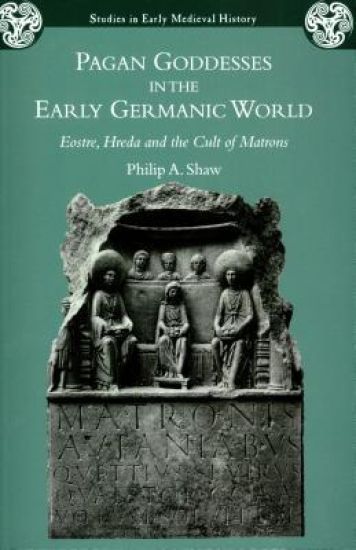
Pagan Goddesses in the Early Germanic World

Pagan Goddesses in the Early Germanic World

Philip A. Shaw

Bristol Classical Press
2011
nidottu
This book considers evidence for Germanic goddesses in England and on the Continent, and argues that modern scholarship has tended to focus too heavily on the notion of divine functions or spheres of activity, such as fertility or warfare, rather than considering the extent to which goddesses are rooted in localities and social structures - such local religious manifestations are more important to Germanic paganisms than is often supposed, and should caution us against assumptions of pan-Germanic traditional beliefs. Linguistic and onomastic evidence is not always well integrated into discussions of historical developments in the early Middle Ages, and this book provides both an introduction to the models and methods employed throughout, and a model for further research into the linguistic evidence for traditional beliefs among the Germanic-speaking communities of early medieval Europe.