

Kirjailija
Philip Allmendinger
Kirjat ja teokset yhdessä paikassa: 8 kirjaa, julkaisuja vuosilta 2000-2027, suosituimpien joukossa Planning Theory. Vertaile teosten hintoja ja tarkista saatavuus suomalaisista kirjakaupoista.
8 kirjaa
Kirjojen julkaisuhaarukka 2000-2027.

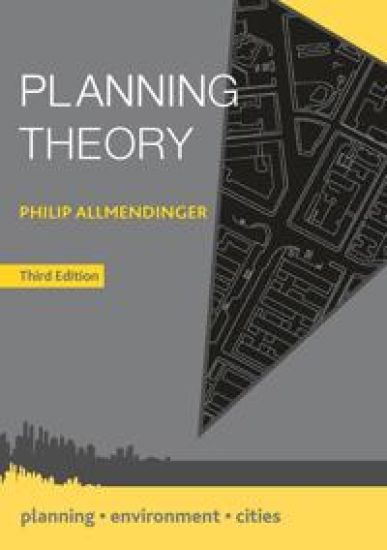
In the 3rd edition of the leading introductory textbook to planning theory, Allmendinger provides a wide-ranging and up-to-date analysis of planning theories, how these relate to planning practice, and their significance. Moving away from a linear, chronological model of progress over time from one paradigm to another, Allmendinger explains how and why different theories have gained dominance in particular places at particular times, giving the reader a holistic view of the field of scholarship and to demonstrate the relevance of planning theory for practise.Planning theory has undergone significant changes in recent decades as new theories and perspectives have emerged. Allmendigner takes care to detail the historical evolution of planning theory and the key philosophical issues involved so as enable the reader to both understand and critique theories as they encounter them.This much revised edition of Philip Allmendinger's text draws upon both established theories and expands its scope of current thinking around neoliberalism, post-colonialism and post-structuralist thinking on politics, space and scale.This unique approach to planning theory means this is an essential for all students completing planning theory courses in Urban or Planning studies, at both undergraduate and postgraduate level.New to this Edition:- Comprehensively revised and updated throughout- Greater international scope of coverage of theories and practice examples- Reflects the shift in planning theory to post-structuralism
In the 3rd edition of the leading introductory textbook to planning theory, Allmendinger provides a wide-ranging and up-to-date analysis of planning theories, how these relate to planning practice, and their significance. Moving away from a linear, chronological model of progress over time from one paradigm to another, Allmendinger explains how and why different theories have gained dominance in particular places at particular times, giving the reader a holistic view of the field of scholarship and to demonstrate the relevance of planning theory for practise.Planning theory has undergone significant changes in recent decades as new theories and perspectives have emerged. Allmendigner takes care to detail the historical evolution of planning theory and the key philosophical issues involved so as enable the reader to both understand and critique theories as they encounter them.This much revised edition of Philip Allmendinger's text draws upon both established theories and expands its scope of current thinking around neoliberalism, post-colonialism and post-structuralist thinking on politics, space and scale.This unique approach to planning theory means this is an essential for all students completing planning theory courses in Urban or Planning studies, at both undergraduate and postgraduate level.New to this Edition:- Comprehensively revised and updated throughout- Greater international scope of coverage of theories and practice examples- Reflects the shift in planning theory to post-structuralism
The New Spatial Planning
Graham Haughton; Philip Allmendinger; David Counsell; Geoff Vigar
Routledge
2009
nidottu
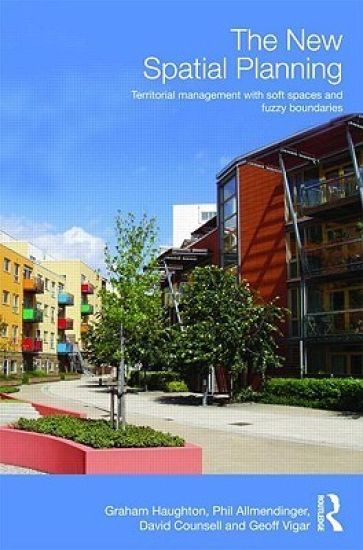
Spatial planning, strongly advocated by government and the profession, is intended to be more holistic, more strategic, more inclusive, more integrative and more attuned to sustainable development than previous approaches. In what the authors refer to as the New Spatial Planning, there is a fairly rapidly evolving maturity and sophistication in how strategies are developed and produced. Crucially, the authors argue that the reworked boundaries of spatial planning means that to understand it we need to look as much outside the formal system of practices of ‘planning’ as within it. Using a rich empirical resource base, this book takes a critical look at recent practices to see whether the new spatial planning is having the kinds of impacts its advocates would wish. Contributing to theoretical debates in planning, state restructuring and governance, it also outlines and critiques the contemporary practice of spatial planning. This book will have a place on the shelves of researchers and students interested in urban/regional studies, politics and planning studies.
The New Spatial Planning
Graham Haughton; Philip Allmendinger; David Counsell; Geoff Vigar
Routledge
2009
sidottu
Spatial planning, strongly advocated by government and the profession, is intended to be more holistic, more strategic, more inclusive, more integrative and more attuned to sustainable development than previous approaches. In what the authors refer to as the New Spatial Planning, there is a fairly rapidly evolving maturity and sophistication in how strategies are developed and produced. Crucially, the authors argue that the reworked boundaries of spatial planning means that to understand it we need to look as much outside the formal system of practices of ‘planning’ as within it. Using a rich empirical resource base, this book takes a critical look at recent practices to see whether the new spatial planning is having the kinds of impacts its advocates would wish. Contributing to theoretical debates in planning, state restructuring and governance, it also outlines and critiques the contemporary practice of spatial planning. This book will have a place on the shelves of researchers and students interested in urban/regional studies, politics and planning studies.
Postmodern social theory has provided significant insights into our understanding of society and its components. Key thinkers including Foucault, Baudrillard and Lyotard have challenged existing ideas about power and rationality in society. This book analyses planning from a postmodern perspective and explores alternative conceptions based on a combination of postmodern thinking and other fields of social theory. In doing so, it exposes some of the limits of postmodern social theory while providing an alternative conception of planning in the twenty-first century. This title will appeal to anyone interested in how we think and act in relation to cities, urban planning and governance.
Postmodern social theory has provided significant insights into our understanding of society and its components. Key thinkers including Foucault, Baudrillard and Lyotard have challenged existing ideas about power and rationality in society. This book analyses planning from a postmodern perspective and explores alternative conceptions based on a combination of postmodern thinking and other fields of social theory. In doing so, it exposes some of the limits of postmodern social theory while providing an alternative conception of planning in the twenty-first century. This title will appeal to anyone interested in how we think and act in relation to cities, urban planning and governance.