Kirjojen hintavertailu. Mukana 12 390 323 kirjaa ja 12 kauppaa.

Kirjailija

Philip Barker

Kirjat ja teokset yhdessä paikassa: 18 kirjaa, julkaisuja vuosilta 1992-2023, suosituimpien joukossa Michel Foucault. Vertaile teosten hintoja ja tarkista saatavuus suomalaisista kirjakaupoista.

18 kirjaa

Kirjojen julkaisuhaarukka 1992-2023.

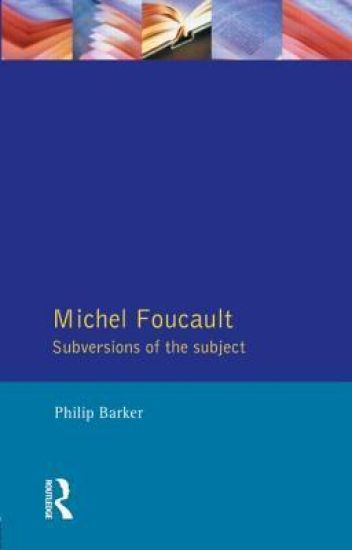
Michel Foucault

Michel Foucault

Philip Barker

Edinburgh University Press
1998
nidottu
The ideal guide to Foucault's work for the non-specialist reader. Organised into easy-to-follow thematic sections, it allows the student to explore Foucault's work with no previous knowledge of contemporary theory. It takes the student through the major strands of Foucault's thought on power and knowledge, discipline and punishment, history and the subject, in a clear and engaging style, providing an easy entry into the complexities of Foucault's thinking.
Michel Foucault

Michel Foucault

Philip Barker

Prentice-Hall
1993
nidottu
This unique and original study analyzes Foucault's interaction with the history of ideas, undertaking a genealogy of the subject that subverts conventional philosophical history to develop a distinctly Foucauldian intellectual history. Through a detailed account of Foucault's work and its relation to the history of ideas, Philip Barker shows how that history can be usefully reconceptualised using Foucault's concepts of genealogy and archaeology. Locating the emergence of self-reflexive consciousness in twelfth century philosophy, and elaborating upon autobiography as a philosophical persona, Barker argues that this extremely productive approach can be used to analyze the relationship between the history of philosophy, psychoanalysis and the transparent subject.
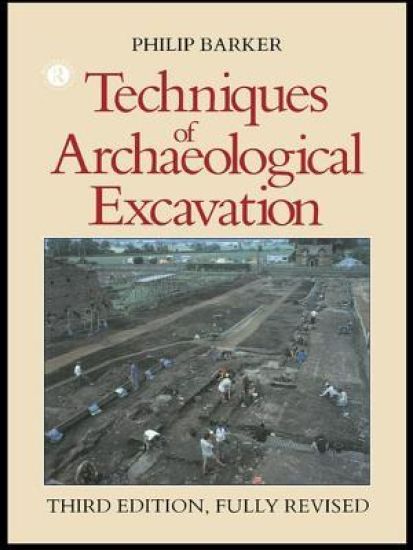
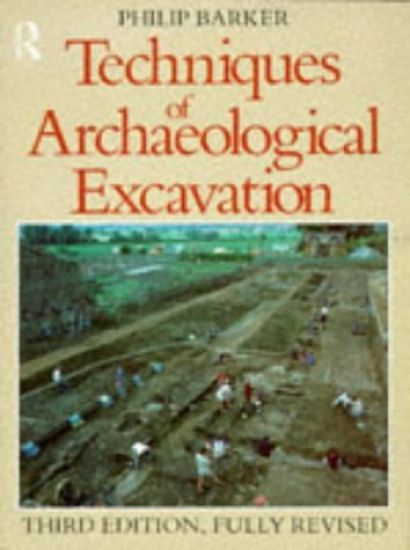
Techniques of Archaeological Excavation
Immediately hailed as the standard work and one of the most widely used archaeological field manuals, this survey of current excavation techniques, now in its third edition, remains an in-dispensible guide for archaeologists. his text has been written by an experienced excavator about the inadequacies of excavation techniques and the possible ways of refining them and should serve as a valuable introduction to the subtleties and spirit of modern archaeology.
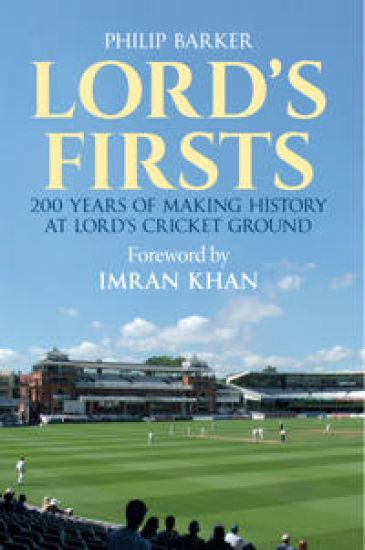
Lord's First

Lord's First

Philip Barker; Imran Khan

Amberley Publishing
2014
nidottu
Since 1858 cricketers from all over the world have dreamed of performing beneath the unchanging gaze of Father Time. Their adventures are to be found in these pages, in this wonderful tribute to the home of cricket. A fascinating insight into the history of Lord's. IMRAN KHAN Lord's Cricket Ground, referred to by many as the 'home of cricket', has become a Mecca for cricket fans the world over. Lord's is steeped in cricketing and sporting history. The year 2014 will mark 200 years since Thomas Lord rolled up the turf at the previous grounds and set them down on today's site, which has become the most revered cricketing arena in the world. The history of the ground is related in Lord's Firsts, a series of sporting firsts including the longest running rivalry in cricket - Eton v. Harrow, the first varsity match of 1827, the earliest Test cricket at Lord's in 1884, the first Sunday league match, the first one-day international and the only time a batsman cleared the pavilion. Other sporting events are also touched on, such as baseball during the First World War and the 2012 Olympics.
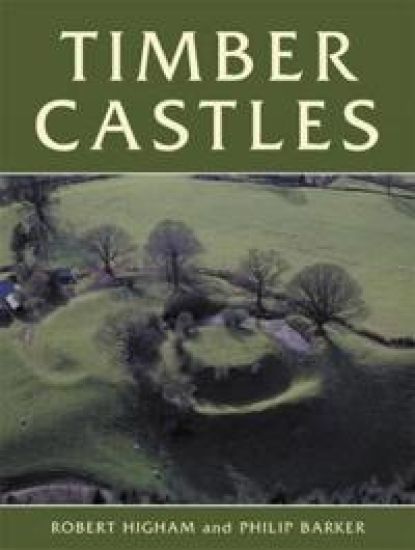
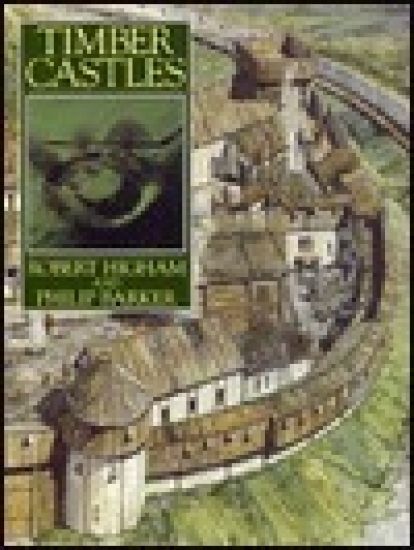
Timber Castles

Timber Castles

Robert Higham; Philip Barker

University of Exeter Press
2012
nidottu
Runner-up for the book award in the 1994 British Archaeological Awards, Timber Castles is the standard work on the subject and hugely influential in its field. Its reissue makes available again this much sought after text with a new preface by Robert Higham. Some of the greatest medieval castles survive only as earthworks and in pictures and written accounts . . . because they were made of timber. Robert Higham and Philip Barker, who excavated in detail the timber castle at Hen Domen in Wales, have brought together evidence of all kinds to produce the first comprehensive survey of this neglected and little-known type of fortification.
The Story of the Olympic Torch

The Story of the Olympic Torch

Philip Barker

Amberley Publishing
2012
nidottu
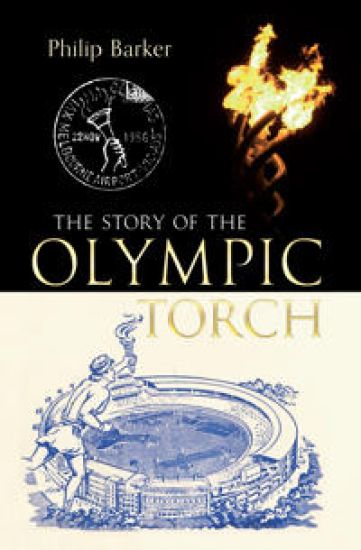
Passed from hand to hand, the Olympic flame has become one of the great symbols of sport. The relay from the ruins at Olympia in Greece forges a powerful bond with the Ancient Olympic Games. Using original documents, The Story of the Olympic Torch chronicles the development of the run as the first great event of the Games. It describes the symbolism as the spark is kindled from the rays of the sun in Olympia at the start of the journey. It reveals the obstacles faced by organisers in 1948 before the flame could be brought to London. It explains why three Olympic torch relays were organised in 1956, and the many original ways the flame has been transported, from under the ocean to the highest mountain. The lighting of the cauldron is the final dramatic moment of an opening ceremony, but it is by no means the oldest part of the Olympic ritual. Barker explores the importance of music and the five Olympic Rings. Tables detail the facts and figures of each relay and for the first time list every runner to have carried the torch on British soil and the main stopping points of the route for 2012. The roll of honour also includes those who have taken the Olympic Oath.
Java Methods for Financial Engineering

Java Methods for Financial Engineering

Philip Barker

Springer London Ltd
2010
nidottu
In order to build a successful, Java-based application it is important to have a clear understanding of the principles underlying the various financial models. Those models guide the application designer in choosing the most appropriate Java data structures and implementation strategy. This book describes the principles of model building in financial engineering and explains those models as designs and working implementations for Java-based applications. Throughout the book a series of packaged classes are developed to address a wide range of financial applications. Java methods are designed and implemented based on the most widely used models in financial engineering and investment practice. The classes and methods are explained and designed in a way which allows the financial engineer complete flexibility. The classes can be used as off-the-shelf working solutions or the innovative developer can re-arrange and modify methods to create new products
How Sadness Survived

How Sadness Survived

Paul Keedwell; Philip Barker

Radcliffe Publishing Ltd
2008
nidottu
"What I am offering is a critical overview of ideas about depression, some new, some old, which fall under the discipline of 'evolutionary psychology'(EP). Do most types of depression represent an adaptation - an evolved mechanism which has improved our survival and reproductive value in our ancestral environment? Has depression been selected? Could it still be useful to us today? This book makes a contribution to the field while communicating the issues to a wider audience than EP currently receives and deserves. There are important implications for how we should prevent or treat an increasingly common condition, and how we might view the condition in a more constructive way." - Paul Keedwell, in the Preface.
Java Methods for Financial Engineering

Java Methods for Financial Engineering

Philip Barker

Springer London Ltd
2007
sidottu
In order to build a successful, Java-based application it is important to have a clear understanding of the principles underlying the various financial models. Those models guide the application designer in choosing the most appropriate Java data structures and implementation strategy. This book describes the principles of model building in financial engineering and explains those models as designs and working implementations for Java-based applications. Throughout the book a series of packaged classes are developed to address a wide range of financial applications. Java methods are designed and implemented based on the most widely used models in financial engineering and investment practice. The classes and methods are explained and designed in a way which allows the financial engineer complete flexibility. The classes can be used as off-the-shelf working solutions or the innovative developer can re-arrange and modify methods to create new products
Basic Child Psychiatry

Basic Child Psychiatry

Philip Barker

Blackwell Science Ltd
2004
nidottu
The seventh edition of Basic Child Psychiatry has been completely revised and updated to take account of advances in this fascinating and important subject. The opening chapters set the scene with developmental considerations, epidemiology and assessment. Coverage includes causal factors and reflects the progress made in the understanding of the genetics of child psychiatric disorders. The main body of the book guides the reader through the major disorders. The final chapters address child abuse and neglect, treatment approaches and prevention. References are provided to enable readers to locate more information on subjects they wish to pursue further. The book refers to the widely used systems of classifying psychiatric disorders – the World Health Organisation’s ICD-10 Classification of Mental and Behavioural Disorders and the American Psychiatric Association’s Diagnostic and Statistical Manual of Mental Disorders (DSM-IV-TR) - and provides a succinct orientation chapter on these systems.
Timber Castles

Timber Castles

Robert Higham; Philip Barker

University of Exeter Press
2004
sidottu
Runner-up for the book award in the 1994 British Archaeological Awards, Timber Castles is the standard work on the subject and hugely influential in its field. Its reissue makes available again this much sought after text with a new preface by Robert Higham. Some of the greatest medieval castles survive only as earthworks and in pictures and written accounts . . . because they were made of timber. Robert Higham and Philip Barker, who excavated in detail the timber castle at Hen Domen in Wales, have brought together evidence of all kinds to produce the first comprehensive survey of this neglected and little-known type of fortification.
Iconic Communication

Iconic Communication

Philip Barker; Masoud Yazdani

Intellect Books
2000
nidottu
Do pictures enhance the communicative power of text? This volume explains how to combine words with pictures, to communicate clearly across the cultural barriers that technology are breaking down.
Wroxeter

Wroxeter

Roger White; Philip Barker

The History Press Ltd
1998
nidottu
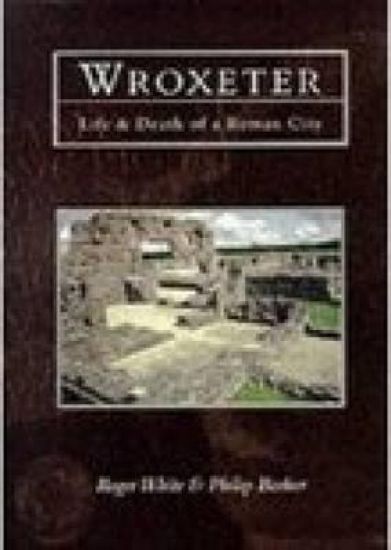
The 'Old Work', the largest fragment of a Roman civilian building still standing in Britain, is a spectacular landmark which points to the site of Wroxeter Roman City, between medieval Shrewsbury and modern Telford. In its prime the city was the fourth largest in Britain, surpassed only by London, Cirencester and St Albans. Intensive archaeological research over the last 30 years, building on the work of earlier archaeologists and antiquarians, now makes it possible to understand much of the rise and fall of this great city. With the help of over 100 illustrations (many in full colour) the authors chart the modern rediscovery of Wroxeter. This lively and authorative account will be equally satisfying to those living in the Welsh Marches and to those with an interest in Roman Britain.
Techniques of Archaeological Excavation
Immediately hailed as the standard work and one of the most widely used archaeological field manuals, this survey of current excavation techniques, now in its third edition, remains an in-dispensible guide for archaeologists. his text has been written by an experienced excavator about the inadequacies of excavation techniques and the possible ways of refining them and should serve as a valuable introduction to the subtleties and spirit of modern archaeology.