Kirjojen hintavertailu. Mukana 12 595 353 kirjaa ja 12 kauppaa.

Kirjailija

Philip Cunliffe

Kirjat ja teokset yhdessä paikassa: 11 kirjaa, julkaisuja vuosilta 2013-2025, suosituimpien joukossa Legions of Peace. Vertaile teosten hintoja ja tarkista saatavuus suomalaisista kirjakaupoista.

11 kirjaa

Kirjojen julkaisuhaarukka 2013-2025.

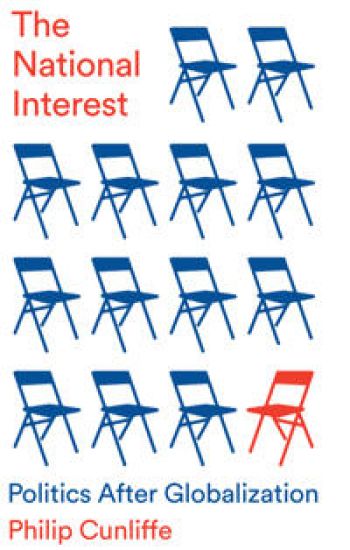
The National Interest

The National Interest

Philip Cunliffe

JOHN WILEY AND SONS LTD
2025
sidottu
Globalization is over. With US president Donald Trump pursuing an ‘America First’ agenda in trade and foreign policy, everyone now recognises the urgency of defending their own country’s national interest. But what is the national interest and why did it disappear from the political agenda? Will Trump restore American national interests, or will he betray them? How might we know the difference? The National Interest answers these questions. It explains how and why globalist political leaders and bureaucrats abandoned the national interest over the past thirty years. Even today, many of our elites still sneer at the concept as an anachronism in an age of global environmental collapse and ‘polycrisis’. But without it, there can be no political representation, and without representation there can be no democratic accountability. The national interest can be revived as part of a strategy of nation-building and national rebirth. This book makes the case for such a revival, heralding a new era of democratic renewal and international cooperation.
The National Interest

The National Interest

Philip Cunliffe

JOHN WILEY AND SONS LTD
2025
nidottu
Globalization is over. With US president Donald Trump pursuing an ‘America First’ agenda in trade and foreign policy, everyone now recognises the urgency of defending their own country’s national interest. But what is the national interest and why did it disappear from the political agenda? Will Trump restore American national interests, or will he betray them? How might we know the difference? The National Interest answers these questions. It explains how and why globalist political leaders and bureaucrats abandoned the national interest over the past thirty years. Even today, many of our elites still sneer at the concept as an anachronism in an age of global environmental collapse and ‘polycrisis’. But without it, there can be no political representation, and without representation there can be no democratic accountability. The national interest can be revived as part of a strategy of nation-building and national rebirth. This book makes the case for such a revival, heralding a new era of democratic renewal and international cooperation.
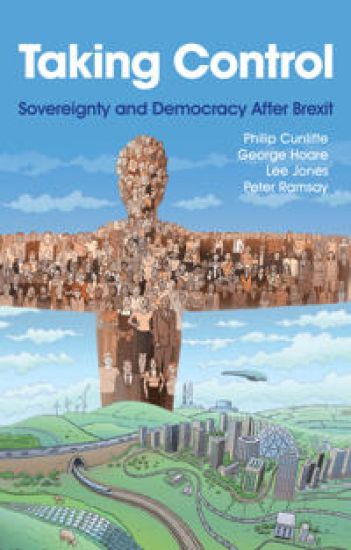
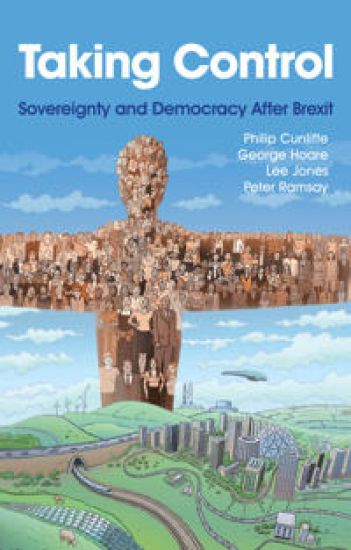
Taking Control

Taking Control

Philip Cunliffe; George Hoare; Lee Jones; Peter Ramsay

JOHN WILEY AND SONS LTD
2023
sidottu
Taking Control argues that neither side in the Brexit debate really understood the European Union or what was involved in reclaiming Britain's sovereignty. The EU is neither a supranational nanny state, nor an internationalist peace project. It is the means by which Europe’s elites transformed their own states in order to rule the void where representative politics used to be. Leaving the EU is a necessary but not sufficient step towards closing the chasm between rulers and ruled. This book makes the democratic case for national sovereignty, arguing for a radical, forward-looking reconstitution of the British nation-state through strengthening representative democracy. It is essential for anyone who wonders why British politics is so dysfunctional and who wants to do better.
Taking Control

Taking Control

Philip Cunliffe; George Hoare; Lee Jones; Peter Ramsay

JOHN WILEY AND SONS LTD
2023
nidottu
Taking Control argues that neither side in the Brexit debate really understood the European Union or what was involved in reclaiming Britain's sovereignty. The EU is neither a supranational nanny state, nor an internationalist peace project. It is the means by which Europe’s elites transformed their own states in order to rule the void where representative politics used to be. Leaving the EU is a necessary but not sufficient step towards closing the chasm between rulers and ruled. This book makes the democratic case for national sovereignty, arguing for a radical, forward-looking reconstitution of the British nation-state through strengthening representative democracy. It is essential for anyone who wonders why British politics is so dysfunctional and who wants to do better.
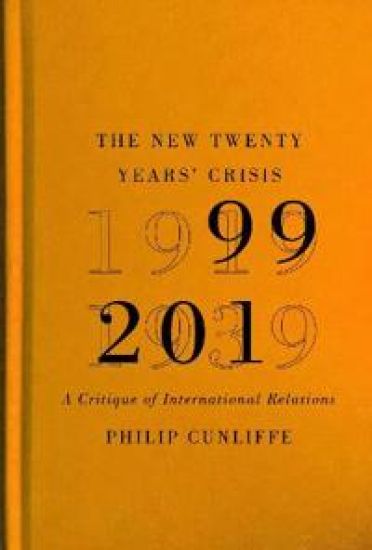
The New Twenty Years' Crisis

The New Twenty Years' Crisis

Philip Cunliffe

McGill-Queen's University Press
2020
nidottu
The liberal order is decaying. Will it survive, and if not, what will replace it? On the eightieth anniversary of the publication of E.H. Carr's The Twenty Years' Crisis, 1919-1939, Philip Cunliffe revisits this classic text, juxtaposing its claims with contemporary debates on the rise and fall of the liberal international order. The New Twenty Years' Crisis reveals that the liberal international order experienced a twenty-year cycle of decline from 1999 to 2019. In contrast to claims that the order has been undermined by authoritarian challengers, Cunliffe argues that the primary drivers of the crisis are internal. He shows that the heavily ideological international relations theory that has developed since the end of the Cold War is clouded by utopianism, replacing analysis with aspiration and expressing the interests of power rather than explaining its functioning. As a result, a growing tendency to discount political alternatives has made us less able to adapt to political change. In search of a solution, this book argues that breaking through the current impasse will require not only dissolving the new forms of utopianism, but also pushing past the fear that the twenty-first century will repeat the mistakes of the twentieth. Only then can we finally escape the twenty years' crisis. By reflecting on Carr's foundational work, The New Twenty Years' Crisis offers an opportunity to take stock of the current state of international order and international relations theory.
The New Twenty Years' Crisis

The New Twenty Years' Crisis

Philip Cunliffe

McGill-Queen's University Press
2020
sidottu
The liberal order is decaying. Will it survive, and if not, what will replace it? On the eightieth anniversary of the publication of E.H. Carr's The Twenty Years' Crisis, 1919-1939, Philip Cunliffe revisits this classic text, juxtaposing its claims with contemporary debates on the rise and fall of the liberal international order. The New Twenty Years' Crisis reveals that the liberal international order experienced a twenty-year cycle of decline from 1999 to 2019. In contrast to claims that the order has been undermined by authoritarian challengers, Cunliffe argues that the primary drivers of the crisis are internal. He shows that the heavily ideological international relations theory that has developed since the end of the Cold War is clouded by utopianism, replacing analysis with aspiration and expressing the interests of power rather than explaining its functioning. As a result, a growing tendency to discount political alternatives has made us less able to adapt to political change. In search of a solution, this book argues that breaking through the current impasse will require not only dissolving the new forms of utopianism, but also pushing past the fear that the twenty-first century will repeat the mistakes of the twentieth. Only then can we finally escape the twenty years' crisis. By reflecting on Carr's foundational work, The New Twenty Years' Crisis offers an opportunity to take stock of the current state of international order and international relations theory.
Cosmopolitan Dystopia

Cosmopolitan Dystopia

Philip Cunliffe

Manchester University Press
2020
sidottu
Cosmopolitan Dystopia shows that rather than populists or authoritarian great powers it is cosmopolitan liberals who have done the most to subvert the liberal international order. Cosmopolitan Dystopia explains how liberal cosmopolitanism has led us to treat new humanitarian crises as unprecedented demands for military action, thereby trapping us in a loop of endless war. Attempts to normalize humanitarian emergency through the doctrine of the ‘responsibility to protect’ has made for a paternalist understanding of state power that undercuts the representative functions of state sovereignty. The legacy of liberal intervention is a cosmopolitan dystopia of permanent war, insurrection by cosmopolitan jihadis and a new authoritarian vision of sovereignty in which states are responsible for their peoples rather than responsible to them. This book will be of vital interest to scholars and students of international relations, IR theory and human rights.
Cosmopolitan Dystopia

Cosmopolitan Dystopia

Philip Cunliffe

Manchester University Press
2020
nidottu
Cosmopolitan Dystopia shows that rather than populists or authoritarian great powers it is cosmopolitan liberals who have done the most to subvert the liberal international order. Cosmopolitan Dystopia explains how liberal cosmopolitanism has led us to treat new humanitarian crises as unprecedented demands for military action, thereby trapping us in a loop of endless war. Attempts to normalize humanitarian emergency through the doctrine of the ‘responsibility to protect’ has made for a paternalist understanding of state power that undercuts the representative functions of state sovereignty. The legacy of liberal intervention is a cosmopolitan dystopia of permanent war, insurrection by cosmopolitan jihadis and a new authoritarian vision of sovereignty in which states are responsible for their peoples rather than responsible to them. This book will be of vital interest to scholars and students of international relations, IR theory and human rights.
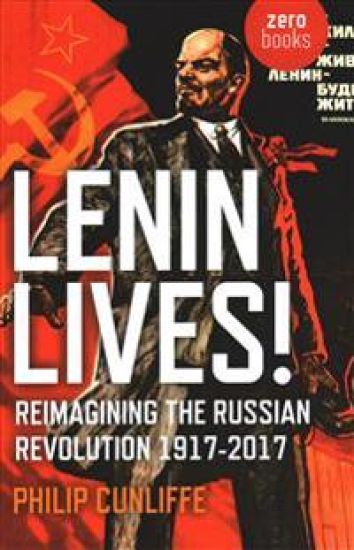
Lenin Lives!

Lenin Lives!

Philip Cunliffe

John Hunt Publishing
2017
nidottu
Of all the tomes published on the centenary of the Russian Revolution, none will reckon with a key part of the story: what if the revolutionaries' dreams had come true, instead of being dashed? Yet, no tale of the Russian Revolution is complete without asking 'what if ...?' Lenin Lives! lays out a narrative account of how history might have happened differently if Lenin had lived long enough to see the global spread of the Russian Revolution to Western Europe and the USA. In one alternative world, instead of the grim authoritarian and autarkic states of the East, socialist revolution in the world's most advanced economies ushers in an era of global peace, progress and prosperity, with global federations substituting for nation-states and international organisations. In keeping with the hopes of European revolutionaries of the time, the early achievement of socialism leads to a drastic improvement in human progress, economic growth, democracy and freedom at the global level.
Legions of Peace

Legions of Peace

Philip Cunliffe

C Hurst Co Publishers Ltd
2013
sidottu
The huge number of security forces stationed around the world as United Nations peace- keepers is second only to the global military deployments of the USA. But most UN peace- keepers come from the emerging powers and developing states that comprise the global South. This is the first book to analyse this phenomenon at the international level. Such unprecedented deployments show that peacekeeping is the most widely tolerated use of force in international affairs today. Far from signalling progress towards global governance, Legions of Peace argues that UN peacekeeping must be understood in the context of continuing economic inequality and the uneven distribution of global power. Philip Cunliffe contends that through UN peace- keeping Western states have used their domination of international institutions to harness the armed forces of the global South. In so doing, Western states seek to reduce the political and military costs of hegemony and stave off their inevitable, long-term decline in power. This strategy has profound political implications. Instead of transcending the 'scourge of war', by globalising peacekeeping the UN has made peace dependent on the extensive and sustained deployment of armed force - a development that bodes ill for the future.