Kirjojen hintavertailu. Mukana 12 595 353 kirjaa ja 12 kauppaa.

Kirjailija

Philip Freeman

Kirjat ja teokset yhdessä paikassa: 46 kirjaa, julkaisuja vuosilta 2000-2025, suosituimpien joukossa Julian. Vertaile teosten hintoja ja tarkista saatavuus suomalaisista kirjakaupoista.

46 kirjaa

Kirjojen julkaisuhaarukka 2000-2025.

Julian

Julian

Philip Freeman

YALE UNIVERSITY PRESS
2025
pokkari
The tragic life of Julian, the last non-Christian emperor of Rome, by award-winning author Philip Freeman “When we think of ancient Rome, it’s impossible not to think of Christianity, one of its most notable exports—but what if it hadn’t been? This is the question provoked by classicist Philip Freeman in Julian, an appealing new entry in Yale’s Ancient Lives series, which tells the story of the old faith’s last imperial torchbearer.”—Anna Heyward, New York Times Book Review Flavius Claudius Julianus, or Julian the Apostate, ruled Rome as sole emperor for just a year and a half, from 361 to 363, but during that time he turned the world upside down. Although a nephew of Constantine the Great, the first Christian emperor of Rome, Julian fought to return Rome to the old gods who had led his ancestors to build their vast empire. As emperor, Julian (331–363) set about reforming the administration, conquering new territories, and reviving ancient religions. He was scorned in his time for repudiating Christianity and demonized as an apostate for willfully rejecting Christ. Through the centuries, Julian has been viewed by many as a tragic figure who sought to save Rome from its enemies and the corrupting influence of Christianity. Christian writers and historians have seen Julian much differently: as a traitor to God and violent oppressor of Christians. Had Julian not been killed by a random Persian spear, he might well have changed all of history.
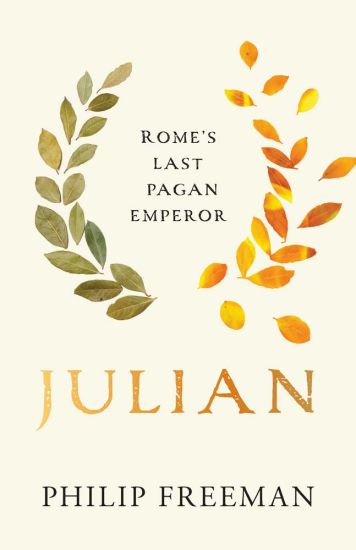
Julian

Julian

Philip Freeman

YALE UNIVERSITY PRESS
2023
sidottu
The tragic life of Julian, the last non-Christian emperor of Rome, by award-winning author Philip Freeman “When we think of ancient Rome, it’s impossible not to think of Christianity, one of its most notable exports—but what if it hadn’t been? This is the question provoked by classicist Philip Freeman in Julian, an appealing new entry in Yale’s Ancient Lives series, which tells the story of the old faith’s last imperial torchbearer.”—Anna Heyward, New York Times Book Review Flavius Claudius Julianus, or Julian the Apostate, ruled Rome as sole emperor for just a year and a half, from 361 to 363, but during that time he turned the world upside down. Although a nephew of Constantine the Great, the first Christian emperor of Rome, Julian fought to return Rome to the old gods who had led his ancestors to build their vast empire. As emperor, Julian (331–363) set about reforming the administration, conquering new territories, and reviving ancient religions. He was scorned in his time for repudiating Christianity and demonized as an apostate for willfully rejecting Christ. Through the centuries, Julian has been viewed by many as a tragic figure who sought to save Rome from its enemies and the corrupting influence of Christianity. Christian writers and historians have seen Julian much differently: as a traitor to God and violent oppressor of Christians. Had Julian not been killed by a random Persian spear, he might well have changed all of history.
JULIUS CAESAR

JULIUS CAESAR

Philip Freeman

SIMON SCHUSTER
2022
nidottu
A fascinating, comprehensive biography of the cunning Roman conqueror Julius Caesar. More than two thousand years after his death, Julius Caesar remains one of the great figures of history. He shaped Rome for generations, and his name became a synonym for "emperor"--not only in Rome but as far away as Germany and Russia. He is best known as the general who defeated the Gauls and doubled the size of Rome's territories. But, as Philip Freeman describes in this fascinating new biography, Caesar was also a brilliant orator, an accomplished writer, a skilled politician, and much more. Julius Caesar was a complex man, both hero and villain. He possessed great courage, ambition, honor, and vanity. Born into a noble family that had long been in decline, he advanced his career cunningly, beginning as a priest and eventually becoming Rome's leading general. He made alliances with his rivals and then discarded them when it suited him. He was a spokesman for the ordinary people of Rome, who rallied around him time and again, but he profited enormously from his conquests and lived opulently. Eventually he was murdered in one of the most famous assassinations in history. Caesar's contemporaries included some of Rome's most famous figures, from the generals Marius, Sulla, and Pompey to the orator and legislator Cicero as well as the young politicians Mark Antony and Octavius (later Caesar Augustus). Caesar's legendary romance with the Egyptian queen Cleopatra still fascinates us today. In this splendid biography, Freeman presents Caesar in all his dimensions and contradictions. With remarkable clarity and brevity, Freeman shows how Caesar dominated a newly powerful Rome and shaped its destiny. This book will captivate readers discovering Caesar and ancient Rome for the first time as well as those who have a deep interest in the classical world.
Hannibal

Hannibal

Philip Freeman

Pegasus Books
2023
pokkari
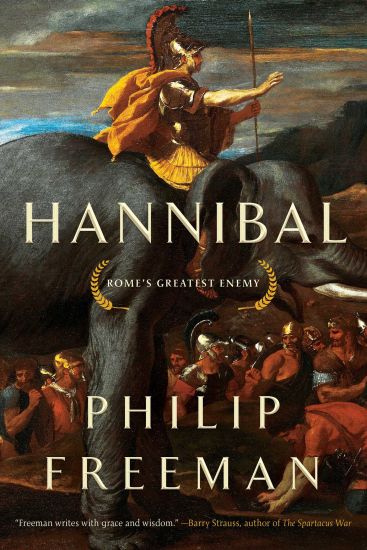
Telling the story of a man who stood against the overwhelming power of the mighty Roman empire, Hannibal is the biography of a man who, against all odds, dared to change the course of history. Over two thousand years ago one of the greatest military leaders in history almost destroyed Rome. Hannibal, a daring African general from the city of Carthage, led an army of warriors and battle elephants over the snowy Alps to invade the very heart of Rome's growing empire. But what kind of person would dare to face the most relentless imperial power of the ancient world? How could Hannibal, consistently outnumbered and always deep in enemy territory, win battle after battle until he held the very fate of Rome within his grasp? Hannibal appeals to many as the ultimate underdog—a Carthaginian David against the Goliath of Rome—but it wasn't just his genius on the battlefield that set him apart. As a boy and then a man, his self-discipline and determination were legendary. As a military leader, like Alexander the Great before him and Julius Caesar after, he understood the hearts of men and had an uncanny ability to read the unseen weaknesses of his enemy. As a commander in war, Hannibal has few equals in history and has long been held as a model of strategic and tactical genius. But Hannibal was much more than just a great general. He was a practiced statesman, a skilled diplomat, and a man deeply devoted to his family and country. Roman historians—on whom we rely for almost all our information on Hannibal—portray him as a cruel barbarian, but how does the story change if we look at Hannibal from the Carthaginian point of view? Can we search beneath the accounts of Roman writers who were eager to portray Hannibal as a monster and find a more human figure? Can we use the life of Hannibal to look at the Romans themselves in an unfamiliar way— not as the noble and benign defenders of civilization but as ruthless conquerors motivated by greed and conquest?
Hannibal

Hannibal

Philip Freeman

Pegasus Books
2022
sidottu
Telling the story of a man who stood against the overwhelming power of the mighty Roman empire, Hannibal is the biography of a man who, against all odds, dared to change the course of history. Over two thousand years ago one of the greatest military leaders in history almost destroyed Rome. Hannibal, a daring African general from the city of Carthage, led an army of warriors and battle elephants over the snowy Alps to invade the very heart of Rome's growing empire. But what kind of person would dare to face the most relentless imperial power of the ancient world? How could Hannibal, consistently outnumbered and always deep in enemy territory, win battle after battle until he held the very fate of Rome within his grasp? Hannibal appeals to many as the ultimate underdog—a Carthaginian David against the Goliath of Rome—but it wasn't just his genius on the battlefield that set him apart. As a boy and then a man, his self-discipline and determination were legendary. As a military leader, like Alexander the Great before him and Julius Caesar after, he understood the hearts of men and had an uncanny ability to read the unseen weaknesses of his enemy. As a commander in war, Hannibal has few equals in history and has long been held as a model of strategic and tactical genius. But Hannibal was much more than just a great general. He was a practiced statesman, a skilled diplomat, and a man deeply devoted to his family and country. Roman historians—on whom we rely for almost all our information on Hannibal—portray him as a cruel barbarian, but how does the story change if we look at Hannibal from the Carthaginian point of view? Can we search beneath the accounts of Roman writers who were eager to portray Hannibal as a monster and find a more human figure? Can we use the life of Hannibal to look at the Romans themselves in an unfamiliar way— not as the noble and benign defenders of civilization but as ruthless conquerors motivated by greed and conquest?
Celtic Spirituality

Celtic Spirituality

Philip Freeman

St Martin's Press
2021
nidottu
In Celtic Spirituality, acclaimed translator and scholar Philip Freeman allows the voices of the Celts to speak once more. Though the Celtic civilization has long disappeared, lingering traces of their spirituality haunt Ireland and the surrounding land. Tantalizing snippets of faded manuscript pages, ancient stone carvings, and spells from the mystery-shrouded Druids have sparked the imagination of generations of modern seekers. Translated from their original languages--Gaulish, Latin, Irish, and Welsh--the passages and stories in Celtic Spirituality are true artifacts of the Celts' vibrant and varied religion from both the pre-Christian and early Christian period. From a ritual of magical inspiration to stories of the ancient gods and adventures of long-forgotten heroes, Freeman has unearthed a stunning collection of Celtic work. The translation is accessible to the modern reader, but maintains the beauty and vibrancy of the original. Celtic Spirituality includes material that has never been translated before, offering a new glimpse into the wisdom and wild magic of the Celts.
The principles of divine service

The principles of divine service

Philip Freeman

Hansebooks
2017
pokkari
The principles of divine service - An enquiry concerning the true manner of understanding and using the order for morning and evening prayer is an unchanged, high-quality reprint of the original edition of 1871. Hansebooks is editor of the literature on different topic areas such as research and science, travel and expeditions, cooking and nutrition, medicine, and other genres. As a publisher we focus on the preservation of historical literature. Many works of historical writers and scientists are available today as antiques only. Hansebooks newly publishes these books and contributes to the preservation of literature which has become rare and historical knowledge for the future.
Celtic Mythology

Celtic Mythology

Philip Freeman

Oxford University Press Inc
2017
sidottu
Most people have heard of the Celts-the elusive, ancient tribal people who resided in present-day England, Ireland, Scotland and France. Paradoxically characterized as both barbaric and innocent, the Celts appeal to the modern world as a symbol of a bygone era, a world destroyed by the ambition of empire and the spread of Christianity throughout Western Europe. Despite the pervasive cultural and literary influence of the Celts, shockingly little is known of their way of life and beliefs, because very few records of their stories exist. In this book, for the first time, Philip Freeman brings together the best stories of Celtic mythology. Everyone today knows about the gods and heroes of the ancient Greeks, such as Zeus, Hera, and Hercules, but how many people have heard of the Gaulish god Lugus or the magical Welsh queen Rhiannon or the great Irish warrior Cú Chulainn? We still thrill to the story of the Trojan War, but the epic battles of the Irish Táin Bó Cuailgne are known only to a few. And yet those who have read the stories of Celtic myth and legend-among them writers like J. R. R. Tolkien and C. S. Lewis-have been deeply moved and influenced by these amazing tales, for there is nothing in the world quite like them. In these stories a mysterious and invisible realm of gods and spirits exists alongside and sometimes crosses over into our own human world; fierce women warriors battle with kings and heroes, and even the rules of time and space can be suspended. Captured in vivid prose these shadowy figures--gods, goddesses, and heroes--come to life for the modern reader.
Sacrifice

Sacrifice

Philip Freeman

Pegasus Books
2016
nidottu
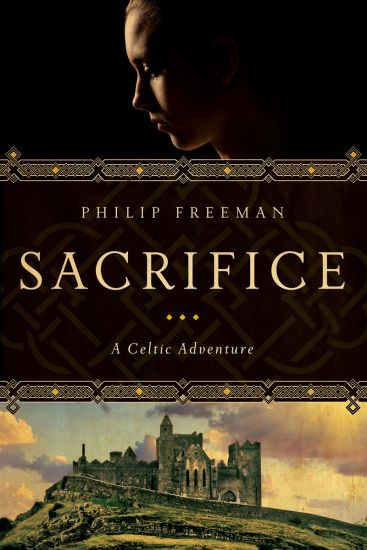
Someone is killing the nuns of Ireland. The grisly discovery of an elderly sister of Saint Brigid’s monastery strangled, bled dry, and thrown into a bog is just the beginning. Soon a beautiful young nun is found decapitated and hung from a barren tree. It doesn’t take long before the members of the struggling monastic community of Kildare realize that not only are the nuns being hunted by a serial killer, but the murderer is preforming the gruesome slayings in the manner of the ancient druid sacrifices. Set in the turmoil of sixth-century Ireland, where ruthless tribal kings wage constant war for survival and the powerful religious order of the druids is threatened by the newly-arrived Christian church, the desperate task of finding the killer falls to Sister Deirdre, a young women torn between the world of the monastery and her own druidic heritage. Unless Deirdre can find the killer before the cycle of sacrifices is complete, more of her friends will die, the monastery will face destruction, and the whole of Ireland may be plunged into civil war.
Searching for Sappho

Searching for Sappho

Philip Freeman

WW Norton Co
2016
sidottu
The daughter of an aristocratic family, a wife, a devoted mother and a lover of women, Sappho was one of the greatest writers of her own or any age. Although most people have heard of Sappho, the story of her lost poems and the lives of ancient women they celebrate has never been told for a general audience. Philip Freeman paints a vivid picture of Sappho’s world. He delves into religious rites, customs, the role of women in the family, medical knowledge and the experience of motherhood at the time. Through this contextual knowledge, a picture of Sappho’s life emerges. Freeman uses his vast historical research, in conjunction with Sappho’s poems and other Greek works of fiction, to bring us the closest we can come to knowing the biographical details of this most famous woman poet.
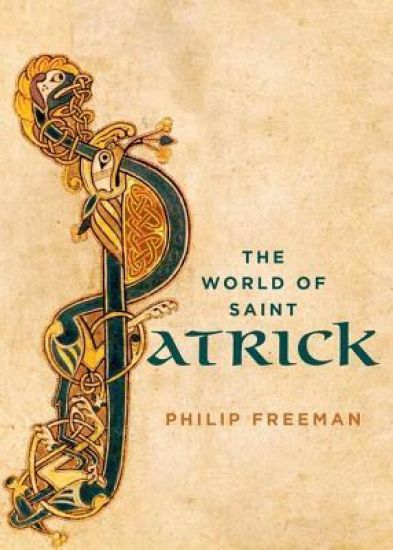
The World of Saint Patrick

The World of Saint Patrick

Philip Freeman

Oxford University Press Inc
2014
sidottu
The legend of Saint Patrick is irresistibly captivating-he drove the snakes out of Ireland, battled the druids, and used the three-leaf Shamrock to convert the pagan Irish to belief in the Christian Trinity. Yet, as so often happens, these stories are mere myths that fold under closer scrutiny. Snakes never plagued the Irish countryside, and the Emerald Isle's most beloved saint wasn't even Irish but a Briton of the Roman nobility. Fortunately, the truth is even more fascinating. In The World of Saint Patrick, classical scholar Philip Freeman offers the definitive account of Saint Patrick's life through new and vibrant translations of the greatest works of early Christian Ireland. This story of great violence, brutality, and even greater faith begins with two letters Patrick wrote describing his kidnapping by pirates at age sixteen and subsequent slavery. Although his grandfather was a priest and his father a deacon, at the time of his kidnapping Patrick had rejected his childhood faith in favor of atheism. Yet in this deeply moving narrative, Patrick recounts how he regained his faith during his captivity, and how the voice of God guided him both in his escape from bondage and in his eventual return to Ireland as a missionary to the very people who had enslaved him. The World of Saint Patrick delves into colorful tales of Patrick's struggles with pagan kings, soaring hymns of praise, and a prayer of protection against forces of evil such as "the magic of women, blacksmiths, and druids." Freeman also examines the life of Saint Brigid, Ireland's first female saint, and the legendary voyage of Saint Brendan and his monks across the western ocean. Both general readers with an interest in Ireland's saints and scholars studying religion or medieval history will be unable to put down this captivating tale of Ireland's greatest saint and the remarkable times in which he lived.
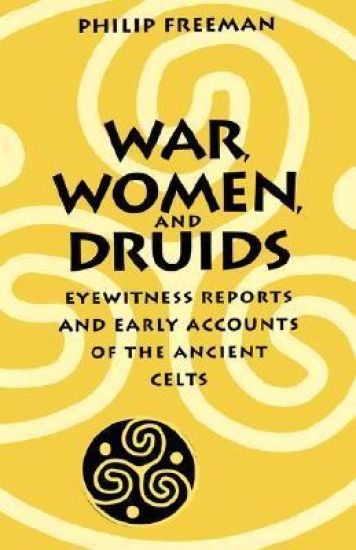
War, Women, and Druids

War, Women, and Druids

Philip Freeman

University of Texas Press
2002
pokkari
"The ancient Celts capture the modern imagination as do few other people of classical times. Naked barbarians charging the Roman legions, Druids performing sacrifices of unspeakable horror, women fighting beside their men and even leading armies-these, along with stunning works of art, are the images most of us call to mind when we think of the Celts," observes Philip Freeman. "And for the most part, these images are firmly based in the descriptions handed down to us by the Greek and Roman writers." This book draws on the firsthand observations and early accounts of classical writers to piece together a detailed portrait of the ancient Celtic peoples of Europe and the British Isles. Philip Freeman groups the selections (ranging from short statements to longer treatises) by themes-war, feasting, poetry, religion, women, and the Western Isles. He also presents inscriptions written by the ancient Celts themselves. This wealth of material, introduced and translated by Freeman to be especially accessible to students and general readers, makes this book essential reading for everyone fascinated by the ancient Celts.
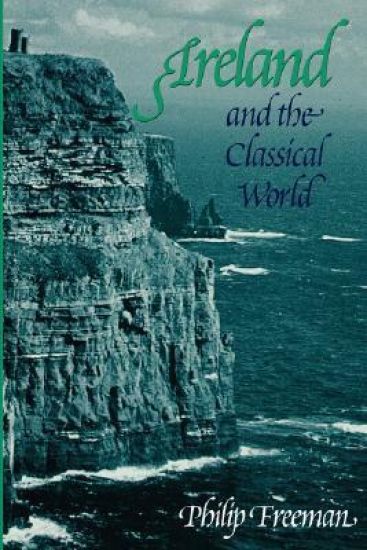
Ireland and the Classical World

Ireland and the Classical World

Philip Freeman

University of Texas Press
2000
pokkari
On the boundary of what the ancient Greeks and Romans considered the habitable world, Ireland was a land of myth and mystery in classical times. Classical authors frequently portrayed its people as savages-even as cannibals and devotees of incest-and evinced occasional uncertainty as to the island's shape, size, and actual location. Unlike neighboring Britain, Ireland never knew Roman occupation, yet literary and archaeological evidence prove that Iuverna was more than simply terra incognita in classical antiquity. In this book, Philip Freeman explores the relations between ancient Ireland and the classical world through a comprehensive survey of all Greek and Latin literary sources that mention Ireland. He analyzes passages (given in both the original language and English) from over thirty authors, including Julius Caesar, Strabo, Tacitus, Ptolemy, and St. Jerome. To amplify the literary sources, he also briefly reviews the archaeological and linguistic evidence for contact between Ireland and the Mediterranean world. Freeman's analysis of all these sources reveals that Ireland was known to the Greeks and Romans for hundreds of years and that Mediterranean goods and even travelers found their way to Ireland, while the Irish at least occasionally visited, traded, and raided in Roman lands. Everyone interested in ancient Irish history or Classics, whether scholar or enthusiast, will learn much from this pioneering book.
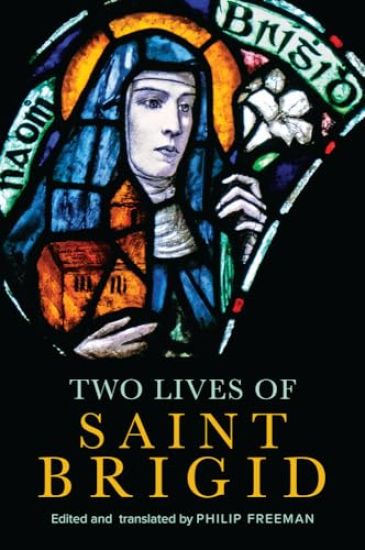
Two Lives of Saint Brigid

Two Lives of Saint Brigid

Philip Freeman

FOUR COURTS PRESS LTD
2024
pokkari
St. Brigid is the earliest and best-known of the female saints of Ireland. In the generation after St. Patrick, she established a monastery for men and women at Kildare which became one of the most powerful and influential centres of the Church in early Ireland. The stories of Brigid's life and deeds survive in several early sources, but the most important are two Latin lives written a century or more after her death. The first was composed by a churchman named Cogitosus and tells of her many miracles of healing and helping the poor. The second source, known as the Vita Prima, continues the tradition with more tales of marvellous deeds and journeys throughout the island. Both Latin sources are a treasure house of information not just about the legends of Brigid but also daily life, the role of women, and the spread of Christianity in Ireland. This book for the first time presents together an English translation of both the Life of Brigid by Cogitosus and the Vita Prima, along with the Latin text of both carefully edited from the best medieval manuscripts. Also included are an introduction, notes, and commentary to help general readers, students, and scholars in reading these fascinating stories of St. Brigid.
The principles of divine service

The principles of divine service

Philip Freeman

Anatiposi Verlag
2023
pokkari
Reprint of the original, first published in 1871. The publishing house Anatiposi publishes historical books as reprints. Due to their age, these books may have missing pages or inferior quality. Our aim is to preserve these books and make them available to the public so that they do not get lost.