Kirjojen hintavertailu. Mukana 12 595 353 kirjaa ja 12 kauppaa.

Kirjailija

Philip Hardie

Kirjat ja teokset yhdessä paikassa: 12 kirjaa, julkaisuja vuosilta 1992-2022, suosituimpien joukossa Virgil. Vertaile teosten hintoja ja tarkista saatavuus suomalaisista kirjakaupoista.

12 kirjaa

Kirjojen julkaisuhaarukka 1992-2022.

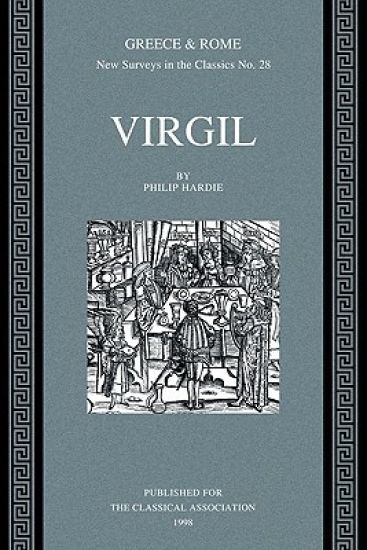
Virgil

Virgil

Philip Hardie

Oxford University Press
1998
pokkari
In this volume Philip Hardie provides an introduction to Virgil's three major works, a survey of changing critical approaches to the poems during the twentieth century, and a bibliographical guide for further study. A final section on style, language and metre offers a case-study in a close reading of a section of the Aeneid. The book communicates a sense of why reading Virgil matters and how the study of this author is always open to new ideas and fresh insights. No knowledge of Latin is presumed.
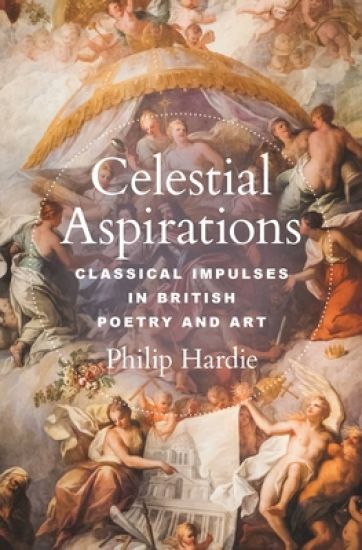
Celestial Aspirations

Celestial Aspirations

Philip Hardie

PRINCETON UNIVERSITY PRESS
2022
sidottu
A unique look at how classical notions of ascent and flight preoccupied early modern British writers and artistsBetween the late sixteenth century and early nineteenth century, the British imagination—poetic, political, intellectual, spiritual and religious—displayed a pronounced fascination with images of ascent and flight to the heavens. Celestial Aspirations explores how British literature and art during that period exploited classical representations of these soaring themes—through philosophical, scientific and poetic flights of the mind; the ascension of the disembodied soul; and the celestial glorification of the ruler.From textual reachings for the heavens in Spenser, Marlowe, Shakespeare, Donne and Cowley, to the ceiling paintings of Rubens, Verrio and Thornhill, Philip Hardie focuses on the ways that the history, ideologies and aesthetics of the postclassical world received and transformed the ideas of antiquity. In England, narratives of ascent appear on the grandest scale in Milton’s Paradise Lost, an epic built around a Christian plot of falling and rising, and one of the most intensely classicizing works of English poetry. Examining the reception of flight up to the Romanticism of Wordsworth and Tennyson, Hardie considers the Whig sublime, as well as the works of Alexander Pope and Edward Young. Throughout, he looks at motivations both public and private for aspiring to the heavens—as a reward for political and military achievement on the one hand, and as a goal of individual intellectual and spiritual exertion on the other.Celestial Aspirations offers an intriguing look at how creative minds reworked ancient visions of time and space in the early modern era.
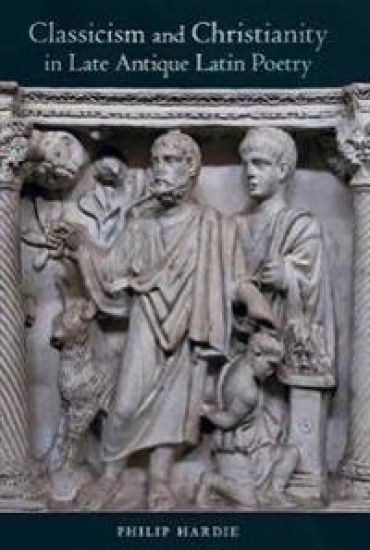
Classicism and Christianity in Late Antique Latin Poetry

Classicism and Christianity in Late Antique Latin Poetry

Philip Hardie

University of California Press
2019
sidottu
After centuries of near silence, Latin poetry underwent a renaissance in the late fourth and fifth centuries CE evidenced in the works of key figures such as Ausonius, Claudian, Prudentius, and Paulinus of Nola. This period of resurgence marked a milestone in the reception of the classics of late Republican and early imperial poetry. In Classicism and Christianity in Late Antique Latin Poetry, Philip Hardie explores the ways in which poets writing on non-Christian and Christian subjects used the classical traditions of Latin poetry to construct their relationship with Rome’s imperial past and present, and with the by now not-so-new belief system of the state religion, Christianity. The book pays particular attention to the themes of concord and discord, the "cosmic sense" of late antiquity, novelty and renouatio, paradox and miracle, and allegory. It is also a contribution to the ongoing discussion of whether there is an identifiably late antique poetics and a late antique practice of intertextuality. Not since Michael Robert's classic The Jeweled Style has a single book had so much to teach about the enduring power of Latin poetry in late antiquity.
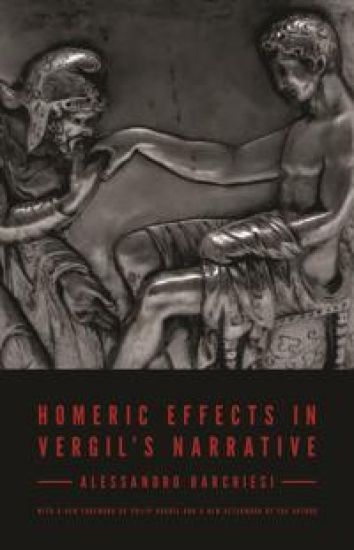
Homeric Effects in Vergil's Narrative

Homeric Effects in Vergil's Narrative

Alessandro Barchiesi; Philip Hardie

Princeton University Press
2017
pokkari
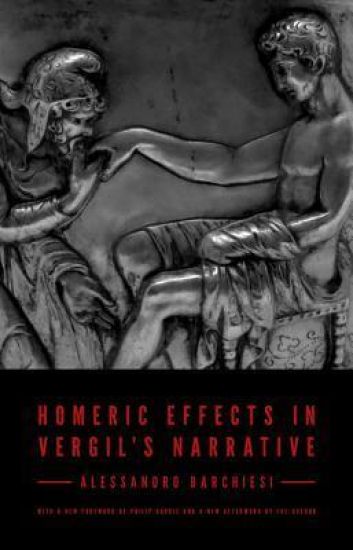
The study of Homeric imitations in Vergil has one of the longest traditions in Western culture, starting from the very moment the Aeneid was circulated. Homeric Effects in Vergil's Narrative is the first English translation of one of the most important and influential modern studies in this tradition. In this revised and expanded edition, Alessandro Barchiesi advances innovative approaches even as he recuperates significant earlier interpretations, from Servius to G. N. Knauer. Approaching Homeric allusions in the Aeneid as "narrative effects" rather than glimpses of the creative mind of the author at work, Homeric Effects in Vergil's Narrative demonstrates how these allusions generate hesitations and questions, as well as insights and guidance, and how they participate in the creation of narrative meaning. The book also examines how layers of competing interpretations in Homer are relevant to the Aeneid, revealing again the richness of the Homeric tradition as a component of meaning in the Aeneid. Finally, Homeric Effects in Vergil's Narrative goes beyond previous studies of the Aeneid by distinguishing between two forms of Homeric intertextuality: reusing a text as an individual model or as a generic matrix. For this edition, a new chapter has been added, and in a new afterword the author puts the book in the context of changes in the study of Latin literature and intertextuality. A masterful work of classical scholarship, Homeric Effects in Vergil's Narrative also has valuable insights for the wider study of imitation, allusion, intertextuality, epic, and literary theory.
Homeric Effects in Vergil's Narrative

Homeric Effects in Vergil's Narrative

Alessandro Barchiesi; Philip Hardie

Princeton University Press
2015
sidottu
The study of Homeric imitations in Vergil has one of the longest traditions in Western culture, starting from the very moment the Aeneid was circulated. Homeric Effects in Vergil's Narrative is the first English translation of one of the most important and influential modern studies in this tradition. In this revised and expanded edition, Alessandro Barchiesi advances innovative approaches even as he recuperates significant earlier interpretations, from Servius to G. N. Knauer. Approaching Homeric allusions in the Aeneid as "narrative effects" rather than glimpses of the creative mind of the author at work, Homeric Effects in Vergil's Narrative demonstrates how these allusions generate hesitations and questions, as well as insights and guidance, and how they participate in the creation of narrative meaning. The book also examines how layers of competing interpretations in Homer are relevant to the Aeneid, revealing again the richness of the Homeric tradition as a component of meaning in the Aeneid. Finally, Homeric Effects in Vergil's Narrative goes beyond previous studies of the Aeneid by distinguishing between two forms of Homeric intertextuality: reusing a text as an individual model or as a generic matrix. For this edition, a new chapter has been added, and in a new afterword the author puts the book in the context of changes in the study of Latin literature and intertextuality. A masterful work of classical scholarship, Homeric Effects in Vergil's Narrative also has valuable insights for the wider study of imitation, allusion, intertextuality, epic, and literary theory.
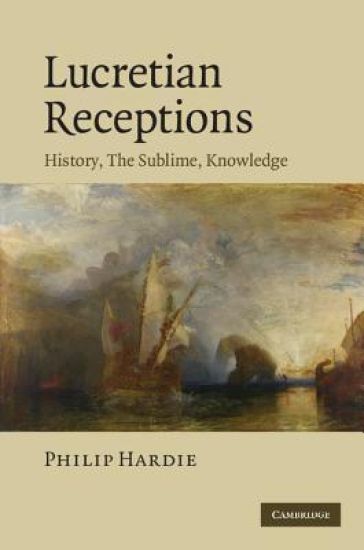
Lucretian Receptions

Lucretian Receptions

Philip Hardie

Cambridge University Press
2015
pokkari
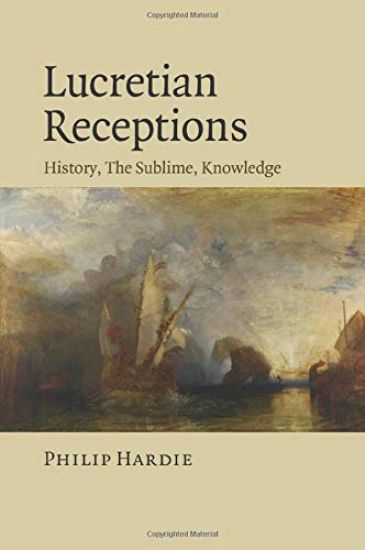
Lucretius' 'De rerum natura', one of the greatest Latin poems, worked a powerful fascination on Virgil and Horace, and continued to be an important model for later poets in antiquity and after, including Milton. This innovative set of studies on the reception of Lucretius is organized round three major themes: history and time, the sublime, and knowledge. The 'De rerum natura' was foundational for Augustan poets' dealings with history and time in the new age of the principate. It is also a major document in the history of the sublime; Virgil and Horace engage with the Lucretian sublime in ways that exercised a major influence on the sublime in later antique and Renaissance literature. The 'De rerum natura' presents a confident account of the ultimate truths of the universe; later didactic and epic poets respond with varying degrees of certainty or uncertainty to the challenge of Lucretius' Epicurean gospel.
Rumour and Renown

Rumour and Renown

Philip Hardie

Cambridge University Press
2014
pokkari
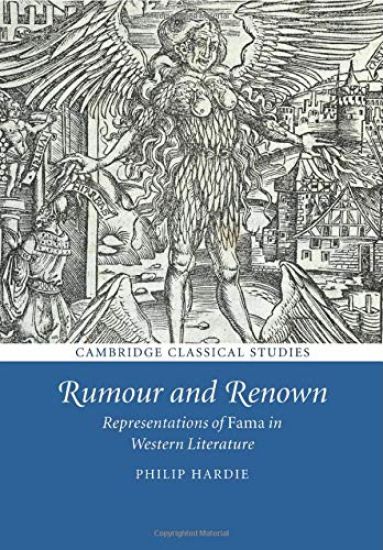
The Latin word fama means 'rumour', 'report', 'tradition', as well as modern English 'fame' or 'renown'. This magisterial and groundbreaking study in the literary and cultural history of rumour and renown, by one of the most influential living critics of Latin poetry, examines the intricate dynamics of their representations from Homer to Alexander Pope, with a focus on the power struggles played out within attempts to control the word, both spoken and written. Central are the personifications of Fama in Virgil and Ovid and the rich progeny spawned by them, but the book focuses on a wide range of genres other than epic, and on a variety of modes of narrating, dramatising, critiquing and illustrating fama. Authors given detailed readings include Livy, Tacitus, Petrarch, Chaucer, Spenser, Shakespeare, Ben Jonson and Milton.
Rumour and Renown

Rumour and Renown

Philip Hardie

Cambridge University Press
2012
sidottu
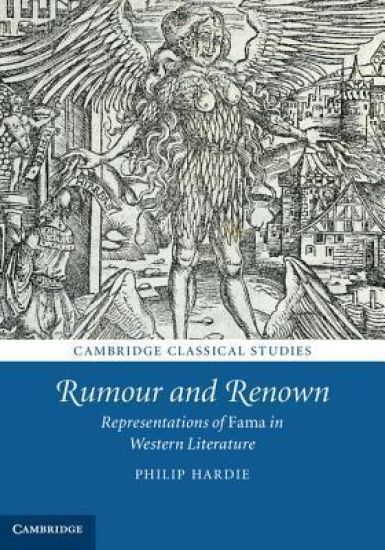
The Latin word fama means 'rumour', 'report', 'tradition', as well as modern English 'fame' or 'renown'. This magisterial and groundbreaking study in the literary and cultural history of rumour and renown, by one of the most influential living critics of Latin poetry, examines the intricate dynamics of their representations from Homer to Alexander Pope, with a focus on the power struggles played out within attempts to control the word, both spoken and written. Central are the personifications of Fama in Virgil and Ovid and the rich progeny spawned by them, but the book focuses on a wide range of genres other than epic, and on a variety of modes of narrating, dramatising, critiquing and illustrating fama. Authors given detailed readings include Livy, Tacitus, Petrarch, Chaucer, Spenser, Shakespeare, Ben Jonson and Milton.
Lucretian Receptions

Lucretian Receptions

Philip Hardie

Cambridge University Press
2009
sidottu
Lucretius' 'De rerum natura', one of the greatest Latin poems, worked a powerful fascination on Virgil and Horace, and continued to be an important model for later poets in antiquity and after, including Milton. This innovative set of studies on the reception of Lucretius is organized round three major themes: history and time, the sublime, and knowledge. The 'De rerum natura' was foundational for Augustan poets' dealings with history and time in the new age of the principate. It is also a major document in the history of the sublime; Virgil and Horace engage with the Lucretian sublime in ways that exercised a major influence on the sublime in later antique and Renaissance literature. The 'De rerum natura' presents a confident account of the ultimate truths of the universe; later didactic and epic poets respond with varying degrees of certainty or uncertainty to the challenge of Lucretius' Epicurean gospel.
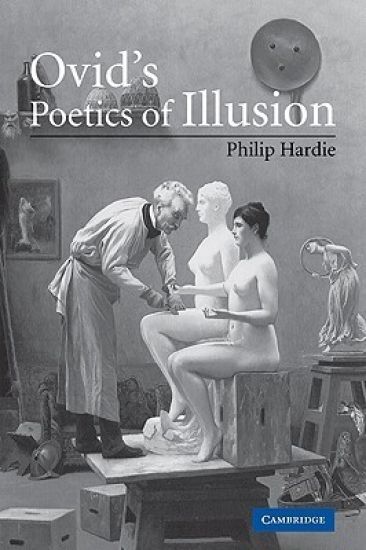
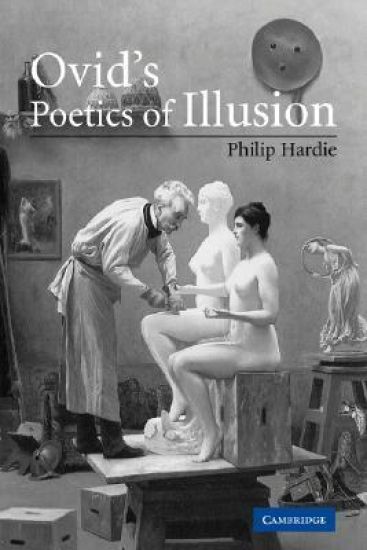
Ovid's Poetics of Illusion

Ovid's Poetics of Illusion

Philip Hardie

Cambridge University Press
2007
pokkari
Ovid's poetry is haunted obsessively by a sense both of the living fullness of the texts and of the emptiness of these 'insubstantial pageants'. This major study touches on the whole of Ovid's output, from the Amores to the exile poetry, and is an overarching treatment of illusionism and the textual conjuring of presence in the corpus. Modern critical and theoretical approaches, accompanied by close readings of individual passages, examine the topic from the points of view of poetics and rhetoric, aesthetics, the psychology of desire, philosophy, religion and politics. There are also case studies of the reception of Ovid's poetics of illusion in Renaissance and modern literature and art. The book will interest students and scholars of Latin and later European literatures. All foreign languages are accompanied by translations.
Ovid's Poetics of Illusion

Ovid's Poetics of Illusion

Philip Hardie

Cambridge University Press
2002
sidottu
Ovid's poetry is haunted obsessively by a sense both of the living fullness of the texts and of the emptiness of these 'insubstantial pageants'. This major study touches on the whole of Ovid's output, from the Amores to the exile poetry, and is an overarching treatment of illusionism and the textual conjuring of presence in the corpus. Modern critical and theoretical approaches, accompanied by close readings of individual passages, examine the topic from the points of view of poetics and rhetoric, aesthetics, the psychology of desire, philosophy, religion and politics. There are also case studies of the reception of Ovid's poetics of illusion in Renaissance and modern literature and art. The book will interest students and scholars of Latin and later European literatures. All foreign languages are accompanied by translations.
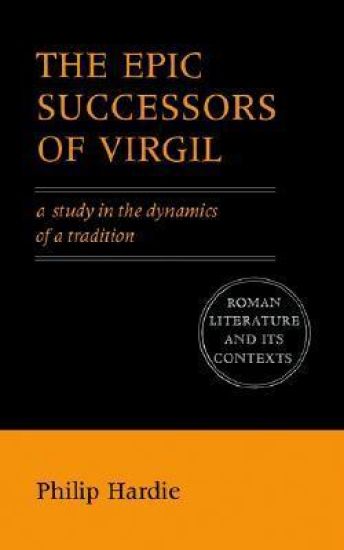
The Epic Successors of Virgil

The Epic Successors of Virgil

Philip Hardie

Cambridge University Press
1992
pokkari
This short book is a study of the epic tradition of the early Roman empire and specifically of the epic poems of Ovid, Lucan, Statius, Valerius Flaccus and Silius Italicus. It explores the use they made of Virgil’s Aeneid, an epic interpreted not just as a monument to the heroic construction of the principate, but also as a problematical text that challenged succeeding epic poets to a reworking of the issues that it dramatised: the possibility of establishing a lasting age of peace, the relation between power and the sacred, the difficulties of distinguishing between good and its evil parodies, anxiety about imperial and poetic succession. The author draws on modern critical and theoretical approaches to argue for the vitality and interest of works which have all too often been relegated to a second division of literary history.