Kirjojen hintavertailu. Mukana 12 657 676 kirjaa ja 12 kauppaa.

Kirjailija

Philip Haythornthwaite

Kirjat ja teokset yhdessä paikassa: 25 kirjaa, julkaisuja vuosilta 1983-2023, suosituimpien joukossa British Rifleman 1797–1815. Vertaile teosten hintoja ja tarkista saatavuus suomalaisista kirjakaupoista.

25 kirjaa

Kirjojen julkaisuhaarukka 1983-2023.

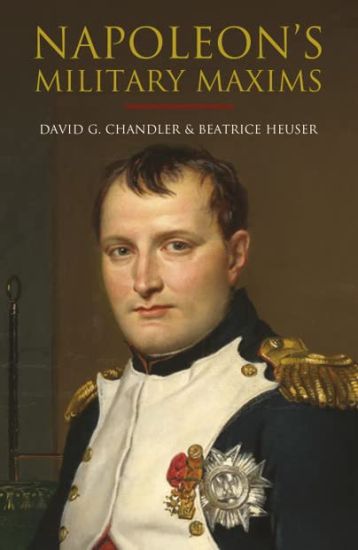
Napoleon's Military Maxims

Napoleon's Military Maxims

David G Chandler; Beatrice Heuser; Philip Haythornthwaite

GREENHILL BOOKS
2023
sidottu
This classic work is a distillation of the knowledge, intuition and wisdom of one of history's greatest military commanders. Napoleon's success was built upon practical experience combined with his own study of classical warfare and his natural grasp of the key principles of war. His thoughts and theories on the art of waging war are presented here in the form of accessible and readable maxims. This edition also features additional contextual commentary by historians David Chandler and Beatrice Heuser, which allows modern readers to compare Napoleon's principles with the experience of war today.

The Waterloo Armies

The Waterloo Armies

Philip Haythornthwaite

Pen Sword Military
2021
nidottu
Waterloo is one of the most famous battles in history and it has given rise to a vast and varied literature. The strategy and tactics of the battle and the entire Waterloo campaign have been analysed at length. The commanders, manoeuvres and critical episodes, and the intense experiences of the men who took part, have all been recorded in minute detail. But the organization, structure and fighting strength of the armies that fought in the battle have received less attention, and this is the subject of Philip Haythornthwaite\'s detailed, authoritative and engaging study. Through a close description of the structure and personnel of each of the armies he builds up a fascinating picture of their makeup, their methods and their capabilities. The insight he offers into the contrasting styles and national characteristics of the forces that came together on the Waterloo battlefield gives a fresh perspective on the extraordinary clash of arms that ended the Napoleonic era.
British Light Infantry & Rifle Tactics of the Napoleonic Wars
Explains and illustrates the training and tactics of the Light Infantry and Rifle regiments, famously dramatized in the 'Sharpe' novels and TV films.In an age when infantry units manoeuvred and fought in rigid blocks, the idea of encouraging initiative and allowing a unit to 'skirmish' was regarded as revolutionary and fell out of favour in the years following the French-Indian and American Revolutionary wars. It was revived by far-sighted British and foreign-mercenary officers, who observed the way in which French Revolutionary armies deployed skirmishers to prepare the way for their assault columns.Offering a detailed analysis of the tactics, this book is studded with period 'battle descriptions' quoted from eye-witness accounts, creating a comprehensive guide to the Light and Rifles units of Wellington's Light Division. As the result of the first tentative experiments in skirmishing the units achieved an unsurpassed peak of efficiency – they marched faster, were versatile in any sort of tactical situation and could shoot more accurately than either friend or foe. No other national army, either allied or enemy, achieved these standards.This comprehensive guide is ideal for modellers, wargamers, re-enactors and anyone interested in the Napoleonic wars.
Napoleonic Light Cavalry Tactics

Napoleonic Light Cavalry Tactics

Philip Haythornthwaite

Osprey Publishing
2013
nidottu
During the Napoleonic Wars all the major combatants fielded large numbers of light cavalry.These nimble, fast-moving regiments performed a variety of vital roles, from reconnaissance and keeping contact with the enemy during the movement of armies, to raiding, skirmishing, and the pursuit to destruction of beaten enemies. In practice, light cavalry were often also employed for battlefield charges alongside the heavy cavalry. Featuring period illustrations and specially commissioned colour artwork, this is the second volume of a two-part study of the cavalry tactics of the armies of Napoleon and those of his allies and opponents.Written by a leading authority on the period, it draws upon drill manuals and later writings to offer a vivid assessment of how light cavalry actually fought on the Napoleonic battlefield.
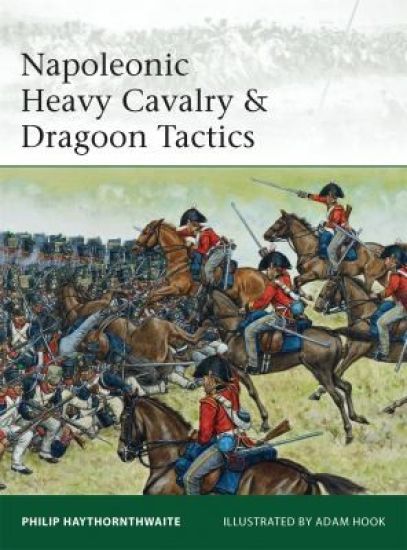
Napoleonic Heavy Cavalry & Dragoon Tactics

Napoleonic Heavy Cavalry & Dragoon Tactics

Philip Haythornthwaite

Osprey Publishing
2013
nidottu
During the Napoleonic Wars the supreme battlefield shock weapon was the heavy cavalry – the French cuirassiers, and their British, Austrian, Prussian and Russian counterparts.Big men mounted on big horses, the heavy cavalry were armed with swords nearly a metre long, used for slashing or thrusting at their opponents; many wore steel armour, a practice revived by Napoleon. They were tasked with smashing a hole in the enemy's line of battle, with exploiting a weakness, or with turning a flank. Their classic manoeuvre was the charge; arrayed in close-order lines or columns, the heavy cavalry would begin their attack at the walk, building up to a gallop for the final 50 metres before impact.Illustrated with diagrams, relevant paintings and prints and specially prepared colour plates, this is the first volume of a two-part study of the cavalry tactics of the armies of Napoleon and those of his allies and opponents.Written by a leading authority on the period, it draws upon drill manuals and later writings to offer a vivid assessment of how heavy cavalry actually fought on the Napoleonic battlefield.
Borodino 1812

Borodino 1812

Philip Haythornthwaite

Osprey Publishing
2012
nidottu
A highly illustrated account of the battle of Borodino, the most crucial action in Napoleon's 1812 campaign in Russia.The battle of Borodino was one of the greatest encounters in European history, and one of the largest and most sanguinary in the Napoleonic Wars. Following the breakdown of relations between Russia and France, Napoleon assembled a vast Grande Armée drawn from the many states within the French sphere of influence. They crossed the river Neimen and entered Russian territory in June 1812 with the aim of inflicting a sharp defeat on the Tsar's forces and bringing the Russians back into line.In a bloody battle of head-on attacks and desperate counter-attacks in the village of Borodino on 7 September 1812, both sides lost about a third of their men, with the Russians forced to withdraw and abandon Moscow to the French. However, the Grande Armée was harassed by Russian troops all the way back and was destroyed by the retreat. The greatest army Napoleon had ever commanded was reduced to a shadow of frozen, starving fugitives.This title covers the events of Napoleon's disastrous Russian campaign of 1812 in its entirety, with the set-piece battle of Borodino proving the focal point of the book.
British Rifleman 1797–1815

British Rifleman 1797–1815

Philip Haythornthwaite

Osprey Publishing
2002
nidottu
The rifle corps of the British Army during the Napoleonic Wars are among the most recognizable of all the soldiers of that era. Their distinctive dark green uniforms are as familiar as some of their exploits which have achieved considerable fame through the large number of memoirs written by members of the rifle corps as well as in modern fiction, most notably the Sharpe series. Apart from their reputation as a corps d'elite, the riflemen were, in their time, at the very cutting edge of military technology and tactical theory. This volume uses first-hand accounts and evidence to give a "soldier's eye view" of the British rifleman, his life and work.
Napoleon's Commanders (2)

Napoleon's Commanders (2)

Philip Haythornthwaite

Osprey Publishing
2002
nidottu
On the Napoleonic battlefield victory or defeat could still depend on the skills, reactions and personalities of individual commanders. Even under a genius such as Bonaparte the dispersal of his armies on campaign, and the lack of fast communications, left command and control of the different corps and divisions in the hands of his marshals and generals. Continuing the author's study of the careers, peronalities and personal uniforms of the greatest French generals and marshals of the Napoleonic Wars, this volume describes and illustrates those leaders who made their names largely in the later years of the Empire, from 1809 to 1815. It includes leading figures such as Soult, Marmont, Murat, Espagne and Sucher.
Napoleon's Commanders (1)

Napoleon's Commanders (1)

Philip Haythornthwaite

Osprey Publishing
2001
nidottu
If the leading player of the Napoleonic Wars was Bonaparte himself, then a cast of colourful generals ably supported him. In the first of two volumes devoted to the most influential of the first empire's military leaders, the author summarizes the career of each commander and individual characters. This title details Napoleon's commanders. The commanders featured include Augereau, Bernadotte, Berthier, Carnot, Davout, Desaix, Junot, Kellerman, Kleber, Lannes, Lasalle, MacDonald, Massena, Moreau, Murat, Oudinot, Rapp, Serurier, Soult and Reynier. It includes quotations and anecdotes from their contemporaries bringing to life the characters of these legendary generals.
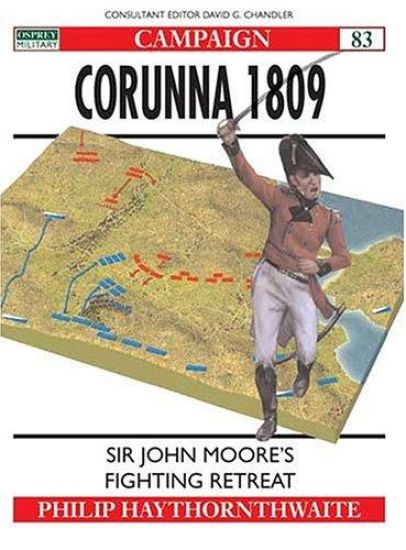
Corunna 1809

Corunna 1809

Philip Haythornthwaite

Osprey Publishing
2001
nidottu
Late in 1808 Sir John Moore, virtually alone with his small British army deep inside Spain and facing the French Army led by Napoleon himself, fell back towards Corunna. The retreat became the most arduous of trials. with armies traversing mountainous terrain over appalling roads in the depths of winter. Somehow Moore held his outnumbered, exhausted men together. Finally, at Corunna his men turned to face their tormentors. The appearance of the enemy galvanised Moore's army and they beat back the French attack. Moore was mortally wounded, however, and was buried upon the ramparts of Corunna before the final evacuation.
Imperial Guardsman 1799–1815

Imperial Guardsman 1799–1815

Philip Haythornthwaite

Osprey Publishing
1997
nidottu
Napoleon's Imperial Guard was one of the most famous military formations in history. The Imperial Guard could perform ceremonial duties as well as any, but it was primarily as an élite combat formation of the army that it excelled. Although it would expand to represent a considerable portion of France's military establishment, it remained Napoleon's personal guard and was accorded care and attention which set its members above the rest of the army. In this book, Philip Haythornthwaite examines their lives, organisation and privileges, paying particular attention to how their experience differed from those of the regular French line units.
The Austrian Army 1740–80 (3)

The Austrian Army 1740–80 (3)

Philip Haythornthwaite

Osprey Publishing
1995
nidottu
Until at least the latter years of Maria Theresa's reign, the Austrian artillery was acknowledged to be second to none in Europe; and it must have been no coincidence that Jean Baptiste de Gribeauval, who went on and so radically reformed the French artillery after he became inspector of artillery in 1776, had spend the Seven Years' War on attachment to the Austrian army from the French. In this last of three volumes [Men-at arms 271 & 276] Philip Haythornwaite does a first class job of examining the composition and uniforms of these and other specialist troops of the Austrian army 1740-80, including the artillery units, engineers, Grenz, Jägers and medical troops..
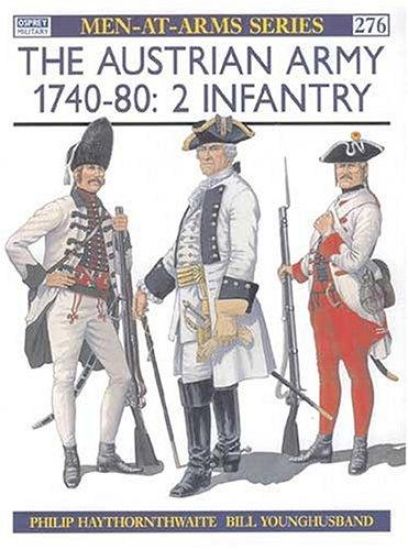
The Austrian Army 1740–80 (2)

The Austrian Army 1740–80 (2)

Philip Haythornthwaite

Osprey Publishing
1994
nidottu
This is an account of the uniforms, insignia, weaponry, campaigns and military practices of the Infantry of Maria Theresa's Austrian Army between 1740 and 1780, a period when the Austrian forces proved themselves to be one of the best armies in Europe, fighting in the War of Austrian Succession and the Seven Years War.
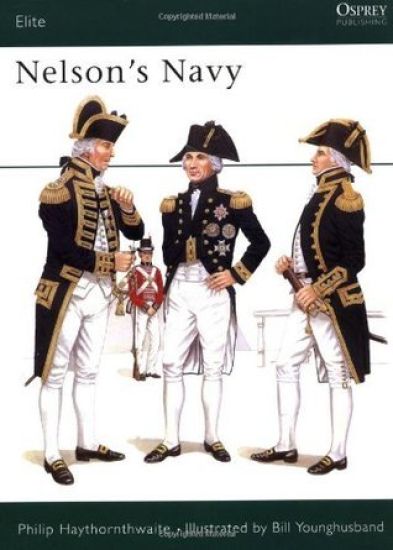
Nelson's Navy

Nelson's Navy

Philip Haythornthwaite

Osprey Publishing
1993
nidottu
Despite the many celebrated victories of the British Army during the Napoleonic Wars, the role of the Royal Navy should never be overlooked.The 'wooden walls' formed the country's first and most important line of defence, and ranged throughout the world to protect Britain's trade-routes and in support of the land forces and overseas possessions.This book covers the huge variations in uniforms not just in the Navy but the Royal Marines and Infantry regiments which served alongside naval crews. It also looks at the organisation, training and recruitment of the force and corrects a number of misconceptions regarding impressment and training.
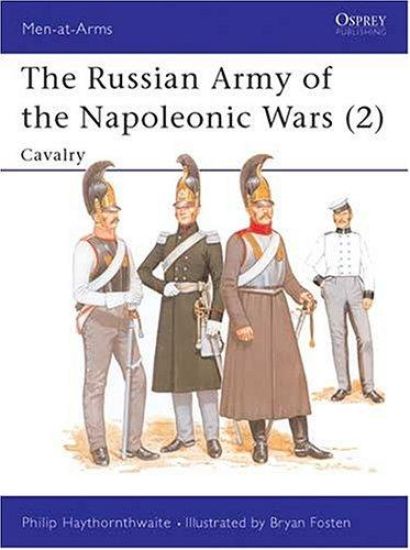
The Russian Army of the Napoleonic Wars (2)

The Russian Army of the Napoleonic Wars (2)

Philip Haythornthwaite

Osprey Publishing
1992
nidottu
During the Napoleonic era, Russia possessed a vast force of cavalry, forming a greater percentage than that of most European armies.This stemmed partly from their service against the Turks, who had huge numbers of troops, and partly from the fact that much Russian terrain was suitable for the manoeuvre of large bodies of cavalry.This companion volume to Men-at-Arms 185 examines the organisation, tactics and uniforms of the Russian cavalry during this dynamic and turbulent period, covering Cuirassiers, Dragoons, Hussars, Uhlans, Mounted Jägers and the Lifeguard, as well as the Opolchenie militia and Cossacks.
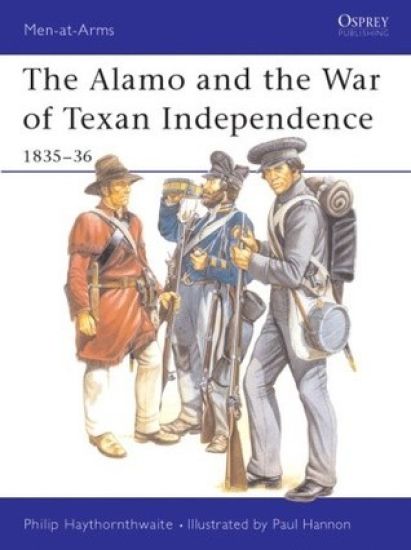
The Alamo and the War of Texan Independence 1835–36

The Alamo and the War of Texan Independence 1835–36

Philip Haythornthwaite

Osprey Publishing
1992
nidottu
In 1823 Texas was opened to American settlement; over the next 12 years thousands took advantage of the opportunity. During this time the corrupt Santa Anna rose to power. A dishonest and ruthless politician, thief, compulsive gambler, opium addict and liar, he nevetheless gained a measure of popular support and set about destroying federalism. Conflict with the American settlers ('Texians') became inevitable, a conflict which included the legendary Battle of the Alamo. Philip Haythornwaite covers the story of the War of Texan Independence in a volume backed by a wealth of illustrations and photographs, including eight full page colour plates by Paul Hannon
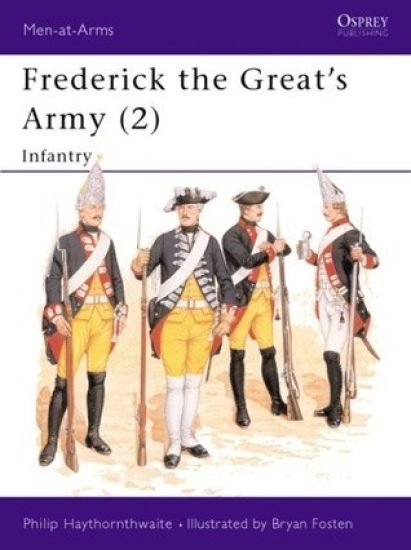
Frederick the Great's Army (2)

Frederick the Great's Army (2)

Philip Haythornthwaite

Osprey Publishing
1991
nidottu
Throughout the wars undertaken by Frederick the Great, probably his greatest resource was his infantry. It is a mark of the king's determination that despite wars which almost destroyed both Prussia and its army (such as the Seven Years' War), he was able to maintain its numbers – even if the quality declined as the attritional campaigns took their toll.Philip Haythornthwaite examines the uniforms, tactics and organisation of Frederick's infantry in detail – a fighting force that contested battles such as Mollwitz, Hohenfriedberg, Kesselsdorf, Liegnitz, Burkersdorf and the siege of Prague.
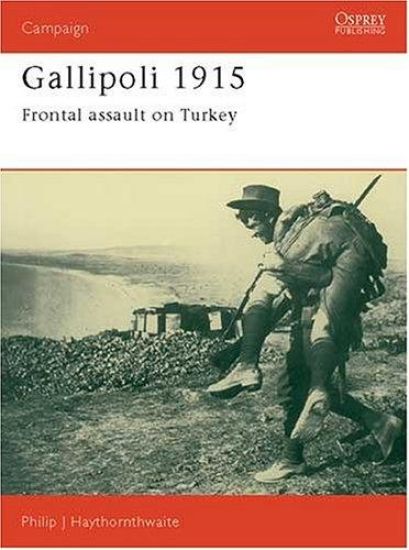
Gallipoli 1915

Gallipoli 1915

Philip Haythornthwaite

Osprey Publishing
1991
nidottu
A highly illustrated description of the battles, hardships and eventual evacuation that these men had to go through, in this comprehensive guide to the Gallipoli landings.The Gallipoli expedition of 1915, the brainchild of Winston Churchill, was designed to knock the Turkish Empire out of the First World War and open a supply route to Russia. The campaign is characterised by the military incompetence of the higher commands, particularly the Allies.However, in spite of this, Gallipoli deserves to be, and is, also remembered for the heroism and resourcefulness of both the British army and the men of the Australian and New Zealand Army Corps.
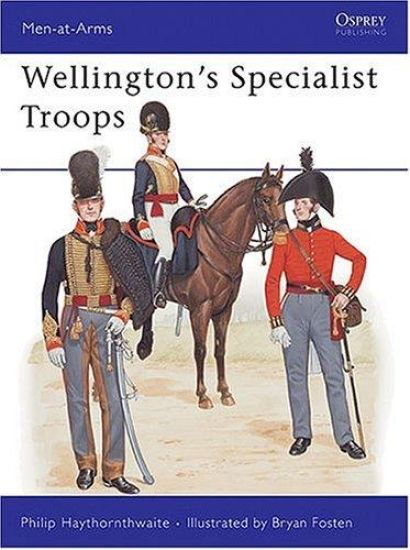
Wellington's Specialist Troops

Wellington's Specialist Troops

Philip Haythornthwaite

Osprey Publishing
1988
nidottu
The specialist troops of Wellington's army played a crucial role in the success of the British Army.Though often understaffed and ineptly managed, the artillery, engineers, transport and commissariat, and medical services contributed to Wellington's ultimate victory in 1815. The Royal Artillery and Corps of Royal Engineers comprised a small number of highly trained officers, while the commissariat was composed of untrained civilians outside military discipline, and the medical services suffered from a shortage of trained surgeons.This richly illustrated book examines the organization, uniforms and equipment of each of these specialist departments.