
Kirjailija
Philip Hughes
Kirjat ja teokset yhdessä paikassa: 19 kirjaa, julkaisuja vuosilta 2009-2026, suosituimpien joukossa The Catholic Question. Vertaile teosten hintoja ja tarkista saatavuus suomalaisista kirjakaupoista.
19 kirjaa
Kirjojen julkaisuhaarukka 2009-2026.

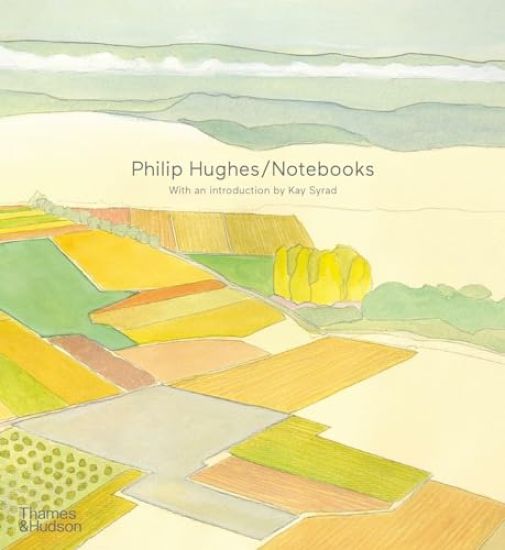
A new selection from Philip Hughes' unpublished notebooks going back over twenty-five years. In an astonishing collection of twenty-seven notebooks created over a quarter of a century, Philip Hughes has sought to capture the spirit of a place: its geological structure, its relationship with the surrounding landscape, and its occasional signs of human intervention. These painterly but topographically precise notebooks record moments when the artist has been moved to draw what he can see, whether from the shelter of a standing stone in Orkney, Scotland, from the air over the Simpson desert in Australia, or from a postal boat sailing through the Norwegian fjords. Pieced together by Hughes himself from over a thousand drawings, this is a logbook of momentary observations. Some are swift sketches of fields or horizons, others are slower studies of lichen and flowers in Antarctica, or lines of quartz in granite in Cornwall. The depth of feeling and knowledge Hughes has for different terrains and climates underpins the beauty of this essential and inspiring selection of notebooks.

To survey the history of the Catholic Church is, in the words of Eamon Duffy, to be left with "a sense of the intractable complexity of the historical reality of the Church and its institutions." To do justice to this complexity, Philip Hughes wrote an ambitious, three-volume survey of Church history-comprehensive in scope yet introductory and accessible in detail. Volume III: The Revolt Against the Church surveys the critical period of 1270 to 1517 and the key figures and events which preceded the Protestant Reformation. In five meticulously detailed chapters, Hughes explores the political and theological crises at the end of the thirteenth century; the scandal of the Avignon Captivity and the relief of return to Rome; the Schism of the West, the terminus of the medieval and the genesis of the Renaissance; and, last, the Luther-led advent of reformation and revolt.Over the course of history, the Catholic Church has been an "all-present, unceasingly active institution." As such, its history demands to be known. A History of the Church, Volume III, is the third and final part of a magisterial response to that demand.
Storytelling Exhibitions describes the role and practice of modern ‘spatial storytellers’ and looks at the potential of exhibitions to shape our understanding of the world. It explains how curators, designers, artists and scientists combine to tell powerful stories through exhibition design.Exhibition designer and educator Philip Hughes shows how contemporary tools and technologies - digital reconstruction, 3D scanning and digital archives – interweave with traditional forms of informing, displaying and promoting to create powerful narrative spaces.Whether telling stories of politics, trends, society, war, science or history, Storytelling Exhibitions provides inspiration and guidance on designing installations which change the way we think. Examples included from:Te Papa, Wellington, New ZealandNational Museum of African American History and Culture, Washington, USAWeltmuseum Wien, AustriaSanta Cruz Museum of Art and History, USLascaux: Centre International de l'Art Pariétal in Montignac, FranceStapferhaus, Lenzburg, SwitizerlandMicropia, Amsterdam, Netherlands…and many more

A History of the Church, Volume II: The Church and the World It Created
Philip Hughes
Cluny Media
2021
sidottu

To survey the history of the Catholic Church is, in the words of Eamon Duffy, to be left with "a sense of the intractable complexity of the historical reality of the Church and its institutions." To do justice to this complexity, Philip Hughes wrote an ambitious, three-volume survey of Church history-comprehensive in scope yet accessible in detail. In Volume I: The Church and the World in Which It Was Founded, Hughes dispenses with the chronological method, instead following the organic division of West and East and the development of the Church in those respective regions. In this "politically Roman and culturally Hellenic" world, Hughes treats the West through to the conversion of Constantine in the early years of the fourth century and the East up to the death of Justinian II in the eighth century.At the end of antiquity, as in the other stages of history, the Catholic Church has been an "all-present, unceasingly active institution." As such, its history demands to be known. A History of the Church, Volume I, is the first part of a magisterial response to that demand.

Philip Hughes: Painting the Ancient Land of Australia
Philip Hughes; Glenn Murcutt
Thames and Hudson (Australia) Pty Ltd
2020
sidottu

Commentary on the Epistle to the Hebrews
Philip Hughes
William B. Eerdmans Publishing Company
2019
nidottu
The Epistle to the Hebrews has been the subject of controversy and conjecture: its author is unknown, its occasion unstated, and its destination disputed. But these questions pale in comparison to the importance of the letter's pervasive theme: the absolute supremacy of Christ--a supremacy which allows no challenge, whether from human or angelic beings. Hughes's introduction includes an outline and synopsis of Hebrews and discusses theme, origin, authorship, and date. His verse-by-verse study of the text is accessible to specialist and nonspecialist readers alike. Technical points are dealt with in notes and excursuses.
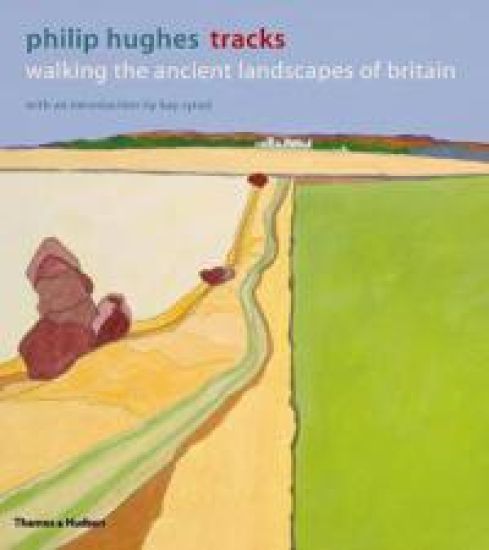
A beautiful, contemplative artistâ??s book from Philip Hughes.
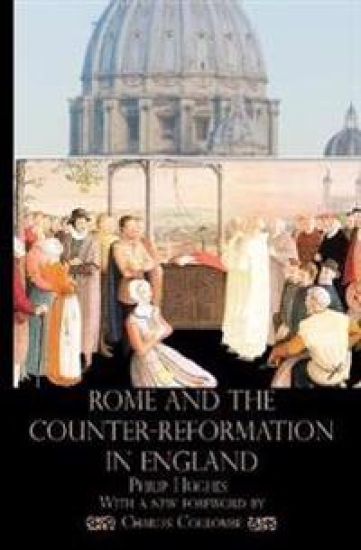
Rome and the Counter-Reformation in England
Philip Hughes; Charles A. Coulombe
Lulu.com
2017
sidottu
In the current book, Msgr. Philip Hughes does not repeat the work of others, important as it has been. Using the Reformation as a jumping-off point, in Rome and the Counter-Reformation in England he focuses on the ultimately unsuccessful attempts by both the Holy See and local Catholics to bring England back to the One True Faith. Ending with reigns of Kings James I and Charles I, he paints a picture that is of utmost importance to English-speaking Catholics today. Read this book carefully; let us forget our 20/20 hindsight, and remember that the issues that were so confusing to our truly brave and noble forbears were as bewildering and threatening to them as the ones that face us now are to us. When we disagree over tactics in facing them with our brother Catholics, let us remember that the man or woman, with whom we may differ, may be holier than we ourselves-something of which none of us this side of the grave tend to be great judges. -Charles A. Coulombe.

In the current book, Msgr. Philip Hughes does not repeat the work of others, important as it has been. Using the Reformation as a jumping-off point, in Rome and the Counter-Reformation in England he focuses on the ultimately unsuccessful attempts by both the Holy See and local Catholics to bring England back to the One True Faith. Ending with reigns of Kings James I and Charles I, he paints a picture that is of utmost importance to English-speaking Catholics today. -Charles A. Coulombe. Fr. Hughes, England's greatest reformation historian, examines in this work the nature of the Counter-Reformation in England in different phases, what it aimed for and how it was thwarted from within by rivalries and disunity. From the restoration of Queen Mary to the Stuarts, this book looks at Catholic action at a critical point and looks to the root causes of the failure to continue spreading the faith in England.

Rome and the Counter-Reformation in England
Philip Hughes; Charles Coulombe
Mediatrix Press
2016
pokkari

Rome and the Counter-Reformation in England
Philip Hughes; Charles Coulombe
Mediatrix Press
2016
sidottu
In the current book, Msgr. Philip Hughes does not repeat the work of others, important as it has been. Using the Reformation as a jumping-off point, in Rome and the Counter-Reformation in England he focuses on the ultimately unsuccessful attempts by both the Holy See and local Catholics to bring England back to the One True Faith. Ending with reigns of Kings James I and Charles I, he paints a picture that is of utmost importance to English-speaking Catholics today.Read this book carefully; rather than feeling scandalised or pitying as we might-let us forget our 20/20 hindsight, and remember that the issues that were so confusing to our truly brave and noble forbears were as bewildering and threatening to them as the ones that face us now are to us. When we disagree over tactics in facing them with our brother Catholics, let us remember that the man or woman, with whom we may differ, may be holier than we ourselves-something of which none of us this side of the grave tend to be great judges.-Charles A. Coulombe.Although the author admits at the outset that the conclusion is already known by the reader before he picks up the book, that the counter-reformation failed in England still, the reader may not know why.To that purpose, Fr. Hughes begins his study with the accession of Queen Mary and the appointment of Cardinal Reginald Pole to England as Cardinal Legate. Then he begins the study of how they refashioned the Church to be so strong that the episcopacy universally resisted Elizabeth. He also explores the condition of the average cleric, layman and other things from official documents and primary source texts.In the next phase, he examines in detail the rise of Protestantism again under Elizabeth, and the projects of St. Pius V and Gregory XIII to help Englishmen depose Elizabeth. The importance of this study is that in the English Protestant historical tradition, Pius V and Gregory, along with the Jesuits and others, are accused of plotting the murder and assassination of Elizabeth. Fr. Hughes, by examining official papers, shows why this was not true, albeit also offering criticism of the official policy in these years. What he shows is that Rome never really had an accurate story on what was going on in England, and as a result committed many blunders in the period when the counter-reformation might have succeeded.Following the scene to the eventual failure, Fr. Hughes also answers the pivotal questions: Were the English martyrs really traitors to the crown, as official history maintains? Were Cardinal Allen, the founder of Douay College, or Fr. Persons of the Jesuits, active tools of Spanish policy in England? Or did they rather believe the Spaniards would help the Catholic cause? Did St. Pius V try to assassinate Elizabeth?In all this Fr. Hughes, a great reformation historian, uses primary sources, letters, and reason to paint for us the picture of the counter-reformation's failures. If one wants to know what Catholic action and life were like in England during the Marian Restoration and the Elizabethan imposition of Protestantism, this is the work.

In the current book, Msgr. Philip Hughes does not repeat the work of others, important as it has been. Using the Reformation as a jumping-off point, in Rome and the Counter-Reformation in England he focuses on the ultimately unsuccessful attempts by both the Holy See and local Catholics to bring England back to the One True Faith. Ending with reigns of Kings James I and Charles I, he paints a picture that is of utmost importance to English-speaking Catholics today.Read this book carefully; rather than feeling scandalised or pitying as we might-let us forget our 20/20 hindsight, and remember that the issues that were so confusing to our truly brave and noble forbears were as bewildering and threatening to them as the ones that face us now are to us. When we disagree over tactics in facing them with our brother Catholics, let us remember that the man or woman, with whom we may differ, may be holier than we ourselves-something of which none of us this side of the grave tend to be great judges.-Charles A. Coulombe.Although the author admits at the outset that the conclusion is already known by the reader before he picks up the book, that the counter-reformation failed in England still, the reader may not know why.To that purpose, Fr. Hughes begins his study with the accession of Queen Mary and the appointment of Cardinal Reginald Pole to England as Cardinal Legate. Then he begins the study of how they refashioned the Church to be so strong that the episcopacy universally resisted Elizabeth. He also explores the condition of the average cleric, layman and other things from official documents and primary source texts.In the next phase, he examines in detail the rise of Protestantism again under Elizabeth, and the projects of St. Pius V and Gregory XIII to help Englishmen depose Elizabeth. The importance of this study is that in the English Protestant historical tradition, Pius V and Gregory, along with the Jesuits and others, are accused of plotting the murder and assassination of Elizabeth. Fr. Hughes, by examining official papers, shows why this was not true, albeit also offering criticism of the official policy in these years. What he shows is that Rome never really had an accurate story on what was going on in England, and as a result committed many blunders in the period when the counter-reformation might have succeeded.Following the scene to the eventual failure, Fr. Hughes also answers the pivotal questions: Were the English martyrs really traitors to the crown, as official history maintains? Were Cardinal Allen, the founder of Douay College, or Fr. Persons of the Jesuits, active tools of Spanish policy in England? Or did they rather believe the Spaniards would help the Catholic cause? Did St. Pius V try to assassinate Elizabeth?In all this Fr. Hughes, a great reformation historian, uses primary sources, letters, and reason to paint for us the picture of the counter-reformation's failures. If one wants to know what Catholic action and life were like in England during the Marian Restoration and the Elizabethan imposition of Protestantism, this is the work.

This book provides a new look at the climatic history of the last 2.6 million years during the ice age, a time of extreme climatic fluctuations that have not yet ended. This period also coincides with important phases of human development from Neanderthals to modern humans, both of whom existed side by side during the last cold stage of the ice age. The ice age has seen dramatic expansions of glaciers and ice sheets, although this has been interspersed with relatively short warmer intervals like the one we live in today. The book focuses on the changing state of these glaciers and the effects of associated climate changes on a wide variety of environments (including mountains, rivers, deserts, oceans and seas) and also plants and animals. For example, at times the Sahara was green and colonized by humans, and Lake Chad covered 350,000 km2 – larger than the United Kingdom. What happened during the ice age can only be reconstructed from the traces that are left in the ground. The work of the geoscientist is similar to that of a detective who has to reconstruct the sequence of events from circumstantial evidence. The book draws on the specialisms and experience of the authors who are experts on the glacial history of the Earth. Readership: Undergraduate and postgraduate students studying the Quaternary, researchers, and anyone interested in climate change, environmental change and geology. The book provides a rich collection of illustrations and photographs to help the readers at all levels visualise the dramatic consequences of glacier expansions during the Ice Age.
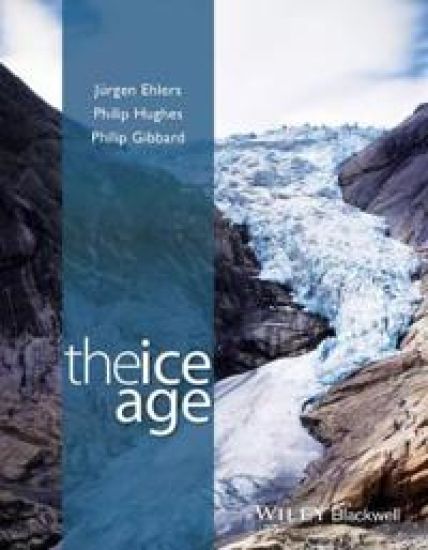
This book provides a new look at the climatic history of the last 2.6 million years during the ice age, a time of extreme climatic fluctuations that have not yet ended. This period also coincides with important phases of human development from Neanderthals to modern humans, both of whom existed side by side during the last cold stage of the ice age. The ice age has seen dramatic expansions of glaciers and ice sheets, although this has been interspersed with relatively short warmer intervals like the one we live in today. The book focuses on the changing state of these glaciers and the effects of associated climate changes on a wide variety of environments (including mountains, rivers, deserts, oceans and seas) and also plants and animals. For example, at times the Sahara was green and colonized by humans, and Lake Chad covered 350,000 km2 – larger than the United Kingdom. What happened during the ice age can only be reconstructed from the traces that are left in the ground. The work of the geoscientist is similar to that of a detective who has to reconstruct the sequence of events from circumstantial evidence. The book draws on the specialisms and experience of the authors who are experts on the glacial history of the Earth. Readership: Undergraduate and postgraduate students studying the Quaternary, researchers, and anyone interested in climate change, environmental change and geology. The book provides a rich collection of illustrations and photographs to help the readers at all levels visualise the dramatic consequences of glacier expansions during the Ice Age.
Mentoring Nursing and Healthcare Students
David Kinnell; Philip Hughes
SAGE Publications Ltd
2009
sidottu
"This key text offers mentors and students an insight into the relationship between mentorship theory, policy and practice." - Diane Tofts, Kings College London What does effective mentoring mean in actual practice? How can I be a good mentor? This book answers these questions and is designed to offer nursing and healthcare students a foundation in effective mentoring. Chapters examine the roles and responsibilities of the mentor, and how they enhance the process of mentorship. By examining the relevant competencies and knowledge base, the book provides an essential framework for developing the practice skills needed for successful mentoring. Key features include: - Embedded in real-life practice and case study examples - Offers tips for successful mentoring and reflects upon likely challenges - Features a range of interactive study activities linked to the student and mentor's experiences - Presents the most up-to-date professional guidance - Includes running themes of reflective practice; evidence-based practice and multi-professional working. Mentoring Nursing & Healthcare Students will help both the mentor and the student to develop the skills needed for effective collaboration. It is the core text for mentor preparation and mentor update courses in nursing, midwifery and allied health.
Mentoring Nursing and Healthcare Students
David Kinnell; Philip Hughes
SAGE Publications Ltd
2009
nidottu
"This key text offers mentors and students an insight into the relationship between mentorship theory, policy and practice." - Diane Tofts, Kings College London What does effective mentoring mean in actual practice? How can I be a good mentor? This book answers these questions and is designed to offer nursing and healthcare students a foundation in effective mentoring. Chapters examine the roles and responsibilities of the mentor, and how they enhance the process of mentorship. By examining the relevant competencies and knowledge base, the book provides an essential framework for developing the practice skills needed for successful mentoring. Key features include: - Embedded in real-life practice and case study examples - Offers tips for successful mentoring and reflects upon likely challenges - Features a range of interactive study activities linked to the student and mentor's experiences - Presents the most up-to-date professional guidance - Includes running themes of reflective practice; evidence-based practice and multi-professional working. Mentoring Nursing & Healthcare Students will help both the mentor and the student to develop the skills needed for effective collaboration. It is the core text for mentor preparation and mentor update courses in nursing, midwifery and allied health.