Kirjojen hintavertailu. Mukana 12 390 323 kirjaa ja 12 kauppaa.

Kirjailija

Philip J. Deloria

Kirjat ja teokset yhdessä paikassa: 10 kirjaa, julkaisuja vuosilta 2004-2025, suosituimpien joukossa This Land. Vertaile teosten hintoja ja tarkista saatavuus suomalaisista kirjakaupoista.

10 kirjaa

Kirjojen julkaisuhaarukka 2004-2025.

This Land

This Land

Philip J. Deloria; Patricia Nelson Limerick; Jack N. Rakove; David Burner

Brandy Wine Press
2006
nidottu
Designed for teachers and students of the United States history survey course who prefer a larger measure of social history content, along with all the vital materials in political, diplomatic, legal, and economic history. This four-color text is written by four major American historians. Its dramatic, clear prose, aimed at beginning college students, tells the nation's story in a way they will both feel and reflect on. It is a full length, standard-sized textbook that provides a coherent narrative rich in relating history, accomplishing its goals in slightly under a thousand pages of highly readable text, not including the appendices and comprehensive index. Accompanied by abundant ancillary materials: maps, charts, tables, and separate student workbook.
Playing Indian

Playing Indian

Philip J. Deloria

YALE UNIVERSITY PRESS
2022
pokkari
Philip J. Deloria’s classic exploration of white America’s drive to “play Indian,” from the Boston Tea Party to the New Age “[A] brilliant book. . . . This book reminds us that at least one question about America has been settled. Contrary to the conventional wisdom that prevailed throughout most of our history, the Indians will remain.”—Peter Iverson, American Historical Review “Not since I first read Michel Foucault, Fredric Jameson, or bell hooks has a text crackled with so much theoretical frisson. Its historical insights are rich and political repercussions profound. American culture will never look the same.”—Joel Martin, author of Sacred Revolt and Native American Religion This provocative book, reissued with a timely new preface, explores how white Americans have used their ideas about Native Americans to shape national identity in different eras—and how Indian people have reacted to these appropriations of their native dress, language, and ritual. At the Boston Tea Party, colonial rebels played Indian in order to claim an aboriginal American identity. In the nineteenth century, Indian fraternal orders allowed men to rethink the idea of revolution, consolidate national power, and write nationalist literary epics. By the twentieth century, playing Indian helped nervous city dwellers deal with modernist concerns about nature, authenticity, Cold War anxiety, and various forms of relativism. Philip J. Deloria points out, however, that throughout American history the creative uses of Indianness have been interwoven with conquest and dispossession. Indian play has thus been fraught with ambivalence—for white Americans who idealized and villainized the Indian, and for Indians who were both humiliated and empowered by these cultural exercises. Deloria suggests that imagining Indians has helped generations of white Americans define, mask, and evade paradoxes stemming from simultaneous construction and destruction of these native peoples. In the process, Americans have created powerful identities that have never been fully secure.
Becoming Mary Sully

Becoming Mary Sully

Philip J. Deloria

University of Washington Press
2019
sidottu
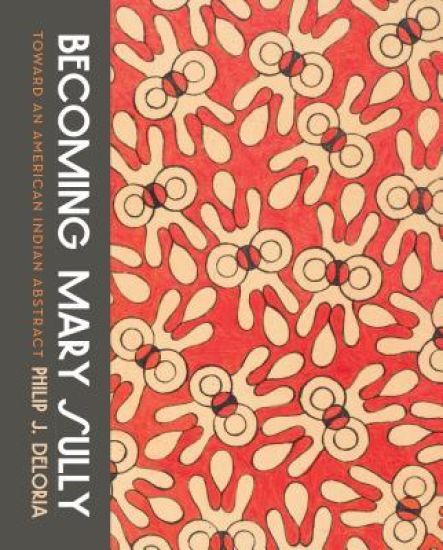
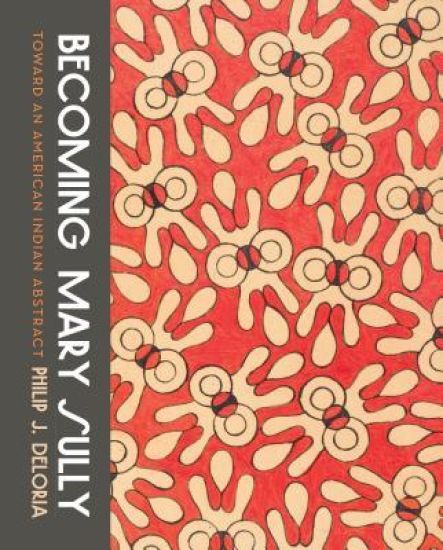
"The moment to savor [Mary Sully]. . . has arrived." —New York TimesDakota Sioux artist Mary Sully was the great-granddaughter of respected nineteenth-century portraitist Thomas Sully, who captured the personalities of America’s first generation of celebrities (including the figure of Andrew Jackson immortalized on the twenty-dollar bill). Born on the Standing Rock reservation in South Dakota in 1896, she was largely self-taught. Steeped in the visual traditions of beadwork, quilling, and hide painting, she also engaged with the experiments in time, space, symbolism, and representation characteristic of early twentieth-century modernist art. And like her great-grandfather Sully was fascinated by celebrity: over two decades, she produced hundreds of colorful and dynamic abstract triptychs, a series of “personality prints” of American public figures like Amelia Earhart, Babe Ruth, and Gertrude Stein.Sully’s position on the margins of the art world meant that her work was exhibited only a handful of times during her life. In Becoming Mary Sully, Philip J. Deloria reclaims that work from obscurity, exploring her stunning portfolio through the lenses of modernism, industrial design, Dakota women’s aesthetics, mental health, ethnography and anthropology, primitivism, and the American Indian politics of the 1930s. Working in a complex territory oscillating between representation, symbolism, and abstraction, Sully evoked multiple and simultaneous perspectives of time and space. With an intimate yet sweeping style, Deloria recovers in Sully’s work a move toward an anti-colonial aesthetic that claimed a critical role for Indigenous women in American Indian futures—within and distinct from American modernity and modernism.
Becoming Mary Sully

Becoming Mary Sully

Philip J. Deloria

University of Washington Press
2019
pokkari
"The moment to savor [Mary Sully]. . . has arrived." —New York TimesDakota Sioux artist Mary Sully was the great-granddaughter of respected nineteenth-century portraitist Thomas Sully, who captured the personalities of America's first generation of celebrities (including the figure of Andrew Jackson immortalized on the twenty-dollar bill). Born on the Standing Rock reservation in South Dakota in 1896, she was largely self-taught. Steeped in the visual traditions of beadwork, quilling, and hide painting, she also engaged with the experiments in time, space, symbolism, and representation characteristic of early twentieth-century modernist art. And like her great-grandfather Sully was fascinated by celebrity: over two decades, she produced hundreds of colorful and dynamic abstract triptychs, a series of "personality prints" of American public figures like Amelia Earhart, Babe Ruth, and Gertrude Stein.Sully's position on the margins of the art world meant that her work was exhibited only a handful of times during her life. In Becoming Mary Sully, Philip J. Deloria reclaims that work from obscurity, exploring her stunning portfolio through the lenses of modernism, industrial design, Dakota women's aesthetics, mental health, ethnography and anthropology, primitivism, and the American Indian politics of the 1930s. Working in a complex territory oscillating between representation, symbolism, and abstraction, Sully evoked multiple and simultaneous perspectives of time and space. With an intimate yet sweeping style, Deloria recovers in Sully's work a move toward an anti-colonial aesthetic that claimed a critical role for Indigenous women in American Indian futures—within and distinct from American modernity and modernism.
American Studies

American Studies

Philip J. Deloria; Alexander I. Olson

University of California Press
2017
sidottu
American Studies has long been a home for adventurous students seeking to understand the culture and politics of the United States. Despite being taught in universities around the world, American Studies has resisted developing a coherent methodology for fear of losing the flexibility and freedom to imagine new avenues of thought. But what if these fears are misplaced? Through a fresh look at the origins of the field, this book contends that a shared set of "rules" can offer a springboard to creativity. American Studies: A User's Guide offers readers a critical introduction to the history and methods of the field, useful strategies for interpretation, curation, analysis, and theory, and case studies of American Studies in practice.
American Studies

American Studies

Philip J. Deloria; Alexander I. Olson

University of California Press
2017
pokkari
American Studies has long been a home for adventurous students seeking to understand the culture and politics of the United States. Despite being taught in universities around the world, American Studies has resisted developing a coherent methodology for fear of losing the flexibility and freedom to imagine new avenues of thought. But what if these fears are misplaced? Through a fresh look at the origins of the field, this book contends that a shared set of "rules" can offer a springboard to creativity. American Studies: A User's Guide offers readers a critical introduction to the history and methods of the field, useful strategies for interpretation, curation, analysis, and theory, and case studies of American Studies in practice.
The Great Sioux Nation

The Great Sioux Nation

Philip J. Deloria

Bison Books
2013
pokkari
“If the moral issues raised by the Sioux people in the federal courtroom that cold month of December 1974 spark a recognition among the readers of a common destiny of humanity over and above the rules and regulations, the codes and statutes, and the power of the establishment to enforce its will, then the sacrifice of the Sioux people will not have been in vain.”-Vine Deloria Jr.The Great Sioux Nation: Sitting in Judgment on America is the story of the Sioux Nation’s fight to regain its land and sovereignty, highlighting the events of 1973–74, including the protest at Wounded Knee. It features pieces by some of the most prominent scholars and Indian activists of the twentieth century, including Vine Deloria Jr., Simon Ortiz, Dennis Banks, Father Peter J. Powell, Russell Means, Raymond DeMallie, and Henry Crow Dog. It also features primary documents and firsthand accounts of the activists’ work and of the trial.New to this Bison Books edition is a foreword by Philip J. Deloria and an introduction by Roxanne Dunbar Ortiz.
Native Acts

Native Acts

Philip J. Deloria

University of Nebraska Press
2012
pokkari
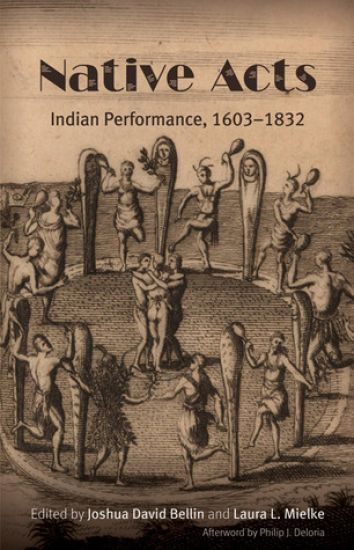
Long before the Boston Tea Party, where colonists staged a revolutionary act by masquerading as Indians, people looked to Native Americans for the symbols, imagery, and acts that showed what it meant to be "American." And for just as long, observers have largely overlooked the role that Native peoples themselves played in creating and enacting the Indian performances appropriated by European Americans. It is precisely this neglected notion of Native Americans "playing Indian" that Native Acts explores. These essays—by historians, literary critics, anthropologists, and folklorists—provide the first broadly based chronicle of the performance of "Indianness" by Natives in North America from the seventeenth through the early nineteenth century. The authors' careful and imaginative analysis of historical documents and performative traditions reveals an intricate history of intercultural exchange. In sum, Native Acts challenges any simple understanding of cultural "authenticity" even as it celebrates the dynamic role of performance in the American Indian pursuit of self-determination. In this collection, Indian peoples emerge as active, vocal, embodied participants in cultural encounters whose performance powerfully shaped the course of early American history.
Indians in Unexpected Places

Indians in Unexpected Places

Philip J. Deloria

University Press of Kansas
2004
nidottu
What is Geronimo doing sitting in a Cadillac? Why is an Indian woman in beaded buckskin sitting under a salon hairdryer? Such images startle and challenge our outdated visions of Native America. Philip Deloria's revealing accounts of Indians doing unexpected things - singing opera, driving cars, acting in Hollywood - explores this cultural discordance in ways that suggest new directions for American Indian history. Deloria chronicles how Indians came to represent themselves in Wild West shows, Hollywood films, sports, music, and even Indian people's use of the automobile - an ironic counterpoint to today's highways teeming with Dakota pickups and Cherokee sport utility vehicles. He also examines longstanding stereotypes of Indians as invariably violent, suggesting that, even as such views continued in American popular culture, they were also transformed by the violence at Wounded Knee. Throughout, Deloria reveals previously hidden narratives that force us to rethink familiar expectations. These ""secret histories,"" Deloria suggests, compel us to reconsider our own current expectations about what Indian people should be, how they should act, and even what they should look like. More important, he shows how such seemingly harmless (even if unconscious) expectations contribute to the racism and injustice that still haunt the experience of many Native American people today.