Kirjailija
Philip James
Kirjat ja teokset yhdessä paikassa: 11 kirjaa, julkaisuja vuosilta 2002-2024, suosituimpien joukossa Adolescents and Substance Use. Vertaile teosten hintoja ja tarkista saatavuus suomalaisista kirjakaupoista.
11 kirjaa
Kirjojen julkaisuhaarukka 2002-2024.

This fully revised second edition reflects the great expansion in urban ecology research, action, and teaching since 2015. Urban ecology provides an understanding of urban ecosystems and uses nature-based techniques to enhance habitats and alleviate poor environmental conditions.Already the home to the majority of the world’s people, urban areas continue to grow, causing ecological changes throughout the world. To help students of all professions caring for urban areas and the people, animals, and plants that live in them, the authors set out the environmental and ecological science of cities, linkages between urban nature and human health, urban food production in cities, and how we can value urban nature. The authors explore our responsibilities for urban nature and greening, ecological management techniques, and the use of nature-based solutions to achieve a better, more sustainable urban future and ensure that cities can climate change and become more beautiful and more sustainable places in which to live.This text provides the student and the practitioner with a critical scientific overview of urban ecology that will be a key source of data and ideas for studies and for sound urban management.

This fully revised second edition reflects the great expansion in urban ecology research, action, and teaching since 2015. Urban ecology provides an understanding of urban ecosystems and uses nature-based techniques to enhance habitats and alleviate poor environmental conditions.Already the home to the majority of the world’s people, urban areas continue to grow, causing ecological changes throughout the world. To help students of all professions caring for urban areas and the people, animals, and plants that live in them, the authors set out the environmental and ecological science of cities, linkages between urban nature and human health, urban food production in cities, and how we can value urban nature. The authors explore our responsibilities for urban nature and greening, ecological management techniques, and the use of nature-based solutions to achieve a better, more sustainable urban future and ensure that cities can climate change and become more beautiful and more sustainable places in which to live.This text provides the student and the practitioner with a critical scientific overview of urban ecology that will be a key source of data and ideas for studies and for sound urban management.
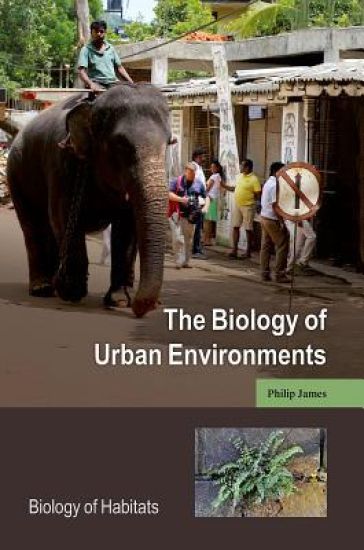
How do plants, animals, and humans manage to survive and adapt to the urban environment? This book provides a comprehensive coverage of biological matters related to urban environments presenting both the conceptual and theoretical underpinnings, and practical examples required to understand and address the challenges presented by this novel environment. The Biology of Urban Environments focusses on urban denizens: species (both domesticated and non-domesticated) that live for all or part of their life cycle in towns and cities. The biology of household plants and companion animals is discussed alongside that of species that have become feral or have not been domesticated. Temporal and spatial distribution patterns are set out and generalizations are made while exceptions are also discussed. The various strategies used and the genotypic, phenotypic, and behavioural adaptions of plants and animals in the face of the challenges presented by urban environments are explained. The final two chapters contain a discussion of the impacts of urban environments on human biology and suggestions on how this understanding might be used to address the increasing human health burden associated with illnesses that are characteristic of urbanites in the early twenty-first century.
How do plants, animals, and humans manage to survive and adapt to the urban environment? This book provides a comprehensive coverage of biological matters related to urban environments presenting both the conceptual and theoretical underpinnings, and practical examples required to understand and address the challenges presented by this novel environment. The Biology of Urban Environments focusses on urban denizens: species (both domesticated and non-domesticated) that live for all or part of their life cycle in towns and cities. The biology of household plants and companion animals is discussed alongside that of species that have become feral or have not been domesticated. Temporal and spatial distribution patterns are set out and generalizations are made while exceptions are also discussed. The various strategies used and the genotypic, phenotypic, and behavioural adaptions of plants and animals in the face of the challenges presented by urban environments are explained. The final two chapters contain a discussion of the impacts of urban environments on human biology and suggestions on how this understanding might be used to address the increasing human health burden associated with illnesses that are characteristic of urbanites in the early twenty-first century.
Adolescents and Substance Use
Philip James; Catriona Kearns; Ann Campbell; Bobby nP. Smyth
Radcliffe Publishing Ltd
2013
nidottu
Highly Commended, BMA Medical Book Awards 2014This highly practical manual presents an ideal introduction to adolescent substance use. It offers invaluable guidance for all professionals involved with adolescents including social workers, health and social care professionals, youth workers, family support workers, teachers, counsellors, mental health teams, A&E staff, police and probation officers. The approach these practitioners take in dealing with the problem has considerable influence over outcomes. It succinctly covers a wealth of information on key matters such as counselling, treatment options, motives for substance abuse, sexual and mental health, policy development, ethical and legal considerations, and the important role of the family. Adolescents and Substance Use provides a user-friendly foundation for effective, evidence-based practice.