Kirjojen hintavertailu. Mukana 12 390 323 kirjaa ja 12 kauppaa.

Kirjailija

Philip Jodidio

Kirjat ja teokset yhdessä paikassa: 97 kirjaa, julkaisuja vuosilta 2006-2026, suosituimpien joukossa Fran Silvestre. Vertaile teosten hintoja ja tarkista saatavuus suomalaisista kirjakaupoista.

97 kirjaa

Kirjojen julkaisuhaarukka 2006-2026.

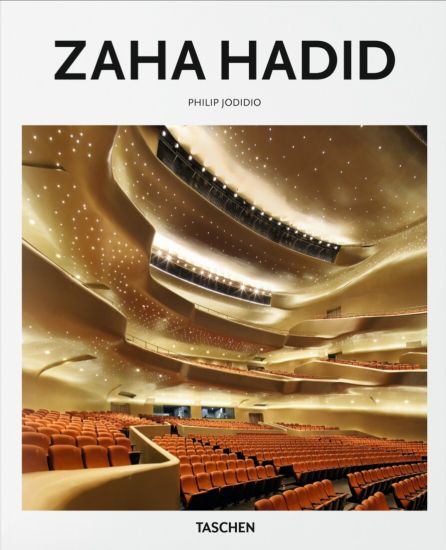
Zaha Hadid

Zaha Hadid

Philip Jodidio

TASCHEN GMBH
2016
sidottu
Zaha Hadid was a revolutionary architect, who for many years built almost nothing, despite winning critical acclaim. Some even said her audacious, futuristic designs were unbuildable. During the latter years of her life, Hadid’s daring visions became a reality, bringing a unique new architectural language to cities and structures as varied as the Rosenthal Center for Contemporary Art in Cincinnati, hailed by The New York Times as “the most important new building in America since the Cold War”; the MAXXI Museum in Rome; the Guangzhou Opera House in China; and the London 2012 Olympics Aquatics Centre. At the time of her unexpected death in 2016, Hadid was firmly established among the elite of world architecture, recognized as the first woman to win both the Pritzker Prize for architecture and the RIBA Royal Gold Medal, but above all as a giver of new forms, the first great architect of the noughties. From her early sharply angled buildings to later more fluid architecture that made floors, ceilings, walls, and furniture part of an overall design, this essential introduction presents key examples of Hadid’s pioneering practice. She was an artist, as much as an architect, who fought to break the old rules and crafted her own 21st-century universe.
Zaha Hadid

Zaha Hadid

Philip Jodidio

Taschen GmbH
2016
sidottu
Zaha Hadid was a revolutionary architect, who for many years built almost nothing, despite winning critical acclaim. Some even said her audacious, futuristic designs were unbuildable. During the latter years of her life, Hadid’s daring visions became a reality, bringing a unique new architectural language to cities and structures as varied as the Rosenthal Center for Contemporary Art in Cincinnati, hailed by The New York Times as “the most important new building in America since the Cold War”; the MAXXI Museum in Rome; the Guangzhou Opera House in China; and the London 2012 Olympics Aquatics Centre. At the time of her unexpected death in 2016, Hadid was firmly established among the elite of world architecture, recognized as the first woman to win both the Pritzker Prize for architecture and the RIBA Royal Gold Medal, but above all as a giver of new forms, the first great architect of the noughties. From her early sharply angled buildings to later more fluid architecture that made floors, ceilings, walls, and furniture part of an overall design, this essential introduction presents key examples of Hadid’s pioneering practice. She was an artist, as much as an architect, who fought to break the old rules and crafted her own 21st-century universe.
Calatrava

Calatrava

Philip Jodidio

TASCHEN GMBH
2016
sidottu
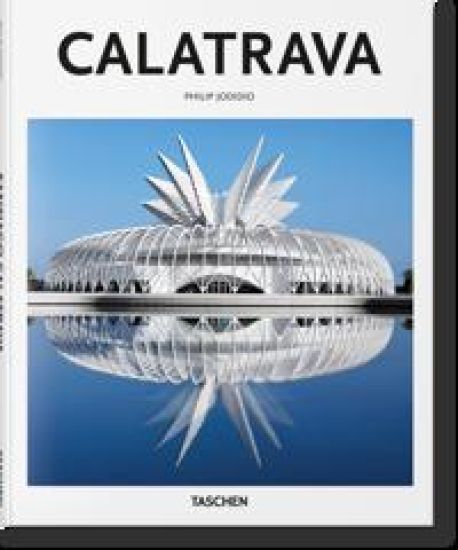
Spanish visionary Santiago Calatrava is renowned around the world as an architect, structural engineer, sculptor, and artist. Famed for bridges as much as buildings, he has made his name with neofuturistic structures that combine deft engineering solutions with dramatic visual impact. From the Athens 2004 Olympic sports complex and the Museum of Tomorrow to the Peace Bridge in Calgary, Alamillo Bridge in Seville, and the Mujer Bridge in Buenos Aires, Calatrava’s creations show particular interest in the meeting point of movement and balance. With influences ranging from NASA space design to da Vinci’s nature studies, the structures dazzle with a sense of lightness, agility, and aerodynamism, but always with a graceful poise amid their particular surroundings. This compact introduction explores Calatrava’s unique aesthetic with key projects from his career, from early breakthroughs to his most recent work. Through buildings of culture, science, faith, and across his many famous bridges, we explore his integration of organic forms and human movements, and a uniquely fluid futurism, soaring towards tomorrow.
Calatrava

Calatrava

Philip Jodidio

Taschen GmbH
2016
sidottu
Spanish visionary Santiago Calatrava is renowned around the world as an architect, structural engineer, sculptor, and artist. Famed for bridges as much as buildings, he has made his name with neofuturistic structures that combine deft engineering solutions with dramatic visual impact. From the Athens 2004 Olympic sports complex and the Museum of Tomorrow to the Peace Bridge in Calgary, Alamillo Bridge in Seville, and the Mujer Bridge in Buenos Aires, Calatrava’s creations show particular interest in the meeting point of movement and balance. With influences ranging from NASA space design to da Vinci’s nature studies, the structures dazzle with a sense of lightness, agility, and aerodynamism, but always with a graceful poise amid their particular surroundings. This compact introduction explores Calatrava’s unique aesthetic with key projects from his career, from early breakthroughs to his most recent work. Through buildings of culture, science, faith, and across his many famous bridges, we explore his integration of organic forms and human movements, and a uniquely fluid futurism, soaring towards tomorrow.
Calatrava

Calatrava

Philip Jodidio

TASCHEN GMBH
2016
sidottu
Spanish visionary Santiago Calatrava is renowned around the world as an architect, structural engineer, sculptor, and artist. Famed for bridges as much as buildings, he has made his name with neofuturistic structures that combine deft engineering solutions with dramatic visual impact. From the Athens 2004 Olympic sports complex and the Museum of Tomorrow to the Peace Bridge in Calgary, Alamillo Bridge in Seville, and the Mujer Bridge in Buenos Aires, Calatrava’s creations show particular interest in the meeting point of movement and balance. With influences ranging from NASA space design to da Vinci’s nature studies, the structures dazzle with a sense of lightness, agility, and aerodynamism, but always with a graceful poise amid their particular surroundings. This compact introduction explores Calatrava’s unique aesthetic with key projects from his career, from early breakthroughs to his most recent work. Through buildings of culture, science, faith, and across his many famous bridges, we explore his integration of organic forms and human movements, and a uniquely fluid futurism, soaring towards tomorrow.
Piano

Piano

Philip Jodidio

Taschen GmbH
2016
sidottu
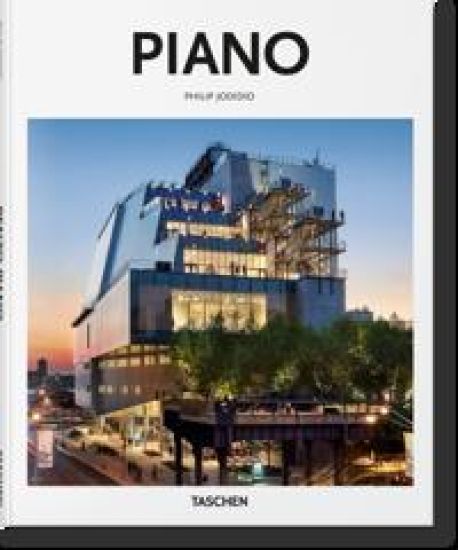
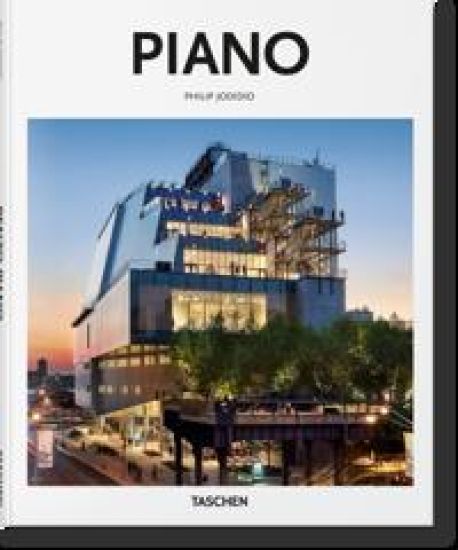
While some architects have a signature style, Renzo Piano seeks to apply coherent ideas to extraordinarily different projects. His buildings impress as much for their individual impact as for their diversity of scale, material, and form. Piano rose to international prominence with his codesign of the Pompidou Center in Paris, described by The New York Times as a building that “turned the architecture world upside down.” Since then, he has continued to craft many high-profile cultural spaces, including the Modern Wing of the Art Institute of Chicago; the Morgan Library Renovation and Expansion in New York; and, most recently, the Whitney Museum of American Art, an asymmetric nine-story structure in Manhattan’s Meatpacking District with both indoor and outdoor galleries. In New York and London, the Renzo touch has also transformed the skyline with the towers of the New York Times Building and the Shard, the tallest building in the European Union. This essential introduction travels from Osaka, Japan, to Bern, Switzerland, and through many cities, structures, and islands in between, to explore the staggering scope of the Renzo Piano repertoire. From the “inside-out” Pompidou to the airy shells of the Tjibaou Cultural Center in Nouméa, New Caledonia, this is a thrilling journey through the beauty of architecture, where, in Piano’s own words, “each time, it is like life starting all over again.”
Piano

Piano

Philip Jodidio

TASCHEN GMBH
2016
sidottu
While some architects have a signature style, Renzo Piano seeks to apply coherent ideas to extraordinarily different projects. His buildings impress as much for their individual impact as for their diversity of scale, material, and form. Piano rose to international prominence with his codesign of the Pompidou Center in Paris, described by The New York Times as a building that “turned the architecture world upside down.” Since then, he has continued to craft many high-profile cultural spaces, including the Modern Wing of the Art Institute of Chicago; the Morgan Library Renovation and Expansion in New York; and, most recently, the Whitney Museum of American Art, an asymmetric nine-story structure in Manhattan’s Meatpacking District with both indoor and outdoor galleries. In New York and London, the Renzo touch has also transformed the skyline with the towers of the New York Times Building and the Shard, the tallest building in the European Union. This essential introduction travels from Osaka, Japan, to Bern, Switzerland, and through many cities, structures, and islands in between, to explore the staggering scope of the Renzo Piano repertoire. From the “inside-out” Pompidou to the airy shells of the Tjibaou Cultural Center in Nouméa, New Caledonia, this is a thrilling journey through the beauty of architecture, where, in Piano’s own words, “each time, it is like life starting all over again.”
Piano

Piano

Philip Jodidio

TASCHEN GMBH
2016
sidottu
While some architects have a signature style, Renzo Piano seeks to apply coherent ideas to extraordinarily different projects. His buildings impress as much for their individual impact as for their diversity of scale, material, and form. Piano rose to international prominence with his codesign of the Pompidou Center in Paris, described by The New York Times as a building that “turned the architecture world upside down.” Since then, he has continued to craft many high-profile cultural spaces, including the Modern Wing of the Art Institute of Chicago; the Morgan Library Renovation and Expansion in New York; and, most recently, the Whitney Museum of American Art, an asymmetric nine-story structure in Manhattan’s Meatpacking District with both indoor and outdoor galleries. In New York and London, the Renzo touch has also transformed the skyline with the towers of the New York Times Building and the Shard, the tallest building in the European Union. This essential introduction travels from Osaka, Japan, to Bern, Switzerland, and through many cities, structures, and islands in between, to explore the staggering scope of the Renzo Piano repertoire. From the “inside-out” Pompidou to the airy shells of the Tjibaou Cultural Center in Nouméa, New Caledonia, this is a thrilling journey through the beauty of architecture, where, in Piano’s own words, “each time, it is like life starting all over again.”
100 Contemporary Houses

100 Contemporary Houses

Philip Jodidio

Taschen GmbH
2016
sidottu
Designing private residences has its own very special challenges and nuances for the architect. The scale may be more modest than public projects, the technical fittings less complex than an industrial site, but the preferences, requirements and vision of particular personalities becomes priority. The delicate task is to translate all the emotive associations and practical requirements of “home” into a workable, constructed reality. This publication rounds up 100 of the world’s most interesting and pioneering homes designed in the past two decades, featuring a host of talents both new and established, including John Pawson, Richard Meier, Shigeru Ban, Tadao Ando, Zaha Hadid, Herzog & de Meuron, Daniel Libeskind, Alvaro Siza, and Peter Zumthor. Accommodating daily routines of eating, sleeping, and shelter, as well as offering the space for personal experience and relationships, this is architecture at its most elementary and its most intimate.
100 Contemporary Concrete Buildings
Concrete? That characterless stuff of parking lots or Communist tower blocks, right? Well, yes. And no. Concrete is actually a name applied to a remarkably wide range of building substances, and, when properly handled, is one of the noble materials of contemporary architecture. A kind of “liquid stone” at the outset, it is malleable, durable, and capable of prodigious feats of engineering.This two-volume book highlights the best work done in concrete of recent years. It includes such stars as Zaha Hadid, Herzog & de Meuron, and Steven Holl, but also surprising new architects like the Russians SPEECH, and rising stars of the international scene like Rudy Ricciotti from France, as well as artists such as James Turrell, who turned the famous concrete spiral of Frank Lloyd Wright’s Guggenheim in New York into the setting of one of his most remarkable pieces.
Niemeyer

Niemeyer

Philip Jodidio

Taschen GmbH
2016
sidottu
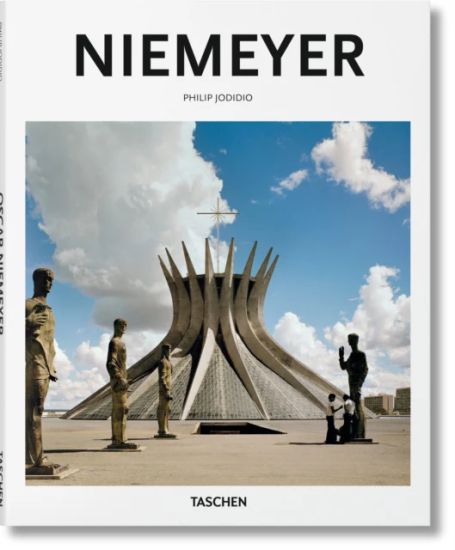
Until his death at age 104, Oscar Niemeyer (1907–2012) was something of an unstoppable architectural force. Over seven decades of work, he designed approximately 600 buildings, transforming skylines from Bab-Ezzouar, Algeria, to his homeland masterpiece Brasília. Niemeyer’s work took the reduced forms of modernism and infused them with free-flowing grace. In place of pared-down starkness, his structures rippled with sinuous and seductive lines. In buildings such as the Niterói Contemporary Art Museum, Edifício Copan, or the Metropolitan Cathedral in Brasília, he brought curvaceousness to the concrete jungle. In the futuristic federal capital of Brasília, he designed almost all public buildings, and thus became integral to the global image of Brazil. With rich illustrations documenting highlights from his prolific career, this book introduces Niemeyer’s unique vision and its transformative influence on buildings of business, faith, culture, and the public imagination of Brazil.
Shigeru Ban. Complete Works 1985–2015

Shigeru Ban. Complete Works 1985–2015

Philip Jodidio

Taschen GmbH
2015
sidottu
From a house without walls to exhibition spaces in shipping containers, Shigeru Ban has constantly challenged architectural rule and expectation. In the age of the “starchitect,” he has also demonstrated a commitment to humanitarian practice: Over the course of his esteemed career, his inventive, elegant designs have been applied as much to private commissions as to emergency relief work at the sites of natural and man-made disasters around the world, from Kobe to New Orleans. For the Pritzker Prize jury, which chose Ban as its 2014 winner, the architect manifests “total curiosity and commitment; endless innovation; an infallible eye; an acute sensibility.” This updated monograph, compiled with the architect’s collaboration, brings together every one of Ban's built works, including such recent projects as the Tamedia headquarters in Zurich, the Aspen Art Museum, and the Cardboard Cathedral in Christchurch.
Tabanlioglu Architects

Tabanlioglu Architects

Philip Jodidio; Suha Ozkan

Skira Rizzoli
2014
sidottu
The first comprehensive volume on the Istanbul-based firm Tabanlioglu Architects, whose innovative designs come from the modern tradition. The scope of Tabanlioglu's projects is all-encompassing, from residential to mixed-use complexes across Turkey and abroad, including a wide range of building types from high-rises to museums.
Tree Houses. Castillos de Cuento En El Aire
The idea of climbing a tree for shelter, or just to see the earth from another perspective, is surely as old as humanity. Tree houses are chronicled in ancient civilizations and their lore crosses through the history of every part of the world where trees grow. This stunningly illustrated study offers a tour of the best tree houses in the world, some designed by architects, others the work of unknown craftsmen. A teahouse, a restaurant, a hotel, a playhouse for children, or a perch from which to contemplate life--the tree house can take as many forms as the imagination can offer. In times of concern for sustainability and ecological responsibility, the tree house may also be the ultimate symbol of life in symbiosis with nature. Whether rustic or contemporary in style, tree houses make the most of space. Climb into this trove of tree houses and enjoy a new perspective on the world. 50 tree houses from around the worldCovers all different styles, from romantic to modernEvery house is depicted in several photos as well as one illustration by artist Patrick Hruby from Los Angeles (who also created the book's cover artwork)Helpful short biographies of all architects
Valode & Pistre Architects

Valode & Pistre Architects

Philip Jodidio

Birkhauser
2006
sidottu
The firm of Denis Valode and Jean Pistre, which has been practicing for 25 years, entered upon a new phase of its career in 1992, when the architects — in cooperation with the landscape architect Kathryn Gustafson — received the Equerre d’argent prize of the journal Le Moniteur for the L’Oréal corporate headquarters outside Paris. Their predominantly large-scale projects are distinguished by their high degree of diversity. For some years, Valode & Pistre have not only been practicing in France, their native country, but also maintain offices in Germany, Italy, Great Britain, Russia, Mexico, China, and elsewhere. This book contains detailed presentations of 18 projects by Valode & Pistre, with documentation focusing on the specific working and design methods of the architects. Projects presented include the Renault Technocentre in Guyancourt, France; the Las Mercedes business park in Madrid, Spain; a group of office and hotel towers in Beijing, China; and the Hyatt Hotel in Ekaterinburg, Russia. Die Karriere des seit 25 Jahren praktizierenden Büros von Denis Valode und Jean Pistre trat 1992 in eine neue Phase, als die Architekten – in Kooperation mit der Landschaftsarchitektin Kathryn Gustafson – für den Firmensitz von l Oréal bei Paris den Equerre d argent-Preis erhielten, den bedeutendsten Architekturpreis Frankreichs. Ihre zumeist großmaßstäblichen Projekte zeichnen sich durch eine weite Vielfalt aus. Seit einigen Jahren praktizieren Valode & Pistre nicht nur in ihrem Mutterland Frankreich, sondern unterhalten Büros in Spanien und Polen und sind mit ihren Projekten u.a. auch in Deutschland, Italien, Großbritannien, Rußland, Mexiko und China vertreten. Das Buch stellt etwa 18 Projekte von Valode & Pistre ausführlich dar, wobei die spezifische Arbeitsweise und die Entwurfsmethoden im Mittelpunkt der Dokumentation stehen. Zu den vorgestellten Projekten gehören u.a das Renault-Technozentrum in Guyancourt, Frankreich, der Büropark Cristalia in Madrid, Spanien, ein Büro- und Hotelturm in Peking, China und ein Handelszentrum in Sankt Petersburg, Rußland.