Kirjojen hintavertailu. Mukana 12 595 353 kirjaa ja 12 kauppaa.

Kirjailija

Philip Katcher

Kirjat ja teokset yhdessä paikassa: 30 kirjaa, julkaisuja vuosilta 1973-2007, suosituimpien joukossa The American Civil War Day by Day. Vertaile teosten hintoja ja tarkista saatavuus suomalaisista kirjakaupoista.

30 kirjaa

Kirjojen julkaisuhaarukka 1973-2007.

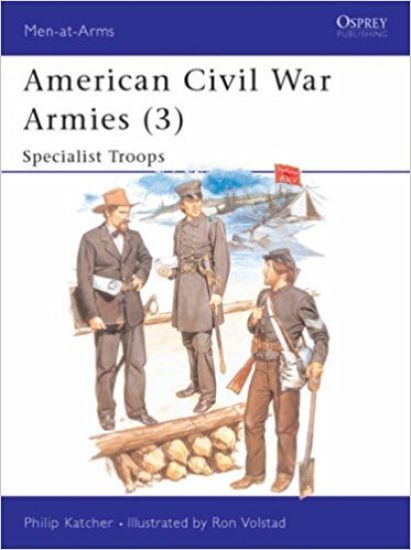
American Civil War Armies (3)

American Civil War Armies (3)

Philip Katcher

Osprey Publishing
1987
nidottu
A concise illustrated study of the uniforms and organization of the specialist troops on both sides of the US Civil War. At the time of the American Civil War, with two million men under arms, a US Army that in pre-war days had depended upon a minute number of technical troops now required virtually an army of specialists alone. Special sharpshooters were recruited for skirmishing duty; men whose wounds would have led to their discharge in the past now found themselves guarding important posts in the Veteran Reserve Corps; and large numbers of civilians found themselves in uniform as members of the Telegraph or Hospital Corps. Philip Katcher examines the organization and uniforms of the specialist troops who served in the armies of both sides. The text is supported by 50 black-and-white images along with 8 superb colour artwork plates depicting the uniforms and equipment of specialist troop types.
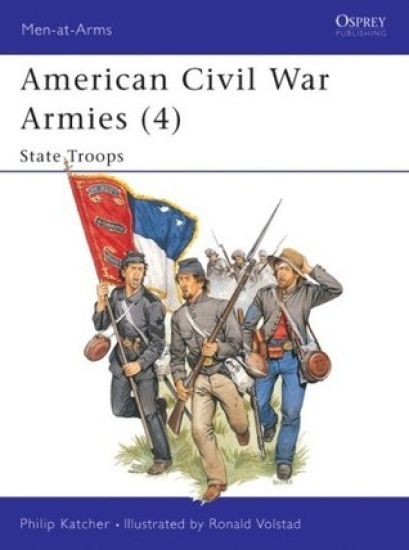
American Civil War Armies (4)

American Civil War Armies (4)

Philip Katcher

Osprey Publishing
1987
nidottu
A concise illustrated study of the uniforms worn by the troops of 32 states in the US Civil War. 'The War between the States' is the term used for the American Civil War throughout much of the South even today. Many on both sides – not just the South – felt that they were serving their states as much, if not more, than their central governments. Many of the states agreed; the state governments raising their own units, commissioning their officers, and supplying their men. Indeed, many of the units that fought the Civil War were supplied in large part by their own states rather than by the central government's quartermasters. Philip Katcher's fascinating text explores the uniforms of 32 states, from Alabama to Wisconsin, supported by a selection of images throughout, and 8 superb artwork plates depicting the uniforms and equipment of the state troops.
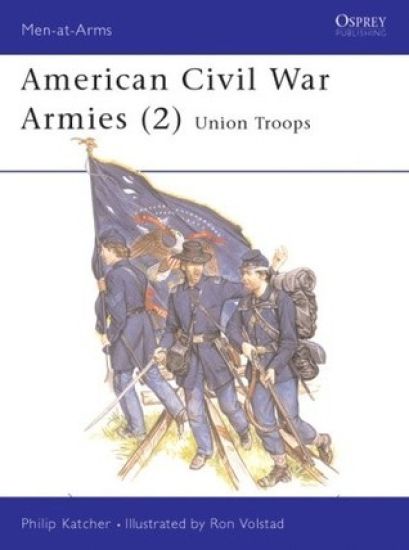
American Civil War Armies (2)

American Civil War Armies (2)

Philip Katcher

Osprey Publishing
1986
nidottu
A concise illustrated study of the uniforms, accoutrements, insignia and weapons of the Union artillery, infantry and cavalry between 1861 and 1865. The US Army during the Civil War was the largest the country had raised in its brief history, and it would remain the largest ever raised until World War I. In all, 2,772,408 men served in some branch or other of the US Army. This detailed work by Philip Katcher is a comprehensive guide to the uniforms, accoutrements, insignia and weapons of the Union troops who fought the American Civil War, with a wealth of illustrations, including contemporary photographs and eight full page colour plates by Ron Volstad.
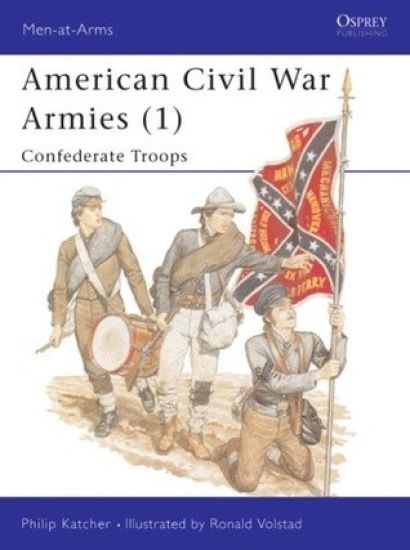
American Civil War Armies (1)

American Civil War Armies (1)

Philip Katcher

Osprey Publishing
1986
nidottu
A concise illustrated study of the uniforms, arms and personal equipment issued by the national Confederate government to its artillery, cavalry, and infantry. When the Southern states seceded to form their own government in 1861, one of their first moves was to organise an army. The South's fighting men served from the time of their enlistment until the end of the war, receiving poor rations, and even worse clothing – and this despite the fact that one of the first steps taken by the new army was to design a uniform and establish standards for accoutrements and weapons. In this first of five volumes examining American Civil War armies, Philip Katcher profiles the uniforms issued by the national Confederate government to its artillery, cavalry and infantry in detailed text accompanied by black-and-white images and 8 superb colour plates by artist Ron Volstad.
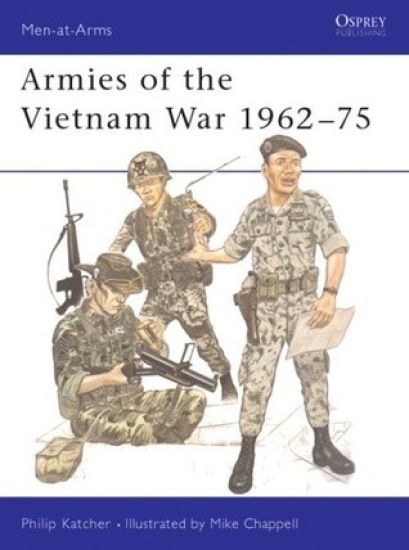
Armies of the Vietnam War 1962–75

Armies of the Vietnam War 1962–75

Philip Katcher

Osprey Publishing
1980
nidottu
Philip Katcher provides an overview to the conflict that engulfed Vietnam following the division of the country into two along the 17th Parallel in 1954.The uniforms and insignia of the US forces, including the army, Special Forces, air force, navy and marine corps, are dealt with in detail, together with those of the ARVN, the Allied Forces (such as the Royal Thai Army and Korean troops), and also the Communist NLF (Viet Cong) and NVA forces.Mike Chappell's colourful artwork provides plenty of detail to accompany this authoritative text.
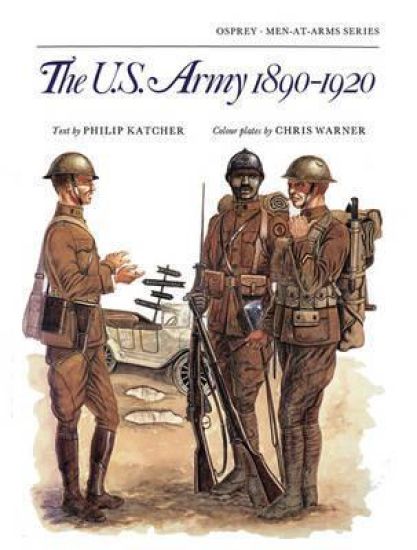
The US Army 1890–1920

The US Army 1890–1920

Philip Katcher

Osprey Publishing
1978
nidottu
Between 1890 and 1920 the US Army underwent profound changes in organization, function, composition and appearance.The Army was transformed from a small, blue-clad force whose primary weapon was the single-shot rifle, into a mighty host of men dressed in dirt-coloured combat uniforms, using automatic weapons, tanks and aircraft to fight enemies on fields across the world. This book details the Army's developments during its involvement in the Spanish-American War, the Boxer Rebellion and World War I.Particular attention is given to the evolution of the Army's uniforms, which are illustrated vividly by Chris Warner throughout the book.
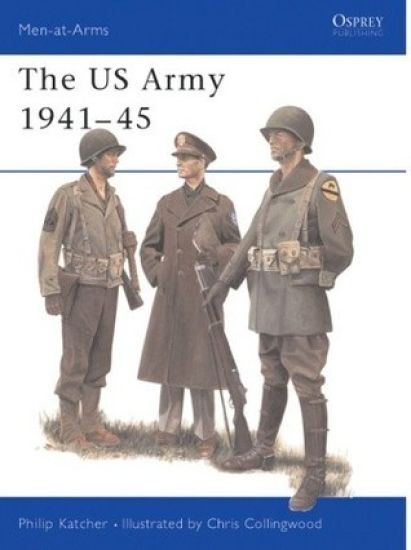
The US Army 1941–45

The US Army 1941–45

Philip Katcher

Osprey Publishing
1978
nidottu
At the time of the Second World War, the United States Army took an unusual approach, for the period, towards the design of its uniforms.Rather than attempt to find an all-purpose outfit, such as the British battledress, it attempted to design special-purpose dress for every possible duty, from combat in cold climates to dress parades in hot ones.Alongside illustrations, photographs and colour plates, Philip Katcher provides an extensive examination of the many different types of uniform and equipment which saw service during the conflict.
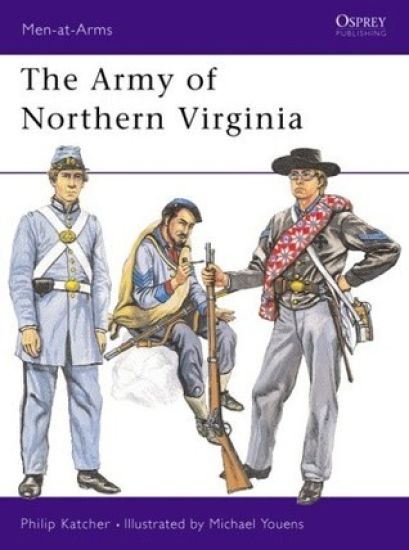
The Army of Northern Virginia

The Army of Northern Virginia

Philip Katcher

Osprey Publishing
1975
nidottu
On the 27 June, 1862, with the American Civil War already a year old, General Robert E. Lee assumed personal command of troops engaged in driving the Federal Army of the Potomac out of Richmond – troops which would henceforth be known as The Army of Northern Virginia. Philip Katcher explores in absorbing detail all aspects of the army, including infantry, cavalry, artillery, technical and medical corps, paying particular attention to equipment, weapons and uniforms. Contemporary and museum photographs, together with the author's expert text, combine to a paint a vivid and accurate picture of what life was like for the average confederate soldier.
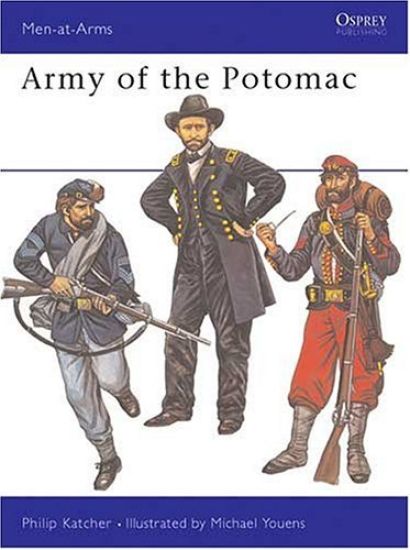
Army of the Potomac

Army of the Potomac

Philip Katcher

Osprey Publishing
1974
nidottu
In October 1861 the Army of the Potomac officially came into being.For General George B. McClellan, the dejected Union troops who poured into Washington fresh from defeat at Bull Run on Monday 22 July, 1861, were to provide the raw material which he would train, equip, organise and ultimately transform from a mere mob into an effective fighting force.This entertaining volume from the same team of author Philip Katcher and artist Michael Youens who produced Men-at-Arms 37 The Army of Northern Virginia, explores how this transition came about, with a particular emphasis on weapons, uniforms and equipment.
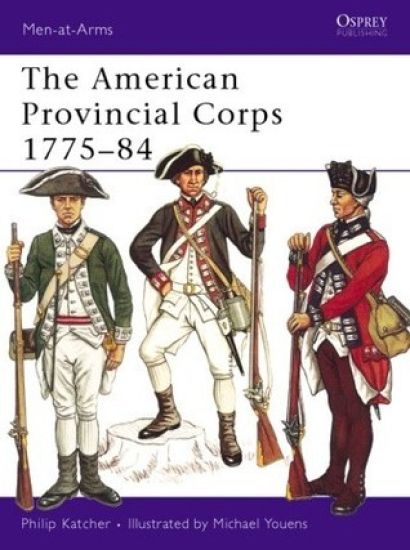
The American Provincial Corps 1775–84

The American Provincial Corps 1775–84

Philip Katcher

Osprey Publishing
1973
nidottu
Initially British officials were reluctant to accept the offers of loyal subjects to form fighting units but eventually the potential of a Provincial corps was realized. Yet they never received the whole-hearted support of the British regular army and this was a factor in their evental defeat. Nonetheless the Provincial Corps served with distinction – even fighting against the Spanish in Nicaragua and the Bahamas – and some remained in service for several more years by relocating to Canada. This book examines their experiences in this continental conflict and details their uniforms and equipment.