Kirjojen hintavertailu. Mukana 12 390 323 kirjaa ja 12 kauppaa.

Kirjailija

Philip Kitcher

Kirjat ja teokset yhdessä paikassa: 28 kirjaa, julkaisuja vuosilta 1983-2025, suosituimpien joukossa Joyce's Kaleidoscope. Vertaile teosten hintoja ja tarkista saatavuus suomalaisista kirjakaupoista.

28 kirjaa

Kirjojen julkaisuhaarukka 1983-2025.

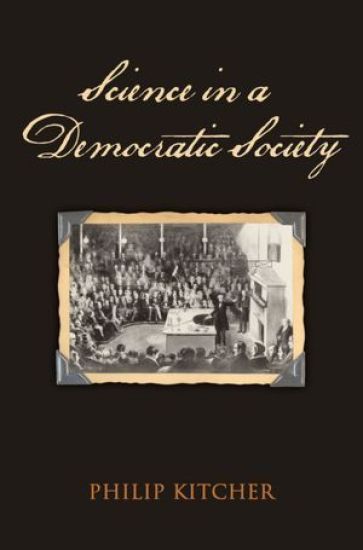
Science in a Democratic Society

Science in a Democratic Society

Philip Kitcher

Prometheus Books
2011
sidottu
In this successor to his pioneering Science, Truth, and Democracy, the author revisits the topic explored in his previous work-namely, the challenges of integrating science, the most successful knowledge-generating system of all time, with the problems of democracy. But in this new work, the author goes far beyond that earlier book in studying places at which the practice of science fails to answer social needs. He considers a variety of examples of pressing concern, ranging from climate change to religiously inspired constraints on biomedical research to the neglect of diseases that kill millions of children annually, analyzing the sources of trouble. He shows the fallacies of thinking that democracy always requires public debate of issues most people cannot comprehend, and argues that properly constituted expertise is essential to genuine democracy. No previous book has treated the place of science in democratic society so comprehensively and systematically, with attention to different aspects of science and to pressing problems of our times.
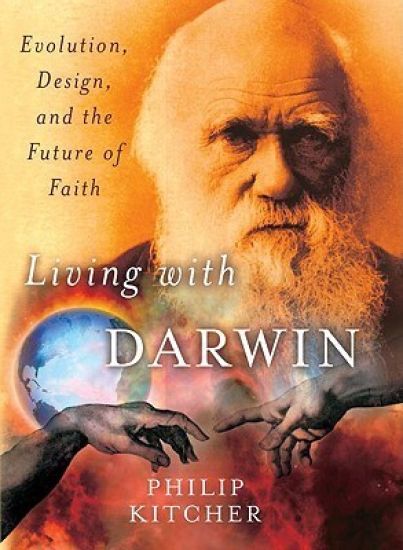
Living with Darwin

Living with Darwin

Philip Kitcher

Oxford University Press Inc
2009
nidottu
Charles Darwin has been at the center of white-hot public debate for more than a century. In Living With Darwin, Philip Kitcher stokes the flames swirling around Darwin's theory, sifting through the scientific evidence for evolution, Creation Science, and Intelligent Design, and revealing why evolution has been the object of such vehement attack. Kitcher first provides valuable perspective on the present controversy, describing the many puzzles that blocked evolution's acceptance in the early years, and explaining how scientific research eventually found the answers to these conundrums. Interestingly, Kitcher shows that many of these early questions have been resurrected in recent years by proponents of Intelligent Design. In fact, Darwin himself considered the issue of intelligent design, and amassed a mountain of evidence that effectively refuted the idea. Kitcher argues that the problem with Intelligent Design isn't that it's "not science," as many critics say, but that it's "dead science," raising questions long resolved by scientists. But Kitcher points out that it is also important to recognize the cost of Darwin's success--the price of "life with Darwin." Darwinism has a profound effect on our understanding of our place in the universe, on our religious beliefs and aspirations. It is in truth the focal point of a larger clash between religious faith and modern science. Unless we can resolve this larger issue, the war over evolution will go on.
Finding an Ending

Finding an Ending

Philip Kitcher; Richard Schacht

Oxford University Press Inc
2005
nidottu
Few musical works loom as large in Western culture as Richard Wagner's four-part Ring of the Nibelung. In Finding an Ending, two eminent philosophers, Philip Kitcher and Richard Schacht, offer an illuminating look at this greatest of Wagner's achievements, focusing on its far-reaching and subtle exploration of problems of meanings and endings in this life and world. Kitcher and Schacht plunge the reader into the heart of Wagner's Ring, drawing out the philosophical and human significance of the text and the music. They show how different forms of love, freedom, heroism, authority, and judgment are explored and tested as it unfolds. As they journey across its sweeping musical-dramatic landscape, Kitcher and Schacht lead us to the central concern of the Ring—the problem of endowing life with genuine significance that can be enhanced rather than negated by its ending, if the right sort of ending can be found. The drama originates in Wotan's quest for a transformation of the primordial state of things into a world in which life can be lived more meaningfully. The authors trace the evolution of Wotan's efforts, the intricate problems he confronts, and his failures and defeats. But while the problem Wotan poses for himself proves to be insoluble as he conceives of it, they suggest that his very efforts and failures set the stage for the transformation of his problem, and for the only sort of resolution of it that may be humanly possible—to which it is not Siegfried but rather Brünnhilde who shows the way. The Ring's ending, with its passing of the gods above and destruction of the world below, might seem to be devastating; but Kitcher and Schacht see a kind of meaning in and through the ending revealed to us that is profoundly affirmative, and that has perhaps never been so powerfully and so beautifully expressed.
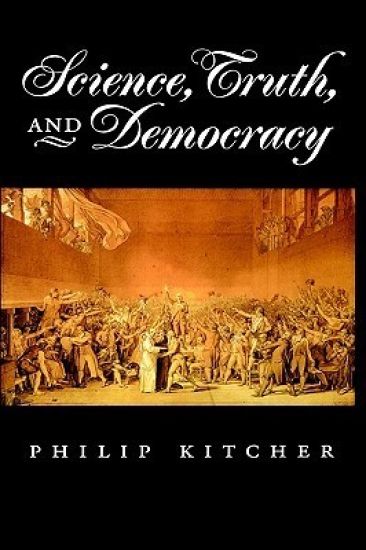
Science, Truth, and Democracy

Science, Truth, and Democracy

Philip Kitcher

OXFORD UNIVERSITY PRESS INC
2001
sidottu
Striving to boldly redirect the philosophy of science, this book by renowned philosopher Philip Kitcher examines the heated debate surrounding the role of science in shaping our lives. Kitcher explores the sharp divide between those who believe that the pursuit of scientific knowledge is always valuable and necessary-the purists-and those who believe that it invariably serves the interests of people in positions of power. In a daring turn, he rejects both perspectives, working out a more realistic image of the sciences-one that allows for the possibility of scientific truth, but nonetheless permits social consensus to determine which avenues to investigate. He then proposes a democratic and deliberative framework for responsible scientists to follow. Controversial, powerful, yet engaging, this volume will appeal to a wide range of readers. Kitcher's nuanced analysis and authoritative conclusion will interest countless scientists as well as all readers of science-scholars and laypersons alike.
The Advancement of Science

The Advancement of Science

Philip Kitcher

Oxford University Press Inc
1995
nidottu
Philip Kitcher resurrects notions of objectivity and progress in science by identifying both the limitations of idealized treatments of the growth of knowledge and overreactions to philosophical idealizations.
The Nature of Mathematical Knowledge

The Nature of Mathematical Knowledge

Philip Kitcher

Oxford University Press Inc
1985
nidottu
This book argues against the view that mathematical knowledge is a priori, contending that mathematics is an empirical science and develops historically, just as natural sciences do. Kitcher presents a complete, systematic, and richly detailed account of the nature of mathematical knowledge and its historical development, focusing on such neglected issues as how and why mathematical language changes, why certain questions assume overriding importance, and how standards of proof are modified.
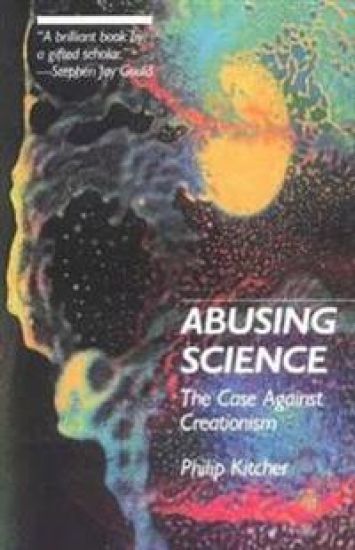
Abusing Science

Abusing Science

Philip Kitcher

MIT Press
1983
pokkari
Abusing Science is a manual for intellectual self-defense, the most complete available for presenting the case against Creationist pseudo-science. It is also a lucid exposition of the nature and methods of genuine science. The book begins with a concise introduction to evolutionary theory for non-scientists and closes with a rebuttal of the charge that this theory undermines religious and moral values. It will astonish many readers that this case must still be made in the 1980s, but since it must, Philip Kitcher makes it irresistibly and forcefully.Not long ago, a federal court struck down an Arkansas law requiring that "scientific" Creationism be taught in high school science classes. Contemporary Creationists may have lost one legal battle, but their cause continues to thrive. Their efforts are directed not only at state legislatures but at local school boards and textbook publishers. As Kitcher argues in this rigorous but highly readable book, the integrity of science is under attack. The methods of inquiry used in evolutionary biology are those which are used throughout the sciences. Moreover, modern biology is intertwined with other fields of science-physics, chemistry, astronomy, and geology. Creationists hope to persuade the public that education in science should be torn apart to make room for a literal reading of Genesis.Abusing Science refutes the popular complaint that the scientific establishment is dogmatic and intolerant, denying "academic freedom" to the unorthodox. It examines Creationist claims seriously and systematically, one by one, showing clearly just why they are at best misguided, at worst ludicrous.