Kirjojen hintavertailu. Mukana 12 262 769 kirjaa ja 12 kauppaa.

Kirjailija

Philip Levy

Kirjat ja teokset yhdessä paikassa: 9 kirjaa, julkaisuja vuosilta 1994-2025, suosituimpien joukossa Fellow Travelers. Vertaile teosten hintoja ja tarkista saatavuus suomalaisista kirjakaupoista.

9 kirjaa

Kirjojen julkaisuhaarukka 1994-2025.

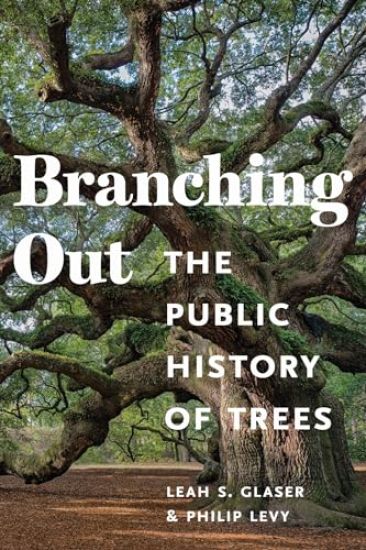
Branching Out

Branching Out

Leah Glaser; Philip Levy

UNIVERSITY OF MASSACHUSETTS PRESS
2025
sidottu
Trees are not just natural resources; they are also cultural ones that present unique challenges and opportunities for public historians. Trees can serve as important objects of memory, recalling past triumphs or tragedies. They can be the last living witness to important events or community stories. Trees can also be objects of preservation, sometimes as individuals, other times as stands or even forests, all of which can take on historical significance for people, sites, and institutions. But as living entities they defy the kind of permanent legal preservation applicable to buildings and other non-living historical objects. Furthermore, their organic fragility can actually make them significant problems for historical sites and local preservation activities. For example, communities have had to cope with extensive tree loss from storm and fire damage, and dying trees can drop limbs or topple over, creating considerable danger to people and resources. Climate-change-driven increasing storm intensity has also highlighted the ways that trees—however historical or beloved—can become considerable threats. The fourteen new, previously unpublished essays in this volume explore the many ways that trees are an integral part of public history practice and sites. The authors draw on a range of approaches and historiographies to look at how memories of race-based hate, patriotic stories, community identities, and changed places all have centered on trees. In addition to contributions from the volume editors, this collection features scholarship by Sonja DÜmpelmann Andrew Hurley, Carolyn M. Barske Crawford, Brian Dempsey, Liz Sargent, Sasha Coles, Mariaelena DiBenigno, Evan Haefeli, Krista McCracken, Alena Pirok, Christian Kosmas Mayer Alaina Scapicchio, and David Glassberg.
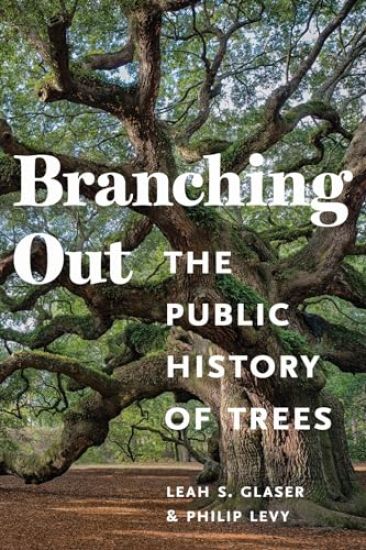
Branching Out

Branching Out

Leah Glaser; Philip Levy

UNIVERSITY OF MASSACHUSETTS PRESS
2025
nidottu
Trees are not just natural resources; they are also cultural ones that present unique challenges and opportunities for public historians. Trees can serve as important objects of memory, recalling past triumphs or tragedies. They can be the last living witness to important events or community stories. Trees can also be objects of preservation, sometimes as individuals, other times as stands or even forests, all of which can take on historical significance for people, sites, and institutions. But as living entities they defy the kind of permanent legal preservation applicable to buildings and other non-living historical objects. Furthermore, their organic fragility can actually make them significant problems for historical sites and local preservation activities. For example, communities have had to cope with extensive tree loss from storm and fire damage, and dying trees can drop limbs or topple over, creating considerable danger to people and resources. Climate-change-driven increasing storm intensity has also highlighted the ways that trees—however historical or beloved—can become considerable threats. The fourteen new, previously unpublished essays in this volume explore the many ways that trees are an integral part of public history practice and sites. The authors draw on a range of approaches and historiographies to look at how memories of race-based hate, patriotic stories, community identities, and changed places all have centered on trees. In addition to contributions from the volume editors, this collection features scholarship by Sonja DÜmpelmann Andrew Hurley, Carolyn M. Barske Crawford, Brian Dempsey, Liz Sargent, Sasha Coles, Mariaelena DiBenigno, Evan Haefeli, Krista McCracken, Alena Pirok, Christian Kosmas Mayer Alaina Scapicchio, and David Glassberg.
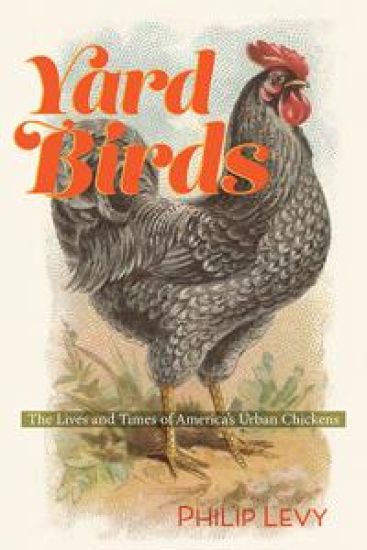
Yard Birds

Yard Birds

Philip Levy

UNIVERSITY OF VIRGINIA PRESS
2023
pokkari
In 2009, the New Yorker declared chickens the "it bird" and heralded "the return of the backyard chicken." This honour occurred as, a host of American cities were changing their laws to allow chickens in residents’ backyards. Philip Levy, a sometime chicken keeper himself, mixes cultural history with husbandry to chronicle the weird and wonderful story of Americans’ urban chickens. From the streets of Brooklyn to council chambers in Albany to the beat of Key West’s Chicken Nuisance Patrol, yard birds are an important and growing part of American city life.Part history, part travelogue, and part reportage, Yard Birds takes the reader on a tour-de-force journey across America, past and present, to profile its urban chickens housed in luxury coops or dying at yearly rituals. What emerges is a compelling picture of city chickens that can both serve as hipster status symbols and guarantee that the families keeping them have at least something to eat. Levy’s smart and entertaining investigation of the contemporary urban chicken craze reveals that poultry flocks were historically an integral part of America’s urban spaces; chickens have simply returned home now, some to very fancy roosts.
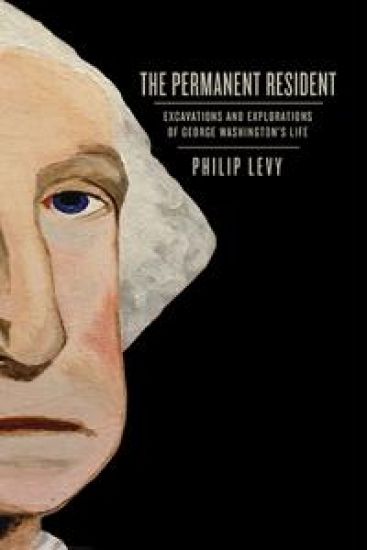
The Permanent Resident

The Permanent Resident

Philip Levy

UNIVERSITY OF VIRGINIA PRESS
2022
sidottu
No figure in American history has generated more public interest or sustained more scholarly research around his various homes and habitations than has George Washington. The Permanent Resident is the first book to bring the principal archaeological sites of Washington's life together under one cover, revealing what they say individually and collectively about Washington’s life and career and how Americans have continued to invest these places with meaning.Philip Levy begins with Washington’s birthplace in Westmoreland County, Virginia, then moves to Ferry Farm-site of the mythical cherry tree-before following Washington to Barbados to examine how his only trip outside the continental United States both shaped him and lingered in local memory. The book then profiles the site of Washington’s first military engagement and his nation-making stay in Philadelphia. From archaeological study of Mount Vernon, Levy also derives fascinating insights about how slavery changed and was debated at Washington's famous home. Levy considers the fates of Washington statues and commemorations to understand how they have functioned as objects of veneration-and sometimes vandalism-for more than a century and a half.Two hundred years after his death, at the sites of his many abodes, Washington remains an inescapable presence. The Permanent Resident guides us through the places where Washington lived and in which Americans have memorialized him, speaking to issues that have defined and challenged America from his time to our own.
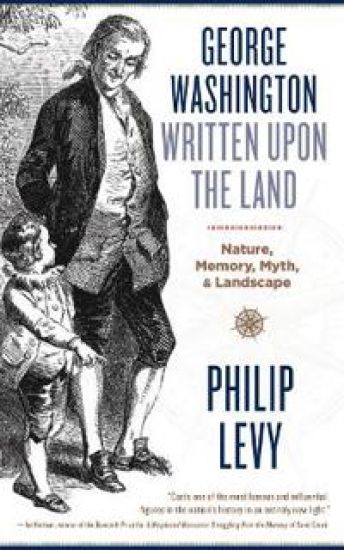
George Washington Written Upon the Land

George Washington Written Upon the Land

Philip Levy

West Virginia University Press
2015
nidottu
George Washington’s childhood is famously the most elusive part of his life story. For centuries biographers have struggled with a lack of period documentation and an absence of late-in-life reflection in trying to imagine Washington’s formative years.In George Washington Written upon the Land, Philip Levy explores this most famous of American childhoods through its relationship to the Virginia farm where much of it took place. Using approaches from biography, archaeology, folklore, and studies of landscape and material culture, Levy focuses on how different ideas about Washington’s childhood functioned—what sorts of lessons they sought to teach and how different epochs and writers understood the man and the past itself.In a suggestive and far-reaching final chapter, Levy argues that Washington was present at the onset of the Anthropocene—the geologic era when human activity began to have a significant impact on world ecosystems. Interpreting Washington’s childhood farm through the lens of “big” history, he encourages scholars to break down boundaries between science and social science and between human and nonhuman.
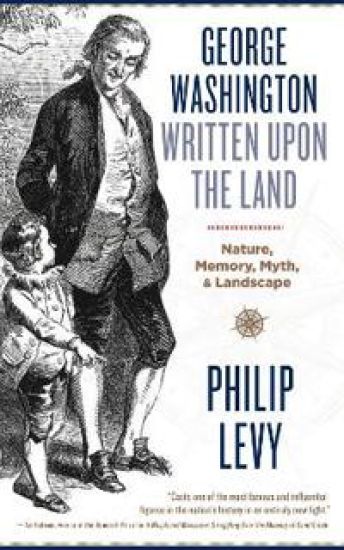
George Washington Written Upon the Land

George Washington Written Upon the Land

Philip Levy

West Virginia University Press
2015
sidottu
George Washington’s childhood is famously the most elusive part of his life story. For centuries biographers have struggled with a lack of period documentation and an absence of late-in-life reflection in trying to imagine Washington’s formative years.In George Washington Written upon the Land, Philip Levy explores this most famous of American childhoods through its relationship to the Virginia farm where much of it took place. Using approaches from biography, archaeology, folklore, and studies of landscape and material culture, Levy focuses on how different ideas about Washington’s childhood functioned—what sorts of lessons they sought to teach and how different epochs and writers understood the man and the past itself.In a suggestive and far-reaching final chapter, Levy argues that Washington was present at the onset of the Anthropocene—the geologic era when human activity began to have a significant impact on world ecosystems. Interpreting Washington’s childhood farm through the lens of “big” history, he encourages scholars to break down boundaries between science and social science and between human and nonhuman.
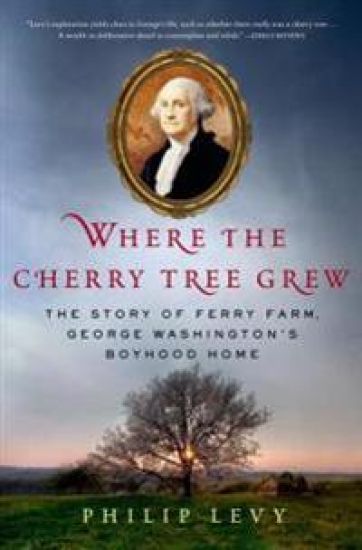
Where the Cherry Tree Grew: The Story of Ferry Farm, George Washington's Boyhood Home
Noted historian pens biography of Ferry Farm--George Washington's boyhood home--and its three centuries of American history In 2002, Philip Levy arrived on the banks of Rappahannock River in Virginia to begin an archeological excavation of Ferry Farm, the eight hundred acre plot of land that George Washington called home from age six until early adulthood. Six years later, Levy and his team announced their remarkable findings to the world: They had found more than Washington family objects like wig curlers, wine bottles and a tea set. They found objects that told deeper stories about family life: a pipe with Masonic markings, a carefully placed set of oyster shells suggesting that someone in the household was practicing folk magic. More importantly, they had identified Washington's home itself--a modest structure in line with lower gentry taste that was neither as grand as some had believed nor as rustic as nineteenth century art depicted it. Levy now tells the farm's story in Where the Cherry Tree Grew. The land, a farmstead before Washington lived there, gave him an education in the fragility of life as death came to Ferry Farm repeatedly. Levy then chronicles the farm's role as a Civil War battleground, the heated later battles over its preservation and, finally, an unsuccessful attempt by Wal-Mart to transform the last vestiges Ferry Farm into a vast shopping plaza.
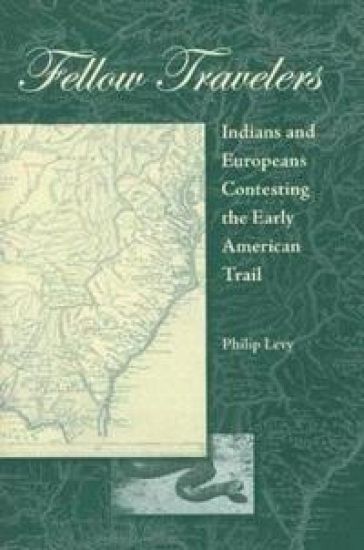
Fellow Travelers

Fellow Travelers

Philip Levy

University Press of Florida
2007
sidottu
When Europeans first arrived on North American shores, they came to a continent crisscrossed by a well-trodden network of native trails. The traders, missionaries, diplomatists, and naturalists who traveled these trails depended in no small measure on the skills, knowledge, and goodwill of the native people who were squarely in colonization's crosshairs. This study of 16th- to 19-century native and European travel companions, or ""fellow travelers,"" as Levy calls them, draws on anthropological studies and applies ethnohistorical methodology. Examining the writings of European travelers who took to trails and rivers from the Rio Grande to the Arctic, Levy argues that travel relationships evolved from patterns of coercion and miscommunication to partnerships based on careful and constant negotiation. The shared trail was an arena of contested meanings. Levy explores the many forms such contests took and how they contributed to the larger shape and course of colonial travel. Dispelling the simplistic image of European travelers and explorers as heroes, Levy stresses the contingent and dependent nature of these endeavors, noting that natives were vital to the Europeans and vice versa; many natives came to rely on their fellow travelers as well. The realities of the trail potentially blurred distinctions among people eating the same food, treading the same path, and often wearing similar clothes, yet travelers worked hard to maintain distinctions between them. In sharing the rigors and burdens of the trail and relying on one another in a variety of ways, Indian and European travelers entwined their fates.
Cognition In Action

Cognition In Action

Alan F. Collins; Philip Levy; Peter E. Morris; Mary M. Smyth

Psychology Press Ltd
1994
nidottu
This revised textbook is designed for undergraduate courses in cognitive psychology. It approaches cognitive psychology by asking what it says about how people carry out everyday activities: how people organize and use their knowledge in order to behave appropriately in the world in which they live.; Each chapter of the book starts with an example and then uses this to introduce some aspect of the overall cognitive system. Through such examples of cognition in action, important components of the cognitive system are identified, and their interrelationships highlighted. Thus the text demonstrates that each part of the cognitive system can only be understood properly in its place in the functioning of the whole.; This edition features increased coverage of neuropsychological and connectionist approaches to cognition.