Kirjojen hintavertailu. Mukana 12 390 323 kirjaa ja 12 kauppaa.

Kirjailija

Philip R. Ashurst

Kirjat ja teokset yhdessä paikassa: 9 kirjaa, julkaisuja vuosilta 1995-2016, suosituimpien joukossa Food Authentication. Vertaile teosten hintoja ja tarkista saatavuus suomalaisista kirjakaupoista.

9 kirjaa

Kirjojen julkaisuhaarukka 1995-2016.

Chemistry and Technology of Soft Drinks and Fruit Juices

Chemistry and Technology of Soft Drinks and Fruit Juices

Philip R. Ashurst

Wiley-Blackwell (an imprint of John Wiley Sons Ltd)
2016
sidottu
Soft drinks and fruit juices are produced in almost every country in the world and their availability is remarkable. From the largest cities to some of the remotest villages, soft drinks are available in a variety of flavours and packaging. Over the last decade, soft drinks and fruit juices have been the subject of criticism by the health community and there is considerable pressure on beverage manufacturers to reduce, or even remove, the sugar content of these products. Chemistry and Technology of Soft Drinks and Fruit Juices, Third Edition provides an overview of the chemistry and technology of soft drinks and fruit juices, covering ingredients, processing, microbiology, traceability and packaging as well as global market trends. This fully revised edition now includes chapters on topics that have become prominent in the industry since publication of the previous edition namely: water use and treatment, and microbiology technologies. The book is directed at graduates in food science, chemistry or microbiology entering production, quality control, new product development or marketing in the beverage industry or in companies supplying ingredients or packaging materials to the beverage industry.

Food Flavourings

Food Flavourings

Philip R. Ashurst

Springer-Verlag New York Inc.
2011
nidottu
The flavour industry has become a vital element in the growth and success of food and beverage industries worldwide. The development of many new products is now directly related to the use of the appropriate flavouring which, among other benefits, has allowed the use of many novel raw materials. The phenomenal growth of specialised consumer products offering special tastes, nutritional benefits or 'convenience' almost always directly involves the use of a bespoke flavouring. With recent growth in worldwide concern for environmental issues has come a corresponding concern for the use of 'natural' ingredients in foods. The flavour industry has been closely involved, by offering many of its products as natural alternatives, although the vexed issue of what 'natural' means has promoted discussion and debate in many quarters. The European Flavouring Directive has attempted to incorporate a definition. This is discussed further in chapter 1. The work of the flavourist remains akin to that of the perfumer, despite inroads made by sophisticated analytical technology. For example, use of linked gas chromatography-mass spectrometry (GC-MS) instrumentation enables the skilled analyst to identify most components of a competitor's flavouring or the minor ingredients of a natural extract. Despite this, the industry remains a unique blend of art, science and technology in which the experience and knowledge of the flavourist is vital.
Food Authentication

Food Authentication

Philip R. Ashurst; M.J. Dennis

Springer-Verlag New York Inc.
2011
nidottu
The issue of food authenticity is not new. For centuries unscrupulous farmers and traders have attempted to 'extend', or othewise alter, their products to maximise revenues. In recent years the subject has reached new prominence and there even have been situations where food authenticity has featured as a newspaper headline in various countries. Food legislation covering the definition, and in some cases composition, of various commodities has been in place in developed countries for many years and paradoxically it is the legislative trend away from emphasis on composition and more on accurate and truthfullabeliing that has been one driving force for the authenticity issue. Another, and many would speculate as the more potent, driving force is the move towards fewer and larger supermarket chains in many countries. Such trading companies with their images of quality products, buying power and commercial standing, exercise considerable commercial power which has been claimed as a significant source of financial pressure on food prices and food commodity product quality. For whatever reason, recent food authenticity issues have become news and consumers, the media and enforcement authorities are showing more interest than ever before in the subject.
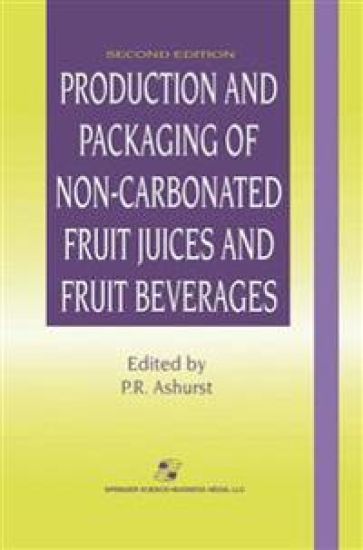
Production and Packaging of Non-Carbonated Fruit Juices and Fruit Beverages
In the period of about five years since the first edition of this book appeared, many changes have occurred in the fruit juice and beverage markets. The growth of markets has continued, blunted to some extent, no doubt, by the recession that has featured prominently in the economies of the major consuming nations. But perhaps the most significant area that has affected juices in particular is the issue of authenticity. Commercial scandals of substantial proportions have been seen on both sides of the Atlantic because of fraudulent practice. Major strides have been made in the development of techniques to detect and measure adulterants in the major juices. A contri­ bution to Chapter 1 describes one of the more important scientific techniques to have been developed as a routine test method to detect the addition of carbohydrates to juices. Another, and perhaps more welcome, development in non-carbonated beverages during the past few years is the rapid growth of sports drinks. Beverages based on glucose syrup have been popular for many years, and in some parts of the world isotonic products have long featured in the sports arena. A combination of benefits is now available from a wide range of preparations formulated and marketed as sports drinks and featuring widely in beverage markets world-wide. A new chapter reviews their formulation and performance characteristics. Another major trend in the area of fruit-containing non-carbonated bever­ ages is the highly successful marketing of ready-to-drink products.
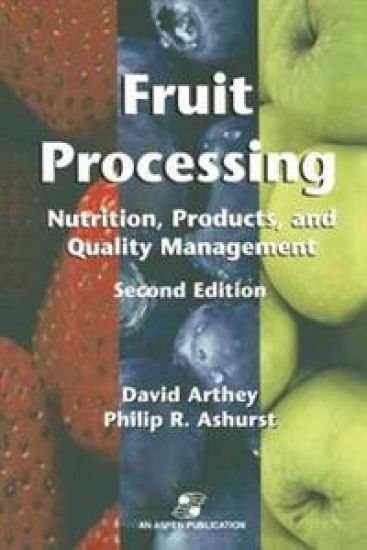
Fruit Processing: Nutrition, Products, and Quality Management

Fruit Processing: Nutrition, Products, and Quality Management

Philip R. Ashurst; David Arthey

Aspen Publishers Inc.,U.S.
2000
sidottu
Consumption of food products based on or containing fruit is increasing as consumers in the developed world seek a diet which they perceive to be healthy. At the same time, developing countries are increasing their volumes of value-added fruit processing in order to earn important foreign currency. This book provides a concise, thorough and authoritative coverage of the technology of fruit processing from a worldwide perspective. Detailed coverage of the use of fruit by-products, environmental issues, quality assurance and hygiene reflect the importance of these topics. New chapters cover biochemistry and implications for processing, packaging, and quality management systems and HACCP. Food technologists, production managers and technical staff in the fruit processing industry and its equipment suppliers will find the book an important information source, while those in academic and research establishments will use it as a key reference.
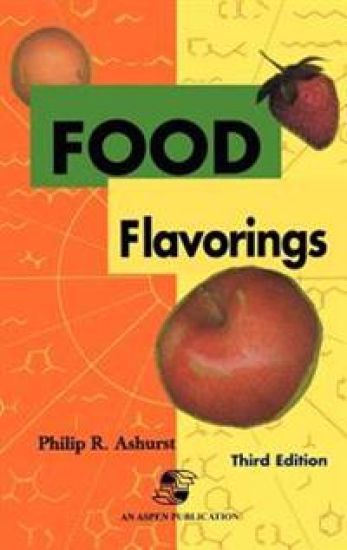
Food Flavorings

Food Flavorings

Philip R. Ashurst

Aspen Publishers Inc.,U.S.
1999
sidottu
Food Flavorings, Third Edition, is written for scientists and technologists in the flavor and food industries and provides a comprehensive review of the natural sources of flavor ingredients and the formulation, manufacture, and application of food flavorings. New to this edition are chapters on pharmaceutical and tobacco flavorings.
Food Authentication

Food Authentication

Philip R. Ashurst; M.J. Dennis

Chapman and Hall
1997
sidottu
The issue of food authenticity is not new. For centuries unscrupulous farmers and traders have attempted to 'extend', or othewise alter, their products to maximise revenues. In recent years the subject has reached new prominence and there even have been situations where food authenticity has featured as a newspaper headline in various countries. Food legislation covering the definition, and in some cases composition, of various commodities has been in place in developed countries for many years and paradoxically it is the legislative trend away from emphasis on composition and more on accurate and truthfullabeliing that has been one driving force for the authenticity issue. Another, and many would speculate as the more potent, driving force is the move towards fewer and larger supermarket chains in many countries. Such trading companies with their images of quality products, buying power and commercial standing, exercise considerable commercial power which has been claimed as a significant source of financial pressure on food prices and food commodity product quality. For whatever reason, recent food authenticity issues have become news and consumers, the media and enforcement authorities are showing more interest than ever before in the subject.
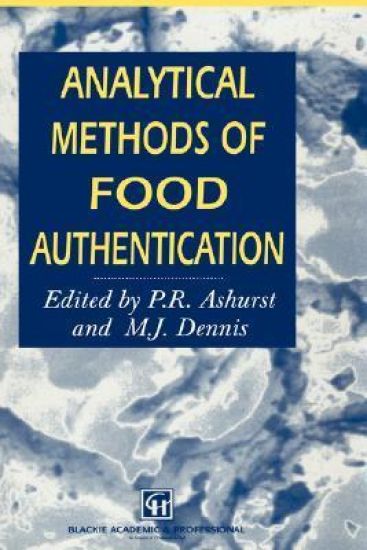
Analytical Methods Of Food Authentication

Analytical Methods Of Food Authentication

Philip R. Ashurst; M.J. Dennis

Chapman and Hall
1997
sidottu
Food Authentication is an issue that has become increasingly important in recent years, due to the drive for more accurate and truthful labeling. This title provides a guide to the techniques available to establish food authenticity, together with their associated strengths and limitations. It is aimed at food scientists and technologists involved in the issues of adulteration or fortification of food and beverages.
Food Flavorings, Second Edition

Food Flavorings, Second Edition

Philip R. Ashurst

Aspen Publishers
1995
nidottu
1 The control of quality in the manufacture of flavourings.- 1.1 Introduction.- 1.2 Preamble to the System of Quality.- 1.3 Organisation to Achieve BS 5750 Accreditation.- 1.3.1 Commitment is Mandatory.- 1.3.2 The Driver.- 1.3.3 Management Project Team.- 1.3.4 Dedicated Word Processor.- 1.3.5 Quality Manager.- 1.3.6 Communication.- 1.4 BS 5750 Specification, Production and Installation.- 1.4.1 Introduction.- 1.4.2 Quality System Requirements.- 1.5 The Detail.- 1.5.1 Departmental Manuals.- 1.5.2 Management Responsibility.- 1.5.3 Responsibility and Authority.- 1.5.4 The Policy Manual.- 1.5.5 Quality System.- 1.5.6 Contract Review.- 1.5.7 Document Control.- 1.5.8 Purchasing.- 1.5.9 Purchaser-Supplied Product.- 1.5.10 Product Identification and Traceability.- 1.5.11 Process Control.- 1.5.12 Inspection and Testing.- 1.5.13 Inspection, Measuring and Test Equipment.- 1.5.14 Inspection and Test Status.- 1.5.15 Control of Non-Conforming Products.- 1.5.15 Corrective Action.- 1.5.16 Handling, Storage, Packing and Delivery.- 1.5.17 Quality Records.- 1.5.18 Internal Quality Audits.- 1.5.19 Training.- 1.6 The Assessment.- 1.6.1 Outline.- 1.6.2 The Pre-assessment.- 1.7 Conclusion.- Note.- 2 Essential oils.- 2.1 Introduction.- 2.2 The Production of Essential Oils.- 2.2.1 Steam Distillation.- 2.2.2 Water Distillation.- 2.2.3 Dry Distillation Methods.- 2.2.4 Expression of Oils.- 2.2.5 Extraction.- 2.3 Further Processing of Essential Oils.- 2.3.1 Rectification.- 2.3.2 Washed Oils.- 2.3.3 Oil Quality.- 2.4 The Uses of Essential Oils.- 2.5 The Composition of Essential Oils.- 2.5.1 Bitter Almond Oil.- 2.5.2 Bergamot Oil.- 2.5.3 Buchu Leaf Oil.- 2.5.4 Cassia Oil.- 2.5.5 Cinnamon Oil.- 2.5.6 Clove Oil.- 2.5.7 Coriander Oil.- 2.5.8 Cornmint Oil.- 2.5.9 Cumin Seed Oil.- 2.5.10 Davana Oil.- 2.5.11 Dill Oil.- 2.5.12 Eucalyptus Oil.- 2.5.13 Garlic Oil.- 2.5.14 Ginger Oil.- 2.5.15 Grapefruit Oil.- 2.5.16 Jasmin Concrete and Absolute.- 2.5.17 Lemongrass Oil.- 2.5.18 Lemon Oil.- 2.5.19 Lime Oil.- 2.5.20 Litsea Cubeba Oil.- 2.5.21 Nutmeg Oil.- 2.5.22 Peppermint Oil.- 2.5.23 Rose Oil.- 2.5.24 Rosemary Oil.- 2.5.25 Spearmint Oil.- 2.5.26 Star Anise Oil.- 2.5.27 Sweet Orange Oil.- 2.5.28 Tangerine Oil.- 2.5.29 Thyme Oil.- 3 Oleoresins, tinctures and extracts.- 3.1 Introduction.- 3.1.1 General Comments.- 3.1.2 Costs.- 3.1.3 Raw Materials and Processes.- 3.2 Plant Materials.- 3.2.1 Origin.- 3.2.2 Crop to Crop Variations.- 3.2.3 Storage.- 3.2.4 Yield.- 3.2.5 Degradation.- 3.2.6 Preparation of Plant Material.- 3.2.7 Vanilla Bean Curing (Classical Method).- 3.3 Solvents.- 3.3.1 Polarity.- 3.3.2 Boiling Point.- 3.3.3 Viscosity.- 3.3.4 Latent Heat of Evaporation.- 3.3.5 Temperature/Pressure.- 3.4 Tinctures.- 3.4.1 Water Infusions.- 3.4.2 Alcoholic Tinctures.- 3.5 Oleoresins.- 3.5.1 Solvents.- 3.5.2 Solubility.- 3.5.3 Commercial Solvent Extraction System.- 3.6 Absolutes 77 3.6.1 Solvents.- 3.7 Extraction with Carbon Dioxide as a Solvent.- 3.7.1 Introduction.- 3.7.2 Subcritical C02.- 3.7.3 SupercriticalC02.- 3.8 Summary.- 4 Fruit juices.- 4.1 Introduction.- 4.2 Fruit processing.- 4.2.1 GeneralConsiderations.- 4.2.2 Soft Fruit Processing.- 4.3 Specialised Fruit Processing.- 4.3.1 Citrus.- 4.3.2 Comminuted Citrus Bases.- 4.3.3 Pineapple Juice.- 4.3.4 Processes Requiring Heat.- 4.4 Products and Packaging.- 4.4.1 Frozen Juices.- 4.4.2 Aseptic Packaging.- 4.4.3 Self-Preserved Juice.- 4.4.4 Preserved Juice.- 4.4.5 Hot Pack Products.- 4.5 Product Specifications.- 4.5.1 Soluble Solids Content.- 4.5.2 Titratable Acidity.- 4.5.3 Brix/Acid Ratio.- 4.5.4 Other Specifications.- 4.5.5 Juice Adulteration.- 4.5.6 Specifications for Essence/Volatiles/Citrus Oils.- 4.6 Volatile Components of Fruit Juices.- 4.6.1 Production.- 4.6.2 Composition of Fruit Juice Volatile Fractions.- 4.7 The Use of Fruit Juices in Flavourings.- 4.7.1 Fruit Juice Compounds.- 4.7.2 Flavourings.- 4.8 Summary.- 5 Synthetic ingredients of food flavourings.- 5.1 General Aspects.- 5.1.1 Introduction, Definitions an...