Kirjojen hintavertailu. Mukana 12 390 323 kirjaa ja 12 kauppaa.

Kirjailija

Philip R. Berke

Kirjat ja teokset yhdessä paikassa: 4 kirjaa, julkaisuja vuosilta 2004-2026, suosituimpien joukossa Plan-making for Sustainability. Vertaile teosten hintoja ja tarkista saatavuus suomalaisista kirjakaupoista.

4 kirjaa

Kirjojen julkaisuhaarukka 2004-2026.

Plan-making for Sustainability

Plan-making for Sustainability

Neil J. Ericksen; Philip R. Berke; Jennifer E. Dixon

Routledge
2017
nidottu
Around the introduction of Agenda 21 at Rio in 1991, some countries like the Netherlands and New Zealand were already leading the way with quite innovative approaches to environmental planning. Focusing on the New Zealand government's innovations in sustainable and environmental planning, particularly the Resource Management Act of 1991, this book highlights planning and governance under devolved and co-operative mandates. It uses multiple methods to evaluate the quality of policy statements and district plans prepared by regional and local councils respectively, as well as the various inter- and intra-organizational and institutional factors affecting them. It also analyses the quality of the plans' implementation through the consensus or permits process, and the quality of the environmental outcomes.
Plan-making for Sustainability

Plan-making for Sustainability

Neil J. Ericksen; Philip R. Berke; Jennifer E. Dixon

Ashgate Publishing Limited
2004
sidottu
Around the introduction of Agenda 21 at Rio in 1991, some countries like the Netherlands and New Zealand were already leading the way with quite innovative approaches to environmental planning. Focusing on the New Zealand government's innovations in sustainable and environmental planning, particularly the Resource Management Act of 1991, this book highlights planning and governance under devolved and co-operative mandates. It uses multiple methods to evaluate the quality of policy statements and district plans prepared by regional and local councils respectively, as well as the various inter- and intra-organizational and institutional factors affecting them. It also analyses the quality of the plans' implementation through the consensus or permits process, and the quality of the environmental outcomes.

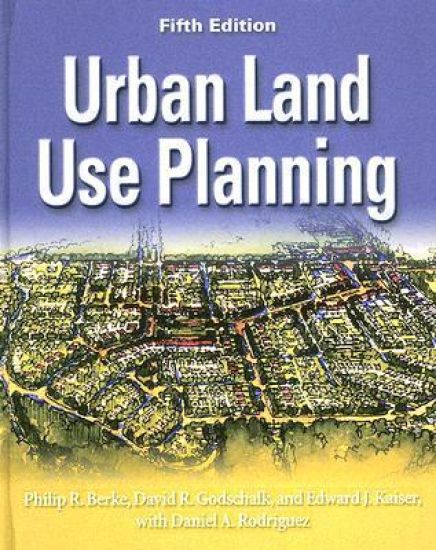
Urban Land Use Planning, Fifth Edition

Urban Land Use Planning, Fifth Edition

Philip R. Berke; David R Godschalk; Edward J Kaiser

University of Illinois Press
2006
sidottu
Divided into three sections, this edition of Urban Land Use Planning deftly balances an authoritative, up-to-date discussion of current practices with a vision of what land use planning should become. It explores the societal context of land use planning and proposes a model for understanding and reconciling the divergent priorities among competing stakeholders; it explains how to build planning support systems to assess future conditions, evaluate policy choices, create visions, and compare scenarios; and it sets forth a methodology for creating plans that will influence future land use change. Discussions new to the fifth edition include how to incorporate the three Es of sustainable development (economy, environment, and equity) into sustainable communities, methods for including livability objectives and techniques, the integration of transportation and land use, the use of digital media in planning support systems, and collective urban design based on analysis and public participation.