Kirjojen hintavertailu. Mukana 12 390 323 kirjaa ja 12 kauppaa.

Kirjailija

Philip W. Blood

Kirjat ja teokset yhdessä paikassa: 3 kirjaa, julkaisuja vuosilta 2021-2024, suosituimpien joukossa Birds of Prey. Vertaile teosten hintoja ja tarkista saatavuus suomalaisista kirjakaupoista.

Mukana myös kirjoitusasut: Philip W Blood

3 kirjaa

Kirjojen julkaisuhaarukka 2021-2024.

War Comes to Aachen

War Comes to Aachen

Philip W. Blood

C HURST CO PUBLISHERS LTD
2024
sidottu
This book narrates the tumultuous era of total war through the fate of Aachen—Imperial Germany’s seat of power for 600 years, site of Charlemagne’s coronation as Holy Roman Emperor, and a place with greater geopolitical significance for Adolf Hitler in 1944 than Stalingrad in 1943. This was a stark contrast with the events of the Great War: in 1918, the Imperial German Army had abandoned Aachen in a rout-like flight. In the Nazi period, however, Aachen became a major symbol of Germany’s defiance against the Allies. For Hitler—his mind warped after surviving the Stauffenberg bomb plot—Germany’s westernmost city became pivotal in his last-ditch defence of the ‘thousand-year Reich’. War Comes to Aachen weaves together the city’s story from 1900, tracing its entrenched Catholic orthodoxy, its growth as an industrial urban centre, the demise of democracy, the rise of Nazism, the two world wars, and the Holocaust. The book surveys Churchill’s wartime leadership and the destruction of pre-war Aachen through the lenses of military history and the anthropology of aerial bombing. Philip W. Blood’s absorbing history concludes with Allied efforts to reshape German society after 1945, and with the use of remembrance as a means of socio-political control.
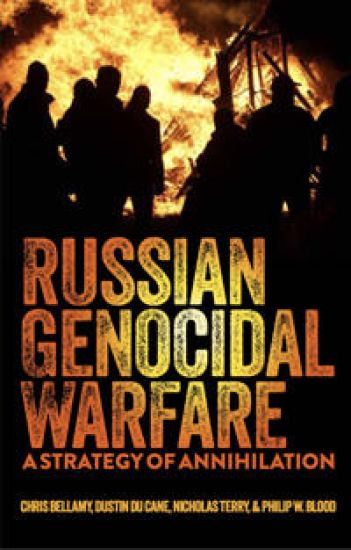
Russian Genocidal Warfare

Russian Genocidal Warfare

Chris Bellamy; Dustin Du Cane; Philip W. Blood

C HURST CO PUBLISHERS LTD
2023
nidottu
Vladimir Putin’s illegal invasion and war of annihilation against Ukraine have been accompanied by a genocidal rhetoric demanding the physical erasure of Ukrainian national identity and culture, under the slogan of ‘de-Nazification’. As Russian armed forces advanced across front lines of more than 3,000 kilometres, from Kyiv to Mariupol, the world was horrified as these ideas were put into practice. Images of flattened cities, the targeting of civilians and the flight of millions of refugees were omnipresent. These war crimes and acts of genocide were met with immediate protests by western governments, public opinion and the media—yet Russian propagandists not only denied any crimes against humanity had occurred, but escalated the rhetoric of Moscow’s genocidal war aims. In April 2022, as the International Court in The Hague began examining the evidence, US President Joe Biden claimed Russia was committing genocide in Ukraine. Canada and the Baltic States quickly formalised, through parliamentary procedure, the same accusation. Through historical, political, military and legal analysis, the authors of this book examine the conflict’s early critical phase as central to understanding the Russian way of war, and Moscow’s application of genocidal warfare in the politics of aggressive reunification and nation-building.
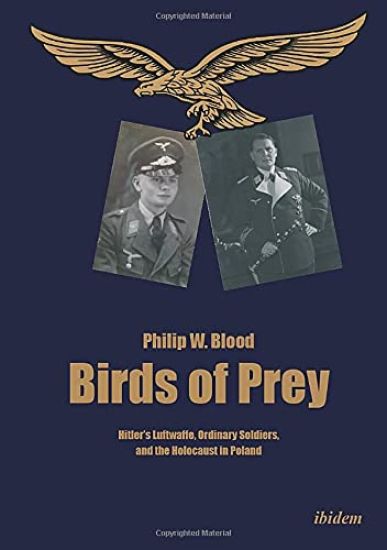
Birds of Prey

Birds of Prey

Philip W Blood

Ibidem Press
2021
nidottu
This is the smoking gun of all your research. -- Professor Richard E Holmes (18 February 2001). Birds of Prey is a microhistory of the Nazi occupation of Bialowieza Forest, Polands national park. The narrative stretches from Görings palatial lifestyle to the common soldier on the ground killing Jews, partisans, and civilians. Based entirely on previously unpublished sources, the book is the synthesis of six areas of research: Hitlers Luftwaffe, the hunt and environmental history, military geography, Colonialism and Nazi Lebensraum, the Holocaust, and the war in the East. By weaving together a narrative about Hermann Göring, his inner circle, and ordinary soldiers, the book reveals the Nazi ambition to draw together East Prussia, the Bialystok region, and Ukraine into a common eastern frontier of the Greater German state, revealing how the Luftwaffe, the German hunt, and the state forestry were institutional perpetrators of Lebensraum and genocide. Up until now the Luftwaffe had not been identified in specific acts of genocide or placed at large scale killings of Jews, civilians, and partisans. This gap in the historical record had been facilitated by the destruction of the Luftwaffes records in 1945. Through a forensic and painstaking process of piecing together scraps of evidence over two decades, and utilizing Geographical Information System software, Philip W. Blood managed to decipher previously obscure reports and expose patterns of Nazi atrocities.