Kirjojen hintavertailu. Mukana 12 390 323 kirjaa ja 12 kauppaa.
Kirjailija
Philip Wolfe
Kirjat ja teokset yhdessä paikassa: 11 kirjaa, julkaisuja vuosilta 1957-2025, suosituimpien joukossa Recent Advances in Mathematical Programming. Vertaile teosten hintoja ja tarkista saatavuus suomalaisista kirjakaupoista.
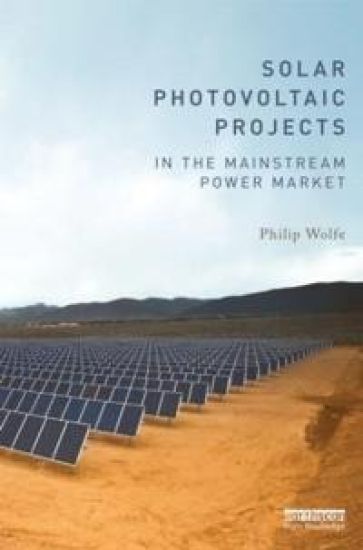
This is the first and probably the only book devoted to utility-scale solar power – perhaps the fastest-growing sector of the global energy market.Philip Wolfe’s book describes the development and operation of large-scale solar power stations, and will interest all those who want to understand how these multi-million dollar projects are designed, structured, financed, constructed and maintained. It contains case studies of the Waldpolenz Energy Park, Germany, Lopburi Solar Plant in Thailand and the Topaz Solar Farm in California. Also included are interviews from leading figures in the PV industry.It shows the state of the world market and links to an online resource that continues to track the explosive growth of the sector.The book is arranged in three sections:A description of solar projects in context, and how they are undertaken. Chapters on developing and structuring projects; siting, consenting and connection issues; building and operating solar plants; design and technology basics; economies of solar photovoltaics.The second section reviews individual aspects of the project development and operational process in more detail. In particular it advises on strategies to manage technology, commercial, regulatory and implementation risks.These are supported by a comprehensive reference section, including case studies and overviews of key parameters applicable in different parts of the world. Supported by figures and photographs, this book is for anyone wanting to master the commercial, professional, financial, engineering or political aspects of developing multi-mega-watt solar PV projects in a mainstream power market. It is a ‘user manual’ to accompany a sector which by 2015 had surpassed a value of $100 billion.
In the 16th century, the chief doctrine of the Protestant reformers was that the Pope was the Antichrist. Thus St. Robert Bellarmine, the greatest controversial author of the Reformation period, turned his pen to answering the challenge which resulted in a complete demolition of their position. Bellarmine's argumentation begins first with Scripture, then with the Fathers of the Church, then with appeals to reason and the later Theologians. He first shows that the Protestant explication does not match up to the texts of Scripture that treat on the Antichrist, then he shows that the Pope cannot be Antichrist since Antichrist has not yet come, giving proofs from the Old and New Testaments and then the Fathers, along with the contradictions of the Protestants themselves. He continues with a discussion of 666, the mark of Antichrist and many other things that not only defend the Church, but also show the positive teaching of the Church Fathers and the Tradition in regard to Antichrist. "I am delighted that the eschatological mission of the Holy Fathers Enoch and Elias, so well testified to in Sacred Tradition, but virtually forgotten in our day and age, will become more widely known. We owe a real debt of gratitude to Ryan Grant for bringing this work to a wider audience. I pray that it receives a very wide reading." -Fr. Philip Wolfe, FSSP"In the history of the writings about the Antichrist, other than the Fathers, the text of St. Robert Bellarmine is of prime importance." -Fr. Chad Ripperger, PhD "Mr. Grant has once again done the Catholic world a great favor by making available yet another mini-treatise of the great Counter-Reformation Doctor, St. Robert Bellarmine, rightly feared by all the Protestant controversialists as one who shreds every anti-Catholic argument with cogent reasoning and an encyclopedic knowledge of Scripture and Tradition. This translation of the saint's probing commentary on the identity and work of Antichrist is more pertinent than ever, not only because the Protestant arguments he is dealing with have never entirely disappeared, but also because we are living in an age of exponentially intensifying evil that might well make many Catholics wonder if we are living in the end times. Since Antichrist is the very herald of the end times, it behooves us to study carefully his features and characteristics, as drawn for us by St. Paul and other inspired authors." -Dr. Peter Kwasniewski, Wyoming Catholic College Here is a timely book for an age when many are looking around for the Antichrist, often seeing foreshadowings of him here and there. Is he alive? Is he walking the earth? In seeking to answer these questions, many in the past (i.e., various Protestants leaders and writers) have actually aided his coming by becoming Antichrist themselves. To avoid this pitfall, read this excellent book penned by a holy doctor of the Church. -Fr. Sean Kopczynski, MSJB
Sustainability for SMEs offers a comprehensive introduction to sustainable business for small and medium-sized enterprises. It offers: the first ever guide to sustainability reporting for SMEs, including tips for using sustainability reporting to gain customer loyalty and build a brand; a collection of airtight arguments and business cases for putting sustainability at the heart of an SME; and a practical guide to lowering environmental impact through improved energy usage, sourcing or generation.
The major environmental impact of most businesses derives from energy usage. The upside of this is that using energy more responsibly improves profitability. A business's cheapest unit of energy is also the one which is least damaging to the planet: the unit you don't use.There are many ways to make your organization's energy usage more sustainable. In Sustainable Energy Options for Business, Philip Wolfe outlines the best available options for (1) reducing energy use and (2) improving the sustainability of energy supply. After an introduction to regulatory drivers and management issues, Wolfe looks at energy opportunities in five key areas: 1. Saving on energy usage; 2. Finding more sustainable sources of energy; 3. Generating renewable electricity; 4. Producing renewable heat; 5. Indirect energy sustainability options.Also included: An "energy checklist" to help identify your best options and important quick wins, plus a handy reference list, signposted from annotations in the text.
This is the first and probably the only book devoted to utility-scale solar power – perhaps the fastest-growing sector of the global energy market.Philip Wolfe’s book describes the development and operation of large-scale solar power stations, and will interest all those who want to understand how these multi-million dollar projects are designed, structured, financed, constructed and maintained. It contains case studies of the Waldpolenz Energy Park, Germany, Lopburi Solar Plant in Thailand and the Topaz Solar Farm in California. Also included are interviews from leading figures in the PV industry.It shows the state of the world market and links to an online resource that continues to track the explosive growth of the sector.The book is arranged in three sections: A description of solar projects in context, and how they are undertaken. Chapters on developing and structuring projects; siting, consenting and connection issues; building and operating solar plants; design and technology basics; economies of solar photovoltaics.The second section reviews individual aspects of the project development and operational process in more detail. In particular it advises on strategies to manage technology, commercial, regulatory and implementation risks.These are supported by a comprehensive reference section, including case studies and overviews of key parameters applicable in different parts of the world. Supported by figures and photographs, this book is for anyone wanting to master the commercial, professional, financial, engineering or political aspects of developing multi-mega-watt solar PV projects in a mainstream power market. It is a ‘user manual’ to accompany a sector which by 2015 had surpassed a value of $100 billion.
A new group of contributions to the development of this theory by leading experts in the field. The contributors include L. D. Berkovitz, L. E. Dubins, H. Everett, W. H. Fleming, D. Gale, D. Gillette, S. Karlin, J. G. Kemeny, R. Restrepo, H. E. Scarf, M. Sion, G. L. Thompson, P. Wolfe, and others.