

Kirjailija
Philip Young
Kirjat ja teokset yhdessä paikassa: 18 kirjaa, julkaisuja vuosilta 1993-2023, suosituimpien joukossa How to Build a Successful Low-Cost Rally Car. Vertaile teosten hintoja ja tarkista saatavuus suomalaisista kirjakaupoista.
18 kirjaa
Kirjojen julkaisuhaarukka 1993-2023.

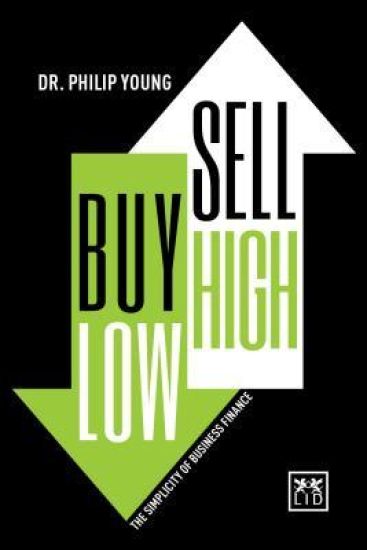
Financial (or business) acumen is essential for all managers and owners of businesses if they are to truly understand how to make them successful. Yet, for general (non-financial) managers and owners, business finance is often perceived to be "difficult" and/or plain boring. This book, written by an experienced and popular teacher of finance to thousands of non-financial managers, explains in very simple but engaging terms what are the goals of a business, how it is set up to make money, what are the key measures of this financial health, and what are the key factors affecting those measures. Concise and designed for great accessibility, this is the dream-book for all those non-financial managers and owners who want a quick and motivating read on finance in order to obtain that necessary business acumen.

BMC Competitions Department Secrets
Marcus Chambers; Peter Browning; Philip Young; Stuart Turner
Veloce Publishing Ltd
2016
nidottu
Reprinted after a long absence! The revealing and surprising inside story of the legendary BMC Works Competitions Department told by the three Competition Managers of the highly successful BMC/British Leyland race and rally teams based at Abingdon. The book reveals the inner workings and machinations of one of the most successful motor sport teams Britain has ever seen. Based on previously unpublished internal memos and documents, and the recollections of the prime movers, the book describes the ups and downs, and the politics of big time competition in an exciting era. An excellent and entertaining read and an important factual documentation, no motorsport enthusiast should be without this book.
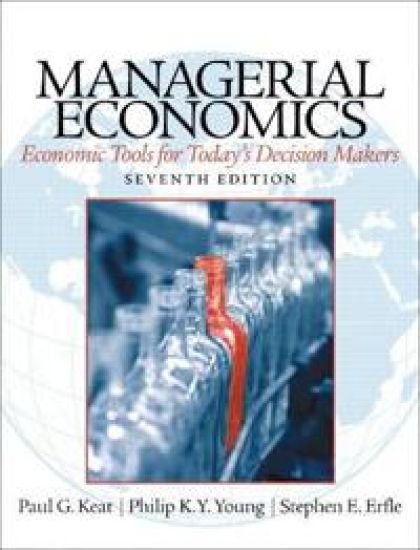
Directed primarily toward undergraduate/MBA students in Economics, this text also provides practical content to current and aspiring industry professionals. This text will excite readers by providing a more linear progression, while proving the consistency and relevance of microeconomic theory. The Seventh Edition welcomes a new co-author, Stephen Erfle of Dickinson College, who has contributed many revisions and improvements to the quantitative sections of the text, as well as provided a major addition: the use of Excel in the presentation of many of the numerical and graphical illustrations presented throughout the text. To strengthen readers’ ability to use Excel—a critical skill in today’s job market–new Excel Applications (Excel Apps) allow readers to turn the static figures and tables in the text into dynamic illustrations.
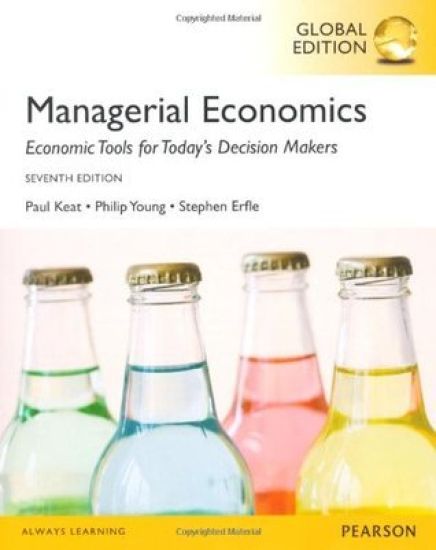
Managerial Economics, Global Edition
Paul Keat; Philip Young; Steve Erfle
Pearson Education Limited
2013
pokkari
For upper-level undergraduate and first-year MBA courses in managerial and applied economics. This Global Edition has been edited to include enhancements making it more relevant to students outside the United StatesThis text will excite readers by providing a more linear progression, while proving the consistency and relevance of microeconomic theory.The Seventh Edition welcomes a new co-author, Stephen Erfle of Dickinson College, who has contributed many revisions and improvements to the quantitative sections of the text, as well as provided a major addition: the use of Excel in the presentation of many of the numerical and graphical illustrations presented throughout the text. To strengthen students’ ability to use Excel—a critical skill in today’s job market—new Excel Applications (Excel Apps) allow readers to turn the static figures and tables in the text into dynamic illustrations.
Title: History of Mexico: her civil wars, and colonial and revolutionary annals, from the ... Spanish Conquest, 1520, to ... 1847; including an account of the war with the United States, etc.Publisher: British Library, Historical Print EditionsThe British Library is the national library of the United Kingdom. It is one of the world's largest research libraries holding over 150 million items in all known languages and formats: books, journals, newspapers, sound recordings, patents, maps, stamps, prints and much more. Its collections include around 14 million books, along with substantial additional collections of manuscripts and historical items dating back as far as 300 BC.The HISTORY OF COLONIAL NORTH AMERICA collection includes books from the British Library digitised by Microsoft. This collection refers to the European settlements in North America through independence, with emphasis on the history of the thirteen colonies of Britain. Attention is paid to the histories of Jamestown and the early colonial interactions with Native Americans. The contextual framework of this collection highlights 16th century English, Scottish, French, Spanish, and Dutch expansion. ++++The below data was compiled from various identification fields in the bibliographic record of this title. This data is provided as an additional tool in helping to insure edition identification: ++++ British Library Young, Philip; 1847. 564 p.; 8 . 9771.c.8.
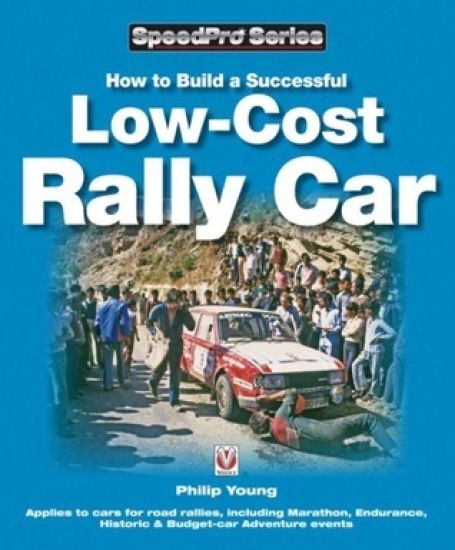
How to Build a Successful Low-Cost Rally Car sets out in graphic detail a hundred tips that cost very little, but which will transform your car. For example, how a wire coat-hanger transforms an exhaust system so that it can survive the Sahara Desert, how a tube of bathroom silicone sealer waterproofs an engine, and how a garden chain ensures you don't break the engine-mountings. Simple, cost-effective, basic and reliable tips to ensure any rally car stands a chance of reaching the finishing line. From the lanes of Devon at night, to romping through the wilderness of Mongolia, this book is full of illustrated detailed tips, as well as pictures of typical low cost cars setting out on international events. If you are planning any road-based rally, don't even think of leaving home before reading this book and implementing the tried and tested mods it describes so well.
Few experts in American literature have written as insightfully and brilliantly as did Philip Young, renowned Hemingway critic and scholar at large. His unique work bursts with a joy in the humanities, with a sensibility, a humor, and a style that communicate to academics and general readers alike. Although Young died in 1991, he survives in his remarkable prose.American Fiction, American Myth features nineteen groundbreaking essays in which Young masterfully reveals the "so what?" that he insisted all literary studies ought to have. In the first section, he demonstrates his fascination with such American myths as Pocahontas and Rip Van Winkle, reaching powerful conclusions about America and its people. In the second section, he becomes "Our Hemingway Man," explaining his germinal and still provocative theory that Hemingway's severe wounding in World War I so traumatized the novelist that his fiction was to a great degree unwitting self-psychoanalysis. Young's book on Hemingway was the first of its kind, but Young was more than a one-author critic, as his essays demonstrate in the third section, exploring such diverse topics as Hawthorne's secret love, the Lost Generation that was never lost, F. Scott Fitzgerald’s debt to T. S. Eliot, and the relationship between American fiction and American life. What Hemingway once said about himself can be equally applied to Young: "I am a very serious but not a solemn writer." The reader comes away from these essays dazzled by the power of Young's observations and the grace with which he expresses them.
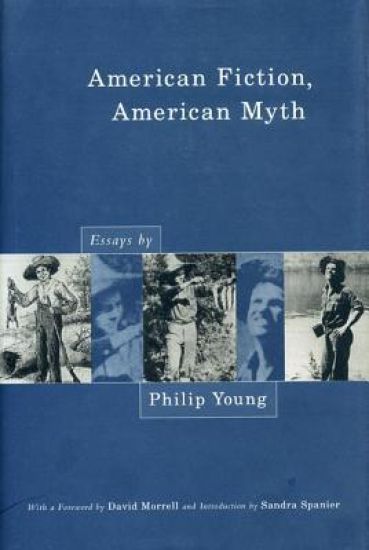
Few experts in American literature have written as insightfully and brilliantly as did Philip Young, renowned Hemingway critic and scholar at large. His unique work bursts with a joy in the humanities, with a sensibility, a humor, and a style that communicate to academics and general readers alike. Although Young died in 1991, he survives in his remarkable prose.American Fiction, American Myth features nineteen groundbreaking essays in which Young masterfully reveals the "so what?" that he insisted all literary studies ought to have. In the first section, he demonstrates his fascination with such American myths as Pocahontas and Rip Van Winkle, reaching powerful conclusions about America and its people. In the second section, he becomes "Our Hemingway Man," explaining his germinal and still provocative theory that Hemingway's severe wounding in World War I so traumatized the novelist that his fiction was to a great degree unwitting self-psychoanalysis. Young's book on Hemingway was the first of its kind, but Young was more than a one-author critic, as his essays demonstrate in the third section, exploring such diverse topics as Hawthorne's secret love, the Lost Generation that was never lost, F. Scott Fitzgerald’s debt to T. S. Eliot, and the relationship between American fiction and American life. What Hemingway once said about himself can be equally applied to Young: "I am a very serious but not a solemn writer." The reader comes away from these essays dazzled by the power of Young's observations and the grace with which he expresses them.
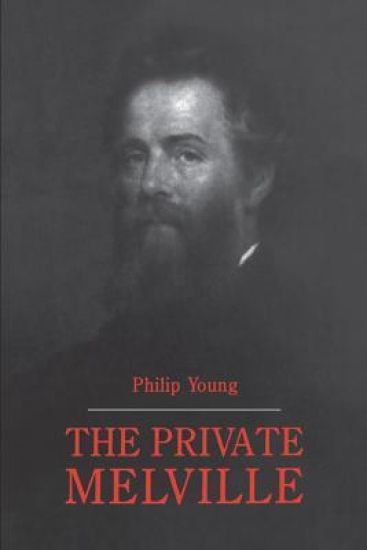
The Private Melville demonstrates how great a role his profound sense of privacy played in Melville's life and work. Secrets he was careful never to reveal are unmasked by Philip Young. Privacy, as it appears to Melville here, is of three types. First are family matters the public had no business knowing about, such as the life story of a secret half-sister; next the story of the life of a cousin, model for the heroine of his incestuous novel, Pierre; and then the history of the woman's forebears. The second type concerns four Berkshire Tales that depend heavily on "private jokes," and thus have secret meaning that escaped the editors who printed them and continue to evade critics and scholars. The third kind deals with two "fictions" so little understood that the meaning might as well be secret: a speech of Ahab's, which is called the "spiritual climax" of Moby Dick; and Melville's very last fiction, Daniel Orme, a self-portrait in which he has gone pretty much unrecognized.
The Private Melville demonstrates how great a role his profound sense of privacy played in Melville's life and work. Secrets he was careful never to reveal are unmasked by Philip Young. Privacy, as it appears to Melville here, is of three types. First are family matters the public had no business knowing about, such as the life story of a secret half-sister; next the story of the life of a cousin, model for the heroine of his incestuous novel, Pierre; and then the history of the woman's forebears. The second type concerns four Berkshire Tales that depend heavily on "private jokes," and thus have secret meaning that escaped the editors who printed them and continue to evade critics and scholars. The third kind deals with two "fictions" so little understood that the meaning might as well be secret: a speech of Ahab's, which is called the "spiritual climax" of Moby Dick; and Melville's very last fiction, Daniel Orme, a self-portrait in which he has gone pretty much unrecognized.