Kirjojen hintavertailu. Mukana 12 125 871 kirjaa ja 12 kauppaa.

Kirjailija

Philipp Meuser

Kirjat ja teokset yhdessä paikassa: 17 kirjaa, julkaisuja vuosilta 2007-2026, suosituimpien joukossa Hospital Architecture: Specialist Clinics & Medical Departments. Vertaile teosten hintoja ja tarkista saatavuus suomalaisista kirjakaupoista.

17 kirjaa

Kirjojen julkaisuhaarukka 2007-2026.

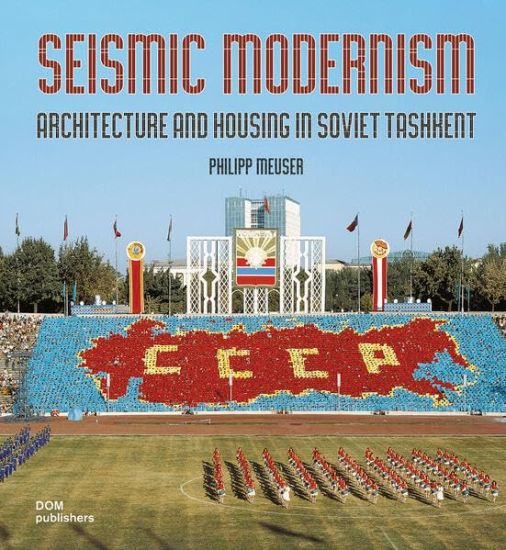
Seismic Modernism

Seismic Modernism

Philipp Meuser

DOM PUBLISHERS
2026
sidottu
Tashkent, the southernmost metropolis of millions in the Soviet Union, is a city redolent with architectural contrasts and paradoxes. Home to the world’s most beautiful prefabricated buildings, it features a prominent urban duality predicated upon the oriental Old City and the Russian New City. Never was this contrast brought into sharper focus than during the severe earthquake of 1966 which left the New City relatively unscathed but the Old City in ruins. Yet one respite was offered: a rebuilding effort which triggered an upsurge of innovation. The city thus became the face of Seismic Modernism – unprecedented in history, the earthquake stimulated the modernisation of urban development in Tashkent. Architects incorporated regional building traditions in their socialist modern designs, including the visually intriguing façade mosaics attributed to the little-known Jarsky brothers. The rebuilding of Tashkent provides a perfect example of Soviet ideas about urban planning – in which technical standardisation and social requirements were no more of a contradiction than the design of experimental living concepts and the simultaneous search for an expression of national identity in building. Tashkent thus represents a unique example of radical urban redevelopment in a Soviet megacity with standard designs.
East Polynesia

East Polynesia

Natascha Meuser; Philipp Meuser

DOM PUBLISHERS
2026
pokkari
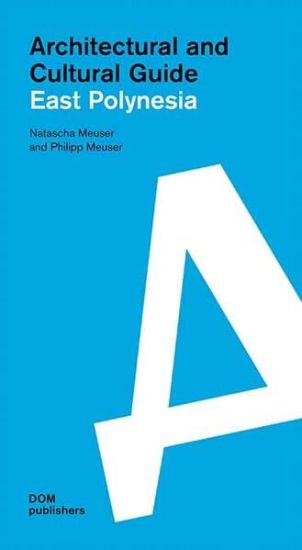
This Architectural and Cultural Guide East Polynesia challenges the romanticised visions of the South Pacific by critically examining the built environment through the lens of architecture, history, and cultural resilience. Across over 400 richly illustrated pages, it traces how traditional knowledge systems, ecological adaptation, and colonial ruptures have shaped architectural practices from the Cook Islands via French Polynesia and Pitcairn to Rapa Nui in Chilean Polynesia. With contributions from local experts, architects, geologists, and historians, the guide foregrounds the complex entanglements of place, power, and memory. Rather than offering a conventional typological catalogue, it maps networks of meaning: from sacred stone platforms (marae) and climate-responsive vernacular dwellings to the infrastructural legacies of nuclear testing and space-age geopolitics. The Pacific is not portrayed as a void but as a stage of cultural innovation and architectural intelligence. This publication is a carefully curated, research-based exploration of a region where architecture emerges not as monumentality, but as method: flexible, bioclimatic, and socially coded. Aimed at critically minded travellers, scholars, and architects, this volume invites readers to reconsider what architecture can mean in contexts defined not by permanence, but by rhythm, movement, and relational space.
Patterned Panels

Patterned Panels

Philipp Meuser

DOM PUBLISHERS
2026
sidottu
In the wake of Soviet Modernism’s belated renaissance, the monumental façade mosaics of Pyotr, Nikolai, and Alexander Jarsky stand as defiant expressions of individuality within an architecture of mass production. Created for serially manufactured housing blocks in post-earthquake Tashkent, these artworks challenge the conventional narrative of Soviet prefabricated construction as soulless, anonymous, and oppressive. Their vivid ornamentation – geometric, floral, figurative – gives voice to a Soviet-Uzbek style that emerged not through ideology but through artistic resistance embedded in concrete. This book documents for the first time the life and work of the Jarsky brothers, whose mosaic murals now number among Uzbekistan’s officially protected cultural assets. Based on two decades of research and rare personal encounters with the Jarsky family, it presents an architectural history written not by ministries but by hands shaping tiles – and identities – into lasting form. More than an homage, this monograph is a call to action. It interrogates the politics of heritage, the historiography of standardised architecture, and the role of art in contested urban space. As Uzbekistan cautiously begins to valorise its Soviet-era past, the question lingers: will these Modernist surfaces, born of a utopian impulse, find their place on the global stage of architectural heritage?
Mass Housing in Ukraine

Mass Housing in Ukraine

Kateryna Malaia; Philipp Meuser

DOM PUBLISHERS
2024
sidottu
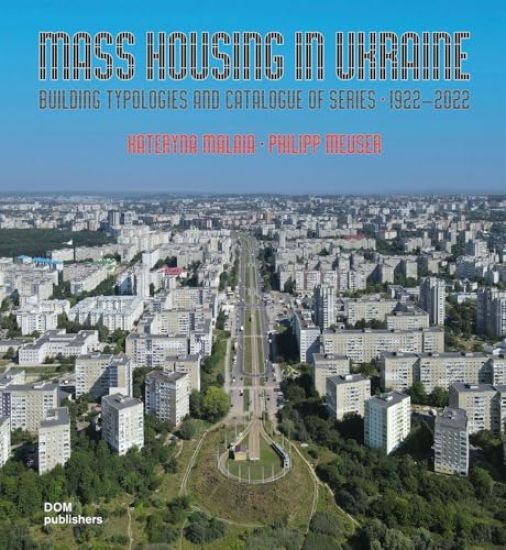
Housing is the most omnipresent urban typology. Housing is also the essential architecture of the human condition. Perhaps more than any other architectural species, housing determines the ways urbanites construct their lives and build their shared futures. The all-out war in Ukraine, started by the Russian Federation in 2022 has disproportionally affected housing and residential infrastructure. The destruction is so targeted, and the damage so significant that it has disfigured entire neighborhoods and erased entire cities. With the scale of damage and loss in mind, and the future wide-ranging reconstruction that will inevitably take place after the war, this study examines the history and typologies of mass housing in Ukraine. It does so in order to evaluate what is lost, explain the diversity of modes of urban living that exist in Ukrainian cities, and finally, reconsider the narrative of how Ukrainian housing came about. The study covers the period of the last 100 years: the time of the most dramatic expansion and change in character of Ukrainian cities. It begins with the experimental buildings constructed in the Soviet Central and Eastern Ukraine and Polish Western Ukraine in the 1920s and 1930s, continues by looking at type projects from the Stalin era, as well as the serial apartment blocks built during the reigns of Khrushchev and Brezhnev and in the late USSR. Finally, it showcases individually designed, yet also typical residential buildings from the turbo-capitalist period of the 1990s and 2000s. With the help of archival materials--texts, blueprints, and photographs--as well as contemporary documentation, the authors analyze 30 examples of Ukrainian-designed or modified housing types. Through uncovering the Ukrainian context, as well as the work of Ukrainian architects, design institutions, contractors, and developers, the history of Ukrainian housing is emancipated from the Russian narrative of the Soviet past. By doing so, we aim to write the history of a specifically Ukrainian building tradition and contribute to embedding it in the context of all-European architectural history.
Mass Housing in Ukraine

Mass Housing in Ukraine

Kateryna Malaia; Philipp Meuser

DOM PUBLISHERS
2024
pokkari
Housing is the most omnipresent urban typology. Housing is also the essential architecture of the human condition. Perhaps more than any other architectural species, housing determines the ways urbanites construct their lives and build their shared futures. The all-out war in Ukraine, started by the Russian Federation in 2022 has disproportionally affected housing and residential infrastructure. The destruction is so targeted, and the damage so significant that it has disfigured entire neighborhoods and erased entire cities. With the scale of damage and loss in mind, and the future wide-ranging reconstruction that will inevitably take place after the war, this study examines the history and typologies of mass housing in Ukraine. It does so in order to evaluate what is lost, explain the diversity of modes of urban living that exist in Ukrainian cities, and finally, reconsider the narrative of how Ukrainian housing came about. The study covers the period of the last 100 years: the time of the most dramatic expansion and change in character of Ukrainian cities. It begins with the experimental buildings constructed in the Soviet Central and Eastern Ukraine and Polish Western Ukraine in the 1920s and 1930s, continues by looking at type projects from the Stalin era, as well as the serial apartment blocks built during the reigns of Khrushchev and Brezhnev and in the late USSR. Finally, it showcases individually designed, yet also typical residential buildings from the turbo-capitalist period of the 1990s and 2000s. With the help of archival materials--texts, blueprints, and photographs--as well as contemporary documentation, the authors analyze 30 examples of Ukrainian-designed or modified housing types. Through uncovering the Ukrainian context, as well as the work of Ukrainian architects, design institutions, contractors, and developers, the history of Ukrainian housing is emancipated from the Russian narrative of the Soviet past. By doing so, we aim to write the history of a specifically Ukrainian building tradition and contribute to embedding it in the context of all-European architectural history.
Public Humanities in Architecture

Public Humanities in Architecture

Philipp Meuser

DOM PUBLISHERS
2023
pokkari
Anyone concerned with the history, tradition, and culture of our built environment will sooner or later come across the term ‘Public Humanities’. At the interface between an academic discipline and the media-oriented culture industry, Public Humanities is established as a field of inquiry in the US and is increasingly becoming so in Europe too. Whether this field of research remains a product of Western culture will only become apparent in the coming years. However, linking architectural debate with the humanities is an important concern of the papers collected here. These essays on architectural theory provide academic food for thought while encouraging reflection on the discipline of architecture and stimulating urban design in the twenty-first century. The lectures collected here are from a class on Public Humanities at Brown University.
Galina Balashova

Galina Balashova

Philipp Meuser

DOM PUBLISHERS
2022
sidottu
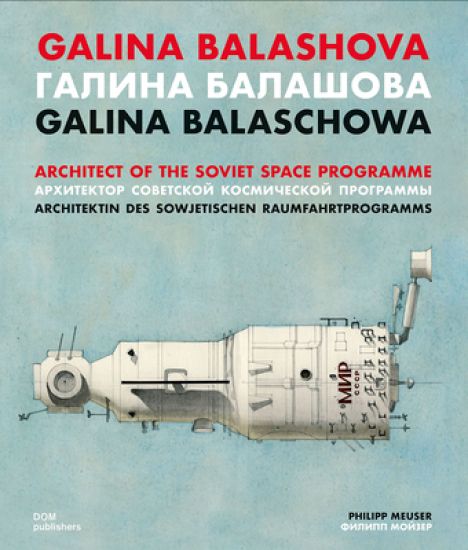
This monograph on the work of the Russian architect Galina Balashova presents a unique collection of designs for Soviet cosmonautics. These include plans and engineering drawings for Soyuz capsules and the space stations Salyut and Mir. Balashova acted as a consultant to the Buran programme, the Soviet counterpart to the American Space Shuttle.
Construction and Design Manual Prefabricated Housing
Prefabricated housing, often associated with blighted urban land­scapes and monotonous grey boxes, has evolved into an approach to housing with a wealth of aesthetic and ­structural possibilities. Modern methods of constructing and assembling prefabricated buildings – methods that can be traced back to the 19th century – are going through a renaissance. This is true across the world, from Vancouver and New York to London and Berlin through to Astana and Singapore. Moreover, prefabrication now serves a wider range of purposes than ever before. In ­Moscow, Europe’s largest metropolitan area, it is primarily used ­­­­as a means to provide ­affordable homes. But in some countries, prefabrication is surprisingly also used to build exclusive, upmarket properties. This construction and design manual presents a range of ­different production and assembly methods currently used in the field of prefabricated housing. It particularly focuses on ­efficiency, sustainability, and market relevance, and presents strategies for ­organising processes along with best-practice examples that reflect the latest trends. The manual also ex­plores the historical development of prefabricated housing in order to discover its full architectural potential. Finally, it outlines ten design parameters for prefabricated housing and presents 15 noteworthy examples, making a fresh contribution to the debate on affordable housing today.
Hospitals and Medical Facilities

Hospitals and Medical Facilities

Philipp Meuser

DOM Publishers
2019
sidottu
This Construction and Design Manual showcases all aspects of planning hospitals, medical practices, and pharmacies. Around 50 projects are presented in their entirety, accompanied by large photographs, true to scale floor plans, and coloured diagrams. The volume also features scientific contributions concerning methods of planning and questions of design. Additional essays on architectural history and typological classifications make this book, spanning over 400 pages, an indispensable reference work for everyone with an interest in hospital architecture and healthcare design. Construction data, planning parameters, and regulations for hospitals and medical facilities True to scale floor plans for different building types and scientific comments Essential for healthcare design, architecture, and medical administration
Prefabricated Housing

Prefabricated Housing

Philipp Meuser

DOM Publishers
2018
muu
Prefabricated housing has long since ceased to mean the disfigurement of the urban landscape with monotonous grey boxes. Particularly in Central Europe and Russia, modern assembly methods and 100 years of experience in planning prefabricated buildings and constructing with large panels are experiencing a renaissance. Whereas predominantly in Moscow - the largest European metropolis with seventeen million - prefabricated housing is an essential instrument for the provision of residential assistance, prefabrication methods in Germany and Switzerland, for example, are used to build exclusive properties. This construction manual examines the potential of prefabricated housing on structural, historical and architectural grounds. In addition to an insight into the methods of production and assembly, roughly twenty selected examples are presented in large-format photographs, plans rich in detail and meaningful diagrams, providing a contribution to the discussion on affordable housing.
Construction and Design Manual

Construction and Design Manual

Philipp Meuser

DOM Publishers
2011
sidottu
This new addition to the hugely successful Construction and Design Manual series looks at building typologies in the field of public health. It is an essential work of reference and covers the entire spectrum of interior architecture in consultancies, pharmacies and other medical facilities. Photographs, scale plans and sketches illustrate 50 projects, which are described and analysed in detail. Background essays shed light on such topics as interior design strategies, medical history and building costs. Sample floor plans and planning aids for architects working in the medical field round off this beautifully designed book.