Kirjojen hintavertailu. Mukana 12 595 353 kirjaa ja 12 kauppaa.

Kirjailija

Philippa H. Francis-West

Kirjat ja teokset yhdessä paikassa: 2 kirjaa, julkaisuja vuosilta 2003-2021, suosituimpien joukossa Craniofacial Development The Tissue and Molecular Interactions That Control Development of the Head. Vertaile teosten hintoja ja tarkista saatavuus suomalaisista kirjakaupoista.

2 kirjaa

Kirjojen julkaisuhaarukka 2003-2021.

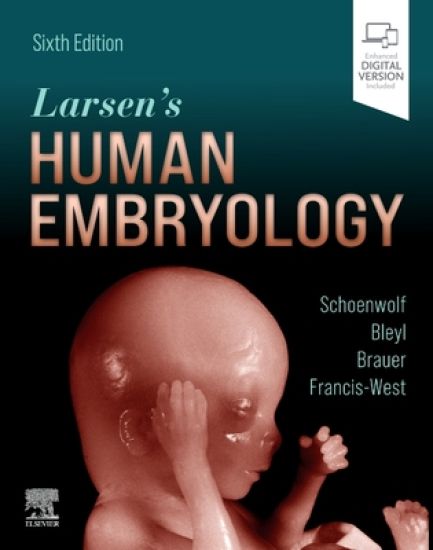
Larsen's Human Embryology

Larsen's Human Embryology

Gary C. Schoenwolf; Steven B. Bleyl; Philip R. Brauer; Philippa H. Francis-West

Elsevier - Health Sciences Division
2021
nidottu
Offering a well-organized, straightforward approach to a highly complex subject, Larsen's Human Embryology, 6th Edition, provides easy-to-read, comprehensive coverage of human embryonic development for today's students. It integrates anatomy and histology with cellular and molecular mechanisms, focusing on both normal development and congenital anomalies. Highly illustrated with superb drawings and photographs, it features a strong clinical focus based on the most up-to-date scientific discoveries and understanding.Contains new information on gene editing via CRISPr technology, organoids and the study of human disease, transcription factors and signaling pathways, and single cell sequencing. Includes clinical scenarios that describe prevention, diagnosis, and treatment of human birth defects and disease. Features a superior art program, online animations, and high-quality drawings and photographs throughout-ideal for today’s visual learners. · Includes a strong clinical emphasis through the use of Clinical Tasters, Embryology in Practice, and In the Clinic sections. Provides additional information on mechanisms of development and research approaches and strategies to establish these mechanisms with In the Research Lab sections. Begins each chapter with an overview of main points as well as a graphical summary, with key terms listed in bold type. Covers the embryology information that today’s medical students need to know for Board exams, clinics, and more, in a readable, straightforward manner. Enhanced eBook version included with purchase. Your enhanced eBook allows you to access 50 narrated animations, multiple-choice questions, and all of the text, figures, and references from the book on a variety of devices.
Craniofacial Development The Tissue and Molecular Interactions That Control Development of the Head

Craniofacial Development The Tissue and Molecular Interactions That Control Development of the Head

Philippa H. Francis-West; Lesley Robson; Darrell J.R. Evans

Springer-Verlag Berlin and Heidelberg GmbH Co. K
2003
nidottu
Craniofacial development is a multistep and intricate process initially involving a number of inductive interactions that control neural and neural crest development, which are followed by a series of epithelial-mesenchymal interactions that control outgrowth, patterning, and skeletal differentiation. Certain aspects of craniofacial development are unique developmental processes in higher vertebrates. First, in higher vertebrates the cranial neural crest, in contrast to the trunk neural crest, gives rise to the skeletal structures. These skeletal elements include those comprising mem­ brane bone and secondary cartilage, which with the exception of the clavicle are tissue types found exclusively in the head in higher vertebrates. Second, with the exception of the tongue, the origin of the musculature is distinct from other regions of the body. The body and tongue muscles are formed from the segmented epithelial somites whilst the head musculature is formed from unsegmented paraxial and prechordal mesoderm. Furthermore, the signalling cascades that control myogenic differentia­ tion appear to be distinct as determined by gene expression and the response of myogenic cells to growth factors. Finally, the neurogenic placodes, which give rise to the sensory organs and some cranial ganglia, are only found in the head. Over recent years, there have been significant advances in our knowledge of the molecular proc­ esses that control craniofacial development in a number of animal models. This has given insight into the genes that control many aspects of head development from the initial induction of the head to the final stages of differentiation.