
Kirjailija
Philippe Jaccottet
Kirjat ja teokset yhdessä paikassa: 26 kirjaa, julkaisuja vuosilta 1988-2025, suosituimpien joukossa Landscapes with Absent Figures. Vertaile teosten hintoja ja tarkista saatavuus suomalaisista kirjakaupoista.
26 kirjaa
Kirjojen julkaisuhaarukka 1988-2025.
Réussir son Bac de français 2025 : Analyse du recueil À la lumière d'hiver de Philippe Jaccottet
Philippe Jaccottet
Bac de français
2024
nidottu
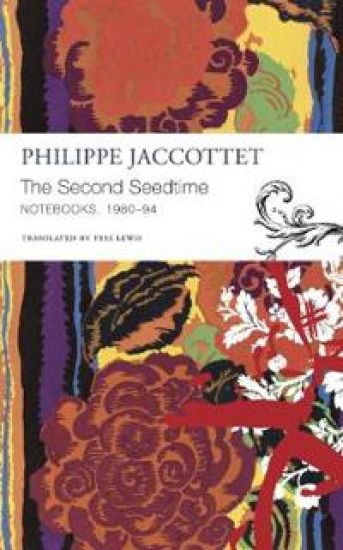
The second volume of notes and reflections from one of Switzerland’s most prominent and prolific men of letters. One of Europe’s finest contemporary poets, Jaccottet is a writer of exacting attention. Through keen observations of the natural world, art, literature, and music, and reflections on the human condition, Jaccottet opens his readers’ eyes to the transcendent in everyday life. The Second Seedtime is a collection of “things seen, things read, and things dreamed.” The volume continues the project Jaccottet began three decades earlier in his first volume of notebooks, Seedtime. Here, again, he gathers flashes of beauty dispersed around him like seeds that may blossom into poems or moments of inspiration. He returns, insistently, to such literary touchstones as Dante, Montaigne, Góngora, Goethe, Kierkegaard, Hölderlin, Michaux, Hopkins, Brontë, and Dickinson, as well as musical greats including Bach, Monteverdi, Purcell, and Schubert. The Second Seedtime is the vivid chronicle of one man’s passionate engagement with the life of the mind, the spirit, and the natural world.
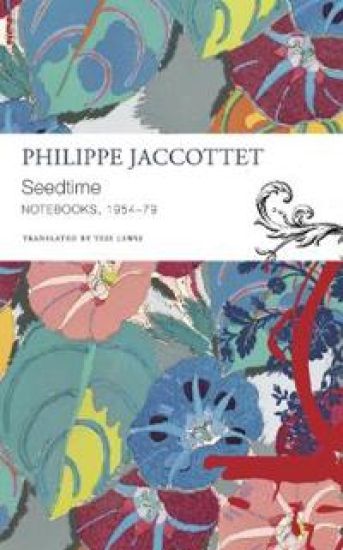
The first volume of notes and reflections from one of Switzerland’s most prominent and prolific men of letters.Seedtime—Jaccottet’s notebooks—is an especially good introduction to this leading francophone Swiss author, containing the poet’s observations of the natural world and his reflections on literature, art, music, and the human condition. In these explorations, he returns again and again to the fundamental, focusing his prodigious talents on describing the exact shade of light on a meadow, the sound of running water, the color of cherry and almond blossoms, or the cry of a bird in the stillness before dawn. In this translation by Tess Lewis, English readers will finally be able to join this poet as we follow in his footsteps of fifty years ago and find the still-viable seeds of his delicate and tenacious verse.
Fiche de lecture À la lumière d'hiver (Étude intégrale)
Philippe Jaccottet
Paideia Education
2023
pokkari
D cryptez la lumi re d'hiver avec l'analyse de Paideia ducation Que faut-il retenir de ce recueil de Philippe Jaccottet ? Retrouvez tout ce que vous devez savoir de ce chef-d'oeuvre de la litt rature fran aise dans une analyse de r f rence pour comprendre rapidement le sens de l'oeuvre. R dig e de mani re claire et accessible par un enseignant, cette fiche de lecture propose notamment un r sum , une tude des th mes principaux, des cl s de lecture et des pistes de r flexion. Une analyse litt raire compl te et d taill e pour mieux lire et comprendre le livre Paideia ducation en deux mots: Pl biscit aussi bien par les passionn s de litt rature que par les lyc ens, Paideia ducation est consid r comme une r f rence en mati re d'analyses d'oeuvres litt raires. Celles-ci ont t con ues pour guider les lecteurs travers la litt rature. Nos auteurs appartiennent aux milieux universitaire et de l' ducation, gage de s rieux pour vous faire d couvrir les plus grandes oeuvres de la litt rature mondiale.
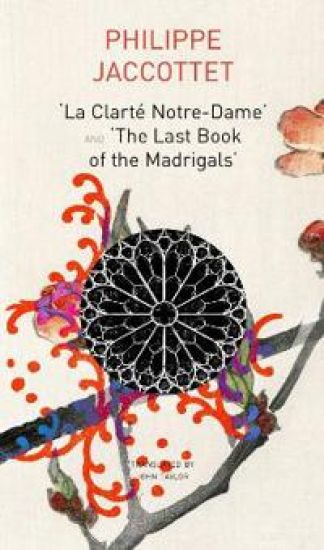
"La Clarté Notre–Dame" and "The Last Book of the Madrigals"
Philippe Jaccottet; John Taylor; José–flore Tappy
SEAGULL BOOKS LONDON LTD
2023
sidottu
The last works of the last great classic European poet now available in English. In his 96th and final year, and with the help of the poet José-Flore Tappy, celebrated Swiss poet Philippe Jaccottet finished two manuscripts-in-progress, one in prose and one in poetry, both of which are presented in this volume in John Taylor’s sensitive translation. The first work, “La Clarté Notre-Dame,” takes off from the “pure, weightless, fragile, yet crystal-clear tinkling” of a monastery bell heard during a walk with friends. With this thought-provoking sound as a leitmotiv, Jaccottet looks back on a life of writing, reading, and scrutinizing humankind’s existential and spiritual aspirations. He sets these concerns against his equally lifelong preoccupation with “the rise of evil in today’s world,” notably in Syria. Composed in a baroque style, the verse poems collected in “The Last Book of Madrigals” explore love. Jaccottet returns in spirit to Italy, the country which for him symbolizes happiness and sensuality. As he evokes amorous attraction, he conjures up Monteverdi’s madrigals, one of Dante’s little-known rhymes, and Giuseppe Ungaretti’s last poem. Reinventing and commenting on these works, Jaccottet meditates on old age, approaching death, despair, and the persistence of love. Together, both works grapple with devastating darkness, but as Tappy observes in her afterword, however, Jaccottet’s “greatest force” was “his perpetually renewed desire, during the most terrifying night, to head for the light.”
Fiche de lecture À la lumière d'hiver de Philippe Jaccottet (Analyse littéraire de référence et résumé complet)
Philippe Jaccottet
Les Editions Du Cenacle
2022
pokkari
La collection Conna tre une oeuvre vous offre la possibilit de tout savoir du recueil la lumi re d'hiver, de Philippe Jaccottet, gr ce une fiche de lecture aussi compl te que d taill e. La r daction, claire et accessible, a t confi e un sp cialiste universitaire. Cette fiche de lecture r pond une charte qualit mise en place par une quipe d'enseignants. Ce livre contient la biographie de Philippe Jaccottet, la pr sentation de l'oeuvre, le r sum d taill , les raisons du succ s, les th mes principaux et l' tude du mouvement litt raire de l'auteur.

'A la lumiere d'hiver' is a central work in the writing of the Swiss French poet Philippe Jaccottet (1925-2021). Tim Dooley's translation, 'In Winter Light', is the product of a long relationship with the original, which he first read in 1977. His English version mirrors the tentative, scrupulous exploration of being he finds in Jaccottet's French.

The Pilgrim`s Bowl – (Giorgio Morandi)
Philippe Jaccottet; John Taylor
SEAGULL BOOKS LONDON LTD
2022
nidottu
A meditation on the work of Italian artist Giorgio Morandi and its power to evoke a complexity of emotions and astonishment. In The Pilgrim’s Bowl, Swiss poet Philippe Jaccottet examines Giorgio Morandi’s ascetic still lifes, contrasting his artistic approach to the life philosophies of two authors whom he cherished, Pascal and Leopardi, and reflecting on the few known autobiographical details we know about Morandi. In this small and erudite tome, Jaccottet draws us into the very heart of the artist’s calm and strangely haunting oeuvre. In his literary criticism, Jaccottet is known for deeply engaging with the work of his fellow poets and tenaciously seeking the essence of their poetics. In this, his only book-length essay devoted to an artist, his critical prose likewise blends empathy, subtle discernment, and a determination to pinpoint, or at least glimpse, the elusive underlying qualities of Morandi's deceptively simple, dull-toned yet mysteriously luminous paintings. The Pilgrim’s Bowl is a remarkably elucidating study based on a profound admiration for and a dialogue with Morandi’s oeuvre.
The story of an intense encounter between two men who were once very close and now must grapple with the fractured ideals that separate them. After several years abroad, a young man returns to his hometown to seek the man he calls master. This master, a brilliant philosopher, had made the young man into a disciple before sending him out into the world to put his teachings into practice. Returning three years later, the disciple finds his master has abandoned his wife and child and moved into a squalid one-room flat, cutting himself off completely from his former life. Disillusioned and reeling from the discovery, the young man spends an entire night listening to his master’s bitter denunciation of the ideals they once shared. Written in 1960 during Jaccottet’s period of poetic paralysis, the novel seeks to harmonize the best and worst of human nature—reconciling despair, falsehood, and lethargy of spirit with the need to remain open to beauty, truth, and the essential goodness of humankind. Translated by Tess Lewis, Obscurity is Jaccottet’s only work of fiction, one that will introduce new readers to the multifaceted skills of this major poet.
À la lumière d'hiver de Philippe Jaccottet (fiche de lecture et analyse complète de l'oeuvre)
Philippe Jaccottet
Comprendre La Litterature
2021
pokkari
Venez d couvrir le recueil de Philippe Jaccottet gr ce une analyse litt raire de r f rence crite par un sp cialiste universitaire, cette fiche de lecture est recommand e par de nombreux enseignants. Cet ouvrage contient la biographie de l' crivain, le r sum d taill , le mouvement litt raire, le contexte de publication de l'oeuvre et l'analyse compl te. Retrouvez tous nos titres sur: www.fichedelecture.fr.
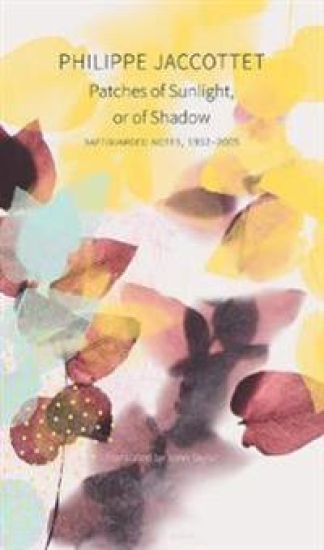
Philippe Jaccottet’s newest work follows in some ways the approach of Seedtime, his recent two-volume collection of notebooks. Similarly comprising on-the-spot jottings, philosophical reflections, literary commentary, dream narratives and sundry “notes,” this book nonetheless differs from the preceding volumes in that the Swiss poet includes more personal material than ever before. Drawing on unpublished notebooks from the years 1952–2005, Jacottet offers here passages about his family, the death of his father-in-law and of his mother, his encounters with other major poets—such as René Char, Francis Ponge, Jean Tardieu, and his friends Yves Bonnefoy and André du Bouchet—and his trips abroad, as well as, characteristically, his walks in the countryside around the village of Grignan, in the south of France, where he has lived since 1953. For a poet who has been notoriously discreet about his life, this book offers unexpected glimpses of the private man. Above all, the entries in this notebook show how one of the greatest European poets grapples with the discouraging elements of existence, counterbalancing them by recording fleeting perceptions in which “something else,” almost like a threshold, seems present.
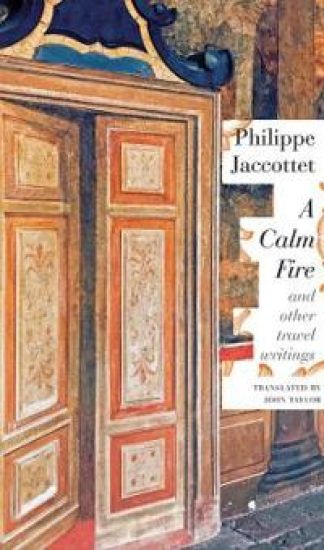
In these times of heartbreaking violence, clashing religions, and a seemingly never-ending narrative of dichotomy between East and West, wonder at the religion and culture of the Middle East can be in short supply. However, the lyrical and philosophical travel writing in Swiss poet Philippe Jaccottet’s Calm Fire rekindles it, lifting us out of our ordinary locales and stories of violent conflict in the Middle East. Jaccottet’s poetic descriptions explore the rich cultural worlds of Syria, Lebanon, Egypt, and Israel, giving us uncommon glimpses into countries so often associated with turmoil, death and destruction. Expressing a poet’s admiration for the ecstasies of faith and a philosopher’s skepticism of these seemingly transformative feelings, Jaccottet dives deep into the religious cultures of the places he visits. ? Ultimately, whether in his native Swiss Alps or among the cedars of Lebanon, the same question pervades Philippe Jaccottet’s work: How should we live? More than a simple palliative to a depressing news cycle, Calm Fire captures a true sense of place by celebrating and pondering ways of life through the immersive experience of travel.
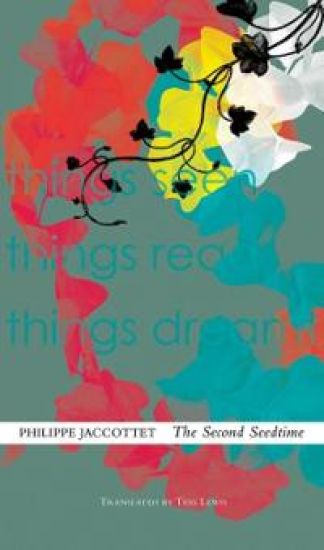
Since his first collection of poetry appeared in 1953, Philippe Jaccottet has sought to express the ineffable that lies at the heart of our material world in his essential, elemental poetry. As one of Switzerland's most prominent and prolific men of letters, Jaccottet has published more than a dozen books of poetry and criticism. One of Europe's finest contemporary poets, Jaccottet is a writer of exacting attention. Through keen observations of the natural world, of art, literature, music, and reflections on the human condition, Jaccottet opens his readers' eyes to the transcendent in everyday life. The Second Seedtime is a collection of "things seen, things read, and things dreamed." The volume continues the project Jaccottet began three decades earlier in his first volume of notebooks, Seedtime. Here, again, he gathers flashes of beauty dispersed around him like seeds that may blossom into poems or moments of inspiration. He returns, insistently, to such literary touchstones as Dante, Montaigne, Gongora, Goethe, Kierkegaard, Holderlin, Michaux, Hopkins, Bronte, and Dickinson, as well as musical greats including Bach, Monteverdi, Purcell, and Schubert. The Second Seedtime is the vivid chronicle of one man's passionate engagement with the life of the mind, the spirit, and the natural world.
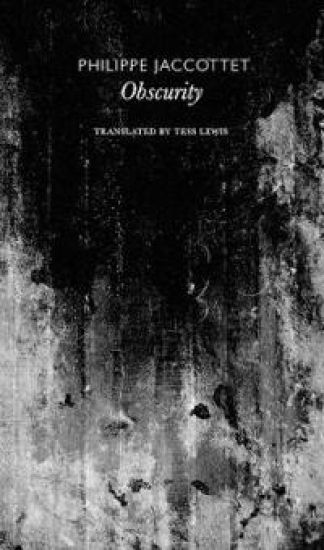
After several years abroad, a young man returns to his hometown to seek the man he calls master. This master, a brilliant philosopher, had made the young man into a disciple before sending him out into the world to put his teachings into practice. Returning three years later, the disciple finds his master has abandoned his wife and child and moved into a squalid one-room flat, cutting himself off completely from his former life. Disillusioned and reeling from the discovery, the young man spends an entire night listening to his master's bitter denunciation of the ideals they once shared. Obscurity, by noted thinker Philippe Jaccottet, is the story of this intense encounter between two men who were once very close and now must grapple with the fractured ideals that separate them. Written in 1960 during Jaccottet's period of poetic paralysis, the novel seeks to harmonize the best and worst of human nature-reconciling despair, falsehood, and lethargy of spirit with the need to remain open to beauty, truth, and the essential goodness of humankind. Translated by Tess Lewis, Obscurity is Jaccottet's only work of fiction, one that will introduce new readers to the multifaceted skills of this major poet. Praise for the French edition "In its haggard sobriety, the account of this tormented soul's monologue is staggering ...a beautiful narrative, written in a resounding, solemn style."-La Table Ronde

Since his first collection of poetry appeared in 1953, Philippe Jaccottet has sought to express the ineffable that lies at the heart of our material world in his essential, elemental poetry. As one of Switzerland's most prominent and prolific men of letters, Jaccottet has published more than a dozen books of poetry and criticism, but none are widely available in English. Seedtime - Jaccottet's notebooks - is an especially good introduction to this leading francophone Swiss author, containing the poet's observations of the natural world and his reflections on literature, art, music, and the human condition. In these explorations, he returns again and again to the fundamental, focusing his prodigious talents on describing the exact shade of light on a meadow, the sound of running water, the color of cherry and almond blossoms, or the cry of a bird in the stillness before dawn. In this translation by Tess Lewis, English readers will finally be able to join this poet as we follow in his footsteps of fifty years ago and find the still-viable seeds of his delicate and tenacious verse.