Kirjojen hintavertailu. Mukana 12 207 258 kirjaa ja 12 kauppaa.

Kirjailija

Philippe Soupault

Kirjat ja teokset yhdessä paikassa: 9 kirjaa, julkaisuja vuosilta 2016-2026, suosituimpien joukossa Lost Profiles. Vertaile teosten hintoja ja tarkista saatavuus suomalaisista kirjakaupoista.

9 kirjaa

Kirjojen julkaisuhaarukka 2016-2026.

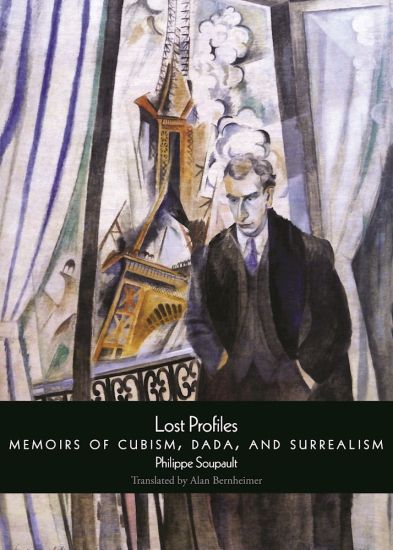
Lost Profiles

Lost Profiles

Philippe Soupault; Ron Padgett; Mark Polizzotti

City Lights Books
2016
pokkari
Poet Alan Bernheimer provides a long overdue English translation of this French literary classic?Lost Profiles is a retrospective of a crucial period in modernism, written by co-founder of the Surrealist Movement. Opening with a reminiscence of the international Dada movement in the late 1910s and its transformation into the beginnings of surrealism, Lost Profiles then proceeds to usher its readers into encounters with a variety of literary lions. We meet an elegant Marcel Proust, renting five adjoining rooms at an expensive hotel to "contain" the silence needed to produce Remembrance of Things Past; an exhausted James Joyce putting himself through grueling translation sessions for Finnegans Wake; and an enigmatic Apollinaire in search of the ultimate objet trouvé. Soupault sketches lively portraits of surrealist precursors like Pierre Reverdy and Blaise Cendrars, a moving account of his tragic fellow surrealist René Crevel, and the story of his unlikely friendship with right-wing anti-Vichy critic George Bernanos. The collection ends with essays on two modernist forerunners, Charles Baudelaire and Henri Rousseau. With an afterword by Ron Padgett recounting his meeting with Soupault in the mid 70's and a preface by André Breton biographer Mark Polizzotti, Lost Profiles confirms Soupault's place in the vanguard of twentieth-century literature."Philippe Soupault was a central figure in both the Dada and Surrealist movements but throughout his long life walked under no banner except the one of artistic freedom. In this previously untranslated book, he gives us a collection of richly remembered portraits of some of his best-loved friends from the old days of the new modernism. As a glimpse into that time, these lost portraits are invaluable?and often deeply moving."?Paul Auster, author of Report from the Interior"Reading Alan Bernheimer's splendid translation of Soupault's memoir, I forgot that it was a translation, that it was Soupault writing or talking about another time, about his friends of one century past. I read myself into these vivid and virile (so, sue me!) assaults on time, and Time stopped."?Andrei Codrescu, author of The Posthuman Dada Guide: Tzara and Lenin Play Chess"Philippe Soupault was present at the creation of both Dada and Surrealism?collaborating with André Breton to produce The Magnetic Fields, the first book of automatic writing?before going his own way as a poet, novelist, and journalist. In this present volume, Soupault's fierce independence, deep wit, and generous heart shine through a set of sharply observed portraits of European writers?fellow geniuses, most of them known to him personally. Alan Bernheimer's fine translation allows Soupault's vibrant voice to come to life in our time, and to reanimate in turn some of the greatest spirits of the past century's literature?a marvelous and much-needed apparition."?Andrew Joron, author of Trance Archive: New and Selected Poems"In this dazzling book?adroitly, smoothly & accurately translated by poet Alan Bernheimer?poet & co-founder of Surrealism Philippe Soupault trains his great secret eye & ear to auscultate an astounding range of core 20th century literary figures he knew personally. And does so with serenity, humor & profound insight. Like none of the academic histories covering this period, no matter how well written and documented, this book makes you say as you devour it: 'Wish I had been there.' Enough said, I’m going to call René Crevel right now."?Pierre Joris, author of Barzakh: Poems 2000-2012Philippe Soupault (1897-1990) served in the French army during WWI and subsequently joined the Dada movement. In 1919, he collaborated with André Breton on the automatic text Les Champs magnétiques, launching the surrealist movement. In the years that followed, he wrote novels and journalism, directed Radio Tunis in Tunisia, and worked for UNESCO.

The Voyage of Horace Pirouelle

The Voyage of Horace Pirouelle

Philippe Soupault

WAKEFIELD PRESS
2024
nidottu
A Rimbaudesque novella of wayward wanderlust and liberty from the cofounder of Surrealism Conceived in a hospital bed in 1917 and written a few months later after his fateful encounter with Lautréamont’s Maldoror, Philippe Soupault’s novella The Voyage of Horace Pirouelle preceded the author’s involvement with Parisian Dada and the Surrealist movement he would later launch with his friends. Inspired by a schoolmate’s sudden departure for Greenland on a whim and his subsequent disappearance, Soupault imagines his alter ego’s adventures as entries in a journal both personal and fictional. Adopted by an Inuit tribe, Pirouelle drifts from one encounter to another, from one casual murder to another, until his life of liberty and spontaneity leads him to stasis at the edge of existence. After taking an active part in French Dada, Philippe Soupault (1897–1990) cofounded the Surrealist movement with André Breton and Louis Aragon, and authored with Breton The Magnetic Fields, the first official Surrealist work. After being expelled from the movement for the crime of being “too literary,” he devoted his life to writing, travel, journalism and political activity (for which he was put in prison by the collaborationist Vichy government).
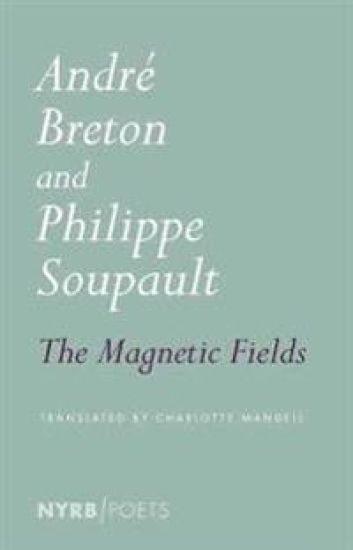
Magnetic Fields

Magnetic Fields

Andre Breton; Philippe Soupault

NYRB Poets
2020
nidottu
An indispensible classic of French poetry, this is a new translation Breton and Soupault's experiment with automatic writing, also the first known work of literary Surrealism. This edition includes the original French text. In the spring of 1919, two young men, Andre Breton and Philippe Soupault, one a student of law and the other of medicine, both in a state of moral shock after the carnage of the First World War, both driven to revolutionize literature and the world, embarked on an experiment in writing. Sick of the literary cultivation of an individual voice, sick of the "well-written", they wanted to unleash the power of the word as such, the better to create "a new morality" that would stand in place of "the prevailing morality, the source of all our trials and tribulations." They gave themselves some rules. They would write over the course of a week; they would write for only so much time on each day of the week; they would write fast and then faster. When the week was over, the writing would be over, and they would not go back to it or clean it up in any way. Finally, the project must proceed in perfect secrecy. They must not tell anyone what they were up to. This was how The Magnetic Fields, the first sustained exercise in automatic writing as a form of literary composition, came to be. By the end of Breton and Soupault's weeklong labor, Breton feared he was going mad, and the chapters of the book, the product of their daily sessions, astonished and confounded both writers. What they had wrought was full of weird comedy and fraught with uncertainty and even terror. It was in touch with primal things. "The end of everything" was the title of the book's gnomic final section, and yet Breton had arrived at a new beginning. The Magnetic Fields, their fellow surrealist Louis Aragon would later say, "was the moment at the dawn of the twentieth] centry on which the entire history of writing pivots." Charlotte Mandell's brilliant new translation of The Magnetic Fields, here accompanied by the original French, is the first in over 30 years.
Sista nätterna i Paris

Sista nätterna i Paris

Philippe Soupault; Hans Johansson

Pequod Press
2016
nidottu
I många surrealistiska texter spelar staden Paris en huvudroll. I Philippe Soupaults roman, som utspelar sig i ett tidlöst Paris på 1920-talet, blandas det alldagliga och det allnattliga, det mystiska och det vardagliga. Läsaren får följa med på långa både meditativa och händelserika vandringar från stans kända centrala delar ut i dess mer okända utkanter och tillbaka. Och genom staden och texten flyter Seine, floden som för med sig och för bort så många minnen i en ständigt allt grumligare ström.