Kirjojen hintavertailu. Mukana 12 152 606 kirjaa ja 12 kauppaa.

Kirjailija

Phillip A. Laplante

Kirjat ja teokset yhdessä paikassa: 18 kirjaa, julkaisuja vuosilta 2003-2026, suosituimpien joukossa Real–Time Systems Design Analysis. Vertaile teosten hintoja ja tarkista saatavuus suomalaisista kirjakaupoista.

Mukana myös kirjoitusasut: Phillip A Laplante

18 kirjaa

Kirjojen julkaisuhaarukka 2003-2026.

Real–Time Systems Design Analysis

Real–Time Systems Design Analysis

Phillip A. Laplante; Seppo J. Ovaska

John Wiley Sons Inc
2021
sidottu
The fifth edition address the important changes that have occurred in the construction of real-time systems since the publising of the fourth edition in 2011. Some of the important innovations and developments include: safety critical systems, internet of things, mobile computing, software security, and the virtualization of small real-time systems. It is an introductory text about real-time systems -- systems where timeliness is a crucial part of the correctness of the system. Real-time software designers must be familiar with computer architecture and organization, operating systems, software engineering, programming languages, and compiler theory. The text provides a pragmatic overview of these subjects from the perspective of the real-time systems designer. The book is organized into chapters that are essentially self-contained. Thus, the material can be rearranged or omitted depending on the background and interests of the reader or instructor.

What Every Engineer, Scientist, and Technologist Should Know About Finance
This book bridges the gap between engineering expertise and financial acumen, equipping technical professionals with essential knowledge of corporate finance. This comprehensive guide transforms complex financial concepts into accessible insights, enabling engineers, scientists, and technology specialists to confidently navigate financial documents and understand the financial drivers behind corporate decisions. • Provides comprehensive coverage of professional financial context. • Presents self-contained explanations of all financial terminology with no prior accounting knowledge required. • Offers practical guidance for interpreting budgets and common financial documentation. • Discusses cost-based project metrics, control mechanisms, and risk management strategies. • Aligns with PMI's Project Management Professional exam topics in Project Cost Management, Business Environment, and Risk Management. • Includes forward-looking chapters examining emerging financial technologies including cryptocurrencies, FinTech innovations, open banking, and AI applications. Written specifically for technically minded professionals seeking to enhance their financial literacy, this essential resource serves as both a practical handbook and strategic guide. Whether you're an engineer looking to better understand how financial considerations impact your projects or a technical team leader needing to communicate effectively with finance departments, this book provides the knowledge framework to make informed financial decisions that complement and enhance your technical expertise throughout your career.
What Every Engineer, Scientist, and Technologist Should Know About Finance
This book bridges the gap between engineering expertise and financial acumen, equipping technical professionals with essential knowledge of corporate finance. This comprehensive guide transforms complex financial concepts into accessible insights, enabling engineers, scientists, and technology specialists to confidently navigate financial documents and understand the financial drivers behind corporate decisions. • Provides comprehensive coverage of professional financial context. • Presents self-contained explanations of all financial terminology with no prior accounting knowledge required. • Offers practical guidance for interpreting budgets and common financial documentation. • Discusses cost-based project metrics, control mechanisms, and risk management strategies. • Aligns with PMI's Project Management Professional exam topics in Project Cost Management, Business Environment, and Risk Management. • Includes forward-looking chapters examining emerging financial technologies including cryptocurrencies, FinTech innovations, open banking, and AI applications. Written specifically for technically minded professionals seeking to enhance their financial literacy, this essential resource serves as both a practical handbook and strategic guide. Whether you're an engineer looking to better understand how financial considerations impact your projects or a technical team leader needing to communicate effectively with finance departments, this book provides the knowledge framework to make informed financial decisions that complement and enhance your technical expertise throughout your career.
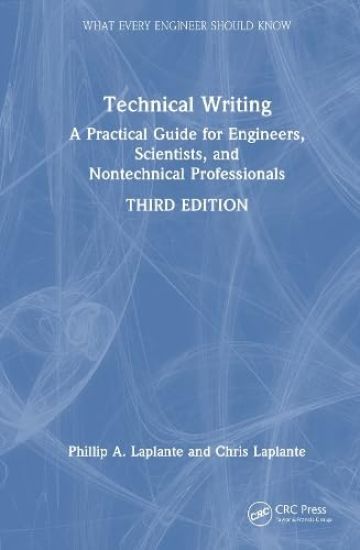
Technical Writing

Technical Writing

Phillip A. Laplante; Chris Laplante

TAYLOR FRANCIS LTD
2025
sidottu
Technical Writing: A Practical Guide for Engineers, Scientists, and Nontechnical Professionals enables readers to write, edit, and publish materials of a technical nature, including books, articles, reports, and electronic media. Written by experienced practicing engineers, this guide complements traditional technical writing manuals through presentation of first-hand examples that help readers understand practical considerations in writing and producing technical content. These examples illustrate how a publication originates as well as various challenges and solutions.The third edition features:• New and updated exercises, examples, and case studies.• New content on software/systems documentation.• Treatment of plagiarism to incorporate issues in generative AI, open access archiving, and more.• Coverage of popular writing and collaboration tools such as Grammarly, Overleaf, and Google Docs.• Increased conversation of writing for non-native English speakers.• Latest standards and research.Written in an informal, conversational style, unlike traditional writing texts, the book contains many interesting vignettes and personal stories to add interest to otherwise stodgy lessons. It is aimed at students and professionals in the science and engineering domains.
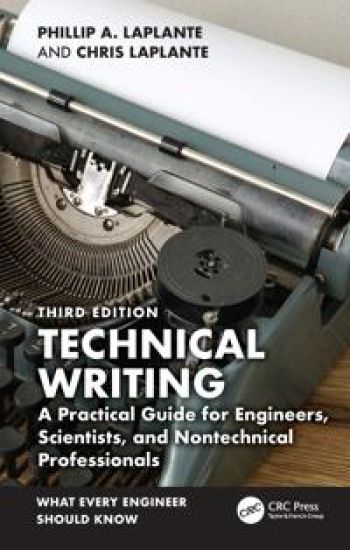
Technical Writing

Technical Writing

Phillip A. Laplante; Chris Laplante

TAYLOR FRANCIS LTD
2025
nidottu
Technical Writing: A Practical Guide for Engineers, Scientists, and Nontechnical Professionals enables readers to write, edit, and publish materials of a technical nature, including books, articles, reports, and electronic media. Written by experienced practicing engineers, this guide complements traditional technical writing manuals through presentation of first-hand examples that help readers understand practical considerations in writing and producing technical content. These examples illustrate how a publication originates as well as various challenges and solutions.The third edition features:• New and updated exercises, examples, and case studies.• New content on software/systems documentation.• Treatment of plagiarism to incorporate issues in generative AI, open access archiving, and more.• Coverage of popular writing and collaboration tools such as Grammarly, Overleaf, and Google Docs.• Increased conversation of writing for non-native English speakers.• Latest standards and research.Written in an informal, conversational style, unlike traditional writing texts, the book contains many interesting vignettes and personal stories to add interest to otherwise stodgy lessons. It is aimed at students and professionals in the science and engineering domains.
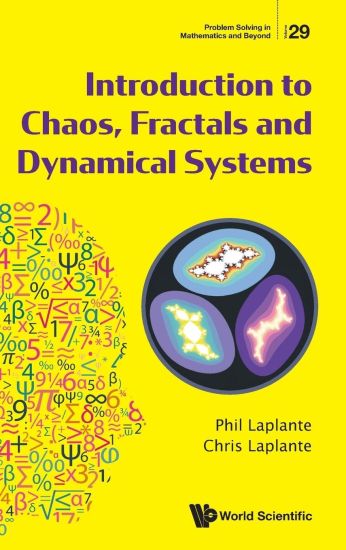
Introduction To Chaos, Fractals And Dynamical Systems

Introduction To Chaos, Fractals And Dynamical Systems

Phillip A Laplante; Chris Laplante

WORLD SCIENTIFIC PUBLISHING CO PTE LTD
2023
sidottu
This book offers a fun and enriching introduction to chaos theory, fractals and dynamical systems, and on the applications of fractals to computer generated graphics and image compression. Introduction to Chaos, Fractals and Dynamical Systems particularly focuses on natural and human phenomenon that can be modeled as fractals, using simple examples to explain the theory of chaos and how it affects all of us. Then, using straightforward mathematic and intuitive descriptions, computer generated graphics and photographs of natural scenes are used to illustrate the beauty of fractals and their importance in our world. Finally, the concept of Dynamical Systems, that is, time-dependent systems, the foundation of Chaos and Fractal, is introduced. Everyday examples are again used to illustrate concepts, and the importance of understanding how these vital systems affect our lives. Throughout the fascinating history of the evolution of chaos theory, fractals and dynamical systems is presented, along with brief introductions to the scientists, mathematicians and engineers who created this knowledge.Introduction to Chaos, Fractals and Dynamical Systems contains ample mathematical definitions, representations, discussions and exercises, so that this book can be used as primary or secondary source in home schooling environments.The book is suitable for homeschooling as a focused course on the subject matter or as a classroom supplement for a variety of courses at the late junior high or early high-school level. For example, in addition to a standalone course on Chaos, Fractals and Dynamical Systems (or similar title), this book could be used with the following courses:The text can also be used in conjunction with mathematics courses for undergraduates for non-science majors. The book can also be used for informal and lively family study and discussion.For each chapter, exercises and things to do are included. These activities range from simple computational tasks to more elaborate computer projects, related activities, biographical research and writing assignments.
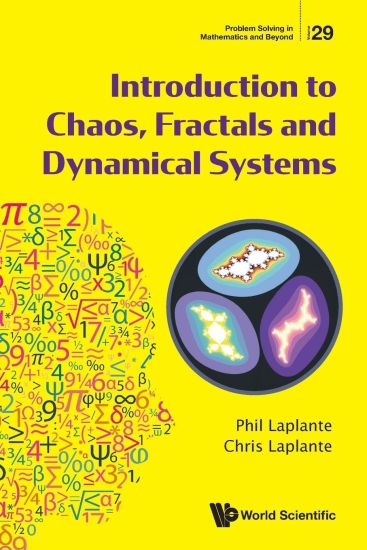
Introduction To Chaos, Fractals And Dynamical Systems

Introduction To Chaos, Fractals And Dynamical Systems

Phillip A Laplante; Chris Laplante

WORLD SCIENTIFIC PUBLISHING CO PTE LTD
2023
nidottu
This book offers a fun and enriching introduction to chaos theory, fractals and dynamical systems, and on the applications of fractals to computer generated graphics and image compression. Introduction to Chaos, Fractals and Dynamical Systems particularly focuses on natural and human phenomenon that can be modeled as fractals, using simple examples to explain the theory of chaos and how it affects all of us. Then, using straightforward mathematic and intuitive descriptions, computer generated graphics and photographs of natural scenes are used to illustrate the beauty of fractals and their importance in our world. Finally, the concept of Dynamical Systems, that is, time-dependent systems, the foundation of Chaos and Fractal, is introduced. Everyday examples are again used to illustrate concepts, and the importance of understanding how these vital systems affect our lives. Throughout the fascinating history of the evolution of chaos theory, fractals and dynamical systems is presented, along with brief introductions to the scientists, mathematicians and engineers who created this knowledge.Introduction to Chaos, Fractals and Dynamical Systems contains ample mathematical definitions, representations, discussions and exercises, so that this book can be used as primary or secondary source in home schooling environments.The book is suitable for homeschooling as a focused course on the subject matter or as a classroom supplement for a variety of courses at the late junior high or early high-school level. For example, in addition to a standalone course on Chaos, Fractals and Dynamical Systems (or similar title), this book could be used with the following courses:The text can also be used in conjunction with mathematics courses for undergraduates for non-science majors. The book can also be used for informal and lively family study and discussion.For each chapter, exercises and things to do are included. These activities range from simple computational tasks to more elaborate computer projects, related activities, biographical research and writing assignments.
What Every Engineer Should Know About Data-Driven Analytics

What Every Engineer Should Know About Data-Driven Analytics

Satish Mahadevan Srinivasan; Phillip A. Laplante

TAYLOR FRANCIS LTD
2023
sidottu
What Every Engineer Should Know About Data-Driven Analytics provides a comprehensive introduction to the theoretical concepts and approaches of machine learning that are used in predictive data analytics. By introducing the theory and by providing practical applications, this text can be understood by every engineering discipline. It offers a detailed and focused treatment of the important machine learning approaches and concepts that can be exploited to build models to enable decision making in different domains.Utilizes practical examples from different disciplines and sectors within engineering and other related technical areas to demonstrate how to go from data, to insight, and to decision makingIntroduces various approaches to build models that exploits different algorithmsDiscusses predictive models that can be built through machine learning and used to mine patterns from large datasetsExplores the augmentation of technical and mathematical materials with explanatory worked examplesIncludes a glossary, self-assessments, and worked-out practice exercisesWritten to be accessible to non-experts in the subject, this comprehensive introductory text is suitable for students, professionals, and researchers in engineering and data science.
What Every Engineer Should Know About Data-Driven Analytics

What Every Engineer Should Know About Data-Driven Analytics

Satish Mahadevan Srinivasan; Phillip A. Laplante

TAYLOR FRANCIS LTD
2023
nidottu
What Every Engineer Should Know About Data-Driven Analytics provides a comprehensive introduction to the theoretical concepts and approaches of machine learning that are used in predictive data analytics. By introducing the theory and by providing practical applications, this text can be understood by every engineering discipline. It offers a detailed and focused treatment of the important machine learning approaches and concepts that can be exploited to build models to enable decision making in different domains.Utilizes practical examples from different disciplines and sectors within engineering and other related technical areas to demonstrate how to go from data, to insight, and to decision makingIntroduces various approaches to build models that exploits different algorithmsDiscusses predictive models that can be built through machine learning and used to mine patterns from large datasetsExplores the augmentation of technical and mathematical materials with explanatory worked examplesIncludes a glossary, self-assessments, and worked-out practice exercisesWritten to be accessible to non-experts in the subject, this comprehensive introductory text is suitable for students, professionals, and researchers in engineering and data science.
What Every Engineer Should Know about Software Engineering

What Every Engineer Should Know about Software Engineering

Phillip A. Laplante; Mohamad Kassab

TAYLOR FRANCIS LTD
2022
sidottu
This book offers a practical approach to understanding, designing, and building sound software based on solid principles. Using a unique Q&A format, this book addresses the issues that engineers need to understand in order to successfully work with software engineers, develop specifications for quality software, and learn the basics of the most common programming languages, development approaches, and paradigms. The new edition is thoroughly updated to improve the pedagogical flow and emphasize new software engineering processes, practices, and tools that have emerged in every software engineering area.Features: Defines concepts and processes of software and software development, such as agile processes, requirements engineering, and software architecture, design, and construction. Uncovers and answers various misconceptions about the software development process and presents an up-to-date reflection on the state of practice in the industry. Details how non-software engineers can better communicate their needs to software engineers and more effectively participate in design and testing to ultimately lower software development and maintenance costs. Helps answer the question: How can I better leverage embedded software in my design? Adds new chapters and sections on software architecture, software engineering and systems, and software engineering and disruptive technologies, as well as information on cybersecurity. Features new appendices that describe a sample automation system, covering software requirements, architecture, and design.This book is aimed at a wide range of engineers across many disciplines who work with software.
What Every Engineer Should Know about Software Engineering

What Every Engineer Should Know about Software Engineering

Phillip A. Laplante; Mohamad Kassab

TAYLOR FRANCIS LTD
2022
nidottu
This book offers a practical approach to understanding, designing, and building sound software based on solid principles. Using a unique Q&A format, this book addresses the issues that engineers need to understand in order to successfully work with software engineers, develop specifications for quality software, and learn the basics of the most common programming languages, development approaches, and paradigms. The new edition is thoroughly updated to improve the pedagogical flow and emphasize new software engineering processes, practices, and tools that have emerged in every software engineering area.Features: Defines concepts and processes of software and software development, such as agile processes, requirements engineering, and software architecture, design, and construction. Uncovers and answers various misconceptions about the software development process and presents an up-to-date reflection on the state of practice in the industry. Details how non-software engineers can better communicate their needs to software engineers and more effectively participate in design and testing to ultimately lower software development and maintenance costs. Helps answer the question: How can I better leverage embedded software in my design? Adds new chapters and sections on software architecture, software engineering and systems, and software engineering and disruptive technologies, as well as information on cybersecurity. Features new appendices that describe a sample automation system, covering software requirements, architecture, and design.This book is aimed at a wide range of engineers across many disciplines who work with software.
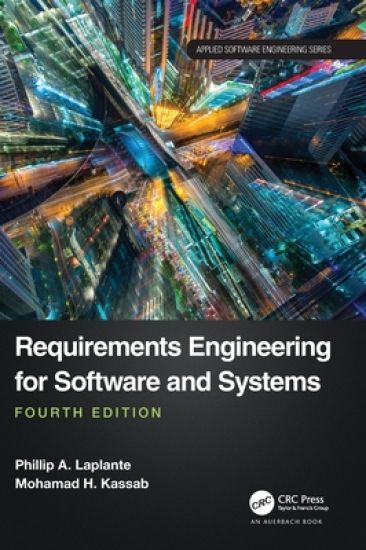
Requirements Engineering for Software and Systems

Requirements Engineering for Software and Systems

Phillip A. Laplante; Mohamad Kassab

TAYLOR FRANCIS LTD
2022
nidottu
Solid requirements engineering has increasingly been recognized as the key to improved, on-time, and on-budget delivery of software and systems projects. New software tools are emerging that are empowering practicing engineers to improve their requirements engineering habits. However, these tools are not usually easy to use without significant training. Requirements Engineering for Software and Systems, Fourth Edition is intended to provide a comprehensive treatment of the theoretical and practical aspects of discovering, analyzing, modeling, validating, testing, and writing requirements for systems of all kinds, with an intentional focus on software-intensive systems. It brings into play a variety of formal methods, social models, and modern requirements writing techniques to be useful to practicing engineers. The book is intended for professional software engineers, systems engineers, and senior and graduate students of software or systems engineering.Since the first edition, there have been made many changes and improvements to this textbook. Feedback from instructors, students, and corporate users was used to correct, expand, and improve the materials. The fourth edition features two newly added chapters: "On Non-Functional Requirements" and "Requirements Engineering: Road Map to the Future." The latter provides a discussion on the relationship between requirements engineering and such emerging and disruptive technologies as Internet of Things, Cloud Computing, Blockchain, Artificial Intelligence, and Affective Computing.All chapters of the book were significantly expanded with new materials that keep the book relevant to current industrial practices. Readers will find expanded discussions on new elicitation techniques, agile approaches (e.g., Kanpan, SAFe, and DEVOps), requirements tools, requirements representation, risk management approaches, and functional size measurement methods. The fourth edition also has significant additions of vignettes, exercises, and references. Another new feature is scannable QR codes linked to sites containing updates, tools, videos, and discussion forums to keep readers current with the dynamic field of requirements engineering.
Requirements Engineering for Software and Systems

Requirements Engineering for Software and Systems

Phillip A. Laplante; Mohamad Kassab

TAYLOR FRANCIS LTD
2022
sidottu
Solid requirements engineering has increasingly been recognized as the key to improved, on-time, and on-budget delivery of software and systems projects. New software tools are emerging that are empowering practicing engineers to improve their requirements engineering habits. However, these tools are not usually easy to use without significant training. Requirements Engineering for Software and Systems, Fourth Edition is intended to provide a comprehensive treatment of the theoretical and practical aspects of discovering, analyzing, modeling, validating, testing, and writing requirements for systems of all kinds, with an intentional focus on software-intensive systems. It brings into play a variety of formal methods, social models, and modern requirements writing techniques to be useful to practicing engineers. The book is intended for professional software engineers, systems engineers, and senior and graduate students of software or systems engineering.Since the first edition, there have been made many changes and improvements to this textbook. Feedback from instructors, students, and corporate users was used to correct, expand, and improve the materials. The fourth edition features two newly added chapters: "On Non-Functional Requirements" and "Requirements Engineering: Road Map to the Future." The latter provides a discussion on the relationship between requirements engineering and such emerging and disruptive technologies as Internet of Things, Cloud Computing, Blockchain, Artificial Intelligence, and Affective Computing.All chapters of the book were significantly expanded with new materials that keep the book relevant to current industrial practices. Readers will find expanded discussions on new elicitation techniques, agile approaches (e.g., Kanpan, SAFe, and DEVOps), requirements tools, requirements representation, risk management approaches, and functional size measurement methods. The fourth edition also has significant additions of vignettes, exercises, and references. Another new feature is scannable QR codes linked to sites containing updates, tools, videos, and discussion forums to keep readers current with the dynamic field of requirements engineering.
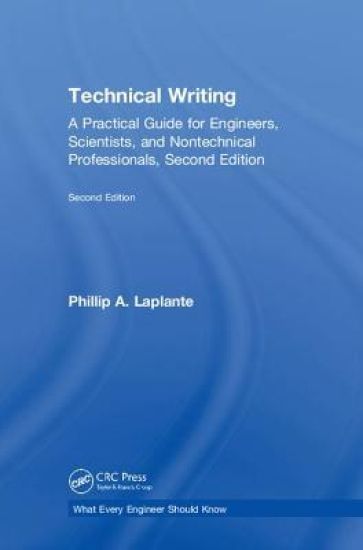
Technical Writing

Technical Writing

Phillip A. Laplante

CRC Press
2018
nidottu
Technical Writing: A Practical Guide for Engineers, Scientists, and Nontechnical Professionals, Second Edition enables readers to write, edit, and publish materials of a technical nature, including books, articles, reports, and electronic media. Written by a renowned engineer and widely published technical author, this guide complements traditional writer’s reference manuals on technical writing through presentation of first-hand examples that help readers understand practical considerations in writing and producing technical content. These examples illustrate how a publication originates as well as various challenges and solutions.The second edition contains new material in every chapter including new topics, additional examples, insights, tips and tricks, new vignettes and more exercises. Appendices have been added for writing checklists and writing samples. The references and glossary have been updated and expanded. In addition, a focus on writing for the nontechnical persons working in the technology world and the nonnative English speaker has been incorporated. Written in an informal, conversational style, unlike traditional college writing texts, the book also contains many interesting vignettes and personal stories to add interest to otherwise stodgy lessons.
Technical Writing

Technical Writing

Phillip A. Laplante

CRC Press
2018
sidottu
Technical Writing: A Practical Guide for Engineers, Scientists, and Nontechnical Professionals, Second Edition enables readers to write, edit, and publish materials of a technical nature, including books, articles, reports, and electronic media. Written by a renowned engineer and widely published technical author, this guide complements traditional writer’s reference manuals on technical writing through presentation of first-hand examples that help readers understand practical considerations in writing and producing technical content. These examples illustrate how a publication originates as well as various challenges and solutions.The second edition contains new material in every chapter including new topics, additional examples, insights, tips and tricks, new vignettes and more exercises. Appendices have been added for writing checklists and writing samples. The references and glossary have been updated and expanded. In addition, a focus on writing for the nontechnical persons working in the technology world and the nonnative English speaker has been incorporated. Written in an informal, conversational style, unlike traditional college writing texts, the book also contains many interesting vignettes and personal stories to add interest to otherwise stodgy lessons.
Computer Architecture: A Minimalist Perspective

Computer Architecture: A Minimalist Perspective

William F. Gilreath; Phillip A. Laplante

Springer-Verlag New York Inc.
2012
nidottu
This book examines computer architecture, computability theory, and the history of computers from the perspective of minimalist computing - a framework in which the instruction set consists of a single instruction. This approach is different than that taken in any other computer architecture text, and it is a bold step. The audience for this book is researchers, computer hardware engineers, software engineers, and systems engineers who are looking for a fresh, unique perspective on computer architecture. Upper division undergraduate students and early graduate students studying computer architecture, computer organization, or embedded systems will also find this book useful. A typical course title might be "Special Topics in Computer Architecture." The organization ofthe book is as follows. First, the reasons for studying such an "esoteric" subject are given. Then, the history and evolution of instruction sets is studied with an emphasis on how modern computing has features ofone instruction computing. Also, previous computer systems are reviewed to show how their features relate to one instruction computers. Next, the primary forms of one instruction set computing are examined. The theories of computation and of Turing machines are also reviewed to examine the theoretical nature of one instruction computers. Other processor architectures and instruction sets are then mapped into single instructions to illustrate the features of both types of one instruction computers. In doing so, the features of the processor being mapped are highlighted.
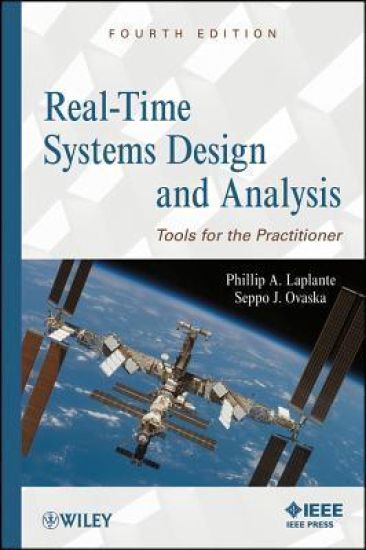
Real-Time Systems Design and Analysis

Real-Time Systems Design and Analysis

Phillip A. Laplante; Seppo J. Ovaska

John Wiley Sons Inc
2011
sidottu
The leading text in the field explains step by step how to write software that responds in real time From power plants to medicine to avionics, the world increasingly depends on computer systems that can compute and respond to various excitations in real time. The Fourth Edition of Real-Time Systems Design and Analysis gives software designers the knowledge and the tools needed to create real-time software using a holistic, systems-based approach. The text covers computer architecture and organization, operating systems, software engineering, programming languages, and compiler theory, all from the perspective of real-time systems design. The Fourth Edition of this renowned text brings it thoroughly up to date with the latest technological advances and applications. This fully updated edition includes coverage of the following concepts: Multidisciplinary design challenges Time-triggered architectures Architectural advancements Automatic code generation Peripheral interfacing Life-cycle processes The final chapter of the text offers an expert perspective on the future of real-time systems and their applications. The text is self-contained, enabling instructors and readers to focus on the material that is most important to their needs and interests. Suggestions for additional readings guide readers to more in-depth discussions on each individual topic. In addition, each chapter features exercises ranging from simple to challenging to help readers progressively build and fine-tune their ability to design their own real-time software programs. Now fully up to date with the latest technological advances and applications in the field, Real-Time Systems Design and Analysis remains the top choice for students and software engineers who want to design better and faster real-time systems at minimum cost.
Computer Architecture: A Minimalist Perspective

Computer Architecture: A Minimalist Perspective

William F. Gilreath; Phillip A. Laplante

Springer-Verlag New York Inc.
2003
sidottu
This book examines computer architecture, computability theory, and the history of computers from the perspective of minimalist computing - a framework in which the instruction set consists of a single instruction. This approach is different than that taken in any other computer architecture text, and it is a bold step. The audience for this book is researchers, computer hardware engineers, software engineers, and systems engineers who are looking for a fresh, unique perspective on computer architecture. Upper division undergraduate students and early graduate students studying computer architecture, computer organization, or embedded systems will also find this book useful. A typical course title might be "Special Topics in Computer Architecture." The organization ofthe book is as follows. First, the reasons for studying such an "esoteric" subject are given. Then, the history and evolution of instruction sets is studied with an emphasis on how modern computing has features ofone instruction computing. Also, previous computer systems are reviewed to show how their features relate to one instruction computers. Next, the primary forms of one instruction set computing are examined. The theories of computation and of Turing machines are also reviewed to examine the theoretical nature of one instruction computers. Other processor architectures and instruction sets are then mapped into single instructions to illustrate the features of both types of one instruction computers. In doing so, the features of the processor being mapped are highlighted.