Kirjojen hintavertailu. Mukana 12 506 941 kirjaa ja 12 kauppaa.

Kirjailija

Phillip B. Levine

Kirjat ja teokset yhdessä paikassa: 4 kirjaa, julkaisuja vuosilta 2007-2022, suosituimpien joukossa Reconsidering Retirement. Vertaile teosten hintoja ja tarkista saatavuus suomalaisista kirjakaupoista.

4 kirjaa

Kirjojen julkaisuhaarukka 2007-2022.

A Problem of Fit

A Problem of Fit

Phillip B. Levine

THE UNIVERSITY OF CHICAGO PRESS
2022
sidottu
A critical examination of the complex system of college pricing-how it works, how it fails, and how fixing it can help both students and universities. How much does it cost to attend college in the United States today? The answer is more complex than many realize. College websites advertise a sticker price, but uncovering the actual price-the one after incorporating financial aid-can be difficult for students and families. This inherent uncertainty leads some students to forgo applying to colleges that would be the best fit for them, or even not attend college at all. The result is that millions of promising young people may lose out on one of society's greatest opportunities for social mobility. Colleges suffer too because losing these prospective students can mean lower enrollment and less socioeconomic diversity. If markets require prices to function well, then the American higher-education system-rife as it is with ambiguity in its pricing-amounts to a market failure. In A Problem of Fit, economist Phillip B. Levine explains why institutions charge the prices they do and discusses the role of financial aid systems in facilitating-and discouraging-access to college. Affordability issues are real, but price transparency is also part of the problem. As Levine makes clear, our conversations around affordability and free tuition miss a larger truth: that the opacity of our current college-financing systems is a primary driver of inequities in education and society. In a clear-eyed assessment of educational access and aid in a post-Covid economy, A Problem of Fit offers a trenchant new argument for educational reforms that are well within reach.
A Problem of Fit

A Problem of Fit

Phillip B. Levine

THE UNIVERSITY OF CHICAGO PRESS
2022
nidottu
A critical examination of the complex system of college pricing-how it works, how it fails, and how fixing it can help both students and universities. How much does it cost to attend college in the United States today? The answer is more complex than many realize. College websites advertise a sticker price, but uncovering the actual price-the one after incorporating financial aid-can be difficult for students and families. This inherent uncertainty leads some students to forgo applying to colleges that would be the best fit for them, or even not attend college at all. The result is that millions of promising young people may lose out on one of society's greatest opportunities for social mobility. Colleges suffer too because losing these prospective students can mean lower enrollment and less socioeconomic diversity. If markets require prices to function well, then the American higher-education system-rife as it is with ambiguity in its pricing-amounts to a market failure. In A Problem of Fit, economist Phillip B. Levine explains why institutions charge the prices they do and discusses the role of financial aid systems in facilitating-and discouraging-access to college. Affordability issues are real, but price transparency is also part of the problem. As Levine makes clear, our conversations around affordability and free tuition miss a larger truth: that the opacity of our current college-financing systems is a primary driver of inequities in education and society. In a clear-eyed assessment of educational access and aid in a post-Covid economy, A Problem of Fit offers a trenchant new argument for educational reforms that are well within reach.
Reconsidering Retirement

Reconsidering Retirement

Courtney C. Coile; Phillip B. Levine

Brookings Institution
2010
nidottu
The economic downturn that began in 2008, the most severe in decades, has hit older Americans hard. Many have seen huge losses to their 401(k)s. In numerous cases the value of homes?the largest investment most older Americans have ever made?has diminished considerably. In addition, large numbers of American workers, including those 50 and older, have lost their jobs and may have difficulty replacing them. Suddenly the future seems a whole lot less certain, throwing years of planning into doubt. In Reconsidering Retirement, economists Courtney Coile and Phillip Levine go beyond the headlines to explain how the economic crisis will affect the future plans and well-being of older Americans.Amid well-publicized reports that older workers needed to stay on the job because of the crisis, the number of U.S. workers claiming Social Security retirement benefits actually rose substantially from 2008 to 2009. The authors maintain that job loss has been the culprit, leading to premature retirement, and while this trend may have been less noticed, it is perhaps the more significant outcome of the crisis.Coile and Levine examine the three major characteristics of the recession thought to influence retirement behavior: decline in the stock market, reduced housing values, and a weak labor market. The authors find that lower home prices did not actually affect retirement behavior but that the decline in the stock market did lead some workers to delay retirement, while a weakened labor market actually forced more older workers with fewer skills into retirement. As a result, these early retirees, who rely on Social Security, face a lifetime of lower benefits.The legacy of recessions is that those most in need usually are last to reap the benefits of an economic recovery. While the lion's share of media coverage after the economic downturn of 2008?09 has gone to the plight of older workers who remain employed, Courtney Coile and Phillip Levine examine the effects of the economic crisis on all workers approaching retirement age. Some of their findings are counterintuitive and will surprise many analysts and readers.In particular, they shine a light on lesser-skilled workers forced into early retirement?a number estimated at 378,000 workers. These workers will be forced into early involuntary retirement, drawing from Social Security sooner and receiving lower retirement income.This important book provides a complete picture of older workers today, how they will transition into retirement, and what we can do to assist them as the recession persists.
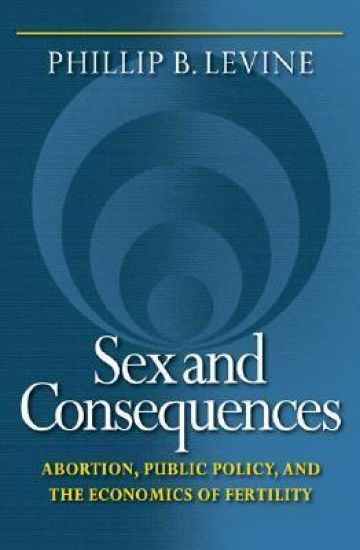
Sex and Consequences

Sex and Consequences

Phillip B. Levine

Princeton University Press
2007
pokkari
How do individuals change their behavior when abortion access increases? In this innovative book, economist Phillip Levine uses economic analysis to consider this question, comparing abortion to a form of insurance. Like insurance, he contends, abortion provides protection from downside risk. A pregnant woman who would otherwise give birth to an unwanted child has the option to abort. On the other hand, the availability of this option may increase the likelihood of a pregnancy in the first place. In a very restrictive abortion environment, few women would choose to have an abortion; legalizing abortion would reduce unwanted births. But if abortion becomes readily available, it may cause individuals to increase their sexual activity and/or reduce their use of contraception, Levine contends. Women will become pregnant more frequently, but will abort those pregnancies. Therefore, these abortions will not reduce unwanted births. Levine's analysis suggests that the manner in which individuals change their behavior depends on the extent to which abortion is accessible. He supports these assertions using data from both the United States and Eastern Europe, comparing areas that have restricted access to abortion services with those that have liberalized access. Using sound economic analysis, Sex and Consequences goes beyond the ideological arguments that frequently dominate the abortion debate, lending a new perspective to this controversial subject.