Kirjojen hintavertailu. Mukana 12 390 323 kirjaa ja 12 kauppaa.

Kirjailija

Phillip Cole

Kirjat ja teokset yhdessä paikassa: 9 kirjaa, julkaisuja vuosilta 2000-2024, suosituimpien joukossa Debating the Ethics of Immigration. Vertaile teosten hintoja ja tarkista saatavuus suomalaisista kirjakaupoista.

9 kirjaa

Kirjojen julkaisuhaarukka 2000-2024.

Global Displacement in the Twenty-First Century

Global Displacement in the Twenty-First Century

Phillip Cole

EDINBURGH UNIVERSITY PRESS
2024
nidottu
In this book Phillip Cole calls for a radical review of what international protection looks like and who is entitled to it. The book brings together different issues of forced displacement in one place to provide a systematic overview. It draws attention to groups who are often overlooked when it comes to discussions of international protection, such as the internally displaced, those displaced by climate change, disasters, development infrastructure projects and extreme poverty. The study draws on extensive case studies, such as border practices by European Union states, the United States and its border with Mexico, and the United Kingdom. Cole places the experiences of displaced people at the centre, and argues that they should be key political agents in determining policy in this area.
Global Displacement in the Twenty-First Century

Global Displacement in the Twenty-First Century

Phillip Cole

EDINBURGH UNIVERSITY PRESS
2022
sidottu
Builds an ethical framework for responding to the urgent crisis of global displacement Widening the discussion of the ethics of forced displacement to include people displaced by development projects, in particular Indigenous peoples A critical examination of border practices by global North states, including their use of violence and their defiance of international law Radical proposals for how we should understand key ideas such as protection, borders and solidarity both at a practical and theoretical level Case studies include bordering practices by European Union states, the United States and its border with Mexico, recent developments in the United Kingdom regarding refugees and people displaced by development projects In this book Phillip Cole calls for a radical review of what international protection looks like and who is entitled to it. The book brings together different issues of forced displacement in one place to provide a systematic overview. It draws attention to groups who are often overlooked when it comes to discussions of international protection, such as the internally displaced, those displaced by climate change, disasters, development infrastructure projects and extreme poverty. The study draws on extensive case studies, such as border practices by European Union states, the United States and its border with Mexico, and the United Kingdom. Cole places the experiences of displaced people at the centre, and argues that they should be key political agents in determining policy in this area.
The Ethics of Emigration

The Ethics of Emigration

Phillip Cole

Edinburgh University Press
2020
sidottu
The book explores the philosophical, ethical and personal dimensions of emigration, examining the debates around questions of citizenship, migration and the nature of political community from a distinct perspective.
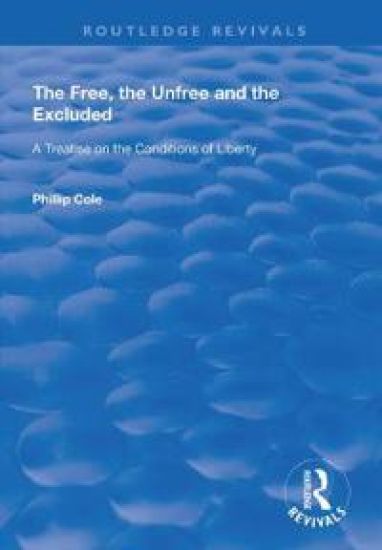
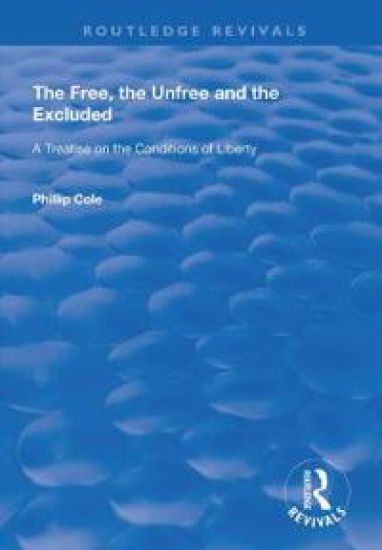
The Free, the Unfree and the Excluded
First published in 1998, this volume forwards a particular theory of freedom and delves into the relationships between this view of freedom and issues of social justice. Exploring positive and negative implications of the idea of freedom and its interaction with social justice programs, Phillip Cole argues that the idea of freedom contributes substantially to the theory of social justice, rather than drawing limiting boundaries around it. Cole examines the concept of freedom in light of ability, autonomy, neutrality, equality, welfare and membership. At heart, his approach is based on the notion of ‘entitlement’ and assumes that all people are of equal moral and political weight, that all should receive the same consideration for the purpose of ethical and political questions.
The Free, the Unfree and the Excluded
First published in 1998, this volume forwards a particular theory of freedom and delves into the relationships between this view of freedom and issues of social justice. Exploring positive and negative implications of the idea of freedom and its interaction with social justice programs, Phillip Cole argues that the idea of freedom contributes substantially to the theory of social justice, rather than drawing limiting boundaries around it. Cole examines the concept of freedom in light of ability, autonomy, neutrality, equality, welfare and membership. At heart, his approach is based on the notion of ‘entitlement’ and assumes that all people are of equal moral and political weight, that all should receive the same consideration for the purpose of ethical and political questions.
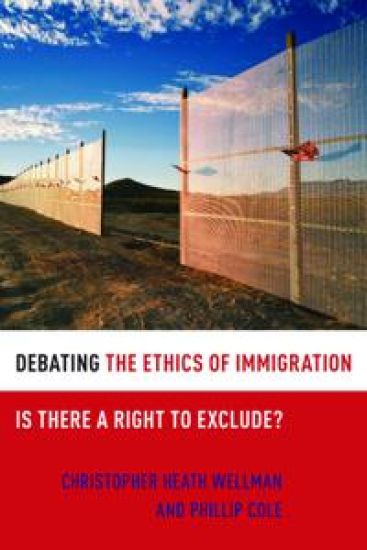
Debating the Ethics of Immigration

Debating the Ethics of Immigration

Christopher Heath Wellman; Phillip Cole

Oxford University Press Inc
2011
sidottu
Do states have the right to prevent potential immigrants from crossing their borders, or should people have the freedom to migrate and settle wherever they wish? Christopher Heath Wellman and Phillip Cole develop and defend opposing answers to this timely and important question. Appealing to the right to freedom of association, Wellman contends that legitimate states have broad discretion to exclude potential immigrants, even those who desperately seek to enter. Against this, Cole argues that the commitment to the moral equality of all human beings - which legitimate states can be expected to hold - means national borders must be open: equal respect requires equal access, both to territory and membership; and that the idea of open borders is less radical than it seems when we consider how many territorial and community boundaries have this open nature. In addition to engaging with each other's arguments, Wellman and Cole address a range of central questions and prominent positions on this topic. The authors therefore provide a critical overview of the major contributions to the ethics of migration, as well as developing original, provocative positions of their own.
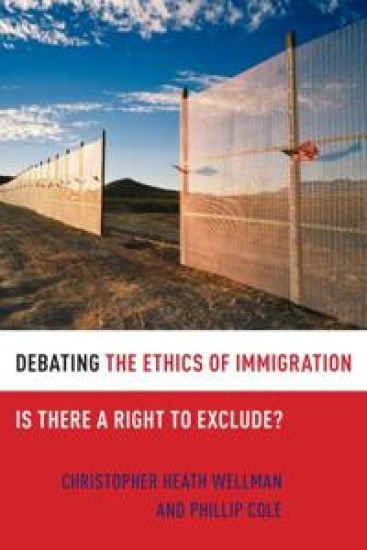
Debating the Ethics of Immigration

Debating the Ethics of Immigration

Christopher Heath Wellman; Phillip Cole

Oxford University Press Inc
2011
nidottu
Do states have the right to prevent potential immigrants from crossing their borders, or should people have the freedom to migrate and settle wherever they wish? Christopher Heath Wellman and Phillip Cole develop and defend opposing answers to this timely and important question. Appealing to the right to freedom of association, Wellman contends that legitimate states have broad discretion to exclude potential immigrants, even those who desperately seek to enter. Against this, Cole argues that the commitment to the moral equality of all human beings - which legitimate states can be expected to hold - means national borders must be open: equal respect requires equal access, both to territory and membership; and that the idea of open borders is less radical than it seems when we consider how many territorial and community boundaries have this open nature. In addition to engaging with each other's arguments, Wellman and Cole address a range of central questions and prominent positions on this topic. The authors therefore provide a critical overview of the major contributions to the ethics of migration, as well as developing original, provocative positions of their own.
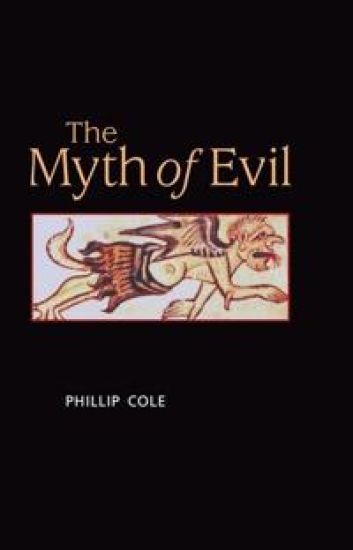
The Myth of Evil

The Myth of Evil

Phillip Cole

Edinburgh University Press
2006
sidottu
A philosophical history of the concept of evil in western culture. 'Evil is something to be feared, and historically, we shall see, it is the enemy within who has been seen as representing the most intense evil of all - the enemy who looks just like us, talks like us, and is just like us.' The Myth of Evil explores a contradiction: the belief that human beings cannot commit acts of pure evil, that they cannot inflict harm for its own sake, and the evidence that pure 'evil' truly is a human capacity. Acts of horror are committed not by inhuman 'monsters', but by ordinary human beings. This contradiction is clearest in the apparently 'extreme' acts of war criminals, terrorists, serial murderers, sex offenders and children who kill. Phillip Cole delves deep into our two, cosily established approaches to evil. There is the traditional approach where evil is a force which creates monsters in human shape. And there is the 'enlightened' perspective where evil is the consequence of the actions of misguided or mentally deranged agents. Cole rejects both approaches. Satan may have played a role in its evolution, but evil is really a myth we have created about ourselves. And to understand it fully, we must acknowledge this. Drawing on the philosophical ideas of Nietzsche, Arendt, Kant, Mary Midgley and others, as well as theology, psychoanalysis, fictional representations and contemporary political events such as the global 'war on terror', Cole presents an account of evil that is thorough and thought-provoking, and which, more fundamentally, compels us to reassess our understanding of human nature.
Philosophies of Exclusion

Philosophies of Exclusion

Phillip Cole

Edinburgh University Press
2000
nidottu
The mass movement of people across the globe constitutes a major feature of world politics today. Whatever the cause of the movement - often war, famine, economic hardship, political repression or climate change - the governments of western capitalist states see this 'torrent of people in flight' as a serious threat to their stability and the scale of this migration indicates a need for a radical re-thinking of both political theory and practice, for the sake of political, social and economic justice. This book argues that there is at present a serious gap between the legal and social practices of immigration and naturalisation in liberal democratic states and any theoretical justification for such practices that can be made within the tradition of liberal political philosophy. How can liberal states develop institutions of democratic citizenship and at the same time justifiably exclude 'outsiders' from participating in those institutions? The book examines various responses to this contradiction within the liberal tradition, and finds none of them satisfactory - there are no consistently liberal justifications for immigration control and this has serious implications both for liberal practice and theory. The first comprehensive overview of various positions within political philosophy on immigration, this original text offers a radical critique of these positions and will be of interest to students of Political Philosophy, International Relations, Social Policy and Law. Key Features: * An original contribution to political philosophy - fills a significant gap in the market * A comprehensive review and critique of theoretical arguments within political philosophy which attempt to justify practices of exclusion * An outline of a radical position on that question * A review of immigration and naturalisation practices of liberal democratic states including the USA, Canada, Europe, Australia and New Zealand * An application of the theoretical perspectives to the practices of immigration and naturalisation Winner of the North American Society for Social Philosophy's major prize - The Most Important Social Philosophy Title to be Published in 2000.