Kirjojen hintavertailu. Mukana 12 390 323 kirjaa ja 12 kauppaa.

Kirjailija

Phillip Lopate

Kirjat ja teokset yhdessä paikassa: 25 kirjaa, julkaisuja vuosilta 1993-2026, suosituimpien joukossa The Prince Of Minor Writers. Vertaile teosten hintoja ja tarkista saatavuus suomalaisista kirjakaupoista.

25 kirjaa

Kirjojen julkaisuhaarukka 1993-2026.

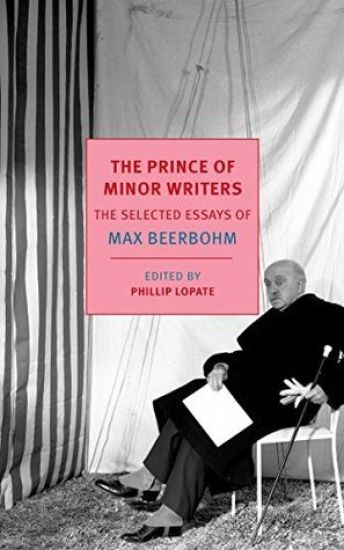
The Prince Of Minor Writers

The Prince Of Minor Writers

Max Beerbohm; Phillip Lopate

NYRB Classics
2015
nidottu
AN NYRB CLASSICS ORIGINAL Virginia Woolf called Max Beerbohm "the prince" of essayists, F. W. Dupee praised his "whim of iron" and "cleverness amounting to genius," while Beerbohm himself noted that "only the insane take themselves quite seriously." From his precocious debut as a dandy in 1890s Oxford until he put his pen aside in the aftermath of World War II, Beerbohm was recognized as an incomparable observer of modern life and an essayist whose voice was always and only his own. Here Phillip Lopate, one of the finest essayists of our day, has selected the finest of Beerbohm's essays. Whether writing about the vogue for Russian writers, laughter and philosophy, dandies, or George Bernard Shaw, Beerbohm is as unpredictable as he is unfailingly witty and wise. As Lopate writes, "Today . . . it becomes all the more necessary to ponder how Beerbohm performed the delicate operation of displaying so much personality without lapsing into sticky confession."
A Washington Irving Sketchbook

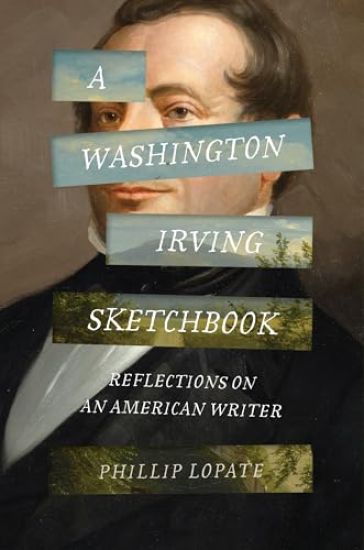
A Washington Irving Sketchbook

Phillip Lopate

PRINCETON UNIVERSITY PRESS
2026
sidottu
A richly textured portrait of an American man of letters who came to exemplify the writer’s life with all its setbacks and triumphs Washington Irving (1783–1859) is often considered America’s first professional writer, supporting himself and his family amid the ups and downs of literary fortune. He burst on the scene with his uproarious History of New York, followed by his Sketchbook, a collection of personal essays and short stories that includes “Rip Van Winkle” and “The Legend of Sleepy Hollow.” As an essayist and teacher, Phillip Lopate identifies with Irving, inspired by his humane and elegant prose style, and by Irving’s courage and persistence in the face of setbacks and his own limitations as a writer. In this illuminating book, Lopate reflects on Irving and his extensive body of work through a series of warmly sympathetic sketches of his own. Irving was the first American writer to attain international renown, attracting such devoted fans as Charles Dickens and Lord Byron, and while he may have been overrated in his day, he has since become undeservedly neglected. A lifelong bachelor, he was urbane, popular, and socially adept, mixing with royals as well as paupers, yet underneath it all he was a loner and a melancholic. Lopate describes how Irving constantly reinvented himself, first as a satirist, then a belletrist, at times a hack writer, and finally as a serious biographer of figures like George Washington and the Prophet Mohammed. Along the way, he explains why minor writers like Irving have their enduring fascinations. Delving into all that is likable and perplexing about the man once considered America’s most famous writer, A Washington Irving Sketchbook brings Irving closer to today’s readers, capturing the charm of his work and the vicissitudes of literary fashion.
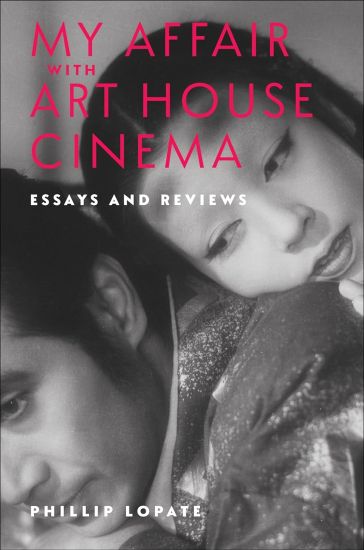
My Affair with Art House Cinema

My Affair with Art House Cinema

Phillip Lopate

Columbia University Press
2024
sidottu
Finalist, 2025 PEN / Diamonstein-Spielvogel Award for the Art of the Essay, PEN AmericaPhillip Lopate fell hard for the movies as an adolescent. As he matured into an acclaimed critic and essayist, his infatuation deepened into a lifelong passion. My Affair with Art House Cinema presents Lopate’s selected essays and reviews from the last quarter century, inviting readers to experience films he found exhilarating, tantalizing, and beguiling—and sometimes disappointing or frustrating—through his keen eyes.In an essayist’s sinuous prose style, Lopate captures the formal mastery, artistic imagination, and emotional intensity of art house essentials like Yasujiro Ozu’s Late Spring, David Lynch’s Mulholland Drive, and Andrei Tarkovsky’s Solaris, as well as works by contemporary filmmakers such as Maren Ade, Hong Sang-soo, Hou Hsiao-hsien, Christian Petzold, Paolo Sorrentino, and Jafar Panahi. Essays explore Chantal Akerman’s rigorous honesty, Ingmar Bergman’s intimacy, Abbas Kiarostami’s playfulness, Kenji Mizoguchi’s visual style, and Frederick Wiseman’s vision of the human condition. Lopate also reflects on the work of fellow critics, including Roger Ebert, Pauline Kael, and Jonathan Rosenbaum. His considered, at times contrarian critiques and celebrations will inspire readers to watch or rewatch these films. Above all, this book showcases Lopate’s passionate advocacy for not only particular films and directors but also the joys and value of a filmgoing culture.
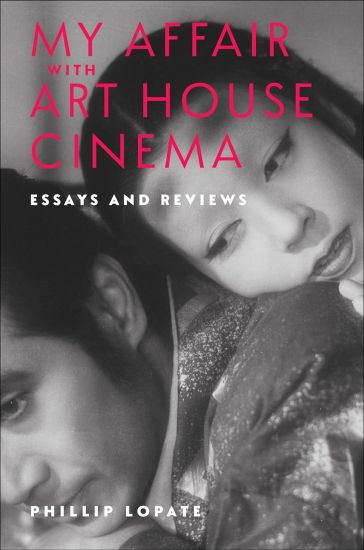
My Affair with Art House Cinema

My Affair with Art House Cinema

Phillip Lopate

Columbia University Press
2024
pokkari
Finalist, 2025 PEN / Diamonstein-Spielvogel Award for the Art of the Essay, PEN AmericaPhillip Lopate fell hard for the movies as an adolescent. As he matured into an acclaimed critic and essayist, his infatuation deepened into a lifelong passion. My Affair with Art House Cinema presents Lopate’s selected essays and reviews from the last quarter century, inviting readers to experience films he found exhilarating, tantalizing, and beguiling—and sometimes disappointing or frustrating—through his keen eyes.In an essayist’s sinuous prose style, Lopate captures the formal mastery, artistic imagination, and emotional intensity of art house essentials like Yasujiro Ozu’s Late Spring, David Lynch’s Mulholland Drive, and Andrei Tarkovsky’s Solaris, as well as works by contemporary filmmakers such as Maren Ade, Hong Sang-soo, Hou Hsiao-hsien, Christian Petzold, Paolo Sorrentino, and Jafar Panahi. Essays explore Chantal Akerman’s rigorous honesty, Ingmar Bergman’s intimacy, Abbas Kiarostami’s playfulness, Kenji Mizoguchi’s visual style, and Frederick Wiseman’s vision of the human condition. Lopate also reflects on the work of fellow critics, including Roger Ebert, Pauline Kael, and Jonathan Rosenbaum. His considered, at times contrarian critiques and celebrations will inspire readers to watch or rewatch these films. Above all, this book showcases Lopate’s passionate advocacy for not only particular films and directors but also the joys and value of a filmgoing culture.
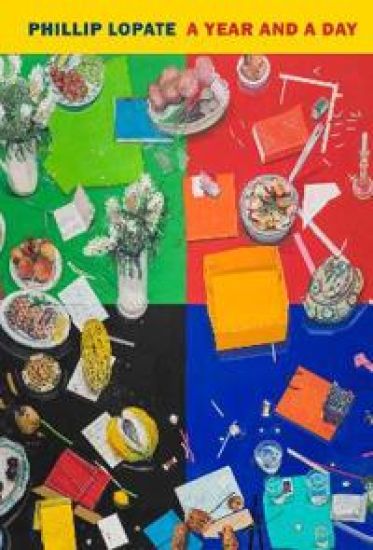
A Year and a Day

A Year and a Day

Phillip Lopate

New York Review Books
2023
nidottu
A compelling celebration of the power of the essay, this collection of 47 writings offers a glimpse into the mind of a modern-day Montaigne as he reflects on the miscellany of daily life--movies and art, friends and family--over the course of a single year. The essay is the most pluckily pedestrian and blithely transgressive of literary genres, the one that is most at large and in need, picking through the accumulated disjecta of daily life and personal and social history to take what it needs and remake it as it sees fit. It is, at its lively best, quite indifferent to the claims of style, fashion, theory, and respectability, provoking and inspiring through the pleasure of surprise. In 2016, Philip Lopate, who has been writing essays and thinking about the essay for decades now, turned his attention to one of the essay's offshoots, the blog, a form by that time already thick, as he knew, with virtual dust. Lopate committed to writing a weekly blog about, really, whatever over the course of a year, a quicker pace of delivery than he'd ever undertaken and one that carried the risk of all too regularly falling short. What emerged was A Year and a Day, a collection of forty-seven essays best characterized as a single essay a year in the making, a virtuosic (if never showy) demonstration of the essay's range and reach, meandering, looping back, pressing reset, forging on. Lopate's topics along the way include family, James Baldwin, a trip to China, Agnes Martin, Abbas Kiarostami, the resistible rise of Donald Trump, death, desire, and the tribulations, small and large, of daily life. What results is at once a self-portrait, a picture of the times, and a splendid new elaboration of what the essay can be.
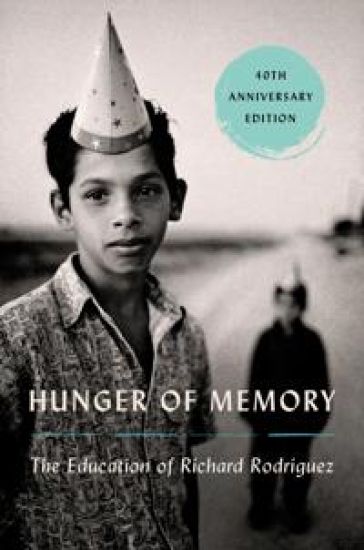
Hunger of Memory

Hunger of Memory

Richard Rodriguez; Phillip Lopate

DAVID R. GODINE PUBLISHER INC
2022
sidottu
The 40th anniversary edition of an American classic: a “minority student” pays the cost of social assimilation and academic success with a painful alienation—from his past, his parents, his culture. Exquisitely written, poignant and powerful, unsettling and controversial, this both a profound study of the importance of language and a moving, intimate portrait of a boy struggling to become a man.Forty years ago, readers met the extraordinary writer Richard Rodriguez through the story of his own education. He would go on to win a loyal readership with Days of Obligation: An Argument with My Mexican Father (a finalist for the Pulitzer Prize), Brown: The Last Discovery of America, and Darling: A Spiritual Autobiography. But first came Hunger of Memory, originally published by Godine in 1982. Hunger of Memory is the story of a young Mexican-American, who began school in Sacramento, California knowing just fifty words of English, yet concluded his university studies in the reading room of the British Museum. In between, he fought a dramatic struggle between his public and private self. A longtime resident of San Francisco, and an ardent opponent of easy labels and limited self-conceptions, Rodriguez describes himself as a “queer Catholic Indian Spaniard at home in a temperate Chinese city in a fading blond state in a post-Protestant nation.” Resisting the easy way of following received dogmatic and conventional thought, Rodriguez has also encountered hostility for his provocative positions on issues such as affirmative action and bilingual education. But the extraordinary clarity of his iconoclastic writing—the surprising twists in his thinking, the view of public policy as it limits individual lives, and the story he tells of an American education—have made this book endure for forty years and counting. This edition includes a new afterword by the author as well as an introduction by Phillip Lopate. Whether you’re hearing about Richard Rodriguez for the first time, or have read him for years, whether his life is like your own or far from it, if you care about the power of language and original thinking, you owe yourself to read Hunger of Memory.
The Glorious American Essay

The Glorious American Essay

Phillip Lopate

Anchor Books
2021
nidottu
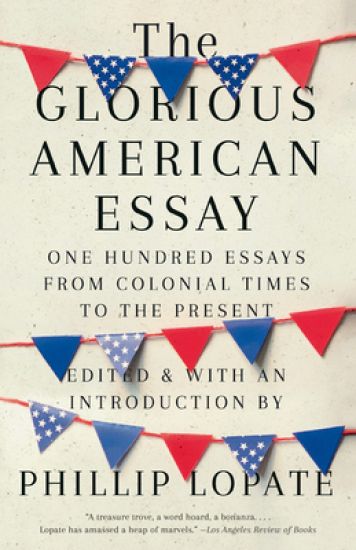
A monumental, canon-defining anthology of three centuries of American essays, from Cotton Mather and Benjamin Franklin to David Foster Wallace and Zadie Smith. The essay form is an especially democratic one, and many of the essays Phillip Lopate has gathered here address themselves--sometimes critically--to American values. We see the Puritans, the Founding Fathers and Mothers, and the stars of the American Renaissance struggle to establish a national culture. A grand tradition of nature writing runs from Audubon, Thoreau, and John Muir to Rachel Carson and Annie Dillard. Marginalized groups use the essay to assert or to complicate notions of identity. Lopate has cast his net wide, embracing critical, personal, political, philosophical, literary, polemical, autobiographical, and humorous essays. Americans by birth as well as immigrants appear here, famous essayists alongside writers more celebrated for fiction or poetry. The result is a dazzling overview of the riches of the American essay. Not only an education but a joy. This is a book for the ages. --Rivka Galchen
The Contemporary American Essay

The Contemporary American Essay

Phillip Lopate

Anchor Books
2021
nidottu
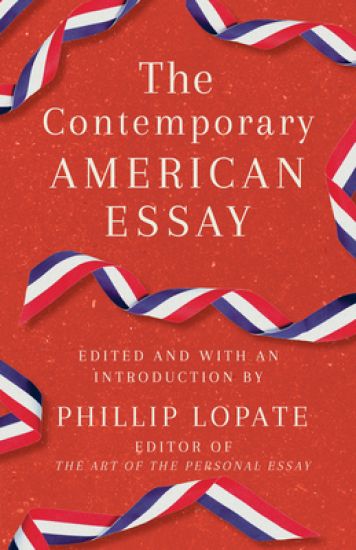
A dazzling anthology of essays by some of America's best writers, drawn from the past quarter century. AN ANCHOR ORIGINAL. The past two decades in America have seen a blossoming of creative nonfiction, and no one is better suited to curate that exciting resurgence than Phillip Lopate. In this remarkable collection, he mingles new and younger voices--like Samantha Irby, Meghan O'Gieblyn, Leslie Jamison, Rivka Galchen, Karen Russell, and Teju Cole--with such long-established eminences as John McPhee, Barry Lopez, Louise Gluck, Geoff Dyer, and Joyce Carol Oates. He brings together a wide variety of perspectives and styles, in the work of Anne Carson, Nicholson Baker, Hilton Als, Alexander Chee, Margo Jefferson, Laura Kipnis, Wesley Yang, Eileen Myles, Meghan Daum, David Sedaris, and many more. The result is a treat for anyone who loves fantastic writing.
The Golden Age of the American Essay

The Golden Age of the American Essay

Phillip Lopate

Anchor Books
2021
nidottu
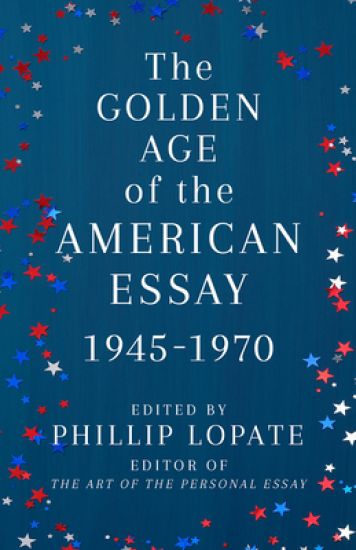
A one-of-a-kind anthology of American essays on a wide range of subjects by a dazzling array of mid-century writers at the top of their form. AN ANCHOR ORIGINAL. The three decades that followed World War II were an exceptionally fertile period for American essays. The explosion of journals and magazines, the rise of public intellectuals, and breakthroughs in the arts inspired a flowering of literary culture. At the same time, the many problems that confronted mid-century America--racism, sexism, nuclear threat, war, poverty, and environmental degradation among them--proved fruitful topics for America's best minds. In The Golden Age of the American Essay, Phillip Lopate assembles a dazzling array of famous writers, critics, sociologists, theologians, historians, activists, theorists, humorists, poets, and novelists. Here are writers like James Agee, E. B. White, A. J. Liebling, and Mary McCarthy, adroitly pivoting from the comic indignities of daily life to world peace, boxing, and restaurants in Paris. Here is Norman Mailer on Jackie Kennedy and Vladimir Nabokov on Lolita. Here is Martin Luther King, Jr.'s Letter from Birmingham Jail, alongside Richard Hofstadter's The Paranoid Style in American Politics and Flannery O'Connor's Some Aspects of the Grotesque in Southern Fiction. Here are Gore Vidal, Rachel Carson, James Baldwin, Susan Sontag, John Updike, Joan Didion, and many more, in a treasury of brilliant writing that has stood the test of time.
A Mother's Tale

A Mother's Tale

Phillip Lopate

Ohio State University Press
2017
sidottu
In 1984, Phillip Lopate sat down with his mother, Frances, to listen to her life story. A strong, resilient, indomitable woman who lived through the major events of the twentieth century, she was orphaned in childhood, ran away and married young, and then reinvented herself as a mother, war factory worker, candy store owner, community organizer, clerk, actress, and singer. But paired with exciting anecdotes are the criticisms of the husband who couldn't satisfy her, the details of numerous affairs and sexual encounters, and, though she succeeded at many of her roles, accounts of how she always felt mistreated, taken advantage of. After the interviews, at a loss for what to do with the tapes, Lopate put them away. But thirty years later, after his mother had passed away, Lopate found himself drawn back to the recordings of this conversation. Thus begins a three-way conversation between a mother, his younger self, and the person he is today. Trying to break open the family myths, rationalizations, and self-deceptions, A Mother's Tale is about family members who love each other but who can't seem to overcome their mutual mistrust. Though Phillip is sympathizing to a point, he cannot join her in her operatic displays of self-pity and how she blames his father for everything that went wrong. His detached, ironic character has been formed partly in response to her melodramatic one. The climax is an argument in which he tries to persuade her-using logic, of all things-that he really does love her, but is only partially successful, of course. A Mother's Tale is about something primal and universal: the relationship between a mother and her child, the parent disappointed with the payback, the child, now fully grown, judgmental. The humor is in the details.
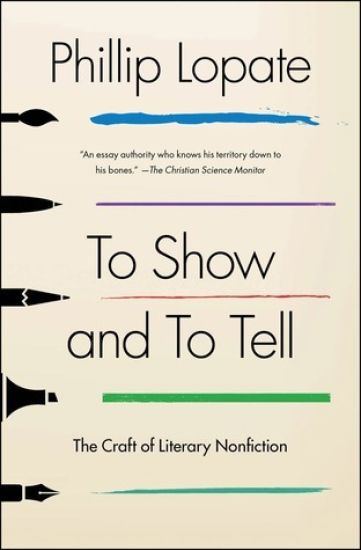
To Show and to Tell: The Craft of Literary Nonfiction
A long-awaited and illuminating book on personal writing from Phillip Lopate--celebrated essayist, professor of writing at Columbia University, and editor of The Art of the Personal Essay. Distinguished author Phillip Lopate, editor of the celebrated anthology The Art of the Personal Essay, is universally acclaimed as "one of our best personal essayists" (Dallas Morning News). Here, combining more than forty years of lessons from his storied career as a writer and professor, he brings us this highly anticipated nuts-and-bolts guide to writing literary nonfiction. A phenomenal master class shaped by Lopate's informative, accessible tone and immense gift for storytelling, To Show and To Tell reads like a long walk with a favorite professor--refreshing, insightful, and encouraging in often unexpected ways.
The Annotated Emerson

The Annotated Emerson

Ralph Waldo Emerson; Phillip Lopate

The Belknap Press
2012
sidottu
A brilliant essayist and a master of the aphorism (“Our moods do not believe in each other”; “Money often costs too much”), Emerson has inspired countless writers. He challenged Americans to shut their ears against Europe’s “courtly muses” and to forge a new, distinctly American cultural identity. But he remains one of America’s least understood writers. And, by his own admission, he spawned neither school nor follower (he valued independent thought too much). Now, in this annotated selection of Emerson’s writings, David Mikics instructs the reader in a larger appreciation of Emerson’s essential works and the remarkable thinker who produced them.Full of color illustrations and rich in archival photographs, this volume offers much for the specialist and general reader. In his running commentaries on Emerson’s essays, addresses, and poems, Mikics illuminates contexts, allusions, and language likely to cause difficulty to modern readers. He quotes extensively from Emerson’s Journal to shed light on particular passages or lines and examines Emerson the essayist, poet, itinerant lecturer, and political activist. Finally, in his Foreword, Phillip Lopate makes the case for Emerson as a spectacular truth teller—a model of intellectual labor and anti-dogmatic sanity.Anyone who values Emerson will want to own this edition. Those wishing to discover, or to reacquaint themselves with, Emerson’s writings but who have not known where or how to begin will not find a better starting place or more reliable guide than The Annotated Emerson.
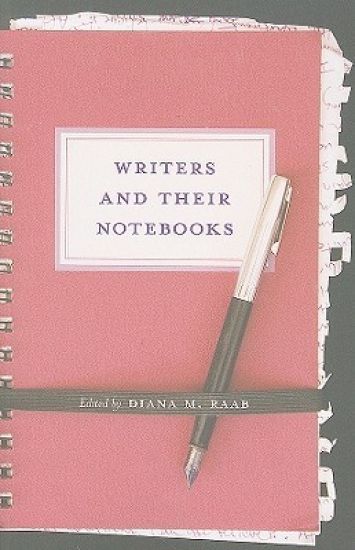
Writers and Their Notebooks

Writers and Their Notebooks

Phillip Lopate

University of South Carolina Press
2010
nidottu
This title peeks inside the writerly testing grounds of Sue Grafton, Kim Stafford, Maureen Stanton, and others. This collection of essays by well-established professional writers explores how their notebooks serve as their studios and workshops - places to collect, to play, and to make new discoveries with language, passions, and curiosities. For these diverse writers, the journal also serves as an ideal forum to develop their writing voice, whether crafting fiction, nonfiction, or poetry. Some entries include sample journal entries that have since developed into published pieces. Through their individual approaches to keeping a notebook, the contributors offer valuable advice, personal recollections, and a hardy endorsement of the value of using notebooks to document, develop, and nurture a writer's creative spark. Designed for writers of all genres and all levels of experience, ""Writers and Their Notebooks"" celebrates the notebook as a vital tool in a writer's personal and literary life.
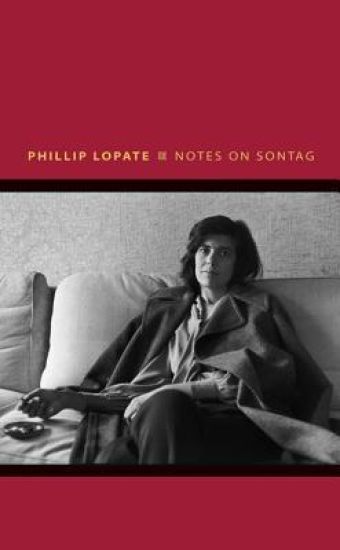
Notes on Sontag

Notes on Sontag

Phillip Lopate

PRINCETON UNIVERSITY PRESS
2009
sidottu
Notes on Sontag is a frank, witty, and entertaining reflection on the work, influence, and personality of one of the "foremost interpreters of ...our recent contemporary moment." Adopting Sontag's favorite form, a set of brief essays or notes that circle around a topic from different perspectives, renowned essayist Phillip Lopate considers the achievements and limitations of his tantalizing, daunting subject through what is fundamentally a conversation between two writers. Reactions to Sontag tend to be polarized, but Lopate's account of Sontag's significance to him and to the culture over which she loomed is neither hagiography nor hatchet job. Despite admiring and being inspired by her essays, he admits a persistent ambivalence about Sontag. Lopate also describes the figure she cut in person through a series of wry personal anecdotes of his encounters with her over the years. Setting out from middle-class California to invent herself as a European-style intellectual, Sontag raised the bar of critical discourse and offered up a model of a freethinking, imaginative, and sensual woman. But while crediting her successes, Lopate also looks at how her taste for aphorism and the radical high ground led her into exaggerations that could do violence to her own common sense, and how her ambition to be seen primarily as a novelist made her undervalue her brilliant essays. Honest yet sympathetic, Lopate's engaging evaluation reveals a Sontag who was both an original and very much a person of her time.
Future Imperfect

Future Imperfect

Jason Vest; Phillip Lopate

Bison Books
2009
pokkari
Philip K. Dick was one of the most incisive, subversive, and entertaining American authors of the last half of the twentieth century. The cinematic adaptations of Dick's fiction have generated so much interest since Blade Runner's 1982 release that a comprehensive assessment of these films is necessary. Future Imperfect is the only book to examine the first eight cinematic adaptations of Dick's fiction in light of their literary sources. In this book, Jason P. Vest explores how filmmakers as diverse as Ridley Scott, Paul Verhoeven, Steven Spielberg, and Richard Linklater have each, in their turn, expanded, extrapolated, and diverged from Dick's fiction when translating its powerful and challenging insights to the silver screen. Future Imperfect gauges how well the film adaptations of Dick's work have captured his unique vision of the human future and how deeply his storytelling abilities have influenced the development of science fiction movies from Blade Runner to the present day.
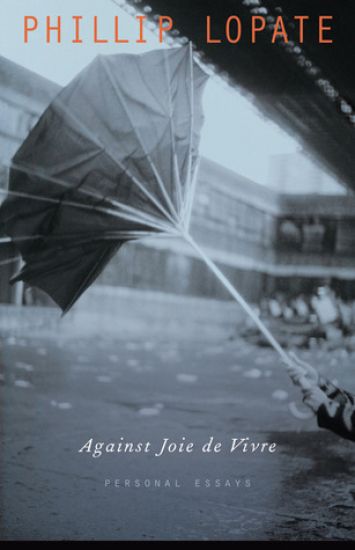
Against Joie De Vivre

Against Joie De Vivre

Phillip Lopate

Bison Books
2008
pokkari
"Over the years I have developed a distaste for the spectacle of joie de vivre, the knack of knowing how to live," begins the title essay by Phillip Lopate. This rejoinder to the cult of hedonism and forced conviviality moves from a critique of the false sentimentalization of children and the elderly to a sardonic look at the social rite of the dinner party, on to a moving personal testament to the "hungry soul." Lopate's special gift is his ability to give us not only sophisticated cultural commentary in a dazzling collection of essays but also to bring to his subjects an engaging honesty and openness that invite us to experience the world along with him. Also included here are Lopate's inspiring account of his production of Chekhov's Uncle Vanya with a group of preadolescents, a look at the tradition of the personal essay, and a soul-searching piece on the suicide of a schoolteacher and its effect on his students and fellow teachers. By turns humorous, learned, celebratory, and elegiac, Lopate displays a keen intelligence and a flair for language that turn bits of common, everyday life into resonant narrative. This collection maintains a conversational charm while taking the contemporary personal essay to a new level of complexity and candor.
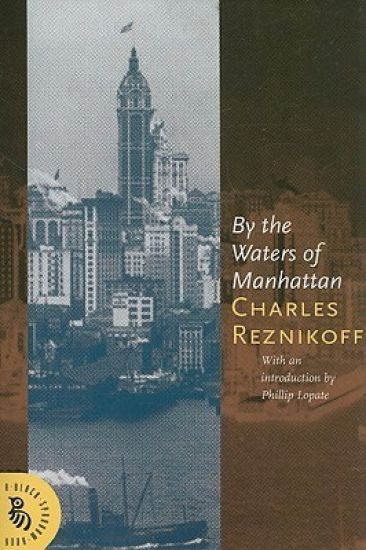
By the Waters of Manhattan

By the Waters of Manhattan

Charles Reznikoff; Phillip Lopate

Black Sparrow Press,U.S.
2008
pokkari
A novel about a Jewish immigrant family at the turn of the century — from Czarist Russia to Brownsville, Brooklyn. This is poet Charles Reznikoff’s finest fiction.By the Waters of Manhattan was Charles Reznikoff’s first novel, published in 1930 by Charles Boni in New York. Part family saga, part bildungsroman, and part unrequited love story, the novel follows the lives of a Jewish family at the turn of the century from Elizavetgrad, Russia, to Brownsville, Brooklyn, birthplace of the novel’s protagonist, Ezekiel, a young poet in search of ways to feed his stomach and his soul.Like Walt Whitman, Hart Crane, and Henry Roth, Reznikoff’s subject is as much the great island of Manhattan, as it is its inhabitants, struggling for their place in a new world. Milton Hindus wrote, “Both Whitman and Reznikoff are singers and chroniclers of the American island, the name of which derives from the language (Manna-hatta) of its original inhabitants. Reznikoff’s title also includes an allusion to the waters of Babylon beside which the prophet sat down and wept. The American Jew, who had been born in Brooklyn in 1894 and whose parents had emigrated from Czarist Russia some years before that date, evidently felt, like the hero of one of the novels of George Gissing, that he had been ‘born in exile’. But the reader should not, on this account, be expecting a tearful immigrant narrative, for if Reznikoff was a student of the Bible he was also a student of another student of the Bible, the philosopher Spinoza. From this stoic master, he had learned neither to laugh nor cry but to try to understand.”
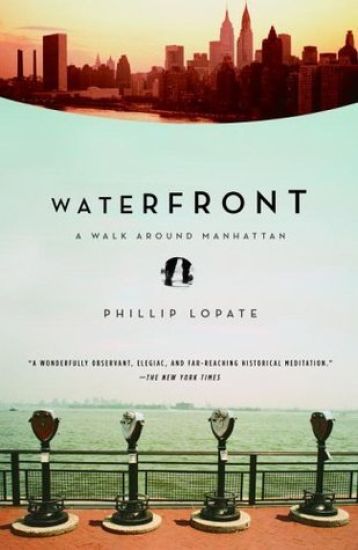
Waterfront: A Walk Around Manhattan

Waterfront: A Walk Around Manhattan

Phillip Lopate

ANCHOR BOOKS
2005
nidottu
East Side, West Side, from the Little Red Lighthouse to Battery Park City, the wonders of Manhattan's waterfront are both celebrated and secret-hidden in plain sight. In his brilliant exploration of this defining yet neglected shoreline, personal essayist Philip Lopate also recovers a part of the city's soul. A native New Yorker, Lopate has embraced Manhattan by walking every inch of its perimeter, telling stories on the way of pirates (Captain Kidd) and power brokers (Robert Moses), the lowly shipworm and Typhoid Mary, public housing in Harlem and the building of the Brooklyn Bridge. He evokes the magic of the once bustling old port from Melville's and Whitman's day to the era of the longshoremen in On the Waterfront, while appraising today's developers and environmental activists, and probing new plans for parks and pleasure domes with river views. Whether escorting us into unfamiliar, hazardous crannies or along a Beaux Arts esplanade, Waterfront is a grand literary ramble and defense of urban life by one of our most perceptive observers.
Essays of Elia

Essays of Elia

Charles Lamb; Phillip Lopate

University of Iowa Press
2003
nidottu
Charles Lamb, one of the most engaging personal essayists of all time, began publishing his Elia essays in the ""London Magazine"" in 1820; they were so immediately popular that a book-length collection was published in 1823. Inventing the persona of ""Elia"" allowed Lamb to be shockingly honest and to gain a playful distance for self-examination. The resulting essays touched upon a wide range of compelling subjects from the humorous ""Dissertation upon Roast Pig"" to the poignantly reflective ""New Year's Eve"". Yet collectively, they also comprise a fascinating personal memoir, veiled under the pseudonymous disguise of Elia. This edition of the text features a foreword by Phillip Lopate and contains useful annotation throughout.