Kirjojen hintavertailu. Mukana 12 390 323 kirjaa ja 12 kauppaa.

Kirjailija

Phillip M. Richards

Kirjat ja teokset yhdessä paikassa: 3 kirjaa, julkaisuja vuosilta 2005-2025, suosituimpien joukossa The Ideological Origins of African American Literature. Vertaile teosten hintoja ja tarkista saatavuus suomalaisista kirjakaupoista.

3 kirjaa

Kirjojen julkaisuhaarukka 2005-2025.

The Ideological Origins of African American Literature

The Ideological Origins of African American Literature

Phillip M. Richards

University of Tennessee Press
2025
sidottu
Inquiry into African American literature in recent decades has neglected to probe the intellectual structure of the tradition’s aesthetics and its underlying ideology. In The Ideological Origins of African American Literature, Phillip M. Richards begins this reconstructive work, illuminating the dialectical backstory of black prose and poetry in America. Richards argues that the social and political forces that influenced white literature were uniquely reacted to, absorbed, and often times rejected by African American literary figures — from the eighteenth-century Puritan notions of a God-centered history to the onset of Romanticism and Modernism in the nineteenth and twentieth centuries. Building his case for ideological continuity, Richards surveys a profoundly creative period of 125 years launched by an African American reaction against a racist, mid-eighteenth-century American culture. This epoch in African American literature saw a fusion of Puritan-Protestant culture into a religious and secular worldview, drawing in the poetry of Phillis Wheatley, antebellum slave narratives, Richard Allen, and the periodicals of the ambitious African Methodist Episcopalian movement—all of which would form the underlying foundation of a black Victorian culture. A rising black middle class, Richards argues, would later be secularized by an eroding religious tradition under the pressures of nineteenth-century modernity, the trauma of Jim Crow, and the emerging northern ghetto. Richards further traces the emergence of Romanticism which appeared with white American authors such as Emerson, Thoreau, and Whitman, but would not take shape in African American literature until the likes of W.E.B. Du Bois and Langston Hughes took stock of Anglo-European culture at the end of the nineteenth century. The Ideological Origins of African American Literature illustrates a pattern of black writing that eschews the hegemonic white culture of the day for an evolving black culture that would define an American literary landscape.
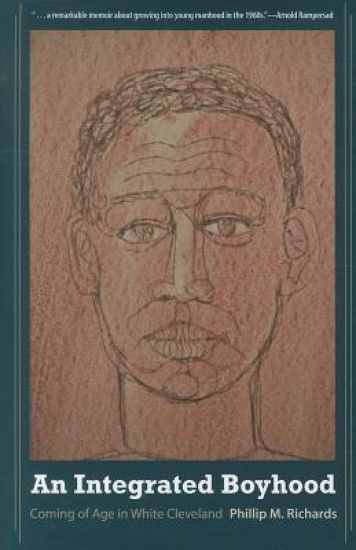
An Integrated Boyhood

An Integrated Boyhood

Phillip M. Richards

Kent State University Press
2012
sidottu
The memoir of a bookish black youth in mid-twentieth century ClevelandWhen Phillip M. Richards graduated from Yale in 1972, he had fulfilled his parents’ dreams. Like many other black Clevelanders of their generation, they had come up from the South in the late forties and moved from neighborhood to neighborhood in search of better schools. As they followed bourgeois African Americans’ circular migration from Mt. Pleasant to Lee Harvard to South Taylor Road and finally to Forest Hills, Richards’s parents provided him with all of what they called “the good situations”: major work, classes at the Institute of Music, Boy Scouts, and education at University School—which midcentury Cleveland could offer its most ambitious new black residents.In An Integrated Boyhood, Richards candidly describes how this exemplary middle-class Cleveland sojourn left him hopelessly confused and dislocated at the very moment of his parents’ triumph. His narrative of success provides the background to a more private turmoil: Richards’s struggle to read the shifting meanings of his privileged experience amid the city’s shifting racial lines, the fringe on the Left, the tumult of rising black consciousness, and the fears of nervous white suburban neighbors. This coming-of-age story sings the undersong of an older generation’s hard-won success. Like all black Clevelanders, Richards was forced to struggle for his understanding of the city’s—and his own—endless racial confusion in the midst of frightening historical change. It is this reality that recurs throughout Richards’s memoir: the early encounters of a scared, bookish African American boy from Mt. Pleasant with what can only be described as the real world.
Black Heart

Black Heart

Phillip M. Richards

Peter Lang Publishing Inc
2005
nidottu
Black Heart is a provocative and polemical critique of African American literary studies at the beginning of the twenty-first century. Through a series of sharp and insightful essays on a wide range of critical thinkers, Phillip M. Richards traces what he sees as an erosion of moral reflection in African American literary culture - a process that has left contemporary black academic criticism socially, politically, and culturally hollow. Exploring the work of Henry Louis Gates, Jr., Michael Dyson, Karla Holloway and others, Black Heart sets forth the rhetorical strategies of present-day African American critical writing, and probes the ethical dimensions of its institutional life in the academy, the media, and the public sphere. Richards undertakes to recover the procedures by which cultural and moral value may be recovered for black literary culture and to establish the possibilities for a new humanism in African American writing and literary culture.