Kirjailija
Phillip Thomas Tucker
Kirjat ja teokset yhdessä paikassa: 51 kirjaa, julkaisuja vuosilta 1997-2025, suosituimpien joukossa Cathy Williams. Vertaile teosten hintoja ja tarkista saatavuus suomalaisista kirjakaupoista.
51 kirjaa
Kirjojen julkaisuhaarukka 1997-2025.
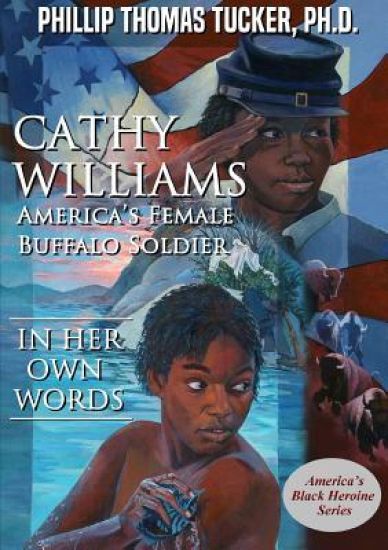
Cathy Williams, a former Missouri slave, became the first black female to serve in the United States Army when she enlisted in the 38th United States Infantry at Jefferson Barracks, Missouri, on November 15, 1866. In the clever disguise of a man, Private William Cathay-her official enlistment name-served in the ranks of Company A, 38th United States Infantry, for nearly two years as a Buffalo Soldier. This is the unforgettable story of Cathy Williams in her own words.
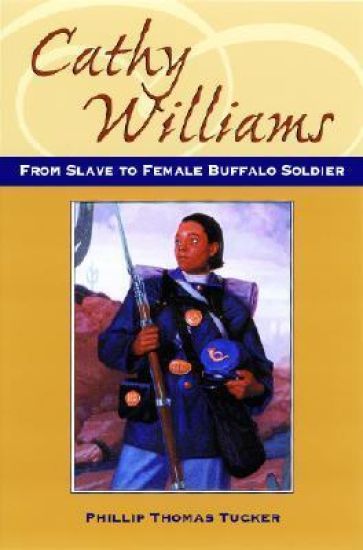
Women in the United States military have received more recognition than ever in recent years, but women also played vital roles in battles and campaigns of previous generations. Cathy Williams served as Pvt. William Cathay from 1866 to 1868 with the famed Buffalo Soldiers who patrolled the 900-mile Santa Fe Trail. Tucker traces her life from her birth as a slave near Independence, Missouri, to her service in Company A, 38th U.S. Infantry, one of the six black units formed following the Civil War. Cathy Williams remains the only known African American woman to have served as a Buffalo Soldier in the Indian Wars. Her remarkable story continues to represent a triumph of the human spirit.
Learn the little-known history of the turning-point battle of Kings Mountain, one of the most decisive American victories in the Revolutionary War. The Battle of Kings Mountain was the most remarkable, unexpected, and unorthodox patriot victory of supreme importance that was fought during the course of the American Revolution. The victors of Kings Mountain were South Carolina, Virginia, and North Carolina Backcountry volunteers (including men from today’s Tennessee) of a ghost army that suddenly materialized practically out of thin air from both sides of the Appalachian Mountains on its own and without authorization from the Continental Congress or Continental officers. To defend their farms and families and the land they loved, on October 7, 1780, this ad hoc force of Backcountry volunteers from remote settlements across the frontier suddenly descended upon a well-trained and well-equipped force of more than one thousand Royal Provincial and Loyalist troops, who defiantly made their last stand on the summit of Kings Mountain, after having been caught by surprise. During one of the hardest fought and bloodiest battles of the American Revolution, this one-sided (the entire enemy force—the vital left wing of Lord Charles Cornwallis’ Army—was killed, wounded, and captured) patriot victory at Kings Mountain was a major turning point of not only the war in the South, but also of the American Revolution. Ironically, no battle of the American Revolution more forcefully demonstrated the lethal effectiveness of Southern militia and the future surreal horrors of America’s first civil war. This decisive battle in northwest South Carolina was fought between fellow Americans, including not only neighbors but also relatives, even fathers and sons, nearly three-quarters of a century before the Battles of First Manassas, Antietam, and Gettysburg, when young Americans once again slaughtered each other for what they believed was right. When it appeared at the time that the war in South Carolina had been lost to the British, the patriots of Kings Mountain rose splendidly to the challenge to win an amazing success that best personified the essence and spirit of the revolution, which the victors kept alive during one of the darkest periods of the American Revolution. Most importantly, the dramatic patriot victory at Kings Mountain on October 7, 1781 helped to set the stage and pave the way for the surrender of Cornwallis’ Army at Yorktown only a year later, which was an event that all but ended the war and ensured the independence of a new nation.
After failing to defeat the Continental Army in New England, New York, New Jersey, and Pennsylvania during the first half of the Revolutionary War, British generals decided to turn south, where they believed they could win the war in a region more heavily populated by Loyalists. In late 1778, a British expeditionary force sailed south from New York City and captured Savannah, which became a British base of operations and strategic hinge. To thwart the British, an international force gathered around Savannah, including Americans, Poles, Germans, Irish, and—significantly—a volunteer force of free Blacks from present-day Haiti: the Chasseurs-Volontaires de Saint-Domingue. The Chasseurs constituted the largest Black military unit in the American Revolution. The soldiers were free men, the sons of French fathers, mostly sugar plantation owners, and slave mothers in France’s most prosperous overseas colony. In the fall of 1779, this force joined the attack on the British at Savannah in a series of frontal results. The French and Americans were repulsed at great cost in lives, but the free Black Haitians stood their ground—and, in a moment of high courage that has never received its due, stymied a British counterattack that salvaged the day for the Americans and French.A rock at Savannah on behalf of the American Revolution, many of the Haitian survivors of the battle went on to serve the cause of liberty in the Haitian Revolution and help found the first Black republic in world history. This is their story.
Alexander Hamilton and the Battle of Yorktown, October 1781
Phillip Thomas Tucker
Skyhorse Publishing
2022
sidottu
Discover the little-known role Alexander Hamilton played in the decisive battle of the American Revolution: Yorktown.Alexander Hamilton and the Battle of Yorktown, October 1781 is the first book in nearly two and a half centuries that has ever been devoted to the story of Alexander Hamilton’s key contributions in winning the most decisive victory the of the American Revolutionary war at Yorktown. Past biographies of Hamilton, including the most respected ones, have minimized the overall importance of the young lieutenant colonel’s role and battlefield performance at Yorktown, which was key to forcing the surrender of Lord Cornwallis’s army. Hamilton led the assault on strategic Redoubt Number Ten, located on the left flank of the British defensive line, and captured the defensive bastion—an accomplishment that ensured the defeat and surrender of Cornwallis’s army that won the American Revolution and changed the course of world history. You thought you knew the full story of the founding father of the American financial system from Lin Manual Miranda's Broadway smash hit Hamilton, but Alexander Hamilton and the Battle of Yorktown, October 1781 brings into sharp relief the vital role he played in the most important battle of the American Revolution, as told by renowned historian Phillip Thomas Ticker, PhD.
Learn the little-known history of the forgotten American Revolution Battle of Pell's Point and the heroism of John Glover. General William Howe and the mighty British-Hessian Army possessed the golden opportunity to cut-off, trap, and then destroy General George Washington’s Army before he could retreat north and escape from Harlem Heights, New York, when he landed his army at Pell’s Point north of New York City. Howe’s bold amphibious operation north of Washington’s Army threatened to end the life of the Continental Army and the revolution. However, the brilliant delaying actions of Colonel John Glover and a small force of New England Continental troops saved the day and Washington’s Army by preventing Howe’s advance inland to intercept Washington’s route of retreat to White Plains. Employing brilliant delaying tactics when outnumbered by more than five to one, Glover inflicted heavy losses on the attackers to ensure that Washington’s Army survived to fight another day. Ironically, the Battle of Pell’s Point has been perhaps the most important forgotten battle of the entire American Revolution. In Saving Washington's Army, renowned historian Phillip Thomas Ticker, PhD, recounts the little-known story of the Battle of Pell's Point and the heroism of Colonel John Glover with the care and attention-to-detail for which he is known.
A figure of legendary, almost mythic proportions, Robert Rogers is widely considered the father of U.S. Army Rangers. He gained his fame during the French and Indian War, fighting in the American and Canadian wilderness for the British colonies against the French and Indians, but a decade later, during the Revolution, he was almost a man without a country. George Washington didn’t trust him—indeed, he had Rogers arrested—nor did the British, who, desperate, gave him a command anyway, and Rogers was pivotal in arresting and executing American spy Nathan Hale. Rogers’ story begins in the French and Indian War.Ranger Raid digs deep into Rogers’ most controversial battle: the raid on St. Francis in Canada during the French and Indian War. On October 4, 1759, Rogers and 140 Rangers raided the Native American town of St. Francis, Canada, as part of British general Jeffrey Amherst’s plan to gain intelligence in the St. Lawrence region. At the time, and for many decades thereafter, this was seen as a great victory—but now it seems like more of a massacre.Philip Thomas Tucker refreshes this story, combining the biography of Robert Rogers, the history of his Rangers, and the history of the native peoples in this region, to tell a new story of the St. Francis raid and its influence in the French and Indian War, the Revolutionary War, and ever after.
Silenced Revelation About An Icon: Suicide of the Alamo’s Commander, William Barret Travis
Phillip Thomas Tucker
Lulu.com
2020
nidottu
Young Lieutenant Colonel William Barret Travis was one of the most legendary and iconic heroes of the Alamo.Travis commanded the Alamo with distinction and great bravery until his dying day on March 6, 1836, when the Alamo was stormed by large numbers of Mexican troops and every garrison member was killed. The true story of Travis' death has long been obscured by the enduring romance and legends of the mythical Alamo. This is the first book that has taken a closer and more detailed look at the death of the Alamo's famous commander to reveal how Travis actually died-contrary to the romantic myths-by his own hand when he suddenly found himself caught in the most desperate of combat situations at the embattled north wall.
David Crockett’s Non-Execution Death and Apotheosis at the Alamo March 6, 1836
Phillip Thomas Tucker
Lulu.com
2020
nidottu
At long last, it is time for a new and fresh look at David Crockett's death at the Alamo. In recent years, it has become fashionable in books, a celebrated Mexican memoir, and the latest Alamo film (2004) to emphasize that Crockett's death at the Alamo was less than heroic-a captured Crockett was allegedly executed on General Santa Anna's direct orders. But this was simply not the case. This timely book tells the truth about Crockett's death in the heat of battle on the early morning of March 6, 1836.
George Armstrong Custer is famous for his fatal defeat at the Little Bighorn in 1876, but Custer’s baptism of fire came during the Civil War. After graduating last in the West Point class of 1861, Custer served from the First Battle of Bull Run (only a month after graduation) through Appomattox, where he witnessed the surrender. But Custer’s true rise to prominence began at Gettysburg in 1863. On the eve of the Battle of Gettysburg, only twenty-three years old and barely two years removed from being the goat of his West Point class, Custer received promotion to brigadier general and command – his first direct field command – of the Michigan Cavalry Brigade, the “Wolverines.” Now that he held general rank, Custer felt comfortable wearing the distinctive, some said gaudy, uniform that helped skyrocket him into fame and legend. However flashy he may have been in style, Custer did not disappoint his superiors, who promoted him in a search for more aggressive cavalry officers. At approximately noon on July 3, 1863, Custer and his men heard enemy cannon fire: Stuart’s signal to Lee that he was ready for action. Thus began the melee that was East Cavalry Field at Gettysburg. Much back and forth preceded Custer’s career-defining action. An hour or two into the battle, after many of his cavalrymen had been reduced to hand-to-hand infantry-style fighting, Custer ordered a charge of one of his regiments and led it into action himself, screaming one of the battle’s most famous lines: “Come on, you Wolverines!” Around three o’clock, Stuart mounted a final charge, which mowed down Union cavalry – until it ran into Custer’s Wolverines, who stood firm, with Custer wielding a sword at their head, and broke the Confederates’ last attack. In a book combining two popular subjects, Tucker recounts the story of Custer at Gettysburg with verve, shows how the Custer legend was born on the fields of the war’s most famous battle, and offers eye-opening new perspectives on Gettysburg’s overlooked cavalry battle.
Famed freedom fighter and former leader of the Underground Railroad, Harriet Tubman truly came of age and reached her zenith during the Civil War years. And Tubman's peak during the Civil War years came when she set the stage and guided the bold Union raid up the Combahee River on June 2, 1863. This is the dramatic story of this courageous and remarkable woman who played a key role in one of the most audacious raids of the Civil War.
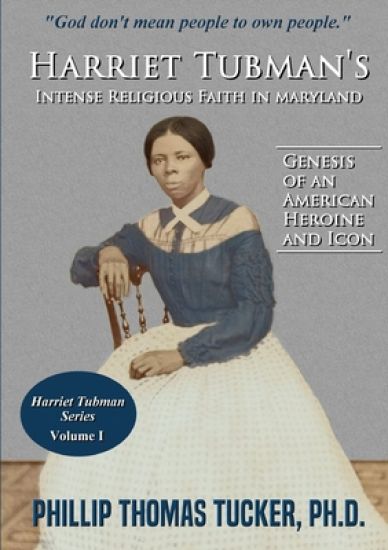
Harriet Tubman has gained iconic status as a true American heroine worthy of celebration today, not only in the United States, but also around the world. But many myths and legends have obscured this remarkable woman of courage and faith. Therefore, to truly understand the "Black Moses," it is now time to take a closer look at the real person, and this can best be achieved by exploring her religious life and experiences in Maryland, before she escaped slavery. This book is the first-ever volume dedicated to what was most important to Harriet Tubman, a freedom fighter and lover of liberty, and it motivated her to achieve herculean tasks that continue to be celebrated today, a powerful and intense religious faith.
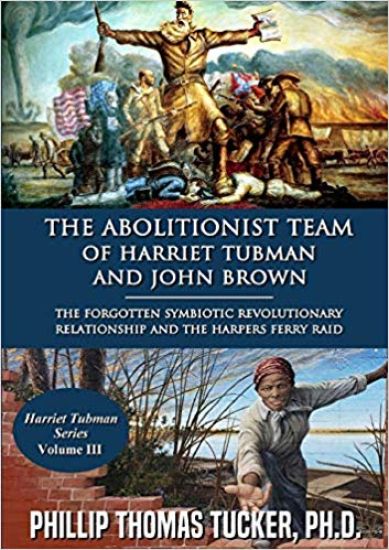
This ground-breaking book brings into focus one of the most unique and special relationships in American history-the true story of the deep bond and working relationship that existed between two of America's leading abolitionists and revolutionaries, Harriet Tubman and John Brown.Working closely together as a dynamic revolutionary team, they improved upon the audacious plan to raid the United States arsenal at Harpers Ferry, Virginia. Brown's bold raid on Harpers Ferry in October 1859 helped to pave the way to the Civil War and the destruction of slavery. Harriet Tubman's vital role in the Harpers Ferry story and her alliance and friendship with John Brown have been presented in full for the first time.
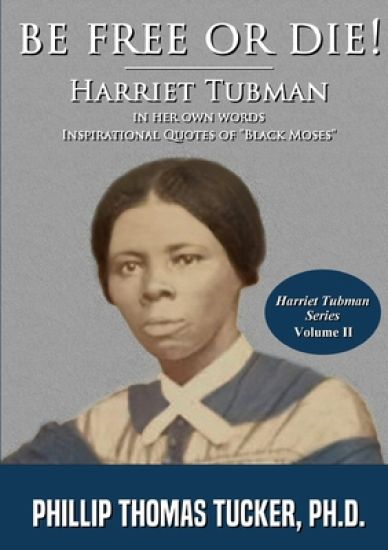
For the first time ever, this new book has allowed Harriet Tubman to speak for herself in her own unforgettable words of passion and faith. It is the personal view of this author that the very best way to get to know the real Harriet Tubman is to allow her own words to express her bold ideas about slavery and liberty and what they meant to her. The overall purpose of this book has been to present the best inspirational quotes of Harriet Tubman in order for today's reader to better understand this incredible woman on a more personal and intimate level, while celebrating the remarkable life an American heroine and icon.
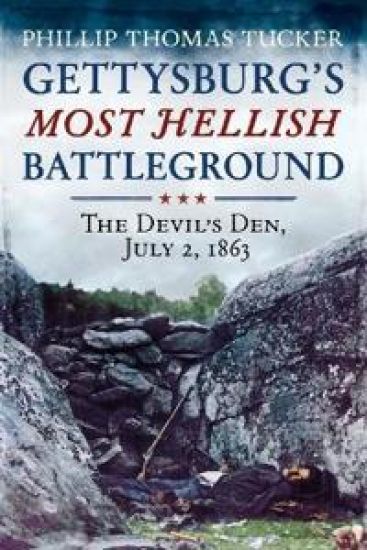
During the crucial three days of combat at Gettysburg, the most nightmarish place on the entire battlefield was appropriately named the Devil's Den. This jumble of huge boulders situated at the southern end of Houck's Ridge was truly a hell on earth during the decisive afternoon of July 2, 1863. The tenacious struggle that raged beyond control at the battle-line's southern end was all-important, because the Devil's Den and Houck's Ridge anchored the left flank of the over-extended Union battle-line, before Federal troops occupied Little Round Top to the east. The battle-hardened veterans of Lieutenant General James Longstreet's First Corps captured this vital sector-- the first Union left flank--in one of the few Southern successes of the second day, after some of the war's most bitter fighting. Nevertheless, the dramatic story of the successful turning of the first Union left flank has been long overlooked and ignored largely because of the giant historical shadow cast by the more famous struggle at Little Round Top, which was only the second and last fight for the southern flank of both armies on July 2. Therefore, the important contest for possession of the first Union left flank at the Devil's Den and Houck's Ridge was crucial on the bloody afternoon that decided the fate of America.
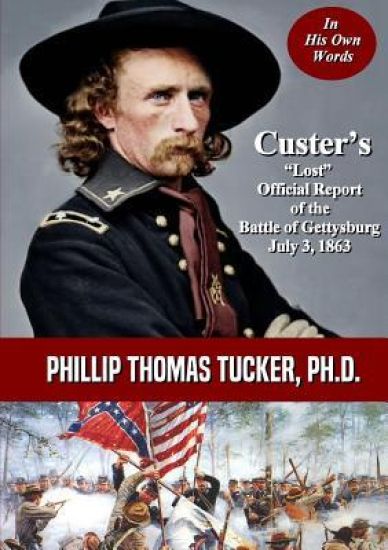
Custer's "Lost" Official Report of the Battle of Gettysburg July 3, 1863
Phillip Thomas Tucker
Lulu.com
2019
nidottu
On the crucial third day of the decisive Battle of Gettysburg, a newly-appointed brigadier general, age 23, commanded a full brigade of Michigan cavalrymen during his first major battle - George Armstrong Custer. He played a key role in saving the day in the Army of the Potomac's rear by leading his four cavalry regiments to victory. This book has emphasized the importance of the decisive clash at the East Cavalry Field on July 3, 1863 by presenting Custer's official report-long considered "lost" and often ignored-about the most important cavalry action during the largest and most decisive battle ever fought on the North American continent.Most of all, this is an important story about the Union cavalry's vital contributions to decisive victory on the final day of the most climactic showdown of the Civil War at Gettysburg.
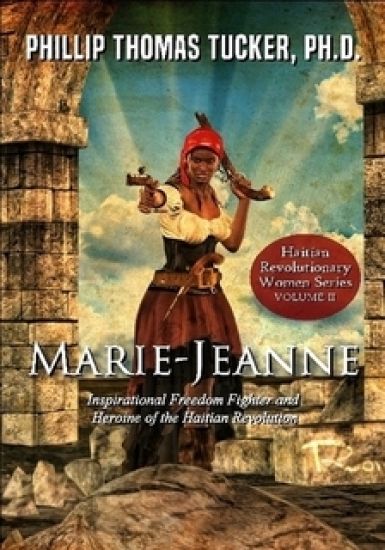
As part of the ground-breaking Haitian Revolutionary Women Series dedicated to honoring the remarkable heroines of Haiti, Phillip Thomas Tucker, Ph.D. has presented a much-needed biography of another Haitian heroine, affectionately known as Marie-Jeanne. This book, Volume II of the series, is the first-ever biography about the life of this distinguished heroine who won fame during the Haitian War of Independence. Marie-Jeanne Lamartini?re won recognition for her bravery and heroics during one of the revolution's most famous battles, with much at stake. Most importantly, Marie-Jeanne's inspirational and symbolic example on the field of strife helped to unite black and mulatto fighting men in their successful war against slavery, that led to the declaration of the world's first black republic on January 1, 1804. Marie-Jeanne was a founding mother of Haiti, and to this day, the heroic legacy of Marie-Jeanne is alive and well in the hearts and minds of the citizens of the Republic of Haiti.
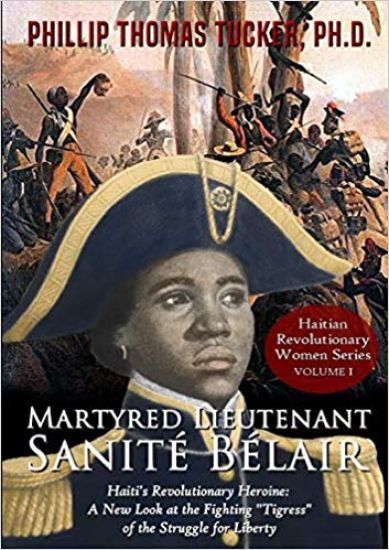
Phillip Thomas Tucker, Ph.D., has presented the first biography about the life of a remarkable Haitian woman who became a revolutionary martyr during the Haitian War for Independence, Sanit? B?lair. She sacrificed her life for the twin goals of destroying slavery and creating the first free black republic in world history. As a seasoned lieutenant and diehard freedom fighter of the revolutionary army, young Sanit? was executed by a French firing squad in early October 1802. But, most importantly, Sanit?'s heroic legacy and memory lived on in the hearts and minds of the Haitian people, helping to inspire the resistance effort to succeed in the end. A bold woman of courage, faith, and character, Sanit? B?lair became not only a revolutionary heroine, but also an inspirational founding mother of the Republic of Haiti.