Kirjojen hintavertailu. Mukana 12 390 323 kirjaa ja 12 kauppaa.

Kirjailija

Phillip W. Magness

Kirjat ja teokset yhdessä paikassa: 2 kirjaa, julkaisuja vuosilta 2018-2025, suosituimpien joukossa Colonization After Emancipation. Vertaile teosten hintoja ja tarkista saatavuus suomalaisista kirjakaupoista.

2 kirjaa

Kirjojen julkaisuhaarukka 2018-2025.

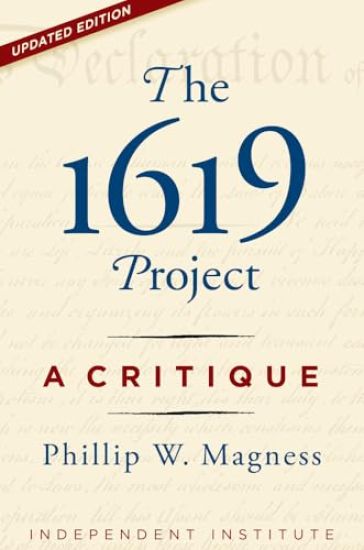
The 1619 Project Myth

The 1619 Project Myth

Phillip W. Magness

Independent Institute
2025
sidottu
"There is no one better to pick apart the disastrous 1619 Project than Phil Magness. If every classroom that incorporated the 1619 Project into its curriculum replaced it with this book, the country would be better off." --Coleman Hughes Slavery is part of America's story--its greatest shame. But abolition is part of America's story, too. Ignoring the latter isn't just bad scholarship. It's brazen deceit. And more often than not, it's done for political reasons. But that didn't seem to bother the writers at the New York Times when they launched the 1619 Project in August 2019. Advertised as a journalistic deep dive on the history of slavery, the series promised thematic explorations on a number of topics ranging from the first slave ship's arrival in Jamestown, Virginia, in 1619, to the present day. Independent Institute Senior Fellow and David J. Theroux Chair Phillip W. Magness was intrigued. What he found, though, was something else entirely. To say he was disappointed is putting it mildly. The 1619 Project was riddled with partisan hysteria, sloppy "scholarship," blatant errors of fact and interpretation, and, above all else, an anti-capitalist ideological agenda to make the case for tearing down our free market economy. Worse still, its transformation from intellectual debate to political dogma poisoned discourse on the right and the left. Angry Twitter mobs canceled and called for the censoring of all critics. Civil discourse and rational thinking became almost impossible. Almost impossible. Thankfully, The 1619 Project Myth boldly sounds the alarm on the New York Times' outright ideological warfare against American history. It's the essential guide to the many lies, distortions, and propaganda peddled by the 1619 Project and its defenders. Magness' writing is cool, calm, collected, and firm. An acclaimed academic and historian in his own right, he debunks and dismantles every myth and blunder of the 1619 Project, including: how the 1619 Project's creator Nikole Hannah-Jones twisted history into shallow political propaganda (just in time for election season); why the Project's activist defenders rely on sneering derision instead of historical facts; why capitalism is not racist ... and, in fact, helped free the slaves; why reparations are a moral and logistical dead end; how the American Historical Association fumbled a chance to protect its institutional integrity and defend real scholarship; how Hannah-Jones responded to her critics by ignoring their corrections and making her message even more partisan, political, and anti-capitalist; and so much more... In these pages, Magness delivers a long-overdue rebuke to "scholars" who treat history as a political weapon. History isn't a tool for scoring points. It's a long, complicated, and morally nuanced story that demands humility, intelligence, and moral courage from every scholar who dares plumb its depths. This is a must-read book on slavery, freedom, and the true American story.
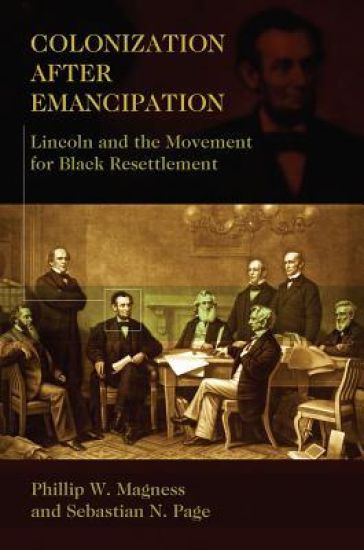
Colonization After Emancipation

Colonization After Emancipation

Phillip W. Magness; Stephen N. Page

University of Missouri Press
2018
nidottu
History has long acknowledged that President Abraham Lincoln, the Great Emancipator, had considered other approaches to rectifying the problem of slavery during his administration. Prior to Emancipation, Lincoln was a proponent of colonization: the idea of sending African American slaves to another land to live as free people. Lincoln supported resettlement schemes in Panama and Haiti early in his presidency and openly advocated the idea through the fall of 1862. But the bigoted, flawed concept of colonization never became a permanent fixture of U.S. policy, and by the time Lincoln had signed the Emancipation Proclamation on January 1, 1863, the word “colonization” had disappeared from his public lexicon. As such, history remembers Lincoln as having abandoned his support of colonization when he signed the proclamation. Documents exist, however, that tell another story.Colonization after Emancipation: Lincoln and the Movement for Black Resettlement explores the previously unknown truth about Lincoln’s attitude toward colonization. Scholars Phillip W. Magness and Sebastian N. Page combed through extensive archival materials, finding evidence, particularly within British Colonial and Foreign Office documents, which exposes what history has neglected to reveal—that Lincoln continued to pursue colonization for close to a year after emancipation. Their research even shows that Lincoln may have been attempting to revive this policy at the time of his assassination.Using long-forgotten records scattered across three continents—many of them untouched since the Civil War—the authors show that Lincoln continued his search for a freedmen’s colony much longer than previously thought. Colonization after Emancipation reveals Lincoln’s highly secretive negotiations with the British government to find suitable lands for colonization in the West Indies and depicts how the U.S. government worked with British agents and leaders in the free black community to recruit emigrants for the proposed colonies. The book shows that the scheme was never very popular within Lincoln’s administration and even became a subject of subversion when the president’s subordinates began battling for control over a lucrative “colonization fund” established by Congress.Colonization after Emancipation reveals an unexplored chapter of the emancipation story. A valuable contribution to Lincoln studies and Civil War history, this book unearths the facts about an ill-fated project and illuminates just how complex, and even convoluted, Abraham Lincoln’s ideas about the end of slavery really were.