Kirjailija
Pierre Bourdieu
Kirjat ja teokset yhdessä paikassa: 140 kirjaa, julkaisuja vuosilta 1964-2026, suosituimpien joukossa Free Exchange. Vertaile teosten hintoja ja tarkista saatavuus suomalaisista kirjakaupoista.
140 kirjaa
Kirjojen julkaisuhaarukka 1964-2026.
Social Theory For A Changing Society
Pierre Bourdieu; James S. Coleman; Zdzislawa Walaszek Coleman
Routledge
2021
nidottu
"There is in modem society a structural change that underlies many of the social changes with which the conference was concerned. My argument here will be that this is a qualitative change in the way society is organized, a change with many implications. I will call this a change from primordial and spontaneous social organization to constructed social organization (see Coleman 1990, Chapters 2, 3, and 24 for an extended examination of this change). The common definitions of these terms contain some hint of what I mean, but I will describe the change more fully to ensure that it is clearly understood. By primordial social organization I mean social organization that has its origins in the relationships established by childbirth. Not all these relations are activated in all cultures, but some subset of these relations forms the basis for all primitive and traditional social organization. From these relations, more complex structures unfold. For example, from these relations come families; from families come clans; from clans, villages; and from villages, tribes, ethnicities, or societies."
This is the third of five volumes based on the lectures given by Pierre Bourdieu at the Collége de France in the early 1980s under the title General Sociology. In these lectures, Bourdieu sets out to define and defend sociology as an intellectual discipline; in doing so he introduces and clarifies all the key concepts for which he has become so well known, concepts that continue to shape the way that sociology is practised today. In this volume, Bourdieu focuses on one of these key concepts, capital, which forms part of the trilogy of concepts – habitus, capital, field – that define the core of his theoretical approach. A field, as a social space of relatively durable relations between agents and institutions, is also a site of specific investments, which presupposes the possession of specific forms of capital and secures both material and symbolic profits. While there are many different forms of capital, two are fundamental and effective in all social fields: economic capital and cultural capital. These and other forms of capital exist only in relation to the fields in which they are deployed: the distribution of the forms and quantities of capital constitutes the structure of the field within which agents act and they confer power over the field, over the mechanisms that define the functioning of the field and over the profits engendered in the field – over, for example, the transmission of cultural capital in the educational system. An ideal introduction to one of Bourdieu’s most important concepts, this volume will be of great interest to the many students and scholars who study and use Bourdieu’s work across the social sciences and humanities, and to general readers who want to know more about the work of one of the most important sociologists and social thinkers of the twentieth century.
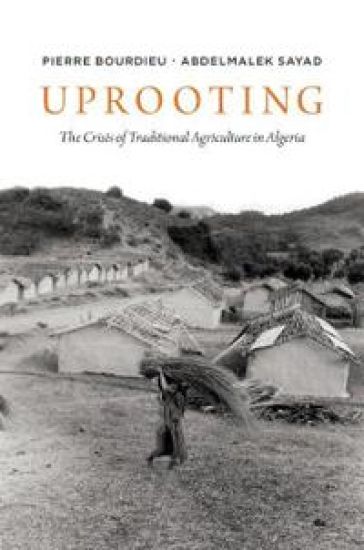
Between 1954 and 1960, in the midst of the Algerian War, more than two million Algerian peasants – a quarter of the population – were forcibly resettled. They were removed from their homes and villages and relocated in camps controlled by the French military in what was one of the largest and most brutal displacements of a rural population in history.It was in this context of colonial violence that Pierre Bourdieu and Abdelmalek Sayad set out to examine transformations in the fundamental structures of peasant economy and thought. By destroying the spatial and temporal frameworks of ordinary existence and reorganizing the life of peasants, the process of uprooting completed what the imperial policy of land confiscation and the spread of monetary exchange had started: the ‘depeasantization’ of agrarian communities stripped of the social and cultural means to make sense of the present and orient themselves to the future. This destruction of the traditional way of life was exacerbated by the quasi-urban conditions of the resettlement shantytowns, which brought about irreversible transformations in economic attitudes at the same time as they accelerated the contagion of needs, plunging the uprooted individuals into a ‘traditionalism of despair’ suited to daily survival in conditions of extreme uncertainty. Through their detailed analysis of these processes Bourdieu and Sayad provide a powerful account both of the destruction of a traditional way of life and of the brutal effects of colonial power.This classic text, now published in English for the first time, will be of great interest to students and scholars in sociology, anthropology, politics, migration studies, postcolonial studies and the social sciences and humanities generally, and to anyone concerned with the impact of colonization and its aftermath.
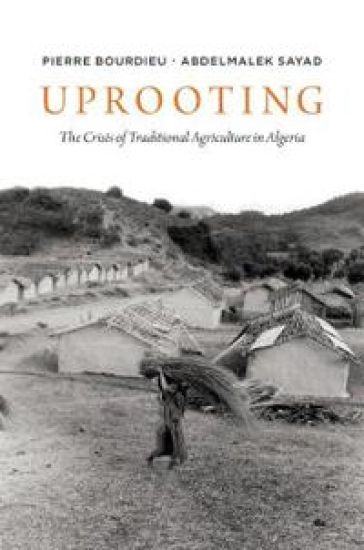
Between 1954 and 1960, in the midst of the Algerian War, more than two million Algerian peasants – a quarter of the population – were forcibly resettled. They were removed from their homes and villages and relocated in camps controlled by the French military in what was one of the largest and most brutal displacements of a rural population in history.It was in this context of colonial violence that Pierre Bourdieu and Abdelmalek Sayad set out to examine transformations in the fundamental structures of peasant economy and thought. By destroying the spatial and temporal frameworks of ordinary existence and reorganizing the life of peasants, the process of uprooting completed what the imperial policy of land confiscation and the spread of monetary exchange had started: the ‘depeasantization’ of agrarian communities stripped of the social and cultural means to make sense of the present and orient themselves to the future. This destruction of the traditional way of life was exacerbated by the quasi-urban conditions of the resettlement shantytowns, which brought about irreversible transformations in economic attitudes at the same time as they accelerated the contagion of needs, plunging the uprooted individuals into a ‘traditionalism of despair’ suited to daily survival in conditions of extreme uncertainty. Through their detailed analysis of these processes Bourdieu and Sayad provide a powerful account both of the destruction of a traditional way of life and of the brutal effects of colonial power.This classic text, now published in English for the first time, will be of great interest to students and scholars in sociology, anthropology, politics, migration studies, postcolonial studies and the social sciences and humanities generally, and to anyone concerned with the impact of colonization and its aftermath.

What is the nature of the modern state? How did it come into being and what are the characteristics of this distinctive field of power that has come to play such a central role in the shaping of all spheres of social, political and economic life? In this major work the great sociologist Pierre Bourdieu addresses these fundamental questions. Modifying Max Weber’s famous definition, Bourdieu defines the state in terms of the monopoly of legitimate physical and symbolic violence, where the monopoly of symbolic violence is the condition for the possession and exercise of physical violence. The state can be reduced neither to an apparatus of power in the service of dominant groups nor to a neutral site where conflicting interests are played out: rather, it constitutes the form of collective belief that structures the whole of social life. The ‘collective fiction’ of the state Ð a fiction with very real effects - is at the same time the product of all struggles between different interests, what is at stake in these struggles, and their very foundation. While the question of the state runs through the whole of Bourdieu’s work, it was never the subject of a book designed to offer a unified theory. The lecture course presented here, to which Bourdieu devoted three years of his teaching at the Collège de France, fills this gap and provides the key that brings together the whole of his research in this field. This text also shows ‘another Bourdieu’, both more concrete and more pedagogic in that he presents his thinking in the process of its development. While revealing the illusions of ‘state thought’ designed to maintain belief in government being oriented in principle to the common good, he shows himself equally critical of an ‘anti-institutional mood’ that is all too ready to reduce the construction of the bureaucratic apparatus to the function of maintaining social order. At a time when financial crisis is facilitating the hasty dismantling of public services, with little regard for any notion of popular sovereignty, this book offers the critical instruments needed for a more lucid understanding of the wellsprings of domination.

This is the second of five volumes based on the lectures given by Pierre Bourdieu at the Collège de France in the early 1980s under the title 'General Sociology'. In these lectures, Bourdieu sets out to define and defend sociology as an intellectual discipline, and in doing so he introduces and clarifies all the key concepts which have come to define his distinctive intellectual approach. In this volume, Bourdieu focuses on two of his most important and influential concepts: habitus and field. For the social scientist, the object of study is neither the individual nor the group but the relation between these two manifestations of the social in bodies and in things: that is, the obscure, dual relation between the habitus – as a system of schemas of perception, appreciation and action – and the field as a system of objective relations and a space of possible actions and struggles aimed at preserving or transforming the field. The relation between the habitus and the field is a two-way process: it is a relation of conditioning, where the field structures the habitus, and it is also a relation of knowledge, with the habitus helping to constitute the field as a world that is endowed with meaning and value. The specificity of social science lies in the fact that it takes as its object of knowledge a reality that encompasses agents who take this same reality as the object of their own knowledge. An ideal introduction to some of Bourdieu's most important concepts and ideas, this volume will be of great interest to the many students and scholars who study and use Bourdieu's work across the social sciences and humanities, and to general readers who want to know more about the work of one of the most important sociologists and social thinkers of the 20th century.
Social Theory For A Changing Society
Pierre Bourdieu; James S. Coleman; Zdzislawa Walaszek Coleman
Routledge
2019
sidottu
"There is in modem society a structural change that underlies many of the social changes with which the conference was concerned. My argument here will be that this is a qualitative change in the way society is organized, a change with many implications. I will call this a change from primordial and spontaneous social organization to constructed social organization (see Coleman 1990, Chapters 2, 3, and 24 for an extended examination of this change). The common definitions of these terms contain some hint of what I mean, but I will describe the change more fully to ensure that it is clearly understood. By primordial social organization I mean social organization that has its origins in the relationships established by childbirth. Not all these relations are activated in all cultures, but some subset of these relations forms the basis for all primitive and traditional social organization. From these relations, more complex structures unfold. For example, from these relations come families; from families come clans; from clans, villages; and from villages, tribes, ethnicities, or societies."

This is the first of five volumes that will be based on lectures given by Pierre Bourdieu at the Collège de France in the early 1980s under the title ‘General Sociology’. In these lectures, Bourdieu sets out to define and defend sociology as an intellectual discipline, giving it his own distinctive twist. In doing so he introduces and clarifies all the key concepts for which he has become so well-known, such as field, capital and habitus, concepts that continue to shape the way that sociology is practiced today. In this first volume, Bourdieu focuses on the fundamental social processes of naming and classifying the world, the ways that social actors use words to construct social objects and the struggles that arise from this. The sociologist encounters a world that is already named, already classified, where objects and social realities are marked by signs that have already been assigned to them. In order to avoid the naiveté and confusion that stem from taking for granted a world that has been socially constituted, sociologists must examine the part played by words in the construction of social things – or, to put it differently, the contribution that classification struggles, a dimension of all class struggles, play in the constitution of classes, including classes of age, sex, race and social class. An ideal introduction to some of Bourdieu’s most important concepts and ideas, this volume will be of great interest to the many students and scholars who study and use Bourdieu’s work across the social sciences and humanities, and to general readers who want to know more about the work of one of the most important sociologists and social thinkers of the 20th century.
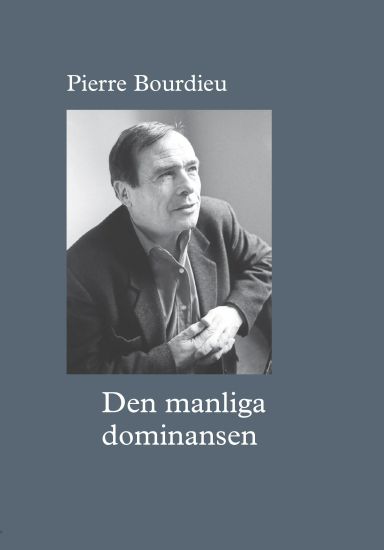
När vi försöker få grepp om den manliga dominansen riskerar vi att ta hjälp av sätt att tänka som själva är en produkt av denna dominans, påpekar sociologen Pierre Bourdieu i Den manliga dominansen. Boken diskuterar mäns makt över kvinnor och hur denna makt påverkar våra perceptions- och värderingsscheman. Vi behöver alla, enligt Bourdieu, ta oss ur den här onda cirkeln. Det vill säga få syn på – och förändra – de föreställningar om oss själva och våra omständigheter som vi omedvetet har anammat. Börja tänka kring vårt sätt att tänka. Den manliga dominansen är en bok som tar politisk ställning – men den är också, det är viktigt att framhålla, en vetenskaplig analys av maktförhållanden och maktdiskurser.Boken ger en god bild av Bourdieus arbetsmetoder, av hans förmåga att förena iakttagelser och reflektioner i en dynamisk helhet. Man får dessutom en möjlighet att förstå grundläggande synsätt som rör dialektiken mellan det subjektiva och det objektiva, alltså mellan kognitiva och objektiva strukturer. Även det viktiga begreppet symbolisk makt får en pedagogisk genomlysning.Den manliga dominansen publicerades ursprungligen 1998 och orsakade då en intensiv debatt i Frankrike. Men det är en bok som har behållit sin grundläggande aktualitet.

Schriften 10: Bildung. Schriften zur Kultursoziologie 2
Pierre Bourdieu
SUHRKAMP VERLAG
2018
pokkari


What is a 'symbolic revolution'? What happens when a symbolic revolutions occurs, how can it succeed and prevail and why is it so difficult to understand? Using the exemplary case of Édouard Manet, Pierre Bourdieu began to ponder these questions as early as the 1980s, before making it the focus of his lectures in his last years at the Collége de France. This second volume of Bourdieu's previously unpublished lectures provides his most sustained contribution to the sociology of art and the analysis of cultural fields. It is also a major contribution to our understanding of impressionism and the works of Manet. Bourdieu treats the paintings of Manet as so many challenges to the conservative academicism of the pompier painters, the populism of the Realists, the commercial eclecticism of genre painting, and even the 'Impressionists', showing that such a revolution is inseparable from the conditions that allow fields of cultural production to emerge. At a time when the Academy was in crisis and when the increase in the number of painters challenged the role of the state in defining artistic value, the break that Manet inaugurated revolutionised the aesthetic order. The new vision of the world that emerged from this upheaval still shapes our categories of perception and judgement today - the very categories that we use everday to understand the representations of the world and the world itself. This major work by one of the greatest sociologists of the last 50 years will be of great interest to students and scholars in sociology, art history and the social sciences and humanities generally. It will also appeal to a wide readership interested in art, in impressionism and in the works of Manet.


Das Elend der Welt. Zeugnisse und Diagnosen alltäglichen Leidens an der Gesellschaft
Pierre Bourdieu
Herbert von Halem Verlag
2017
nidottu
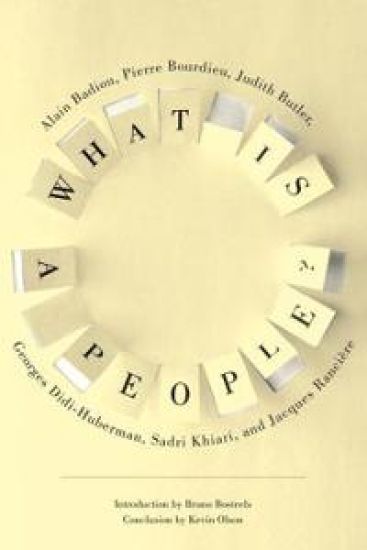
What Is a People?
Alain Badiou; Judith Butler; Georges Didi-Huberman; Sadri Khiari; Jacques Rancière; Pierre Bourdieu; Kevin Olson
Columbia University Press
2016
sidottu
What Is a People? seeks to reclaim "people" as an effective political concept by revisiting its uses and abuses over time. Alain Badiou surveys the idea of a people as a productive force of solidarity and emancipation and as a negative tool of categorization and suppression. Pierre Bourdieu follows with a sociolinguistic analysis of "popular" and its transformation of democracy, beliefs, songs, and even soups into phenomena with outsized importance. Judith Butler calls out those who use freedom of assembly to create an exclusionary "we," while Georges Didi-Huberman addresses the problem of summing up a people with totalizing narratives. Sadri Khiari applies an activist's perspective to the racial hierarchies inherent in ethnic and national categories, and Jacques Ranciere comments on the futility of isolating theories of populism when, as these thinkers have shown, the idea of a "people" is too diffuse to support them. By engaging this topic linguistically, ethnically, culturally, and ontologically, the voices in this volume help separate "people" from its fraught associations to pursue more vital formulations. Together with Democracy in What State?, in which Giorgio Agamben, Alain Badiou, Daniel Bensaid, Wendy Brown, Jean-Luc Nancy, Jacques Ranciere, Kristin Ross, and Slavoj Zizek discuss the nature and purpose of democracy today, What Is a People? expands an essential exploration of political action and being in our time.