

Kirjailija
Pierre Charbonnier
Kirjat ja teokset yhdessä paikassa: 4 kirjaa, julkaisuja vuosilta 2021-2023, suosituimpien joukossa Überfluss und Freiheit. Vertaile teosten hintoja ja tarkista saatavuus suomalaisista kirjakaupoista.
4 kirjaa
Kirjojen julkaisuhaarukka 2021-2023.

Pierre Charbonnier viser, at alle politiske idéer, uanset om de støtter økologiske idealer eller ej, er baseret på en bestemt opfattelse af vores forhold til Jorden og vores omgivelser. Han lokaliserer dermed ikke udgangspunktet for en økologisk tankegang i den politiske idehistorie, som andre har gjort. Modernitetens grundlæggende politiske kategorier var baseret på ideen om, at vi kunne forbedre naturen, beherske den og kræve ubegrænset adgang til dens ressourcer. Men nu tvinger klimaforandringer og miljøkrise os til at genoverveje, hvad politisk frigørelse er, idet frigørelsen ikke længere kan trække på forestillingen om uendelig vækst, sådan som den industrielle kapitalisme tidligere har lovet. Derfor handler forandring heller ikke blot om en socialistisk omfordeling af økonomiens goder, men om en social og politisk organisering, der bestrider produktionen selv. Dette rettidige og originale arbejde med social og politisk teori vil være af interesse for en bred læserskare inden for politik, sociologi, miljøstudier og samfundsvidenskab og humaniora generelt. Pierre Charbonnier er filosof og CNRS-forsker ved Sciences Po (Centre for European Studies and Comparative Politics). Han er tidligere studerende ved Ecole Normale Supérieure og har en doktorgrad i filosofi. Hans arbejde fokuserer på politiske og samfundsvidenskabelige forestillinger om forholdet mellem natur og samfund. Charbonnier er stærkt inspireret af filosoffen, sociologen og antropologen Bruno Latour.
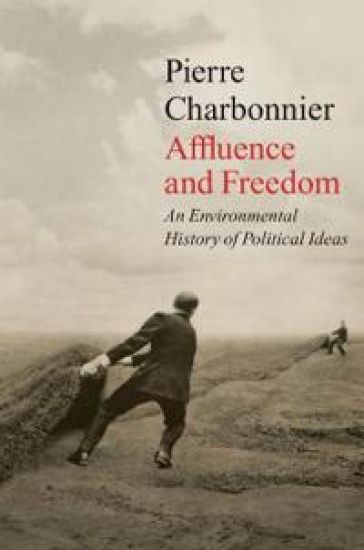
In this pathbreaking book, Pierre Charbonnier opens up a new intellectual terrain: an environmental history of political ideas. His aim is not to locate the seeds of ecological thought in the history of political ideas as others have done, but rather to show that all political ideas, whether or not they endorse ecological ideals, are informed by a certain conception of our relationship to the Earth and to our environment. The fundamental political categories of modernity were founded on the idea that we could improve on nature, that we could exert a decisive victory over its excesses and claim unlimited access to earthly resources. In this way, modern thinkers imagined a political society of free individuals, equal and prosperous, alongside the development of industry geared towards progress and liberated from the Earth’s shackles. Yet this pact between democracy and growth has now been called into question by climate change and the environmental crisis. It is therefore our duty today to rethink political emancipation, bearing in mind that this can no longer draw on the prospect of infinite growth promised by industrial capitalism. Ecology must draw on the power harnessed by nineteenth-century socialism to respond to the massive impact of industrialization, but it must also rethink the imperative to offer protection to society by taking account of the solidarity of social groups and their conditions in a world transformed by climate change. This timely and original work of social and political theory will be of interest to a wide readership in politics, sociology, environmental studies and the social sciences and humanities generally.
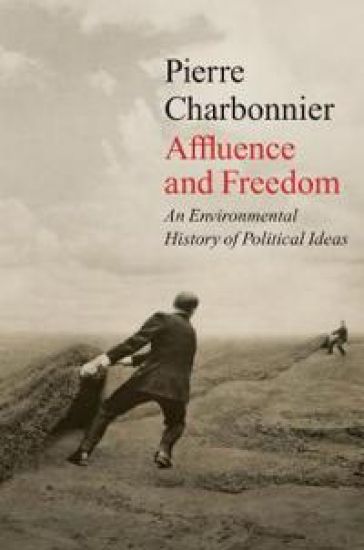
In this pathbreaking book, Pierre Charbonnier opens up a new intellectual terrain: an environmental history of political ideas. His aim is not to locate the seeds of ecological thought in the history of political ideas as others have done, but rather to show that all political ideas, whether or not they endorse ecological ideals, are informed by a certain conception of our relationship to the Earth and to our environment. The fundamental political categories of modernity were founded on the idea that we could improve on nature, that we could exert a decisive victory over its excesses and claim unlimited access to earthly resources. In this way, modern thinkers imagined a political society of free individuals, equal and prosperous, alongside the development of industry geared towards progress and liberated from the Earth’s shackles. Yet this pact between democracy and growth has now been called into question by climate change and the environmental crisis. It is therefore our duty today to rethink political emancipation, bearing in mind that this can no longer draw on the prospect of infinite growth promised by industrial capitalism. Ecology must draw on the power harnessed by nineteenth-century socialism to respond to the massive impact of industrialization, but it must also rethink the imperative to offer protection to society by taking account of the solidarity of social groups and their conditions in a world transformed by climate change. This timely and original work of social and political theory will be of interest to a wide readership in politics, sociology, environmental studies and the social sciences and humanities generally.