Kirjojen hintavertailu. Mukana 12 595 353 kirjaa ja 12 kauppaa.

Kirjailija

Piers Blaikie

Kirjat ja teokset yhdessä paikassa: 6 kirjaa, julkaisuja vuosilta 2003-2018, suosituimpien joukossa At Risk. Vertaile teosten hintoja ja tarkista saatavuus suomalaisista kirjakaupoista.

6 kirjaa

Kirjojen julkaisuhaarukka 2003-2018.

At Risk

At Risk

Piers Blaikie; Terry Cannon; Ian Davis; Ben Wisner

Routledge
2003
nidottu
The term 'natural disaster' is often used to refer to natural events such as earthquakes, hurricanes or floods. However, the phrase 'natural disaster' suggests an uncritical acceptance of a deeply engrained ideological and cultural myth. At Risk questions this myth and argues that extreme natural events are not disasters until a vulnerable group of people is exposed.The updated new edition confronts a further ten years of ever more expensive and deadly disasters and discusses disaster not as an aberration, but as a signal failure of mainstream 'development'. Two analytical models are provided as tools for understanding vulnerability. One links remote and distant 'root causes' to 'unsafe conditions' in a 'progression of vulnerability'. The other uses the concepts of 'access' and 'livelihood' to understand why some households are more vulnerable than others. Examining key natural events and incorporating strategies to create a safer world, this revised edition is an important resource for those involved in the fields of environment and development studies.
The Political Economy of Soil Erosion in Developing Countries
First published in 1985. This book examines wide variety of ways in which environmental deterioration, in particular soil erosion, can be viewed and the implicit political judgements that often inform them. Using the context of developing countries, where the effects tend to be more acute due to underdevelopment and climatic factors, this work aims to examine this source of uncertainty and make explicit the underlying assumptions in the debate about soil erosion. It also rejects the notion that soil erosion is a politically neutral issue and argues that conservation requires fundamental social change. This title will be of interest to students of environmental and developmental studies.
Alternative Development

Alternative Development

Cathrine Brun; Piers Blaikie

Routledge
2016
nidottu
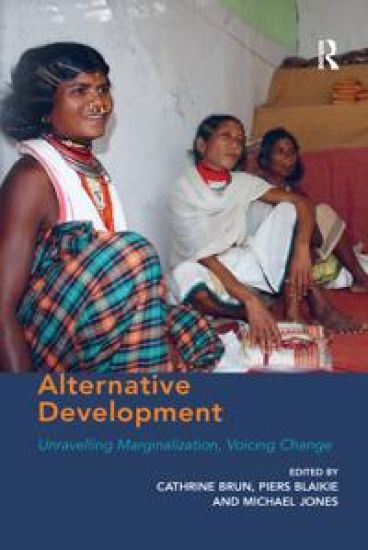
This book brings together a collection of essays that discuss alternative development and its relevance for local/global processes of marginalization and change in the Global South. Alternative development questions who the producers of development knowledges and practices are, and aims at decentring development and geographical knowledge from the Anglo-American centre and the Global North. It involves resistance to dominant political-economic processes in order to further the possibilities for non-exploitative and just forms of development. By discussing how to unravel marginalization and voice change through alternative methods, actors and concepts, the book provides useful guidance on understanding the relationship between theory and practice. The main strength of the book is that it calls for a central role for alternative development in the current development discourse, most notably related to justice, rights, globalization, forced migration, conflict and climate change. The book provides new ways of engaging with alternative development thinking and making development alternatives relevant.
The Political Economy of Soil Erosion in Developing Countries
First published in 1985. This book examines wide variety of ways in which environmental deterioration, in particular soil erosion, can be viewed and the implicit political judgements that often inform them. Using the context of developing countries, where the effects tend to be more acute due to underdevelopment and climatic factors, this work aims to examine this source of uncertainty and make explicit the underlying assumptions in the debate about soil erosion. It also rejects the notion that soil erosion is a politically neutral issue and argues that conservation requires fundamental social change. This title will be of interest to students of environmental and developmental studies.
Alternative Development

Alternative Development

Cathrine Brun; Piers Blaikie

Routledge
2014
sidottu
This book brings together a collection of essays that discuss alternative development and its relevance for local/global processes of marginalization and change in the Global South. Alternative development questions who the producers of development knowledges and practices are, and aims at decentring development and geographical knowledge from the Anglo-American centre and the Global North. It involves resistance to dominant political-economic processes in order to further the possibilities for non-exploitative and just forms of development. By discussing how to unravel marginalization and voice change through alternative methods, actors and concepts, the book provides useful guidance on understanding the relationship between theory and practice. The main strength of the book is that it calls for a central role for alternative development in the current development discourse, most notably related to justice, rights, globalization, forced migration, conflict and climate change. The book provides new ways of engaging with alternative development thinking and making development alternatives relevant.
At Risk

At Risk

Piers Blaikie; Terry Cannon; Ian Davis; Ben Wisner

Routledge
2003
sidottu
The term 'natural disaster' is often used to refer to natural events such as earthquakes, hurricanes or floods. However, the phrase 'natural disaster' suggests an uncritical acceptance of a deeply engrained ideological and cultural myth. At Risk questions this myth and argues that extreme natural events are not disasters until a vulnerable group of people is exposed.The updated new edition confronts a further ten years of ever more expensive and deadly disasters and discusses disaster not as an aberration, but as a signal failure of mainstream 'development'. Two analytical models are provided as tools for understanding vulnerability. One links remote and distant 'root causes' to 'unsafe conditions' in a 'progression of vulnerability'. The other uses the concepts of 'access' and 'livelihood' to understand why some households are more vulnerable than others. Examining key natural events and incorporating strategies to create a safer world, this revised edition is an important resource for those involved in the fields of environment and development studies.