Kirjojen hintavertailu. Mukana 12 506 580 kirjaa ja 12 kauppaa.

Kirjailija

Pietro S. Nivola

Kirjat ja teokset yhdessä paikassa: 5 kirjaa, julkaisuja vuosilta 1993-2002, suosituimpien joukossa Regulating Unfair Trade. Vertaile teosten hintoja ja tarkista saatavuus suomalaisista kirjakaupoista.

5 kirjaa

Kirjojen julkaisuhaarukka 1993-2002.

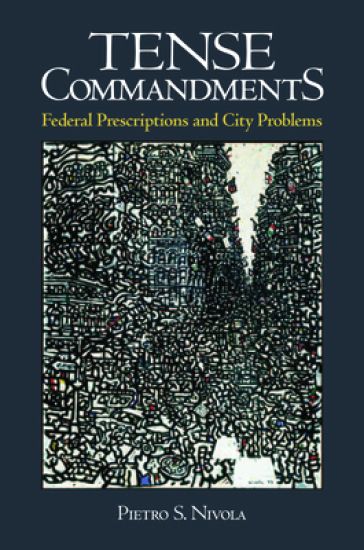
Tense Commandments

Tense Commandments

Pietro S. Nivola

Brookings Institution
2002
nidottu
During the past decade, dozens of large cities lost population as jobs and people kept moving to the suburbs. Despite widespread urban revitalization and renewal, one fact remains unmistakable: when choosing where to live and work, Americans prefer the suburbs to the cities. Many underlying causes of the urban predicament are familiar: disproportionate poverty, stiff city tax rates, and certain unsatisfactory municipal services (most notably, public schools). Less recognized is the distinct possibility that sometimes the regulatory policies of the federal government —the rules and rulings imposed by its judges, bureaucrats, and lawmakers —further disadvantage the cities, ultimately burdening their ability to attract residents and businesses. In Tense Commandments, Pietro S. Nivola encourages renewed reflection on the suitable balance between national and local domains. He examines an array of directive or supervisory methods by which federal policymakers narrow local autonomy and complicate the work urban governments are supposed to do. Urban taxpayers finance many costly projects that are prescribed by federal law. A handful of national rules bore down on local governments before 1965. Today these governments labor under hundreds of so-called unfunded mandates. Federal aid to large cities has lagged behind a profusion of mandated expenditures, at times straining municipal budgets. Apart from their fiscal impacts, Nivola argues, various federal prescriptions impinge on local administration of routine services, tying the hands of managers and complicating city improvements. Nivola includes case studies of six cities: Baltimore, Philadelphia, New York, Chicago, San Francisco, and Los Angeles. He describes the "politics of paternalism," the political pressures that federal regulations place on governance. Then he offers comparisons with various political systems abroad, including Germany, the U.K., France, and Italy. As the nation and its cities brace for a long and arduous effort to combat terrorism, Nivola recommends that federal mandates be evaluated with a standard question: are they socially beneficial, or do they deprive localities of discretion, distort legitimate local priorities, and perhaps misallocate resources? In today's intricate federal system, the unencumbered capacity of governments at all levels to define their roles and concentrate on their core functions and responsibilities seems urgent.
Managing Green Mandates

Managing Green Mandates

Pietro S. Nivola; Jon A. Shields

Brookings Institution
2001
nidottu
"Federal policies have made great progress protecting the environment. But the policies sometimes have imposed inordinate costs on local governments. Managing Green Mandates describes how various federal environmental directives do not suit diverse conditions at the local level, and compel local communities to spend their revenues on reducing relatively minor risks to the public health. While policymakers have thrown far-reaching requirements at the feet of local authorities, the federal government is providing them less aid to comply with the increasingly stringent standards. The burden of these underfunded mandates can further disadvantage many overtaxed municipalities. Pietro Nivola is a senior fellow in the Governmental Studies program at the Brookings Institution. He is the author of The Laws of the Landscape: How Politics Shape Cities in Europe and America (Brookings 1999). Jon Shields is a graduate student in the Department of Government and Foreign Affairs at the University of Virginia."
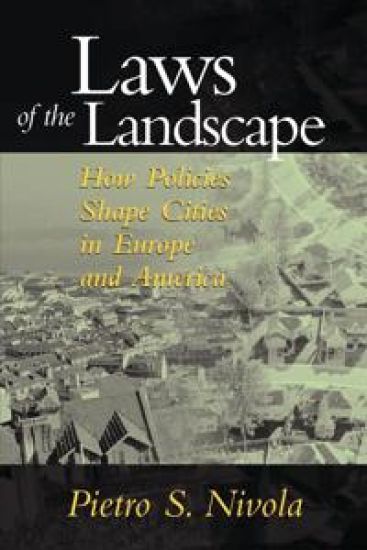
Laws of the Landscape

Laws of the Landscape

Pietro S. Nivola

Brookings Institution
1999
nidottu
For decades, concerns have been raised about the consequences of relentless suburban expansion in the United States. But so far, government programs to control urban sprawl have had little effect in slowing it down, much less stopping it. In this book, Pietro S. Nivola raises important questions about the continued suburbanization of America: Is suburban growth just the result of market forces, or have government policies helped induce greater sprawl? How much of the government intervention has been undesirable, and what has been beneficial? And, if suburban growth is to be controlled, what changes in public policies would be not only effective, but practical? Nivola addresses these questions by comparing sprawling U.S. metropolitan areas to compact development patterns in Europe. He contrasts the effects of traditional urban programs, as well as "accidental urban policies" that have a profound if commonly unrecognized impact on cities, including national tax systems, energy conservation efforts, agricultural supports, and protection from international commerce. Nivola also takes a hard look at the traditional solutions of U.S. urban policy agenda involving core-area reconstruction projects, mass transit investments, "smart" growth controls, and metropolitan organizational rearrangements, and details the reasons why they often don't work. He concludes by recommending reforms for key U.S. policies--from taxes to transportation to federal regulations--based on the successes and failures of the European experience. Brookings Metropolitan Series
The Extra Mile

The Extra Mile

Pietro S. Nivola; Robert W. Crandall

Brookings Institution
1995
nidottu
"In the United States, proposals for gasoline tax hikes have consistently met with broad-based congressional opposition. Although such taxes are a common and effective method of conserving energy in other industrialized nations, U.S. policy has traditionally relied on regulatory programs rather than fuel taxes to promote energy efficiency in automotive transportation. This book examines both the political causes and the economic effects of this idiosyncratic policy preference.Moderating the consumption and importation of oil has been an explicit goal of the United States over the past twenty years. Pietro S. Nivola and Robert W. Crandall argue that a higher levy on gasoline would be a more efficient way of achieving this goal than current automotive fuel economy standards. In fact, they find that an additional excise of less than twenty-five cents per gallon over the past dozen years would have conserved more oil than has the existing policy of administering gas mileage requirements for new passenger vehicles. And such a tax, they maintain, would not be as detrimental to the economy as opponents fear, nor as regressive as they claim.Why, then, is there such a strong national resistance to a fuel tax in the United States? And why is there less resistance in other countries? The authors examine the development of motor-fuel excises in Great Britain, France, Germany, Japan, and Canada, and explain the historical and political factors that have led to different national policy orientations.Turning their attention back to the United States, Nivola and Crandall show how regulatory measures have fallen short of their goal and why political barriers to bolder taxation of gasoline remain formidable. They conclude by offering suggestions for new directions in U.S. energy policy at the federal, state, and local level."
Regulating Unfair Trade

Regulating Unfair Trade

Pietro S. Nivola

Brookings Institution
1993
nidottu
"In the early 1980s, American complaints about unfair trade practices began to intensify. Sunrise industries, such as manufacturers of semiconductors and telecommunications equipment, joined older complainants, including steel and textile producers, in seeking more safeguards against international competitors who priced their products too aggressively or whose governments subsidized exports or protected home markets. In this politically charged atmosphere, the U.S. government has devised increasingly stringent regulatory programs to address the claimed abuses and distortions. In this book, Pietro Nivola examines the strenuous effort to combat the objectionable trading practices of other countries. Through most of the postwar period, Nivola notes, policymakers had deemed it in the nation's economic and strategic interests to tolerate asymmetries and infractions in the international trading order. But that tolerance has been sharply lowered by heightened sensitivity to inequities, and a growing conviction that government should intervene, frequently and forcefully, to ensure a ""level playing field."" The book maintains that foreign protectionism lower East-West tensions, and alleged American decline in the face of international competition cannot fully explain the stiffening regulation of unfair trade. The world trading system, Nivola contends, is not more restrictive now than it was earlier. Cries about foreign commercial transgressions in recent years have remained shrill despite a formidable U.S. export boom and an improved current account valance. Much of the U.S. regulatory activity has acquired a political momentum of its own. The activity has increased not just because global competitive pressures have generally intensified but because we have developed more ways and inducement to complain about those pressures. Nivola cautions that trade regulations now bears too much of the burden for ameliorating economic imbalances and deficiencies. The tendency adds to a sense of frustration that fuels demands for additional regulations. While recognizing the need for an explicit and responsible trade policy, Nivola concludes that such a policy must be based, first and foremost, on realistic expectations. Trade actions need to compliment, not subordinate, a more basic agenda: improvement in the national rates of saving and investment, better preparation of the work force, control of runaway health care costs, less litigation, and more regulatory reform—all of which are likely to be far more consequential for the nation's long-term competitiveness and living standards. "