Kirjojen hintavertailu. Mukana 12 595 353 kirjaa ja 12 kauppaa.

Kirjailija

Piotr Sztompka

Kirjat ja teokset yhdessä paikassa: 10 kirjaa, julkaisuja vuosilta 1990-2025, suosituimpien joukossa Rethinking Progress. Vertaile teosten hintoja ja tarkista saatavuus suomalaisista kirjakaupoista.

10 kirjaa

Kirjojen julkaisuhaarukka 1990-2025.

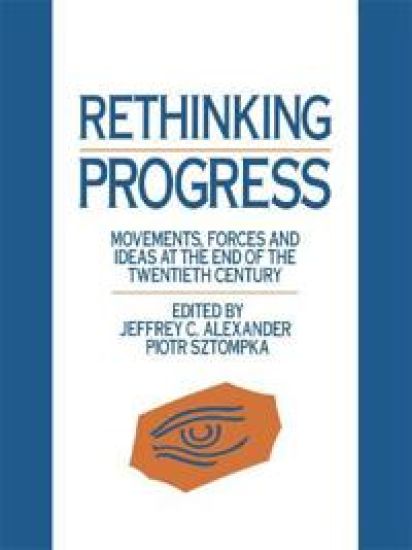
Rethinking Progress

Rethinking Progress

Jeffrey C. Alexander; Piotr Sztompka

Routledge
1990
sidottu
Rethinking Progress provides a challenging reevaluation of one of the crucial ideas of Western civilization; the notion of progress. Progress often seems to have become self-defeating, producing ecological deserts, overpopulated cities, exhausted resources, decaying cultures, and widespread feelings of alienation. The contributors, from all over the world, present their diversified perspectives on the fate of progress.
A Critical Introduction to Contemporary Social Theory
Examining the core sociological theories that have emerged in the first two decades of the current century, A Critical Introduction to Contemporary Social Theory outlines their attempts to answer the most fundamental questions of the discipline, from the nature of social order to the mechanisms of social change. Through a careful exploration of the history of modern social theory, Piotr Sztompka lays the critical groundwork for investigating the development of contemporary social theory from its founding fathers in the 19th century, through the rich contributions of the 20th century, known as "the golden age of theory," up to the most recent developments and illuminates how it is both anchored in and a critique of previous attempts to theorize foundational questions to social being and action. Contemporary theory, the book argues, is now moving toward analysis of action, interpersonal relations, social and epistemological realism, and multivalent mechanisms at the root of social phenomenon.Major social theoretical thinkers like Anthony Giddens, Pierre Bourdieu, Jeffrey Alexander, Randall Collins, Jonathan Turner, Hans Joas, Ulrich Beck, Erving Goffman, and others are presented and evaluated as significant contributors to contemporary social theory, while pointing toward future possibilities for social theory in the current century. This will be a key resource for undergraduate and graduate students in sociology, social theory, and contemporary cultural studies.
A Critical Introduction to Contemporary Social Theory
Examining the core sociological theories that have emerged in the first two decades of the current century, A Critical Introduction to Contemporary Social Theory outlines their attempts to answer the most fundamental questions of the discipline, from the nature of social order to the mechanisms of social change. Through a careful exploration of the history of modern social theory, Piotr Sztompka lays the critical groundwork for investigating the development of contemporary social theory from its founding fathers in the 19th century, through the rich contributions of the 20th century, known as "the golden age of theory," up to the most recent developments and illuminates how it is both anchored in and a critique of previous attempts to theorize foundational questions to social being and action. Contemporary theory, the book argues, is now moving toward analysis of action, interpersonal relations, social and epistemological realism, and multivalent mechanisms at the root of social phenomenon.Major social theoretical thinkers like Anthony Giddens, Pierre Bourdieu, Jeffrey Alexander, Randall Collins, Jonathan Turner, Hans Joas, Ulrich Beck, Erving Goffman, and others are presented and evaluated as significant contributors to contemporary social theory, while pointing toward future possibilities for social theory in the current century. This will be a key resource for undergraduate and graduate students in sociology, social theory, and contemporary cultural studies.
Agency and Structure (RLE Social Theory)
A striking feature of the human condition is its dual, contradictory, inherently split character; on the one hand, autonomy and freedom; on the other, constraint and dependence on social structure. This volume addresses this central problem of the linkage between human action and social structure in sociological and social science theory. Contributions cover several different approaches to the agency-structure problematic, and represent the work of a number of leading international sociologists. Their efforts point to a reorientation of social theory, both on philosophical and methodological levels.
Rethinking Progress

Rethinking Progress

Jeffrey C. Alexander; Piotr Sztompka

Routledge
2016
nidottu
Rethinking Progress provides a challenging reevaluation of one of the crucial ideas of Western civilization; the notion of progress. Progress often seems to have become self-defeating, producing ecological deserts, overpopulated cities, exhausted resources, decaying cultures, and widespread feelings of alienation. The contributors, from all over the world, present their diversified perspectives on the fate of progress.
Agency and Structure (RLE Social Theory)
A striking feature of the human condition is its dual, contradictory, inherently split character; on the one hand, autonomy and freedom; on the other, constraint and dependence on social structure. This volume addresses this central problem of the linkage between human action and social structure in sociological and social science theory. Contributions cover several different approaches to the agency-structure problematic, and represent the work of a number of leading international sociologists. Their efforts point to a reorientation of social theory, both on philosophical and methodological levels.
Cultural Trauma and Collective Identity

Cultural Trauma and Collective Identity

Jeffrey C. Alexander; Ron Eyerman; Bernard Giesen; Neil J. Smelser; Piotr Sztompka

University of California Press
2004
pokkari
In this collaboratively authored work, five distinguished sociologists develop an ambitious theoretical model of "cultural trauma"--and on this basis build a new understanding of how social groups interact with emotion to create new and binding understandings of social responsibility. Looking at the "meaning making process" as an open-ended social dialogue in which strikingly different social narratives vie for influence, they outline a strongly constructivist approach to trauma and apply this theoretical model in a series of extensive case studies, including the Nazi Holocaust, slavery in the United States, and September 11, 2001.
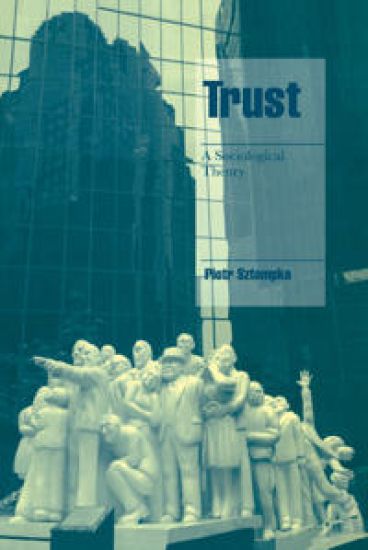
Trust

Trust

Piotr Sztompka

Cambridge University Press
2000
pokkari
Piotr Sztompka here presents a major work of social theory, which gives a comprehensive theoretical account of trust as a fundamental component of human actions. Professor Sztompka’s detailed and systematic study takes account of the rich evolving research on trust, and provides conceptual and typological clarifications and explications of the notion itself, its meaning, foundations and functions. He offers an explanatory model of the emergence (or decay) of trust-cultures, and relates the theoretical to the historical by examining the collapse of communism in 1989 and the emergence of a post-communist social order. Piotr Sztompka illustrates and supports his claims with statistical data and his own impressive empirical study of trust, carried out in Poland at the end of the nineties. Trust: A Sociological Theory is a conceptually creative and elegant work in which scholars and students of sociology, political science and social philosophy will find much of interest.
Trust

Trust

Piotr Sztompka

Cambridge University Press
2000
sidottu
Piotr Sztompka here presents a major work of social theory, which gives a comprehensive theoretical account of trust as a fundamental component of human actions. Professor Sztompka's detailed and systematic study takes account of the rich evolving research on trust, and provides conceptual and typological clarifications and explications of the notion itself, its meaning, foundations and functions. He offers an explanatory model of the emergence (or decay) of trust-cultures, and relates the theoretical to the historical by examining the collapse of communism in 1989 and the emergence of a post-communist social order. Piotr Sztompka illustrates and supports his claims with statistical data and his own impressive empirical study of trust, carried out in Poland at the end of the nineties. Trust: A Sociological Theory is a conceptually creative and elegant work in which scholars and students of sociology, political science and social philosophy will find much of interest.
The Sociology of Social Change

The Sociology of Social Change

Piotr Sztompka

JOHN WILEY AND SONS LTD
1993
nidottu
The sociology of social change has always been the product of times of flux, and the unmatched dynamism of our period is already reflected in the revitalization of theories of change. Piotr Sztompka's aim in this volume is to take stock of and to reappraise the whole legacy of sociological thinking about change, from the classical to the contemporary, providing the intellectual tools necessary for a critical and rational grasp of our own turbulent times. Intended primarily as an advanced textbook for upper-division and graduate students, as well as researchers, this book covers the four grand visions of social and historical change which have dominated the field since the 19th century: the evolutionary, the cyclical, the dialectical, and the post-developmentalist. In so doing, it provides indispensable analytic discussions of the concepts focal to contemporary debates such as social process, development, progress, social time, historical tradition, modernity, post-modernity , and globalization.