

Kirjailija
Polly Young-Eisendrath
Kirjat ja teokset yhdessä paikassa: 12 kirjaa, julkaisuja vuosilta 1991-2023, suosituimpien joukossa Women And Desire. Vertaile teosten hintoja ja tarkista saatavuus suomalaisista kirjakaupoista.
12 kirjaa
Kirjojen julkaisuhaarukka 1991-2023.




Dialogue Therapy for Couples and Real Dialogue for Opposing Sides
Jean Pieniadz; Polly Young-Eisendrath
Taylor Francis Ltd
2021
sidottu
A clear, cogent, and comprehensive account of the rationale and methods of Dialogue Therapy and Real Dialogue, this volume introduces models of facilitated dialogue designed specifically to end polarization. This book offers a straightforward and comprehensive encounter with some of the most effective theories and methods to facilitate dialogue and disrupt deadening power struggles between life partners, grown children and parents, siblings, co-workers, and others whose conflicts have led to harmful polarizations. The book is based on ideas and relational models from mindfulness and psychoanalysis that have not been applied in this unique way before. This melding of mindfulness (containment, concentration, equanimity, maintaining a "mindful gap") with the psychoanalytic understanding of projection and projective identification (the "hijacking" of our subjective experiences) creates much more than light at the end of the tunnel. It engenders the acceptance of another that leads to love and insight, based on the recognition and acknowledgement of our autonomy and our common humanity in the midst of conflict. This book introduces a new, revolutionary model for couple therapists, life coaches, group facilitators, and leaders to open a mindful space that increases witnessing capacities in the midst of emotional conflict without imposing goals of agreement, reconciliation or compromise.

Dialogue Therapy for Couples and Real Dialogue for Opposing Sides
Jean Pieniadz; Polly Young-Eisendrath
Taylor Francis Ltd
2021
nidottu
A clear, cogent, and comprehensive account of the rationale and methods of Dialogue Therapy and Real Dialogue, this volume introduces models of facilitated dialogue designed specifically to end polarization. This book offers a straightforward and comprehensive encounter with some of the most effective theories and methods to facilitate dialogue and disrupt deadening power struggles between life partners, grown children and parents, siblings, co-workers, and others whose conflicts have led to harmful polarizations. The book is based on ideas and relational models from mindfulness and psychoanalysis that have not been applied in this unique way before. This melding of mindfulness (containment, concentration, equanimity, maintaining a "mindful gap") with the psychoanalytic understanding of projection and projective identification (the "hijacking" of our subjective experiences) creates much more than light at the end of the tunnel. It engenders the acceptance of another that leads to love and insight, based on the recognition and acknowledgement of our autonomy and our common humanity in the midst of conflict. This book introduces a new, revolutionary model for couple therapists, life coaches, group facilitators, and leaders to open a mindful space that increases witnessing capacities in the midst of emotional conflict without imposing goals of agreement, reconciliation or compromise.
The modern committed relationship is under stress--we want love and attraction as much as equality and reciprocity. A key figure in mindfulness and psychotherapy shows how to bring mindfulness to the unique kind of relationships we find ourselves pursuing today. A committed relationship, as most people see it today, is a relationship of equals who share values and goals, a kind of team united by love, a common purpose and philosophy, and dedication to each other's growth on many levels, including spiritually. However, we have failed to recognize what a brand-new model this is in the history of the world. The old archetypes and myths and the reductive biological models do not provide adequate guidance for relationships based on "personal love." We need new guidelines that are rooted in sound understanding of our modern psychology and dilemmas. Young-Eisendrath makes the stand that modern relationships, which demand equality and reciprocity, cannot resort to dominance, control, or trust-breaking. Valuing being "true to yourself" in a relationship means we must learn to ongoingly renegotiate conflicts and needs with our partner, rather than necessarily bailing out at the first upset. Utilizing wisdom gleaned from her many years of Buddhist practice and teaching and her work in psychotherapy and couples counseling, Young-Eisendrath shows how mindfulness is the key. Her insights and clinical examples are supported by practical application through the provision of mindfulness-based practices, exercises, and dialogue formats she has effectively used in couples counseling. You may not always like the hard truth in what you read, or you might even disagree at times, but Young-Eisendrath is willing to not only dismantle our idealized projections about love, but also offer a way forward to bring our intimate relationships on the spiritual path.
What can psychotherapy and psychoanalysis teach us about turning human misery into insight and personal freedom? Polly Young-Eisendrath offers a response that opens new vistas in our understanding of ourselves within the complexity of a postmodern world. Subject to Change is a collection of essays spanning a twenty-year period of theorising and practice of a highly regarded senior Jungian analyst. The diverse ideas and perspectives discussed in the essays deal with the big issues surrounding how Jungian analysts and psychoanalysts understand their profession and what it teaches us about our subject lives. The book is divided into four clear and informative sections:* Subjectivity and uncertainty* Gender and desire* Transference and transformation * Transcendence and subjectivity. The classic essays presented in this book will have significant appeal to all those concerned with Jungian analysis, psychotherapy, psychoanalysis, gender development, and the interface between psychotherapy and spirituality.
Kids today are depressed and anxious. They also seem to feel entitled to every advantage and unwilling to make the leap into adulthood. As Polly Young-Eisendrath makes clear in this brilliant account of where a generation has gone astray, parents trying to make their children feel special are unwittingly interfering with their kids' ability to accept themselves and cope with life. Clarifying an enormous cultural change, Polly Young-Eisendrath demonstrates why so many young people have trouble with empathy and compassion, struggle with moral values, and are stymied in the face of adversity. Now in paperback, THE SELF-ESTEEM TRAP is a call to action and a prescriptive guide for parents, teaching them how they can help kids--through the teen and young adult years--develop self-worth, setting them on the right track to productive, balanced, and happy lives.
"Subject to Change" is a collection of essays written by a senior Jungian analyst. The selected essays deal with the big issues surrounding how psychoanalysts understand their profession and how they can improve it.
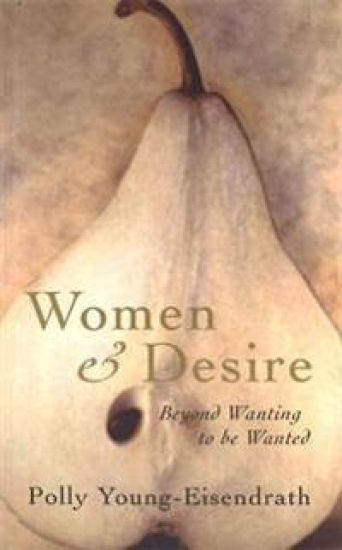
Many years ago the famous French psychoanalyst Jaques Lacan said that women want to be wanted, not to be loved. Now, in her fascinating book about female desire and empowerment, internationally renowned Jungian analyst and author Polly Young-Eisendrath explores this idea further. Women look to others to provide them with confidence, happiness and self-esteem. This reliance produces a need to please others, in order to receive praise. We please others by trying to conform to an image, rather than finding out what our real needs are. If this image conflicts with our inner needs we can become resentful, frustrated and out of control. Often we deal with this unhappiness by trying even harder to make ourselves the kind of spouse, lover, mother or worker who is wanted and desired. We have to abandon these female images and discover our own real needs, without fear or shame. Only by learning to voice these needs clearly, and meet them from within, can we escape the cycle of 'wanting to be wanted'.
For women in Western society, there is no straightforward path of development to autonomous adulthood. The double-bind of female authority--that a women cannot be both a healthy adult and an ideal woman-- is the context in which a woman must construct her self in this culture. Whether she sees herself as too needy or too controlling, too insecure or too self-reliant, she is gathering evidence to support a theory of personal inadequacy. The traditional perspectives of psychodynamics and psychopathology reinforce women's sense of inferiority. How then does a woman claim her own authority-- the validity of her own truth, beauty, goodness, originating in her own experience. Young-Eisendrath and Wiedemann break with the tradition of deficit thinking, the examination of what is absent, wrong, or deficient. Recognizing this as a fundamental barrier to the empowerment of women, they work instead from an understanding of what is already strong and satisfying in the lives of women and girls in a patriarchal society. This volume unravels the paradox of female authority through the examination of its sociocultural, symbolic, and personal dimensions. Chapters 1 through 4 present a re-visioning of the female self, using the psychologies of C. G. Jung and Jane Loevinger as major theoretical frameworks. The authors argue for a modification of Jung's concept of animus'' --the repressed masculine in the girl or woman--and in chapters 5 through 8 present a detailed model of psychotherapy based on five stages of animus development. Using a wealth of clinical material from their own practices --including two extended case presentations in chapters 9 through 11-- the authors skillfully illustrate their own efforts to help women assume greater personal authority. The book's concluding chapter presents New Texts and Contexts for Female Development. Unique in its combination of feminist theory, social psychology, and Jungian psychology, FEMALE AUTHORITY offers a fresh approach to the analysis of gender concerns in identity. The book will be of great value to practitioners and theoreticians in the human services. The discussion of women's self-esteem and personal authority, and the probing of conflicts inherent in female identity in our society, place this book among the major recent contributions to the development of a psychology of women.