Kirjojen hintavertailu. Mukana 12 390 323 kirjaa ja 12 kauppaa.

Kirjailija

Prabha Kotiswaran

Kirjat ja teokset yhdessä paikassa: 4 kirjaa, julkaisuja vuosilta 2011-2026, suosituimpien joukossa Wages for Housework. Vertaile teosten hintoja ja tarkista saatavuus suomalaisista kirjakaupoista.

4 kirjaa

Kirjojen julkaisuhaarukka 2011-2026.

Wages for Housework

Wages for Housework

Prabha Kotiswaran

Oxford University Press
2026
sidottu
A silent revolution is underway in India today. Starting in 2020, twelve states have rolled out unconditional cash transfers to nearly 118 million women. While the media disparages these transfers as 'freebies', Wages for Housework: India's Experiment with Unconditional Cash Transfers to Women offers the first book-length study of these transfers, using social reproduction feminism, particularly the wages for housework campaign, to theorize unconditional cash transfers as providing economic recognition of women's unpaid domestic and care work. Against the backdrop of a low female labour force participation rate, a residual welfare regime, and an entrenched culture of gendered familialism wherein women are presumed responsible for care, the book addresses arguments for and against unconditional cash transfers in feminist economics and welfare theory. In doing so, it recollects the vision of the founding mothers of the Indian Constitution who advocated for the recognition of women's unpaid work. It traces how Indian courts have, since Independence, treated women's unpaid domestic and care work as being on par with an occupation to hold that the economic recognition of unpaid work is a step towards the constitutional vision of equality and dignity. Through an in-depth study of unconditional cash transfers in three states, namely, Goa, Assam, and West Bengal (implemented in 2013, 2020, and 2021, respectively), Kotiswaran elaborates on state-specific welfare regimes and analyses the implementation of cash transfers through interviews with bureaucrats, academics, feminist activists, and women beneficiaries to understand if and how they have resulted in women's empowerment, whether in terms of education, paid employment, or the gendered division of labour. In conclusion, the work posits that unconditional cash transfers represent an unprecedented and welcome expansion of the Indian welfare regime and to be truly gender transformative, they need to be embedded in a broader feminist agenda for care. This is an open access title available under the terms of a CC BY-NC-ND 4.0 licence. It is free to read on Oxford Scholarship Online (OSO) and offered as a free PDF download from OUP and selected open access locations.
Governance Feminism

Governance Feminism

Janet Halley; Prabha Kotiswaran; Rachel Rebouché; Hila Shamir

University of Minnesota Press
2018
nidottu
Describing and assessing feminist inroads into the state Feminists walk the halls of power. Governance Feminism: An Introduction shows how some feminists and feminist ideas-but by no means all-have entered into state and state-like power in recent years. Being a feminist can qualify you for a job in the United Nations, the World Bank, the International Criminal Court, the local prosecutor’s office, or the child welfare bureaucracy. Feminists have built institutions and participate in governance.The authors argue that governance feminism is institutionally diverse and globally distributed. It emerges from grassroots activism as well as statutes and treaties, as crime control and as immanent bureaucracy. Conflicts among feminists-global North and South; left, center, and right-emerge as struggles over governance. This volume collects examples from the United States, Israel, India, and from transnational human rights law.Governance feminism poses new challenges for feminists: How shall we assess our successes and failures? What responsibility do we shoulder for the outcomes of our work? For the compromises and strange bedfellows we took on along the way? Can feminism foster a critique of its own successes? This volume offers a pathway to critical engagement with these pressing and significant questions.
Governance Feminism

Governance Feminism

Janet Halley; Prabha Kotiswaran; Rachel Rebouché; Hila Shamir

University of Minnesota Press
2018
sidottu
Describing and assessing feminist inroads into the state Feminists walk the halls of power. Governance Feminism: An Introduction shows how some feminists and feminist ideas-but by no means all-have entered into state and state-like power in recent years. Being a feminist can qualify you for a job in the United Nations, the World Bank, the International Criminal Court, the local prosecutor’s office, or the child welfare bureaucracy. Feminists have built institutions and participate in governance.The authors argue that governance feminism is institutionally diverse and globally distributed. It emerges from grassroots activism as well as statutes and treaties, as crime control and as immanent bureaucracy. Conflicts among feminists-global North and South; left, center, and right-emerge as struggles over governance. This volume collects examples from the United States, Israel, India, and from transnational human rights law.Governance feminism poses new challenges for feminists: How shall we assess our successes and failures? What responsibility do we shoulder for the outcomes of our work? For the compromises and strange bedfellows we took on along the way? Can feminism foster a critique of its own successes? This volume offers a pathway to critical engagement with these pressing and significant questions.
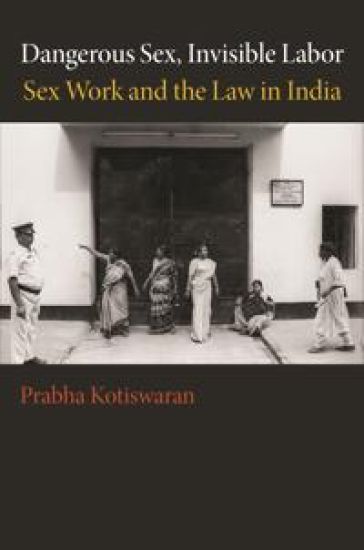
Dangerous Sex, Invisible Labor

Dangerous Sex, Invisible Labor

Prabha Kotiswaran

Princeton University Press
2011
pokkari
Popular representations of third-world sex workers as sex slaves and vectors of HIV have spawned abolitionist legal reforms that are harmful and ineffective, and public health initiatives that provide only marginal protection of sex workers' rights. In this book, Prabha Kotiswaran asks how we might understand sex workers' demands that they be treated as workers. She contemplates questions of redistribution through law within the sex industry by examining the political economies and legal ethnographies of two archetypical urban sex markets in India. Kotiswaran conducted in-depth fieldwork among sex workers in Sonagachi, Kolkata's largest red-light area, and Tirupati, a temple town in southern India. Providing new insights into the lives of these women--many of whom are demanding the respect and legal protection that other workers get--Kotiswaran builds a persuasive theoretical case for recognizing these women's sexual labor. Moving beyond standard feminist discourse on prostitution, she draws on a critical genealogy of materialist feminism for its sophisticated vocabulary of female reproductive and sexual labor, and uses a legal realist approach to show why criminalization cannot succeed amid the informal social networks and economic structures of sex markets. Based on this, Kotiswaran assesses the law's redistributive potential by analyzing the possible economic consequences of partial decriminalization, complete decriminalization, and legalization. She concludes with a theory of sex work from a postcolonial materialist feminist perspective.