Kirjojen hintavertailu. Mukana 12 390 323 kirjaa ja 12 kauppaa.

Kirjailija

Prudence M. Rice

Kirjat ja teokset yhdessä paikassa: 11 kirjaa, julkaisuja vuosilta 1987-2024, suosituimpien joukossa Domestic Architecture and Power. Vertaile teosten hintoja ja tarkista saatavuus suomalaisista kirjakaupoista.

11 kirjaa

Kirjojen julkaisuhaarukka 1987-2024.

Domestic Architecture and Power

Domestic Architecture and Power

Ross W. Jamieson; Prudence M. Rice

Kluwer Academic/Plenum Publishers
1999
sidottu
Historical archaeology, one of the fastest growing of archaeology’s sub fields in North America, has developed more slowly in Central and p- ticularly South America. Happily, this circumstance is ending as a gr- ing number of recent projects are successfully integrating textual and material culture data in studies of the events and processes of the last 500 years. This interval and this region–often called Ibero-America–have been studied for a century or more by historians with traditional perspectives and emphases focusing on colonial elites and large-scale politico-economic events. Such inclinations fit well into world-system and other core-peri- ery models that have had a major impact on historical thought since the 1970s. Over the past 20 years or so, however, world-system models have come under fire from historians, anthropologists, and others, in part because the emphasis on global trends and the growth of capitalism - nies the importance of understanding variability in local histories and circumstances. Historians have increasingly turned their attention to lo cal, rural, and domestic contexts, thereby illuminating the great diversity of responses to colonial domination that were played out in the vast arena of the Americas. It is not coincidental that this is the intellectual climate in which historical archaeology is establishing itself in Central and South America.
Space-Time Perspectives on Early Colonial Moquegua

Space-Time Perspectives on Early Colonial Moquegua

Prudence M. Rice

University Press of Colorado
2024
nidottu
In this rich study of the construction and reconstruction of a colonized landscape, Prudence M. Rice takes an implicit political ecology approach in exploring encounters of colonization in Moquegua, a small valley of southern Peru. Building on theories of spatiality, spatialization, and place, she examines how politically mediated human interaction transformed the physical landscape, the people who inhabited it, and the resources and goods produced in this poorly known area.Space-Time Perspectives on Early Colonial Moquegua looks at the encounters between existing populations and newcomers from successive waves of colonization, from indigenous expansion states (Wari, Tiwanaku, and Inka) to the foreign Spaniards, and the way each group “re-spatialized” the landscape according to its own political and economic ends. Viewing these spatializations from political, economic, and religious perspectives, Rice considers both the ideological and material occurrences. Concluding with a special focus on the multiple space-time considerations involved in Spanish-inspired ceramics from the region, Space-Time Perspectives on Early Colonial Moquegua integrates the local and rural with the global and urban in analyzing the events and processes of colonialism. It is a vital contribution to the literature of Andean studies and will appeal to students and scholars of archaeology, historical archaeology, history, ethnohistory, and globalization.
Revisiting McKeithen Weeden Island

Revisiting McKeithen Weeden Island

Prudence M. Rice

THE UNIVERSITY OF ALABAMA PRESS
2023
nidottu
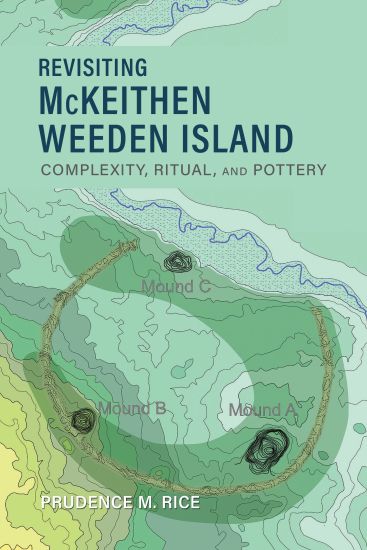
Reassesses the ancient Indigenous McKeithen site in northern Florida in light of new data, analyses, and theoriesRevisiting McKeithen Weeden Island further illuminates an Indigenous Late Woodland (ca. AD 200–900) mound-and-village community in northern Florida that was first excavated in the late 1970s. Since then, some artifacts received additional analyses, and the topic of prechiefdom societies has been broadly reconsidered in anthropology and archaeology. These developments allow new perspectives on McKeithen’s history and significance. Prudence M. Rice, a Mayanist who began her career at the University of Florida, revisits what is known about McKeithen and recontextualizes the 1970s excavations. Weeden Island and McKeithen are best known through mortuary mounds and mortuary ritual, mainly involving unusual pottery bird effigies. Rice discusses current theoretical trends in studies of ritual and belief systems and their relation to mound-building at McKeithen in early stages of developing societal complexity. Revisiting McKeithen Weeden Island serves as a masterful example of an esteemed archaeologist advancing the field through rethought and updated interpretations of the site and its significance, primarily through its pottery. Rice’s case study ultimately also fosters understanding of later Mississippian society and other civilizations around the world at this time period. Archaeologists, anthropologists, and social historians as well as students and avocational readers will welcome Rice’s insight.
Revisiting McKeithen Weeden Island

Revisiting McKeithen Weeden Island

Prudence M. Rice

THE UNIVERSITY OF ALABAMA PRESS
2023
sidottu
Reassesses the ancient Indigenous McKeithen site in northern Florida in light of new data, analyses, and theoriesRevisiting McKeithen Weeden Island further illuminates an Indigenous Late Woodland (ca. AD 200–900) mound-and-village community in northern Florida that was first excavated in the late 1970s. Since then, some artifacts received additional analyses, and the topic of prechiefdom societies has been broadly reconsidered in anthropology and archaeology. These developments allow new perspectives on McKeithen’s history and significance. Prudence M. Rice, a Mayanist who began her career at the University of Florida, revisits what is known about McKeithen and recontextualizes the 1970s excavations. Weeden Island and McKeithen are best known through mortuary mounds and mortuary ritual, mainly involving unusual pottery bird effigies. Rice discusses current theoretical trends in studies of ritual and belief systems and their relation to mound-building at McKeithen in early stages of developing societal complexity. Revisiting McKeithen Weeden Island serves as a masterful example of an esteemed archaeologist advancing the field through rethought and updated interpretations of the site and its significance, primarily through its pottery. Rice’s case study ultimately also fosters understanding of later Mississippian society and other civilizations around the world at this time period. Archaeologists, anthropologists, and social historians as well as students and avocational readers will welcome Rice’s insight.
Anthropomorphizing the Cosmos

Anthropomorphizing the Cosmos

Prudence M. Rice

University Press of Colorado
2019
sidottu
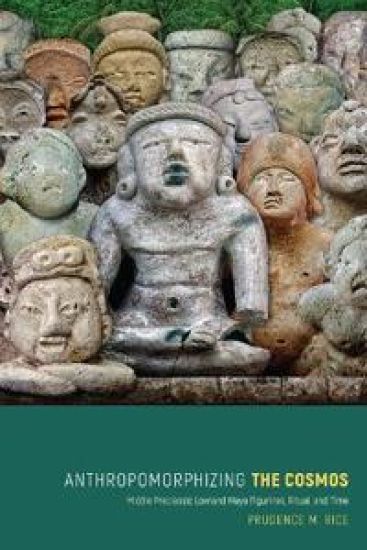
Anthropomorphizing the Cosmos explores the sociocultural significance of more than three hundred Middle Preclassic Maya figurines uncovered at the site of Nixtun-Ch'ich' on Lake Petén Itzá in northern Guatemala. In this careful, holistic, and detailed analysis of the Petén lakes figurines—hand-modeled, terracotta anthropomorphic fragments, animal figures, and musical instruments such as whistles and ocarinas—Prudence M. Rice engages with a broad swath of theory and comparative data on Maya ritual practice. Presenting original data, Anthropomorphizing the Cosmos offers insight into the synchronous appearance of fired-clay figurines with the emergence of societal complexity in and beyond Mesoamerica. Rice situates these Preclassic Maya figurines in the broader context of Mesoamerican human figural representation, identifies possible connections between anthropomorphic figurine heads and the origins of calendrics and other writing in Mesoamerica, and examines the role of anthropomorphic figurines and zoomorphic musical instruments in Preclassic Maya ritual. The volume shows how community rituals involving the figurines helped to mitigate the uncertainties of societal transitions, including the beginnings of settled agricultural life, the emergence of social differentiation and inequalities, and the centralization of political power and decision-making in the Petén lowlands. Literature on Maya ritual, cosmology, and specialized artifacts has traditionally focused on the Classic period, with little research centering on the very beginnings of Maya sociopolitical organization and ideological beliefs in the Middle Preclassic. Anthropomorphizing the Cosmos is a welcome contribution to the understanding of the earliest Maya and will be significant to Mayanists and Mesoamericanists as well as nonspecialists with interest in these early figurines
Pottery Analysis, Second Edition

Pottery Analysis, Second Edition

Prudence M. Rice

University of Chicago Press
2015
nidottu
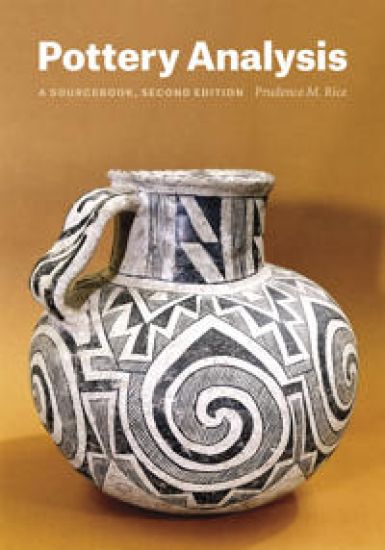
Just as a single pot starts with a lump of clay, the study of a piece's history must start with an understanding of its raw materials. This principle is the foundation of Pottery Analysis, the acclaimed sourcebook that has become the indispensable guide for archaeologists and anthropologists worldwide. This new edition fully incorporates more than two decades of growth and diversification in the fields of archaeological and ethnographic study of pottery. It begins with a summary of the origins and history of pottery in different parts of the world, then examines the raw materials of pottery and their physical and chemical properties. It addresses ethnographic and ethnoarchaeological perspectives on pottery production; reviews the methods of studying pottery's physical, mechanical, thermal, mineralogical, and chemical properties; and discusses how proper analysis of artifacts can reveal insights into their culture of origin.
Domestic Architecture and Power

Domestic Architecture and Power

Ross W. Jamieson; Prudence M. Rice

Springer-Verlag New York Inc.
2013
nidottu
Historical archaeology, one of the fastest growing of archaeology’s sub fields in North America, has developed more slowly in Central and p- ticularly South America. Happily, this circumstance is ending as a gr- ing number of recent projects are successfully integrating textual and material culture data in studies of the events and processes of the last 500 years. This interval and this region–often called Ibero-America–have been studied for a century or more by historians with traditional perspectives and emphases focusing on colonial elites and large-scale politico-economic events. Such inclinations fit well into world-system and other core-peri- ery models that have had a major impact on historical thought since the 1970s. Over the past 20 years or so, however, world-system models have come under fire from historians, anthropologists, and others, in part because the emphasis on global trends and the growth of capitalism - nies the importance of understanding variability in local histories and circumstances. Historians have increasingly turned their attention to lo cal, rural, and domestic contexts, thereby illuminating the great diversity of responses to colonial domination that were played out in the vast arena of the Americas. It is not coincidental that this is the intellectual climate in which historical archaeology is establishing itself in Central and South America.
Vintage Moquegua

Vintage Moquegua

Prudence M. Rice

University of Texas Press
2011
nidottu
The microhistory of the wine industry in colonial Moquegua, Peru, during the colonial period stretches from the sixteenth through nineteenth centuries, yielding a wealth of information about a broad range of fields, including early modern industry and labor, viniculture practices, the cultural symbolism of alcohol consumption, and the social history of an indigenous population. Uniting these perspectives, Vintage Moquegua draws on a trove of field research from more than 130 wineries in the Moquegua Valley.As Prudence Rice walked the remnants of wine haciendas and interviewed Peruvians about preservation, she saw that numerous colonial structures were being razed for development, making her documentary work all the more crucial. Lying far from imperial centers in pre-Hispanic and colonial times, the area was a nearly forgotten administrative periphery on an agricultural frontier. Spain was unable to supply the Peruvian viceroyalty with sufficient wine for religious and secular purposes, leading colonists to import and plant grapevines. The viniculture that flourished produced millions of liters, most of it distilled into pisco brandy. Summarizing archaeological data and interpreting it through a variety of frameworks, Rice has created a three-hundred-year story that speaks to a lost world and its inhabitants.
Maya Calendar Origins

Maya Calendar Origins

Prudence M. Rice

University of Texas Press
2007
pokkari
In Maya Political Science: Time, Astronomy, and the Cosmos, Prudence M. Rice proposed a new model of Maya political organization in which geopolitical seats of power rotated according to a 256-year calendar cycle known as the May. This fundamental connection between timekeeping and Maya political organization sparked Rice's interest in the origins of the two major calendars used by the ancient lowland Maya, one 260 days long, and the other having 365 days. In Maya Calendar Origins, she presents a provocative new thesis about the origins and development of the calendrical system.Integrating data from anthropology, archaeology, art history, astronomy, ethnohistory, myth, and linguistics, Rice argues that the Maya calendars developed about a millennium earlier than commonly thought, around 1200 BC, as an outgrowth of observations of the natural phenomena that scheduled the movements of late Archaic hunter-gatherer-collectors throughout what became Mesoamerica. She asserts that an understanding of the cycles of weather and celestial movements became the basis of power for early rulers, who could thereby claim "control" over supernatural cosmic forces. Rice shows how time became materialized-transformed into status objects such as monuments that encoded calendrical or temporal concerns-as well as politicized, becoming the foundation for societal order, political legitimization, and wealth. Rice's research also sheds new light on the origins of the Popol Vuh, which, Rice believes, encodes the history of the development of the Mesoamerican calendars. She also explores the connections between the Maya and early Olmec and Izapan cultures in the Isthmian region, who shared with the Maya the cosmovision and ideology incorporated into the calendrical systems.
Maya Political Science

Maya Political Science

Prudence M. Rice

University of Texas Press
2004
pokkari
How did the ancient Maya rule their world? Despite more than a century of archaeological investigation and glyphic decipherment, the nature of Maya political organization and political geography has remained an open question. Many debates have raged over models of centralization versus decentralization, superordinate and subordinate status-with far-flung analogies to emerging states in Europe, Asia, and Africa. But Prudence Rice asserts that neither the model of two giant "superpowers" nor that which postulates scores of small, weakly independent polities fits the accumulating body of material and cultural evidence.In this groundbreaking book, Rice builds a new model of Classic lowland Maya (AD 179-948) political organization and political geography. Using the method of direct historical analogy, she integrates ethnohistoric and ethnographic knowledge of the Colonial-period and modern Maya with archaeological, epigraphic, and iconographic data from the ancient Maya. On this basis of cultural continuity, she constructs a convincing case that the fundamental ordering principles of Classic Maya geopolitical organization were the calendar (specifically a 256-year cycle of time known as the may) and the concept of quadripartition, or the division of the cosmos into four cardinal directions. Rice also examines this new model of geopolitical organization in the Preclassic and Postclassic periods and demonstrates that it offers fresh insights into the nature of rulership, ballgame ritual, and warfare among the Classic lowland Maya.
Macanche Island, El Peten, Guatemala

Macanche Island, El Peten, Guatemala

Prudence M. Rice

University Press of Florida
1987
sidottu
"This work makes a solid contribution to our understanding of a poorly known era in cenral lowland Maya prehistory.... It also provides stratigraphic evidence for phasing the subdivisions of the Postclassic era, offering important support for a detailed chronology of this era in the central lowlands--an unresolved and disputed issue until now." -- Robert J. Sharer, University of Pennsylvania "Rice has written the best and most comprehensive study of Postclassic pottery from the southern Maya lowlands. We have precious few windows into the panorama of late Maya history in the Peten, and the ceramics, although they can never tell us all we wish to know, give us some of the most detailed information we are ever likely to have on the centuries after the southern Maya collapse" -- E. Wyllys Andrews V, Tulane University In reconsidering the transition from the Classic to the Postclassic period of Maya civilization in the Department of Peten, Guatemala, Prudence Rice challenges traditional concepts of demographic collapse in the southern lowlands. Using painstaking reconstructions of research by William Bullard and her own work, Rice argues that the rural outpost of Macanache Island in Peten continued to support a population during and long after the Classic Maya collapse, and she uses stratigraphic and ceramic evidence to illuminate the transition. Rice places the rural outpost of Macanche Island within the larger geographical context of the Yucatan peninsula during the Postclassic period. She weaves together analyses of the artifacts, largely ceramics, of Bullard's 1968 excavation with the artifacts found in later excavations focused on the Peten lake basins. Typological descriptions of the pottery are supplemented by analyses of function, slip, and paste and by discussions of locally manufactured and imported material. This important book on a little-known era and site of Maya culture enables us to reconstruct and understand the role of rural outposts of a powerful civilization during a time of economic and political chaos. It greatly advances our understanding of the minutiae of change as well as the larger patten that they form. Prudence M. Rice is Associate Vice Chancellor for Research at Southern Illinois University