Kirjojen hintavertailu. Mukana 12 595 353 kirjaa ja 12 kauppaa.

Kirjailija

Pwyll ap Siôn

Kirjat ja teokset yhdessä paikassa: 5 kirjaa, julkaisuja vuosilta 2007-2016, suosituimpien joukossa Eduqas as and a Level Music Study Guide. Vertaile teosten hintoja ja tarkista saatavuus suomalaisista kirjakaupoista.

Mukana myös kirjoitusasut: Pwyll Ap Sion

5 kirjaa

Kirjojen julkaisuhaarukka 2007-2016.

Eduqas as and a Level Music Study Guide

Eduqas as and a Level Music Study Guide

Pwyll Ap Sion; Adrian Colborne; Paula Gardiner; Tom Pankhurst; Eric Phillips; Jan Richards

Rhinegold Education
2016
nidottu
A definitive study guide for the AS and A Level syllabuses. This comprehensive guide: * covers all three components of both levels * offers tips for performing and composing * has a detailed chapter on each Area of Study, followed by sample exam papers * contains an extensive glossary of technical terms
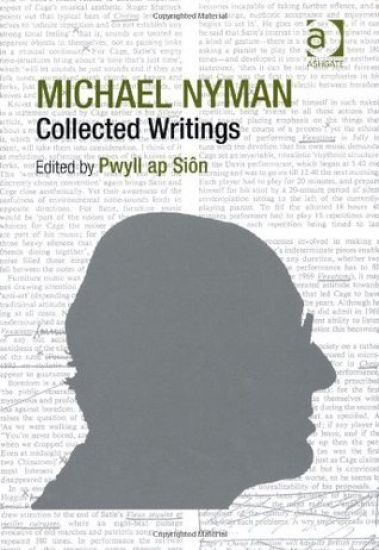
Michael Nyman: Collected Writings

Michael Nyman: Collected Writings

Pwyll ap Siôn

Ashgate Publishing Limited
2013
sidottu
For over three decades Michael Nyman's music has succeeded in reaching beyond the small community of contemporary music aficionados to a much wider range of listeners. An important element in unlocking the key to Nyman's success lies in his writings about music, which preoccupied him for over a decade from the late 1960s to the early 1980s. During this time Nyman produced over 100 articles, covering almost every conceivable musical style and genre - from the Early Music revival and the West's interest in 'world' music, or from John Cage and minimalism to rock and pop. Nyman initiated a number of landmark moments in the course of late twentieth-century music along the way: he was one of the first to critique the distinction between the European avant-garde and the American experimental movement; he was the first to coin the term 'minimalism' in relation to the music of (then largely unknown) Steve Reich and Terry Riley, and later Philip Glass; the first to seriously engage with the music of the English experimental tradition and the importance of Cornelius Cardew, and to identify the importance of Art Colleges in nurturing and developing a radical alternative to modernism; and one of the first writers to grasp the significance of post-minimalists such as Brian Eno and Harold Budd, and to realize how these elements could be brought together into a new aesthetic vision for his own creative endeavours, which was formulated during the late 1970s and early 80s. Much of what transformed and defined Nyman's musical character may be found within the pages of this volume of his writings, comprehensively edited and annotated for the first time, and including previously unpublished material from Nyman's second interview with Steve Reich in 1976. There is also much here to engage the minds of those who are interested in pre-twentieth century music, from Early and Baroque music (Handel and Purcell in particular) to innovative features in Haydn, spatial elements in Berlioz, or Bruckner and Mahler's symphonic works.
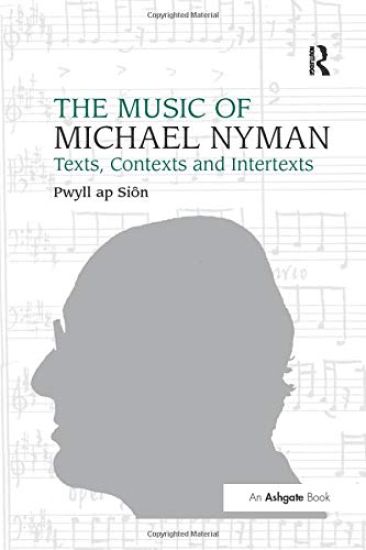
The Music of Michael Nyman

The Music of Michael Nyman

Pwyll ap Siôn

Routledge
2016
nidottu
Nyman's rise to international prominence during the last three decades has made him one of the world's most successful living composers. His music has nevertheless been criticized for its parasitic borrowing of other composers' ideas and for its relentless self-borrowing. In this first book-length study in English, Pwyll ap Siôn places Nyman's writings within the general context of Anglo-American experimentalism, minimalism and post-minimalism, and provides a series of useful contexts from which controversial aspects of Nyman's musical language can be more clearly understood and appreciated. Drawing upon terms informed by intertextual theory in general, appropriation and borrowing are first introduced within the context of twentieth-century art music and theory. Intertextual concepts are explained and their terms defined before Nyman's musical language is considered in relation to a series of intertextual classifications and types. These types then form the basis of a more in-depth study of his works during the second half of the book, ranging from opera and chamber music to film. Rather than restricting style and technique, Nyman's intertextual approach, on the contrary, is shown to provide his music with an almost infinite amount of variety, flexibility and diversity, and this has been used to illustrate a wide range of technical, aesthetic and expressive forms. He composes with his ear towards the past as if it were a rich quarry to mine, working like a musical archaeologist, uncovering artefacts and chiselling fresh and vibrant sonic edifices out of them.
Michael Nyman: Collected Writings

Michael Nyman: Collected Writings

Pwyll ap Siôn

Routledge
2016
nidottu
For over three decades Michael Nyman's music has succeeded in reaching beyond the small community of contemporary music aficionados to a much wider range of listeners. An important element in unlocking the key to Nyman's success lies in his writings about music, which preoccupied him for over a decade from the late 1960s to the early 1980s. During this time Nyman produced over 100 articles, covering almost every conceivable musical style and genre - from the Early Music revival and the West's interest in 'world' music, or from John Cage and minimalism to rock and pop. Nyman initiated a number of landmark moments in the course of late twentieth-century music along the way: he was one of the first to critique the distinction between the European avant-garde and the American experimental movement; he was the first to coin the term 'minimalism' in relation to the music of (then largely unknown) Steve Reich and Terry Riley, and later Philip Glass; the first to seriously engage with the music of the English experimental tradition and the importance of Cornelius Cardew, and to identify the importance of Art Colleges in nurturing and developing a radical alternative to modernism; and one of the first writers to grasp the significance of post-minimalists such as Brian Eno and Harold Budd, and to realize how these elements could be brought together into a new aesthetic vision for his own creative endeavours, which was formulated during the late 1970s and early 80s. Much of what transformed and defined Nyman's musical character may be found within the pages of this volume of his writings, comprehensively edited and annotated for the first time, and including previously unpublished material from Nyman's second interview with Steve Reich in 1976. There is also much here to engage the minds of those who are interested in pre-twentieth century music, from Early and Baroque music (Handel and Purcell in particular) to innovative features in Haydn, spatial elements in Berlioz, or Bruckner and Mahler's symphonic works.
The Music of Michael Nyman

The Music of Michael Nyman

Pwyll ap Siôn

Ashgate Publishing Limited
2007
sidottu
Nyman's rise to international prominence during the last three decades has made him one of the world's most successful living composers. His music has nevertheless been criticized for its parasitic borrowing of other composers' ideas and for its relentless self-borrowing. In this first book-length study in English, Pwyll ap Siôn places Nyman's writings within the general context of Anglo-American experimentalism, minimalism and post-minimalism, and provides a series of useful contexts from which controversial aspects of Nyman's musical language can be more clearly understood and appreciated. Drawing upon terms informed by intertextual theory in general, appropriation and borrowing are first introduced within the context of twentieth-century art music and theory. Intertextual concepts are explained and their terms defined before Nyman's musical language is considered in relation to a series of intertextual classifications and types. These types then form the basis of a more in-depth study of his works during the second half of the book, ranging from opera and chamber music to film. Rather than restricting style and technique, Nyman's intertextual approach, on the contrary, is shown to provide his music with an almost infinite amount of variety, flexibility and diversity, and this has been used to illustrate a wide range of technical, aesthetic and expressive forms. He composes with his ear towards the past as if it were a rich quarry to mine, working like a musical archaeologist, uncovering artefacts and chiselling fresh and vibrant sonic edifices out of them.