Kirjojen hintavertailu. Mukana 12 390 323 kirjaa ja 12 kauppaa.

Kirjailija

Qiao Liu

Kirjat ja teokset yhdessä paikassa: 4 kirjaa, julkaisuja vuosilta 2013-2016, suosituimpien joukossa Finance in Asia. Vertaile teosten hintoja ja tarkista saatavuus suomalaisista kirjakaupoista.

4 kirjaa

Kirjojen julkaisuhaarukka 2013-2016.

Corporate China 2.0

Corporate China 2.0

Qiao Liu

Palgrave Macmillan
2016
sidottu
This book argues that that the rise of great firms - those with sustainable high return on invested capital (ROIC) - will lay the foundation for China’s successful economic transformation. Drawn from the author’s research on corporate finance and the Chinese economy, the author maintains that being big could be easy but means little for corporate China, especially in the context of China’s transition from an investment-led economy to an efficiency-driven one. The work discusses both internal and external impediments that lead to lack of great companies in China and suggests institutional conditions which foster the rise of great companies in China, including, reversing the government’s obsession with GDP, reforming the financial system, and promoting entrepreneurship. Policy makers, investors, corporate executives, and MBA students and scholars will appreciate case studies of Huawei, Alibaba, Xiaomi, and Lenovo, among others, that illustrate the endeavors made by Chinese entrepreneurs at the grassroots level and highlight what makes successful companies in China.

Corporate China 2.0

Corporate China 2.0

Qiao Liu

Palgrave Macmillan
2016
nidottu
This book argues that that the rise of great firms - those with sustainable high return on invested capital (ROIC) - will lay the foundation for China’s successful economic transformation. Drawn from the author’s research on corporate finance and the Chinese economy, the author maintains that being big could be easy but means little for corporate China, especially in the context of China’s transition from an investment-led economy to an efficiency-driven one. The work discusses both internal and external impediments that lead to lack of great companies in China and suggests institutional conditions which foster the rise of great companies in China, including, reversing the government’s obsession with GDP, reforming the financial system, and promoting entrepreneurship. Policy makers, investors, corporate executives, and MBA students and scholars will appreciate case studies of Huawei, Alibaba, Xiaomi, and Lenovo, among others, that illustrate the endeavors made by Chinese entrepreneurs at the grassroots level and highlight what makes successful companies in China.
Finance in Asia

Finance in Asia

Qiao Liu; Paul Lejot; Douglas W. Arner

Routledge
2013
sidottu
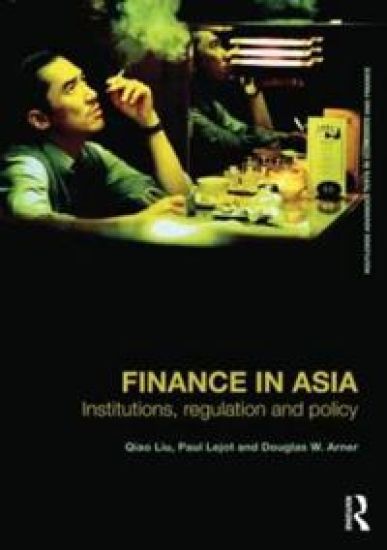
Asia’s demand for second-generation financial institutions and markets needs to be met in order for the region’s further development to be sustained. This book provides a compelling, fact-based assessment of current practices and regulations in Asia’s financial institutions and markets and carefully documents the exciting opportunities and challenges that lie ahead in the region’s financial systems. This book differs in design from typical treatments of financial institutions and markets because its focus is on Asia rather than using the US model (in terms of market configurations or products) as a benchmark, and its takes a contemporary and forward-looking view of financial markets. Examples of practice from Asia are used to illustrate major accepted themes in finance and financial regulation. To the extent that Asia’s main economies share characteristics that are distinct, for example, in the relationship between government and the banking sector, or in aspects of corporate governance, the book will discuss the consequences for market operation and intermediation. The book’s carefully structured facts and rigorously argued analysis carry important implications both for students in business and law and for professionals new to financial markets in Asia. It will change the way that Asian financial markets and institutions is taught in universities as well as provide a valuable resource for professionals working in finance in Asia.
Finance in Asia

Finance in Asia

Qiao Liu; Paul Lejot; Douglas W. Arner

Routledge
2013
nidottu
Asia’s demand for second-generation financial institutions and markets needs to be met in order for the region’s further development to be sustained. This book provides a compelling, fact-based assessment of current practices and regulations in Asia’s financial institutions and markets and carefully documents the exciting opportunities and challenges that lie ahead in the region’s financial systems. This book differs in design from typical treatments of financial institutions and markets because its focus is on Asia rather than using the US model (in terms of market configurations or products) as a benchmark, and its takes a contemporary and forward-looking view of financial markets. Examples of practice from Asia are used to illustrate major accepted themes in finance and financial regulation. To the extent that Asia’s main economies share characteristics that are distinct, for example, in the relationship between government and the banking sector, or in aspects of corporate governance, the book will discuss the consequences for market operation and intermediation. The book’s carefully structured facts and rigorously argued analysis carry important implications both for students in business and law and for professionals new to financial markets in Asia. It will change the way that Asian financial markets and institutions is taught in universities as well as provide a valuable resource for professionals working in finance in Asia.