Kirjojen hintavertailu. Mukana 12 595 353 kirjaa ja 12 kauppaa.

Kirjailija

Qing Zhang

Kirjat ja teokset yhdessä paikassa: 18 kirjaa, julkaisuja vuosilta 1994-2026, suosituimpien joukossa Hierarchical Decision Making in Stochastic Manufacturing Systems. Vertaile teosten hintoja ja tarkista saatavuus suomalaisista kirjakaupoista.

18 kirjaa

Kirjojen julkaisuhaarukka 1994-2026.

High-Performance Computing on the Intel® Xeon Phi™

High-Performance Computing on the Intel® Xeon Phi™

Endong Wang; Qing Zhang; Bo Shen; Guangyong Zhang; Xiaowei Lu; Qing Wu; Yajuan Wang

Springer International Publishing AG
2016
nidottu
The aim of this book is to explain to high-performance computing (HPC) developers how to utilize the Intel® Xeon Phi™ series products efficiently. To that end, it introduces some computing grammar, programming technology and optimization methods for using many-integrated-core (MIC) platforms and also offers tips and tricks for actual use, based on the authors’ first-hand optimization experience.The material is organized in three sections. The first section, “Basics of MIC”, introduces the fundamentals of MIC architecture and programming, including the specific Intel MIC programming environment. Next, the section on “Performance Optimization” explains general MIC optimization techniques, which are then illustrated step-by-step using the classical parallel programming example of matrix multiplication. Finally, “Project development” presents a set of practical and experience-driven methods for using parallel computing in application projects, including how to determine if a serial or parallel CPU program is suitable for MIC and how to transplant a program onto MIC.This book appeals to two main audiences: First, software developers for HPC applications – it will enable them to fully exploit the MIC architecture and thus achieve the extreme performance usually required in biological genetics, medical imaging, aerospace, meteorology and other areas of HPC. Second, students and researchers engaged in parallel and high-performance computing – it will guide them on how to push the limits of system performance for HPC applications.

High-Performance Computing on the Intel® Xeon Phi™

High-Performance Computing on the Intel® Xeon Phi™

Endong Wang; Qing Zhang; Bo Shen; Guangyong Zhang; Xiaowei Lu; Qing Wu; Yajuan Wang

Springer International Publishing AG
2014
sidottu
The aim of this book is to explain to high-performance computing (HPC) developers how to utilize the Intel® Xeon Phi™ series products efficiently. To that end, it introduces some computing grammar, programming technology and optimization methods for using many-integrated-core (MIC) platforms and also offers tips and tricks for actual use, based on the authors’ first-hand optimization experience.The material is organized in three sections. The first section, “Basics of MIC”, introduces the fundamentals of MIC architecture and programming, including the specific Intel MIC programming environment. Next, the section on “Performance Optimization” explains general MIC optimization techniques, which are then illustrated step-by-step using the classical parallel programming example of matrix multiplication. Finally, “Project development” presents a set of practical and experience-driven methods for using parallel computing in application projects, including how to determine if a serial or parallel CPU program is suitable for MIC and how to transplant a program onto MIC.This book appeals to two main audiences: First, software developers for HPC applications – it will enable them to fully exploit the MIC architecture and thus achieve the extreme performance usually required in biological genetics, medical imaging, aerospace, meteorology and other areas of HPC. Second, students and researchers engaged in parallel and high-performance computing – it will guide them on how to push the limits of system performance for HPC applications.
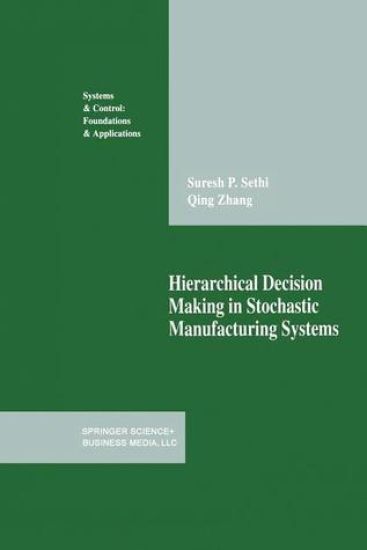
Hierarchical Decision Making in Stochastic Manufacturing Systems

Hierarchical Decision Making in Stochastic Manufacturing Systems

Suresh P. Sethi; Qing Zhang

Springer-Verlag New York Inc.
2012
nidottu
One of the most important methods in dealing with the optimization of large, complex systems is that of hierarchical decomposition. The idea is to reduce the overall complex problem into manageable approximate problems or subproblems, to solve these problems, and to construct a solution of the original problem from the solutions of these simpler prob­ lems. Development of such approaches for large complex systems has been identified as a particularly fruitful area by the Committee on the Next Decade in Operations Research (1988) [42] as well as by the Panel on Future Directions in Control Theory (1988) [65]. Most manufacturing firms are complex systems characterized by sev­ eral decision subsystems, such as finance, personnel, marketing, and op­ erations. They may have several plants and warehouses and a wide variety of machines and equipment devoted to producing a large number of different products. Moreover, they are subject to deterministic as well as stochastic discrete events, such as purchasing new equipment, hiring and layoff of personnel, and machine setups, failures, and repairs.
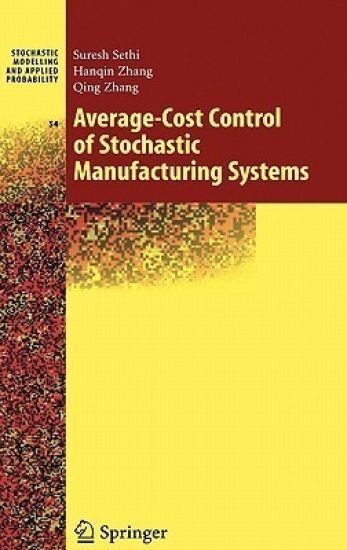
Average-Cost Control of Stochastic Manufacturing Systems

Average-Cost Control of Stochastic Manufacturing Systems

Suresh P. Sethi; Han-Qin Zhang; Qing Zhang

Springer-Verlag New York Inc.
2010
nidottu
Most manufacturing systems are large, complex, and operate in an environment of uncertainty. It is common practice to manage such systems in a hierarchical fashion. This book articulates a new theory that shows that hierarchical decision making can in fact lead to a near optimization of system goals. The material in the book cuts across disciplines. It will appeal to graduate students and researchers in applied mathematics, operations management, operations research, and system and control theory.
Average-Cost Control of Stochastic Manufacturing Systems

Average-Cost Control of Stochastic Manufacturing Systems

Suresh P. Sethi; Han-Qin Zhang; Qing Zhang

Springer-Verlag New York Inc.
2005
sidottu
Most manufacturing systems are large, complex, and operate in an environment of uncertainty. It is common practice to manage such systems in a hierarchical fashion. This book articulates a new theory that shows that hierarchical decision making can in fact lead to a near optimization of system goals. The material in the book cuts across disciplines. It will appeal to graduate students and researchers in applied mathematics, operations management, operations research, and system and control theory.
Advanced Strategies For Infertility Treatment: Acupuncture And Traditional Chinese Medicine In Modern Reproductive Medicine
This book has taken the reader on a journey from foundational theories to clinical applications, from integrative perspectives in assisted reproductive technology (ART) to practical tools and standardized resources. It transforms complex concepts and strategies into actionable guidance that clinicians and patients alike can apply. The overall structure reflects a progressive path: theory ? practice ? integration ? application.The future of reproductive medicine will inevitably move toward personalization, precision, and integration. Emerging technologies — artificial intelligence, big data, genetics, and systems biology — will deepen our understanding of infertility and treatment responses. In this process, integrating TCM and Western medicine is not only a medical necessity but also an opportunity for cultural dialogue and academic innovation.
On Western Influences and the Transformation of Chinese Academic Thought
This book analyses the growth of disciplinary knowledge in modern China through Sino-foreign cultural exchange. It examines Western influences and the transformation of Chinese academic thought through "modern scientific disciplines" rather than mere westernization based on the "nationality" of knowledge. Historically, this transformation is not the unidirectional "eastward dissemination of Western learning," but the "introduction of West learning into China" with more active participation and choice by Chinese scholars. This understanding of the historical process focuses more on the innovation of the medium of knowledge, emphasizing the material and technological background of the dissemination of Western learning.
Patterns in the State of Chu

Patterns in the State of Chu

Qing Zhang

Royal Collins Publishing Company
2024
sidottu
Patterns in the State of Chu is a comprehensive and engaging exploration of the patterns found on artifacts from China's ancient Chu State. This book takes a design-focused approach to examine the stylistic features and evolution of various Chu patterns during the Eastern Zhou period, highlighting the cultural and symbolic significance of these patterns. In addition, the book analyzes the decorative features and visual effects of each type of pattern found in Chu artifacts while also exploring their design concepts and aesthetic significance. Through careful study of archaeological objects and literature, the book paints a vivid picture of the rich artistic heritage of ancient China. Moreover, the book also delves into the relationship between Chu patterns and the patterns of minority groups in some remote areas of southern China during the Qin and Han periods. It also showcases the application of Chu patterns in modern design, offering insights that can inspire contemporary designers. With stunning illustrations and an accessible writing style, it is an essential resource for anyone interested in ancient Chinese culture, design, or art history.
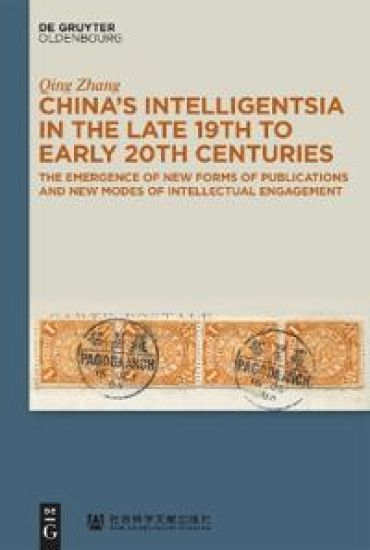
China’s Intelligentsia in the Late 19th to Early 20th Centuries
Intelligentsia has been a widely used term in the studies of history and society to describe intellectual, academic, educational and publishing circles. Zhang Qing analyses the formation of Chinese intelligentsia in the context of modern China, more specifically the late Qing dynasty and Republic of China, and addresses topics such as the expansion of newspaper distributions, the relationship between newspapers and academia, the impact of newspapers on society, the change of readers’ expressions and scholars’ social mobility. The emergence of the intelligentsia and other circles in the early twentieth century is an epitome of the drastic changes in Chinese society at the time, indicative both of a new state-society relation and of Chinese scholars’ efforts to find new roles and identities for themselves after bidding farewell to imperial examinations. The author shows how both the emergence of new-type publications and new roles in academia had a profound influence on modern China. The formation of the intelligentsia at the turn of the twentieth century was not only a key to grasping modern Chinese history, but also a mirror for examining the future society.
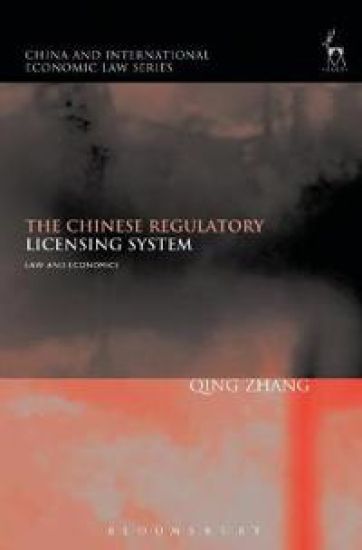
The Chinese Regulatory Licensing System
Although business people often regard licensing requirements as a major obstacle to investment and new ventures, the development of a well-designed regulatory licensing system is also widely believed to promote social welfare. This book explores the existing regulatory licensing systems in China, particularly those typically affected by the rising of the sharing economy, and critically appraises them using a law-and-economics approach. The first part presents a general description of Chinese regulatory licensing systems. Secondly, the book discusses the design and evaluation of regulatory licensing systems by applying law-and-economics theories to three major issues: the use of licensing as a means of regulation and as opposed to other means of regulation; the setting up of standards imposed through regulatory licensing systems; and the arrangement of procedures adopted for regulatory licensing systems. Thirdly, on the basis of the above theoretical framework, this book develops a critical evaluation of current Chinese regulatory licensing systems from the aforementioned three issues. In particular, it looks at licensing regimes for three sectors: lawyers, taxis and pharmaceutical products in China. The book will be of great interest to scholars, practitioners and policymakers.
Practical Digital Design: Using SystemVerilog and FPGA

Practical Digital Design: Using SystemVerilog and FPGA

Qing Zhang

Createspace Independent Publishing Platform
2018
nidottu
SystemVerilog provides abundant features that could overwhelm a SystemVerilog beginner. Fortunately, for a decent RTL design, only a small subset of SystemVerilog is needed. The purpose of this book is to carefully choose the right subset of SystemVerilog so that the digital designer can comfortably start their SystemVerilog design project. In this book, FPGA application is chosen not only for its easy and quick practice but also for its wider adoption. SystemVerilog examples will be deployed broadly throughout this book for reference. For those who want to learn HDL design, this book will help them ramp up their HDL design skill quickly while avoiding the pitfalls. For those who have experience in Verilog but want to advance their knowledge to SystemVerilog, this book can be a good reference. For the VHDL designers who want to explore the features in SystemVerilog, this book can serve as a bridge since it is written in a way that the common and different concepts between VHDL and SystemVerilog are emphasized. The following are the specialties of this book: 1. It provides a carefully chosen subset of SystemVerilog language for FPGA design.2. It provides a great number of examples for easier learning and practice.3. It shows using SystemVerilog as an efficient way for a productive verification. This book is organized as follows: Chapter 1 first briefly describes the HDL digital design methodology. Then it describes SystemVerilog language and its syntax. Chapter 2 shows how to use SystemVerilog to describe the basic digital gates and digital hardware circuits as well as to model their behavior. It explains SytemVerilog modelling constructs: modules, procedures, interfaces, functions and packages. This chapter also covers advanced topics such as compiler directives, digital arithmetic operation and design optimization. Chapter 3 introduces the synchronous sequential digital design. It gives some example designs such as flip-flop registers, shift registers, counters and adders. The design of finite-state machine (FSM) is discussed in depth for control circuit in digital systems. The algorithmic state machine (ASM) with data path is described for data-processing digital system. It also addresses other advanced topics of timing analysis, design performance and clock-domain crossing Chapter 4 focuses on the functional simulation of digital design. It describes the general construction of test bench using SystemVerilog. It introduces the initial procedure for pre-simulation initialization, the final procedure for post-simulation processing and the task procedure for repetitive operations. It explains how to control the simulation proceeding with procedure timing control. It presents some useful system functions and tasks for math functions, file I/O and etc.. Chapter 5 addresses the FPGA design methodology. The topics covers design flow, design environment, intellectual property (IP) core usage, simulation and constraints. The FPGA design for system-on-chip (SOC) is emphasized as this type of FPGA becomes popular. The FPGA configuration options are discussed. Last but not least, it introduces helpful FPGA design practices for a successful design.
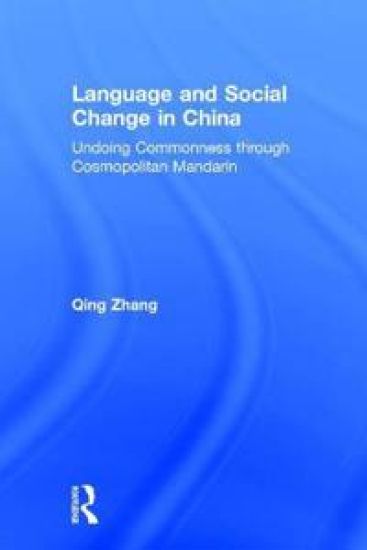
Language and Social Change in China
Language and Social Change in China: Undoing Commonness through Cosmopolitan Mandarin offers an innovative and authoritative account of the crucial role of language in shaping the sociocultural landscape of contemporary China. Based on a wide range of data collected since the 1990s and grounded in quantitative and discourse analyses of sociolinguistic variation, Qing Zhang tracks the emergence of what she terms “Cosmopolitan Mandarin” as a new stylistic resource for a rising urban elite and a new middle-class consumption-based lifestyle. The book powerfully illuminates that Cosmopolitan Mandarin participates in dismantling the pre-reform, socialist, conformist society by bringing about new social distinctions. Rich in cultural and linguistic details, the book is the first of its kind to highlight the implications of language change on the social order and cultural life of contemporary China. Language and Social Change in China is ideal for students and scholars interested in sociolinguistics and linguistic anthropology, and Chinese language and society.
Language and Social Change in China
Language and Social Change in China: Undoing Commonness through Cosmopolitan Mandarin offers an innovative and authoritative account of the crucial role of language in shaping the sociocultural landscape of contemporary China. Based on a wide range of data collected since the 1990s and grounded in quantitative and discourse analyses of sociolinguistic variation, Qing Zhang tracks the emergence of what she terms “Cosmopolitan Mandarin” as a new stylistic resource for a rising urban elite and a new middle-class consumption-based lifestyle. The book powerfully illuminates that Cosmopolitan Mandarin participates in dismantling the pre-reform, socialist, conformist society by bringing about new social distinctions. Rich in cultural and linguistic details, the book is the first of its kind to highlight the implications of language change on the social order and cultural life of contemporary China. Language and Social Change in China is ideal for students and scholars interested in sociolinguistics and linguistic anthropology, and Chinese language and society.
Continuous-Time Markov Chains and Applications

Continuous-Time Markov Chains and Applications

G. George Yin; Qing Zhang

Springer-Verlag New York Inc.
2014
nidottu
This book gives a systematic treatment of singularly perturbed systems that naturally arise in control and optimization, queueing networks, manufacturing systems, and financial engineering. It presents results on asymptotic expansions of solutions of Komogorov forward and backward equations, properties of functional occupation measures, exponential upper bounds, and functional limit results for Markov chains with weak and strong interactions. To bridge the gap between theory and applications, a large portion of the book is devoted to applications in controlled dynamic systems, production planning, and numerical methods for controlled Markovian systems with large-scale and complex structures in the real-world problems. This second edition has been updated throughout and includes two new chapters on asymptotic expansions of solutions for backward equations and hybrid LQG problems. The chapters on analytic and probabilistic properties of two-time-scale Markov chains have been almost completely rewritten and the notation has been streamlined and simplified. This book is written for applied mathematicians, engineers, operations researchers, and applied scientists. Selected material from the book can also be used for a one semester advanced graduate-level course in applied probability and stochastic processes.
Continuous-Time Markov Chains and Applications

Continuous-Time Markov Chains and Applications

G. George Yin; Qing Zhang

Springer-Verlag New York Inc.
2012
sidottu
This book gives a systematic treatment of singularly perturbed systems that naturally arise in control and optimization, queueing networks, manufacturing systems, and financial engineering. It presents results on asymptotic expansions of solutions of Komogorov forward and backward equations, properties of functional occupation measures, exponential upper bounds, and functional limit results for Markov chains with weak and strong interactions. To bridge the gap between theory and applications, a large portion of the book is devoted to applications in controlled dynamic systems, production planning, and numerical methods for controlled Markovian systems with large-scale and complex structures in the real-world problems. This second edition has been updated throughout and includes two new chapters on asymptotic expansions of solutions for backward equations and hybrid LQG problems. The chapters on analytic and probabilistic properties of two-time-scale Markov chains have been almost completely rewritten and the notation has been streamlined and simplified. This book is written for applied mathematicians, engineers, operations researchers, and applied scientists. Selected material from the book can also be used for a one semester advanced graduate-level course in applied probability and stochastic processes.
Discrete-Time Markov Chains

Discrete-Time Markov Chains

G. George Yin; Qing Zhang

Springer-Verlag New York Inc.
2010
nidottu
This book focuses on two-time-scale Markov chains in discrete time. Our motivation stems from existing and emerging applications in optimization and control of complex systems in manufacturing, wireless communication, and ?nancial engineering. Much of our e?ort in this book is devoted to designing system models arising from various applications, analyzing them via analytic and probabilistic techniques, and developing feasible compu- tionalschemes. Ourmainconcernistoreducetheinherentsystemcompl- ity. Although each of the applications has its own distinct characteristics, all of them are closely related through the modeling of uncertainty due to jump or switching random processes. Oneofthesalientfeaturesofthisbookistheuseofmulti-timescalesin Markovprocessesandtheirapplications. Intuitively,notallpartsorcom- nents of a large-scale system evolve at the same rate. Some of them change rapidly and others vary slowly. The di?erent rates of variations allow us to reduce complexity via decomposition and aggregation. It would be ideal if we could divide a large system into its smallest irreducible subsystems completely separable from one another and treat each subsystem indep- dently. However, this is often infeasible in reality due to various physical constraints and other considerations. Thus, we have to deal with situations in which the systems are only nearly decomposable in the sense that there are weak links among the irreducible subsystems, which dictate the oc- sional regime changes of the system. An e?ective way to treat such near decomposability is time-scale separation. That is, we set up the systems as if there were two time scales, fast vs. slow. xii Preface Followingthetime-scaleseparation,weusesingularperturbationmeth- ology to treat the underlying systems.
Hierarchical Decision Making in Stochastic Manufacturing Systems

Hierarchical Decision Making in Stochastic Manufacturing Systems

Suresh P. Sethi; Qing Zhang

Birkhauser Boston Inc
1994
sidottu
One of the most important methods in dealing with the optimization of large, complex systems is that of hierarchical decomposition. The idea is to reduce the overall complex problem into manageable approximate problems or subproblems, to solve these problems, and to construct a solution of the original problem from the solutions of these simpler prob­ lems. Development of such approaches for large complex systems has been identified as a particularly fruitful area by the Committee on the Next Decade in Operations Research (1988) [42] as well as by the Panel on Future Directions in Control Theory (1988) [65]. Most manufacturing firms are complex systems characterized by sev­ eral decision subsystems, such as finance, personnel, marketing, and op­ erations. They may have several plants and warehouses and a wide variety of machines and equipment devoted to producing a large number of different products. Moreover, they are subject to deterministic as well as stochastic discrete events, such as purchasing new equipment, hiring and layoff of personnel, and machine setups, failures, and repairs.