Kirjojen hintavertailu. Mukana 12 595 353 kirjaa ja 12 kauppaa.

Kirjailija

Qinyue Zheng

Kirjat ja teokset yhdessä paikassa: 2 kirjaa, julkaisuja vuosilta 2022-2023, suosituimpien joukossa Regional Innovation Evolution. Vertaile teosten hintoja ja tarkista saatavuus suomalaisista kirjakaupoista.

2 kirjaa

Kirjojen julkaisuhaarukka 2022-2023.

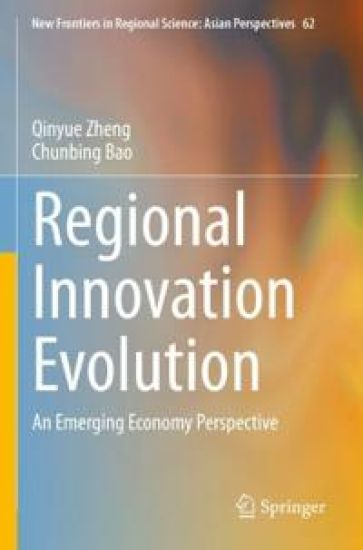
Regional Innovation Evolution

Regional Innovation Evolution

Qinyue Zheng; Chunbing Bao

SPRINGER VERLAG, SINGAPORE
2023
nidottu
This book covers many aspects of innovation theory, evolutionary economics, economic geography, and simulation models. It is one of the first books to comprehensively and systematically focus on the evolution of regional innovation based on provincial experience in emerging economics, including stylized facts, theoretical explanation, and simulation. The book is devoted to a pioneering process-based regional innovation matrix used for classifying a regional innovation model, which is illustrated by real-world cases and data analyses. The topics addressed here include path dependency, lock-in, routines, variations, selectivity, regional gap, innovation progress, agglomeration, and innovation efficiency. The simulation methods describing the dynamics of regional innovation evaluation on economics are developed as well. The primary objective of this work is to provide a tractable and useful regional governance tool for researchers and policy makers in regional science, human geography,and related disciplines. The book is highly recommended to readers who seek more insight into the continuous development of China or regional development gaps.
Regional Innovation Evolution

Regional Innovation Evolution

Qinyue Zheng; Chunbing Bao

SPRINGER VERLAG, SINGAPORE
2022
sidottu
This book covers many aspects of innovation theory, evolutionary economics, economic geography, and simulation models. It is one of the first books to comprehensively and systematically focus on the evolution of regional innovation based on provincial experience in emerging economics, including stylized facts, theoretical explanation, and simulation. The book is devoted to a pioneering process-based regional innovation matrix used for classifying a regional innovation model, which is illustrated by real-world cases and data analyses. The topics addressed here include path dependency, lock-in, routines, variations, selectivity, regional gap, innovation progress, agglomeration, and innovation efficiency. The simulation methods describing the dynamics of regional innovation evaluation on economics are developed as well. The primary objective of this work is to provide a tractable and useful regional governance tool for researchers and policy makers in regional science, human geography,and related disciplines. The book is highly recommended to readers who seek more insight into the continuous development of China or regional development gaps.