Kirjojen hintavertailu. Mukana 12 595 353 kirjaa ja 12 kauppaa.

Kirjailija

Qiuyu Wang

Kirjat ja teokset yhdessä paikassa: 4 kirjaa, julkaisuja vuosilta 2013-2025, suosituimpien joukossa Biology of Disease. Vertaile teosten hintoja ja tarkista saatavuus suomalaisista kirjakaupoista.

4 kirjaa

Kirjojen julkaisuhaarukka 2013-2025.

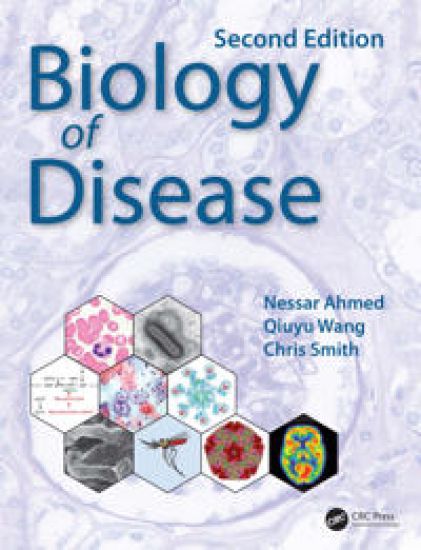
Biology of Disease

Biology of Disease

Nessar Ahmed; Chris Smith; Qiuyu Wang

TAYLOR FRANCIS LTD
2025
nidottu
Praise for the First Edition:‘an excellent introduction to the subject of pathology, disease and laboratory diagnostics ... ideal for undergraduate students on biomedical science and related degrees’Alison Cottell for Biochemistry and Molecular Biology Education‘When you first pick up this book and peruse the pages it is immediately encouraging. The presentation and production values are very good, the diagrams and photographs look professional and it is a substantial volume, all of which suggests a worthwhile textbook. I recommend this book to students and tutors as a text for any course on the biology of disease.’D.J. Cook for British Journal of Biomedical ScienceBiology of Disease describes the biology of many of the human disorders and disease that are encountered in a clinical setting. Assuming no prior knowledge of the principles of diagnostic science, chapters follow a consistent format throughout. Each opens with a statement of learning objectives, a basic introduction and a description of normal physiology. These are followed by a discussion of how the latter is altered by the disease process and comprehensive coverage of the scientific principles underlying disease development, diagnosis and treatment. Real cases are used to illustrate the importance of biology in understanding the causes of disease, as well as in diagnosis and therapy. This second edition has been thoroughly and revised and updated throughout and is now presented in full colour with more case studies and increased illustration.Key Features:Summarizes the biological bases of common diseasesDiscusses real cases, placing basic science in a clinical context for the studentIncludes learning objectives, end of chapter summaries and questions for self-testingExtensively illustrated in full colour with explanatory line diagrams and photographsAdditional online resources for students and lecturers available for download from https://www.routledge.com/9781032284361 This book is designed to meet the needs of undergraduates on biomedical, clinical and healthcare science programmes, and is also suitable for those studying relevant units at postgraduate level. Nursing and biological science students interested in disease should also find it useful..About the Authors:Nessar Ahmed is Reader in Clinical Biochemistry, Department of Life Sciences, Manchester Metropolitan University, UK.Qiuyu Wang is Senior Lecturer in Biomedical Science, Department of Life Sciences, Manchester Metropolitan University, UKChris Smith was formerly Senior Lecturer in Biochemistry, School of Biology, Chemistry and Health Science, Manchester Metropolitan University, UK
Biology of Disease

Biology of Disease

Nessar Ahmed; Chris Smith; Qiuyu Wang

TAYLOR FRANCIS LTD
2025
sidottu
Praise for the First Edition:‘an excellent introduction to the subject of pathology, disease and laboratory diagnostics ... ideal for undergraduate students on biomedical science and related degrees’Alison Cottell for Biochemistry and Molecular Biology Education‘When you first pick up this book and peruse the pages it is immediately encouraging. The presentation and production values are very good, the diagrams and photographs look professional and it is a substantial volume, all of which suggests a worthwhile textbook. I recommend this book to students and tutors as a text for any course on the biology of disease.’D.J. Cook for British Journal of Biomedical ScienceBiology of Disease describes the biology of many of the human disorders and disease that are encountered in a clinical setting. Assuming no prior knowledge of the principles of diagnostic science, chapters follow a consistent format throughout. Each opens with a statement of learning objectives, a basic introduction and a description of normal physiology. These are followed by a discussion of how the latter is altered by the disease process and comprehensive coverage of the scientific principles underlying disease development, diagnosis and treatment. Real cases are used to illustrate the importance of biology in understanding the causes of disease, as well as in diagnosis and therapy. This second edition has been thoroughly and revised and updated throughout and is now presented in full colour with more case studies and increased illustration.Key Features:Summarizes the biological bases of common diseasesDiscusses real cases, placing basic science in a clinical context for the studentIncludes learning objectives, end of chapter summaries and questions for self-testingExtensively illustrated in full colour with explanatory line diagrams and photographsAdditional online resources for students and lecturers available for download from https://www.routledge.com/9781032284361 This book is designed to meet the needs of undergraduates on biomedical, clinical and healthcare science programmes, and is also suitable for those studying relevant units at postgraduate level. Nursing and biological science students interested in disease should also find it useful..About the Authors:Nessar Ahmed is Reader in Clinical Biochemistry, Department of Life Sciences, Manchester Metropolitan University, UK.Qiuyu Wang is Senior Lecturer in Biomedical Science, Department of Life Sciences, Manchester Metropolitan University, UKChris Smith was formerly Senior Lecturer in Biochemistry, School of Biology, Chemistry and Health Science, Manchester Metropolitan University, UK
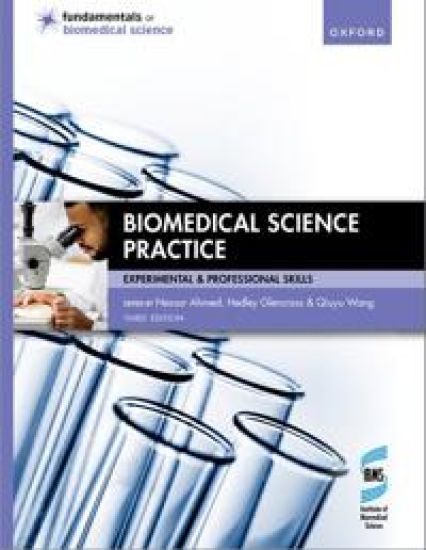
Biomedical Science Practice

Biomedical Science Practice

Nessar Ahmed; Hedley Glencross; Qiuyu Wang

Oxford University Press
2022
nidottu
The Fundamentals of Biomedical Science series has been written to reflect the challenges of practicing biomedical scientists today. It draws together essential basic science, with insights into laboratory practice, to show how an understanding of the biology of disease is linked to analytical approaches that lead to diagnosis. The series reviews the full range of disciplines to which a biomedical scientist may be exposed - from microbiology, to cytopathology, to transfusion science. The third edition of Biomedical Science Practice gives a comprehensive overview of key laboratory techniques and professional practial skills, with which students will need to be familiar to be successful in a professional biomedical enviroment.The text discusses a broad range of professional skills and concepts, such as health and safety considerations, personal development, and communication and confidentiality. The text also explores key experimental and analytical approaches which form the basis of the investigation and diagnosis of clinical conditions. Each chapter is supported with engaging clinical case studies, written to emphasize the link between theory and practice, and a set of end-of-chapter questions, which encourages students to test their knowledge and stretch their understanding. The third edition is available for students and institutions to purchase in a variety of formats and is supported by online resources. The e-book offers a mobile experience and convenient access along with functionality tools, navigation features and links that offer extra learning support: www.oxfordtextbooks.co.uk/ebooks Online student resources supporting the book include: - Video podcasts including interviews with practicing biomedical scientists - 'In the lab' footage of key practical techniques, showing biomedical science in practice Online lecturer resources supporting the book include: Figures from the book, available to download
Thrive in Cell Biology

Thrive in Cell Biology

Qiuyu Wang; Chris Smith; Emma Davis

Oxford University Press
2013
nidottu
The Thrive in Bioscience revision guides are written to help students achieve exam success in all core areas of bioscience. Each title encourages the reader to follow four steps to maximise their learning, with features to support this process. Step One: Review the facts The revision guides are designed to help learning be quick and effective: · Information is set out in bullet points, making it easy to digest. · Clear, uncluttered illustrations illuminate what is said in the text. · Key concept panels summarise the essential learning points. Step 2: Check your understanding Readers are encouraged to: · Complete the questions at the end of chapters and online multiple-choice questions to reinforce their learning. · Use the flashcard app to master the essential terms and phrases. Step 3: Take note of extra advice Revision tips, and hints for getting those precious extra marks in exams, are presented throughout. Step 4: Go the extra mile Readers can explore the suggestions for further reading to take their understanding one step further. Each title in the series is tailored to maximise understanding and achievement, to ensure that the reader really can thrive in their studies. They are the perfect course companions for any bioscience degree. Each title in the series is accompanied by the following digital resources: A flashcard glossary app, enabling the user to test their understanding of key terminology; A bank of interactive MCQs, giving users a hands-on way to check they have fully understood the concepts presented.