Kirjojen hintavertailu. Mukana 12 595 353 kirjaa ja 12 kauppaa.

Kirjailija

Quan Li

Kirjat ja teokset yhdessä paikassa: 12 kirjaa, julkaisuja vuosilta 2009-2023, suosituimpien joukossa Using R for Data Analysis in Social Sciences. Vertaile teosten hintoja ja tarkista saatavuus suomalaisista kirjakaupoista.

12 kirjaa

Kirjojen julkaisuhaarukka 2009-2023.

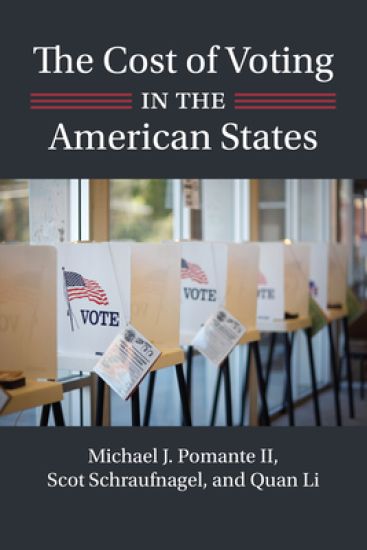
The Cost of Voting in the American States

The Cost of Voting in the American States

Michael J. Pomante; Scot Schraufnagel; Quan Li

UNIVERSITY PRESS OF KANSAS
2023
sidottu
In the wake of Shelby County v. Holder and the January 6 Capitol insurrection, changes to election laws, policies, and especially access to voting have become a key political battleground. A central point of contention is whether new restrictive voting laws intentionally discriminate against Black and Hispanic subpopulations in the United States. Conversely, do policies that expand voting access favor Democrats and increase the possibility of election fraud?In The Cost of Voting in the American States, Michael J. Pomante II, Scot Schraufnagel, and Quan Li test these questions. The authors look specifically for systematic outcomes produced by distinctive election policies in the American states. First, they establish a competent measure of voting restrictions to begin this unraveling. The authors create a Cost of Voting Index (COVI) for the fifty states, which uses a statistical procedure to extract an underlying dimension and to determine significance from state laws based on how restrictive the polices are. The authors call the underlying dimension extracted the “cost of voting.” With this measure in place, they evaluate which states have a higher cost of voting, how this cost impacts who votes, and whether there is a correlation between the cost of voting and minority populations.Using Racial Threat Theory arguments, the authors demonstrate that states with larger or growing Black and Hispanic populations have more restricted voting, and that these restrictive voting laws disproportionately demobilize these populations in predictable ways. States with a higher cost of voting also show lower minority electoral success as well as a larger gap in Black and female representation, and the authors reveal that decreasing the cost of voting does not lead to fraud or favor one party over another. The Cost of Voting in the American States makes a case for a new preclearance formula, and the COVI provides a viable approach for future election law.
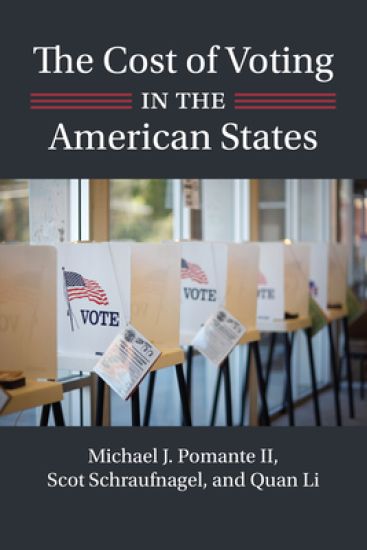
The Cost of Voting in the American States

The Cost of Voting in the American States

Michael J. Pomante; Scot Schraufnagel; Quan Li

UNIVERSITY PRESS OF KANSAS
2023
nidottu
In the wake of Shelby County v. Holder and the January 6 Capitol insurrection, changes to election laws, policies, and especially access to voting have become a key political battleground. A central point of contention is whether new restrictive voting laws intentionally discriminate against Black and Hispanic subpopulations in the United States. Conversely, do policies that expand voting access favor Democrats and increase the possibility of election fraud?In The Cost of Voting in the American States, Michael J. Pomante II, Scot Schraufnagel, and Quan Li test these questions. The authors look specifically for systematic outcomes produced by distinctive election policies in the American states. First, they establish a competent measure of voting restrictions to begin this unraveling. The authors create a Cost of Voting Index (COVI) for the fifty states, which uses a statistical procedure to extract an underlying dimension and to determine significance from state laws based on how restrictive the polices are. The authors call the underlying dimension extracted the “cost of voting.” With this measure in place, they evaluate which states have a higher cost of voting, how this cost impacts who votes, and whether there is a correlation between the cost of voting and minority populations.Using Racial Threat Theory arguments, the authors demonstrate that states with larger or growing Black and Hispanic populations have more restricted voting, and that these restrictive voting laws disproportionately demobilize these populations in predictable ways. States with a higher cost of voting also show lower minority electoral success as well as a larger gap in Black and female representation, and the authors reveal that decreasing the cost of voting does not lead to fraud or favor one party over another. The Cost of Voting in the American States makes a case for a new preclearance formula, and the COVI provides a viable approach for future election law.
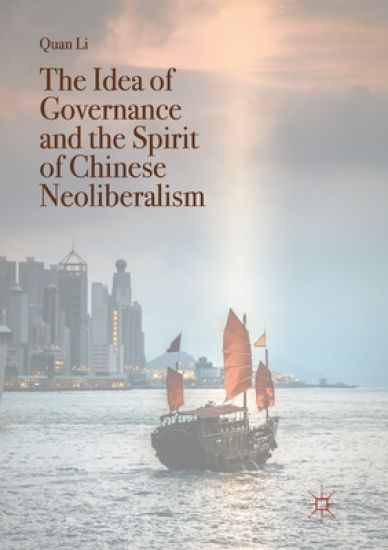
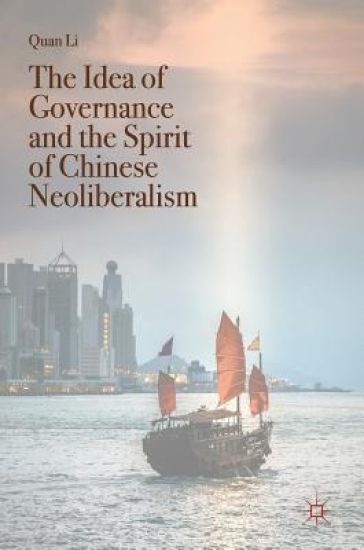
The Idea of Governance and the Spirit of Chinese Neoliberalism
This book offers a critical assessment of governance ideas in the context of Chinese neoliberalism. It argues that the Chinese version of governance has emerged as an important discursive practice in the articulation of the neoliberal spirit of the national reform agenda. The book first examines the institutional and intellectual background of governance ideas, capturing the key features of neoliberalization in transitional China. The main body of investigation is an interpretive analysis of governance in terms of its normative principles and technical skills, which effectively package the mature neoliberal vision and reality so that it indicates the dominant ruling structure of Chinese neoliberalism. The subsequent analysis presents a genealogical review of governance discourse and traces its adaptation to local neoliberal experiments. The book concludes with reflections on possible ways of critical engagement with governance ideas and with the intellectual aspects of neoliberalism.
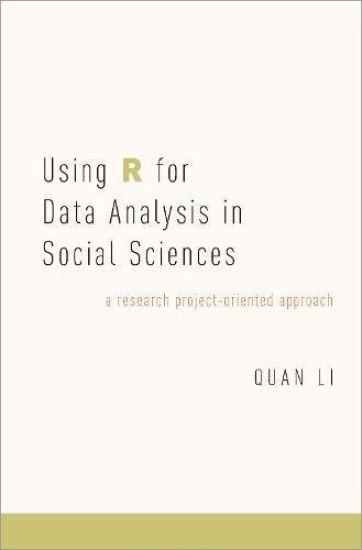
Using R for Data Analysis in Social Sciences

Using R for Data Analysis in Social Sciences

Quan Li

Oxford University Press Inc
2018
sidottu
Statistical analysis is common in the social sciences, and among the more popular programs is R. This book provides a foundation for undergraduate and graduate students in the social sciences on how to use R to manage, visualize, and analyze data. The focus is on how to address substantive questions with data analysis and replicate published findings. Using R for Data Analysis in Social Sciences adopts a minimalist approach and covers only the most important functions and skills in R to conduct reproducible research. It emphasizes the practical needs of students using R by showing how to import, inspect, and manage data, understand the logic of statistical inference, visualize data and findings via histograms, boxplots, scatterplots, and diagnostic plots, and analyze data using one-sample t-test, difference-of-means test, covariance, correlation, ordinary least squares (OLS) regression, and model assumption diagnostics. It also demonstrates how to replicate the findings in published journal articles and diagnose model assumption violations. Because the book integrates R programming, the logic and steps of statistical inference, and the process of empirical social scientific research in a highly accessible and structured fashion, it is appropriate for any introductory course on R, data analysis, and empirical social-scientific research.
Using R for Data Analysis in Social Sciences

Using R for Data Analysis in Social Sciences

Quan Li

Oxford University Press Inc
2018
nidottu
Statistical analysis is common in the social sciences, and among the more popular programs is R. This book provides a foundation for undergraduate and graduate students in the social sciences on how to use R to manage, visualize, and analyze data. The focus is on how to address substantive questions with data analysis and replicate published findings. Using R for Data Analysis in Social Sciences adopts a minimalist approach and covers only the most important functions and skills in R to conduct reproducible research. It emphasizes the practical needs of students using R by showing how to import, inspect, and manage data, understand the logic of statistical inference, visualize data and findings via histograms, boxplots, scatterplots, and diagnostic plots, and analyze data using one-sample t-test, difference-of-means test, covariance, correlation, ordinary least squares (OLS) regression, and model assumption diagnostics. It also demonstrates how to replicate the findings in published journal articles and diagnose model assumption violations. Because the book integrates R programming, the logic and steps of statistical inference, and the process of empirical social scientific research in a highly accessible and structured fashion, it is appropriate for any introductory course on R, data analysis, and empirical social-scientific research.
The Idea of Governance and the Spirit of Chinese Neoliberalism
This book offers a critical assessment of governance ideas in the context of Chinese neoliberalism. It argues that the Chinese version of governance has emerged as an important discursive practice in the articulation of the neoliberal spirit of the national reform agenda. The book first examines the institutional and intellectual background of governance ideas, capturing the key features of neoliberalization in transitional China. The main body of investigation is an interpretive analysis of governance in terms of its normative principles and technical skills, which effectively package the mature neoliberal vision and reality so that it indicates the dominant ruling structure of Chinese neoliberalism. The subsequent analysis presents a genealogical review of governance discourse and traces its adaptation to local neoliberal experiments. The book concludes with reflections on possible ways of critical engagement with governance ideas and with the intellectual aspects of neoliberalism.
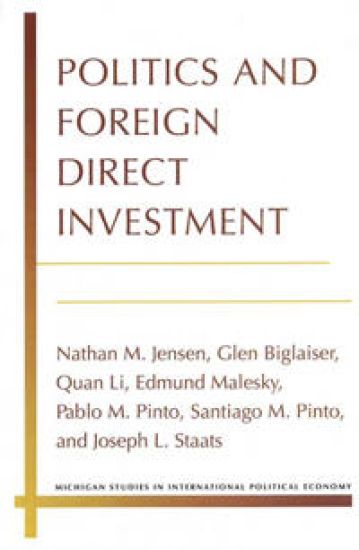
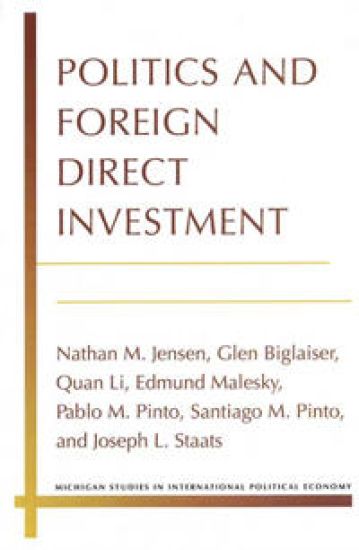
Politics and Foreign Direct Investment

Politics and Foreign Direct Investment

Nathan Jensen; Glen Biglaiser; Quan Li; Edmund Malesky; Pablo Pinto; Santiago Pinto; Joseph Staats

The University of Michigan Press
2012
nidottu
For decades, free trade was advocated as the vehicle for peace, prosperity, and democracy in an increasingly globalized market. More recently, the proliferation of foreign direct investment has raised questions about its impact upon local economies and politics. Here, seven scholars bring together their wide-ranging expertise to investigate the factors that determine the attractiveness of a locale to investors and the extent of their political power. Multinational corporations prefer to invest where legal and political institutions support the rule of law, protections for property rights, and democratic processes. Corporate influence on local institutions, in turn, depends upon the relative power of other players and the types of policies at issue.
Politics and Foreign Direct Investment

Politics and Foreign Direct Investment

Nathan Jensen; Glen Biglaiser; Quan Li; Edmund Malesky; Pablo Pinto; Santiago Pinto; Joseph Staats

The University of Michigan Press
2012
sidottu
For decades, free trade was advocated as the vehicle for peace, prosperity, and democracy in an increasingly globalized market. More recently, the proliferation of foreign direct investment has raised questions about its impact upon local economies and politics. Here, seven scholars bring together their wide-ranging expertise to investigate the factors that determine the attractiveness of a locale to investors and the extent of their political power. Multinational corporations prefer to invest where legal and political institutions support the rule of law, protections for property rights, and democratic processes. Corporate influence on local institutions, in turn, depends upon the relative power of other players and the types of policies at issue.
Liquid Crystals Beyond Displays

Liquid Crystals Beyond Displays

Quan Li

John Wiley Sons Inc
2012
sidottu
The chemistry, physics, and applications of liquid crystals beyond LCDs Liquid Crystals (LCs) combine order and mobility on a molecular and supramolecular level. But while these remarkable states of matter are most commonly associated with visual display technologies, they have important applications for a variety of other fields as well. Liquid Crystals Beyond Displays: Chemistry, Physics, and Applications considers these, bringing together cutting-edge research from some of the most promising areas of LC science. Featuring contributions from respected researchers from around the globe, this edited volume emphasizes the chemistry, physics, and applications of LCs in areas such as photovoltaics, light-emitting diodes, filed-effect transistors, lasers, molecular motors, nanophotonics and biosensors. Specific chapters look at magnetic LCs, lyotropic chromonic LCs, LC-based chemical sensors, LCs in metamaterials, and much more. Introducing readers to the fundamentals of LC science through the use of illustrative examples, Liquid Crystals Beyond Displays covers not only the most recent research in the myriad areas in which LCs are being utilized, but also looks ahead, addressing potential future developments. Designed for physicists, chemists, engineers, and biologists working in academia or industry, as well as graduate students specializing in LC technology, this is the first book to consider LC applications across a wide range of fields.
Self-Organized Organic Semiconductors

Self-Organized Organic Semiconductors

Quan Li

John Wiley Sons Inc
2011
sidottu
This book focuses on the exciting topic on self-organized organic semiconductors – from materials to device applications. It offers up-to-date and accessible coverage of self-organized semiconductors for organic chemistry, polymer science, liquid crystals, materials science, material engineering, electrical engineering, chemical engineering, optics, optic-electronics, nanotechnology and semiconductors. Chapters cover chemistry, physics, processing, and characterization. The applications include photovoltaics, light-emitting diodes (LEDs), and transistors.
Democracy and Economic Openness in an Interconnected System

Democracy and Economic Openness in an Interconnected System

Quan Li; Rafael Reuveny

Cambridge University Press
2009
sidottu
In this book, Quan Li and Rafael Reuveny combine the social scientific approach with a broad, interdisciplinary scope to address some of the most intriguing and important political, economic, and environmental issues of our times. Their book employs formal and statistical methods to study the interactions of economic globalization, democratic governance, income inequality, economic development, military violence, and environmental degradation. In doing so, Li and Reuveny cross multiple disciplinary boundaries, engage various academic debates, bring the insights from compartmentalized bodies of literature into direct dialogue, and uncover policy tradeoffs in a growingly interconnected political-economic-environmental system. They show that growing interconnectedness in the global system increases the demands on national leaders and their advisors; academicians and policy makers will need to cross disciplinary boundaries if they seek to better understand and address the policy tradeoffs of even more complex processes than the ones investigated here.
Democracy and Economic Openness in an Interconnected System

Democracy and Economic Openness in an Interconnected System

Quan Li; Rafael Reuveny

Cambridge University Press
2009
pokkari
In this book, Quan Li and Rafael Reuveny combine the social scientific approach with a broad, interdisciplinary scope to address some of the most intriguing and important political, economic, and environmental issues of our times. Their book employs formal and statistical methods to study the interactions of economic globalization, democratic governance, income inequality, economic development, military violence, and environmental degradation. In doing so, Li and Reuveny cross multiple disciplinary boundaries, engage various academic debates, bring the insights from compartmentalized bodies of literature into direct dialogue, and uncover policy tradeoffs in a growingly interconnected political-economic-environmental system. They show that growing interconnectedness in the global system increases the demands on national leaders and their advisors; academicians and policy makers will need to cross disciplinary boundaries if they seek to better understand and address the policy tradeoffs of even more complex processes than the ones investigated here.