

Kirjailija
Quentin Smith
Kirjat ja teokset yhdessä paikassa: 8 kirjaa, julkaisuja vuosilta 1995-2025, suosituimpien joukossa The Setup Part 2. Vertaile teosten hintoja ja tarkista saatavuus suomalaisista kirjakaupoista.
8 kirjaa
Kirjojen julkaisuhaarukka 1995-2025.
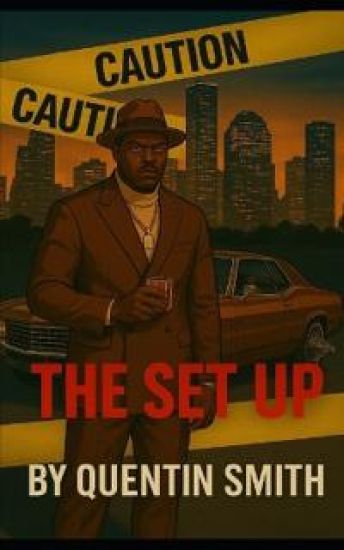


Jean-Marc is nurturing his first decent Bordeaux vintage in a decade when the German army invades France in June 1940. His decision not to flee with his wife and children will haunt him throughout the war, but when he loses his wine farm to the occupiers and is forced into hiding the opportunity to join the resistance and retaliate is irresistible. Here Jean-Marc meets Monique and tragically discovers that everything is not as it seems in war.
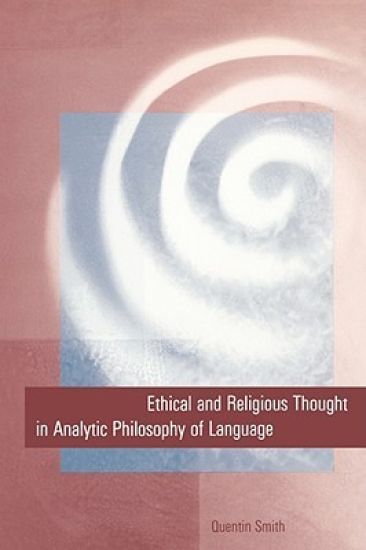
Ethical and Religious Thought in Analytic Philosophy of Language
Quentin Smith
Yale University Press
1998
sidottu
This book is the first to provide a critical history of analytic philosophy from its inception in the late nineteenth century to the present day. Quentin Smith focuses on the connections between the four leading movements in analytic philosophy—logical realism, logical positivism, ordinary language analysis, and linguistic essentialism—and corresponding twentieth-century theories of ethics and of religion. Through a critical evaluation of each school’s theoretical positions, Smith counters the widespread view of analytic philosophy as indifferent to important questions about right and wrong and human meaning. He argues that analytic philosophy throughout its history has revolved around the central issues of existence, and he offers a new ethics and philosophy of religion.The author develops a positive ethical theory based on a method of ethics first formulated by Robert Adams. Smith’s theory belongs to the tradition of perfectionism or self-realization ethics and builds on Thomas Hurka’s recent theory of perfectionism. In his consideration of philosophy of religion, Smith concludes that there is a sound "logical argument from evil" that takes into account Alvin Plantinga’s free-will defense and undermines monotheism, paving the way to a naturalistic pantheism.
Written in an engaging dialogue style, Smith and Oaklander cover metaphysical topics from a student's perspective and introduce key concepts through a process of explanation, reformulation and critique.
Written in an engaging dialogue style, Smith and Oaklander cover metaphysical topics from a student's perspective and introduce key concepts through a process of explanation, reformulation and critique.

Theism, Atheism, and Big Bang Cosmology
William Lane Craig; Quentin Smith
Clarendon Press
1995
nidottu
Contemporary science presents us with the remarkable theory that the universe began to exist about fifteen billion years ago with a cataclysmic explosion called `the Big Bang'. The question of whether Big Bang cosmology supports theism or atheism has long been a matter of discussion among the general public and in popular science books, but has received scant attention from philosophers. This book sets out to fill this gap by means of a sustained debate between two philosophers, William Lane Craig and Quentin Smith, who defend opposing positions. Craig argues that the Big Bang that began the universe was created by God, while Smith argues that the Big Bang has no cause. The book consists of alternating chapters by Craig and Smith, with each chapter being either a criticism of a preceding chapter or being criticized by a subsequent chapter. Part One consists of Craig's arguments that the past is necessarily finite and that God created the Big Bang, and Smith's criticisms of these arguments. Part Two presents Smith's arguments that Big Bang cosmology is inconsistent with theism and Craig's criticisms of Smith's argument. The authors' arguments are based on Einstein's theory of relativity, and there is also a discussion of Stephen Hawking's new quantum cosmology.