

Kirjailija
Quincy Troupe
Kirjat ja teokset yhdessä paikassa: 17 kirjaa, julkaisuja vuosilta 1990-2027, suosituimpien joukossa The Accordion Years. Vertaile teosten hintoja ja tarkista saatavuus suomalaisista kirjakaupoista.
17 kirjaa
Kirjojen julkaisuhaarukka 1990-2027.

The selected poems from over fifty years by the great poet and biographer and friend of Miles Davis. Quincy Troupe writes poetry in great waves. The words are just notes. It's the music you make with them that matters. He's not a wordsmith, he's a shaman conjuring long repetitive lines, cadences of looking across the sea towards Africa and haunted by the legacy of slavery and racism, or of remembering fellow conjurers, poets and musical artists, celebrating, always celebrating, but never only that. In the fifty-page, incantatory poem, Ghost Voices, there is a longing to be reconnected to the past, and a longing too to be free of it. In the short title poem, Duende: For Garc a Lorca and Miles Davis, there lies, nakedly, Troupe's credo: ...secrets, mystery infused in black magic / that enters bodies in forms of music, art/ poetry imbuing language with sovereignty / in blood spooling back through violent centuries... The version of the great poem Avalanche (number 3) that appears here is different from the version of the same poem he published nearly 25 years ago--in exactly the same way that a jazz artist picks up his horn to play the same song a little differently every time. Troupe is a generous and gregarious poet in this giant offering that includes many new poems, as well as a selection chosen from across his eleven previously published volumes. What's remarkable is the constancy, the energy, and how he's always looking right at you in the here and now, and at the same time sees something over your shoulder that others don't see yet, maybe a distant storm gathering over the waters, something we're going to need to rise up and face soon enough.
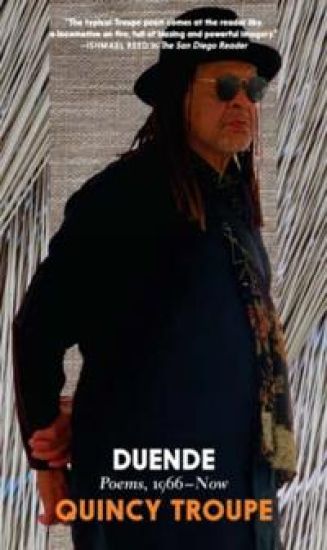
The selected poems from over fifty years by the great poet and biographer and friend of Miles Davis. Quincy Troupe writes poetry in great waves. The words are just notes. It's the music you make with them that matters. He's not a wordsmith, he's a shaman conjuring long repetitive lines, cadences of looking across the sea towards Africa and haunted by the legacy of slavery and racism, or of remembering fellow conjurers, poets and musical artists, celebrating, always celebrating, but never only that. In the fifty-page, incantatory poem, Ghost Voices, there is a longing to be reconnected to the past, and a longing too to be free of it. In the short title poem, Duende: For Garc a Lorca and Miles Davis, there lies, nakedly, Troupe's credo: ...secrets, mystery infused in black magic / that enters bodies in forms of music, art/ poetry imbuing language with sovereignty / in blood spooling back through violent centuries... The version of the great poem Avalanche (number 3) that appears here is different from the version of the same poem he published nearly 25 years ago--in exactly the same way that a jazz artist picks up his horn to play the same song a little differently every time. Troupe is a generous and gregarious poet in this giant offering that includes many new poems, as well as a selection chosen from across his eleven previously published volumes. What's remarkable is the constancy, the energy, and how he's always looking right at you in the here and now, and at the same time sees something over your shoulder that others don't see yet, maybe a distant storm gathering over the waters, something we're going to need to rise up and face soon enough.

The world is made of seductions. In Quincy Troupe's Seduction, the ""I"" becomes the ""Eye,"" serving as metaphor and witness in a narrative compilation from a master of poetic music. Elegies and dramatic odes look at the seduction of all things loved or hated, especially the man made of color. How did the killings of Michael Brown, Tamir Rice, and Trayvon Martin seduce the public's eye and catch the fire of racism? How did Aretha Franklin seduce us with voice and twang? How does the art of Romare Bearden or Jack Whitten still tell our truths, fantasies, and oppressions?time is a bald eagle, a killer soaring high in the blue, / music to men dodging bullets in speeding cars, / knew death, hoped it'd never come . . .In this collection we are seduced by Troupe's opus. This is the poet's art laid bare. He is our ""Eye."" Visions of the transatlantic slave trade, portraits of American violence, pop culture, and historical voices are the lyrical relics in Troupe's masterful verse. One of American literature's most important rhythmical artists, Troupe has created a chronicle reaching through history for the collective ""I/Eye"" that is all of us.

If we were all brave enough to resurrect the voices lost from our humanity, what would they say? Award-winning poet Quincy Troupe, spokesman for the humanizing forces of poetry, music, and art, parts the Atlantic and rattles the ground built on slavery with Ghost Voices: A Poem in Prayer.we are crossing, / we are / crossing, / we are crossing in big salt water, // we are crossing, // crossing under a sky of no guilt / we have left home // though we know we will go back / someday, / see our people / as we knew them . . .Troupe re-creates the history of lost voices between the waters of Africa, Cuba, and the United States. His daring poetics drenched in new forms-notably the seven-elevens-clench transformative narratives spurred on by a relentless, rhythmic language that mimics the foaming waves of the Atlantic Ocean and the Caribbean Sea. His personae speak quantum litanies within one epic, sermonic-gospel to articulate our most ancient ways of storytelling and survival.

Poet, activist and journalist Quincy Troupe's candid account of his friendship with Miles Davis is a revealing portrait of a great musician and an engrossing chronicle of the author's own artistic and personal growth. Describing in intimate detail the sometimes harrowing processes of Davis's spectacular creativity and the joys and travails Davis's passionate and contradictory temperament posed to the two men's friendship. Miles and Me shows how Miles Davis, both as an artist and as a black man, influenced Troupe and whole generations of Americans while forever changing the face of jazz.

Recognized by the New York Times as one of the Best Photography Books. Immerse yourself in the visual stream created over the first 50 years by Kamoinge, a pioneering photographic collective founded in 1963 in New York City, at the height of the Civil Rights Movement. Kamoinge’s members include many of the nation’s most accomplished photographers. This is the first comprehensive book of the work of Kamoinge’s 30 members, from the founding of the Kamoinge Workshop in 1963 to 2014. After more than 5 decades of racist barriers to the recognition of Kamoinge by major museums, the Kamoinge Workshop is finally being celebrated by the art world and has assumed its rightful place as a major force in the history of American photography, as the longest standing photographic collective. The major traveling exhibition Working Together: The Photographers of the Kamoinge Workshop launched in 2020 at the Virginia Museum of Fine Arts and traveled to the Whitney Museum of American Art, the J. Paul Getty Museum, and the Cincinnati Art Museum. Several Kamoinge original members were featured in the major 2017–2020 international exhibition Soul of a Nation: Art in the Age of Black Power, first created at the Tate Modern in London then traveling to Crystal Bridges Museum of American Art, the Brooklyn Museum, the Broad Museum, the de Young Museum, and the Museum of Fine Arts in Houston. In this stunning compendium, over 280 photographs are interspersed with insights and thoughts from Kamoinge’s members and other renowned authors. Taken in New York City, West Africa, Guyana, and suburban America, the photos include abstracts; daily moments of men, women and children; landscapes; and portraits of Miles Davis, Biggie Smalls, a young Ntozake Shange, and many other visionary citizens. Timeless: Photographs by Kamoinge was recognized by the New York Times as one of the Best Photography Books of 2015.
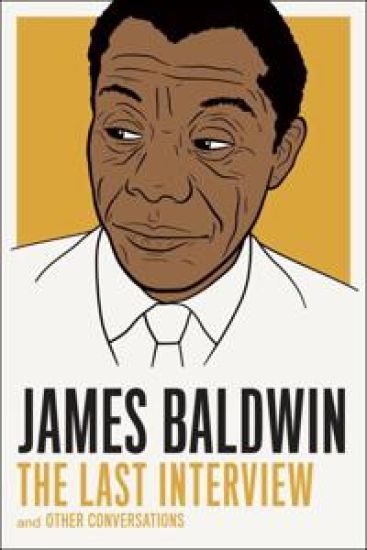
James Baldwin: The Last Interview
James Baldwin; Quincy Troupe
Melville House Publishing
2014
nidottu
Never before available, the unexpurgated last interview with James Baldwin "I was not born to be what someone said I was. I was not born to be defined by someone else, but by myself, and myself only." When, in the fall of 1987, the poet Quincy Troupe traveled to the south of France to interview James Baldwin, Baldwin's brother David told him to ask Baldwin about everything--Baldwin was critically ill and David knew that this might be the writer's last chance to speak at length about his life and work. The result is one of the most eloquent and revelatory interviews of Baldwin's career, a conversation that ranges widely over such topics as his childhood in Harlem, his close friendship with Miles Davis, his relationship with writers like Toni Morrison and Richard Wright, his years in France, and his ever-incisive thoughts on the history of race relations and the African-American experience. Also collected here are significant interviews from other moments in Baldwin's life, including an in-depth interview conducted by Studs Terkel shortly after the publication of Nobody Knows My Name. These interviews showcase, above all, Baldwin's fearlessness and integrity as a writer, thinker, and individual, as well as the profound struggles he faced along the way. From the eBook edition.
"Troupe is an innovator of form and tone who shifts quickly from a lofty, elegiac mode into burlesque or smoky, jazzed-down pop phraseology."--Publishers Weekly"Troupe's poems are exuberant and passionate outpourings with driving, syncopated rhythms and improvisatory riffs of colorful language."--Star Tribune Coined with the French word errance (to wander) in mind, these poems rove through ancient Yoruba to the streets of Harlem to the tropical heat of Guadeloupe and emerge with a new vocabulary for the transformations of the physical, philosophical, and musical worlds. Known for his long, lyrical narrative poems and invocation of the oral tradition, Quincy Troupe captures the histories and deaths of Michael Jackson and Miles Davis, celebrating both their accomplishments and contradictions. This collection embraces the improvisation of a soul as it offers a paean to the possibilities of poetry.The author of eight volumes of poetry, Quincy Troupe has also collaborated with Chris Gardner on The Pursuit of Happyness, which was made into a major motion picture, and with Miles Davis on Miles: The Autobiography. His friendship with Miles Davis is chronicled in Miles and Me. Troupe has also recently published children's books on Magic Johnson and Stevie Wonder. He divides his time between New York and a countryside village in Guadeloupe.

"Troupe's poems resemble Romare Bearden's collages: muscular and colorful."-North American ReviewIn the Whitmanic tradition, Troupe's poetry explodes from the page, capturing the spirit of America. Inspired by contemporary art, music, literature, and sports, The Architecture of Language dismantles the dangerously cliched, wooden rhetoric saturating our national discourse and rebuilds the language in poems bursting with beauty, energy, and enough imaginative fire to light the way to the future.

Kyle Dargan's debut collection of poetry, The Listening, searches through the cluttered surface of contemporary life to tune into the elemental sounds within the marrow of living/life. Throughout the collection, Dargan interweaves elements of his heritage with the present day—jazz influences blend with hip-hop; neoslave narratives run parallel with the intimate tale of civil rights leaders; post-9/11 America is juxtaposed with family portraits of the sixties and seventies—to reveal the continuous, though ever changing, music of the world around us. Whether capturing the famous Ali-Frazier fight in Manila or a trip to the local barbershop, Muddy Waters or boyhood blacktop games, Dargan gives voice to the most poignant and fleeting aspects of our everyday existence. With singular incisiveness and vigor, these poems act simultaneously as psalms and elegies, praising life at the same time they lament its inevitable passing.

Much like the vibrant, riveting reading performances for which he is so well-known, Quincy Troupe’s award-winning poetry is pure rhythm and deep bass beats that barely stay on the page. This magnificent new volume captures Troupe’s voice stronger than ever as he issues celebratory and pointed statements on jazz, sports, love, art, literature, American life, and the sublimity of it all.Winner of a Peabody and two American Book Awards, Quincy Troupe has published several books of poetry and two bestselling books about Miles Davis. He is a professor of literature and creative writing at the University of California, San Diego.

Much like the vibrant, riveting reading performances for which he is so well-known, Quincy Troupe's award-winning poetry is pure rhythm and deep bass beats that barely stay on the page. This magnificent new volume captures Troupe's voice stronger than ever as he issues celebratory and pointed statements on jazz, sports, love, art, literature, American life, and the sublimity of it all.Winner of a Peabody and two American Book Awards, Quincy Troupe has published several books of poetry and two bestselling books about Miles Davis. He is a professor of literature and creative writing at the University of California, San Diego.
Quincy Troupe launches a pyrotechnic display of jazz rhythms, political commentary, sports tributes, travelogues, and architectural abstracts in his latest volume of poetry, withChoruses. Merging traditional poetic form with contemporary content, Troupe fashions "words & sounds that build bridges toward a new tongue" , as he writes in "Song," an ars poetica. Only Troupe could write a sestina chronicling the mass suicide of Heaven's Gate, or a villanelle for Michael Jordan: "rising up in time, michael jordan hangs like an ikon, suspended in space / / his eyes two radar screens screwed like nails into the mask of his face." A masterful technician, Troupe experiments with free verse as well, repeating the same words in three different line-break configurations in "Images: Three Variations of Shape & Form." From haiku to tonka, from Mark McGwire to Sammy Sosa, from bebop to hip hop, these choruses "become sound tracks lifted off a poet's tongue, / / syllables, within moments, are transformed into song...""Troupe's sixth collection covers a wide cultureal bandwidth: the Monica-gate scandal, the Heaven's Gate mass suicide; jazz greats like Miles Davis (Troupe's Miles: The Biography is the standard) and Richard Muhal Abrams; sports stars like Michael Jordon, Sammy Sosa and Mark McGwire; lesser know artists like GeorgeLEwis & the Dancers at Laguna Pueblo, painter Robert Colescott and many more. Perhaps to formally mirror the mix, Troupe puts sonnets, villanelles and sestinas in the midst of his more characteristic jazz-inflected free-verse lines. The best poems here, however, eschew traditional European forms, and foreground Troupe's mastery of a sprawling American vernacular: "the tongue in his hands now was once a saxophone when whole,/ was a blur of fingers whooshing through golden keys of his voice belling/ . . . .conjures up spirits, the drumbeat of strong hearts goosing everything along." Troupe doesn't quite go as far into uninhibited linguistic musicality as, say, Clark Coolidge, Will Alexander or the best rhapsodic passages in Kerouac. Yet his unwillingness to forgo teh referential severrs a powerful didactic function beyond "the tough aesthetics" of contemporary poetry, as Troupe often employ

A collection of poetry about men, women, jazz, and American life.

A collection of poetry about men, women, jazz, and American life.
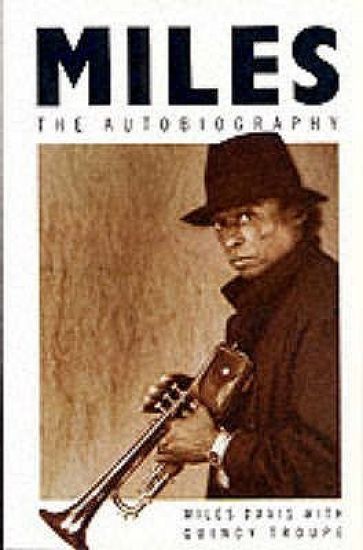
â??LISTEN. The greatest feeling I ever had in my life â?? with my clothes on â?? was when I first heard Diz and Bird back in 1944. Iâ??ve come close to matching the feeling of that night, but Iâ??ve never quite got there. Iâ??m always looking for it, trying to always feel it in and through the music I play . . .â??